
Medical Note: This article is for educational purposes only and should not replace professional medical advice. If your baby develops fever, widespread skin infection, swelling, or rapidly worsening sores, seek immediate medical care.
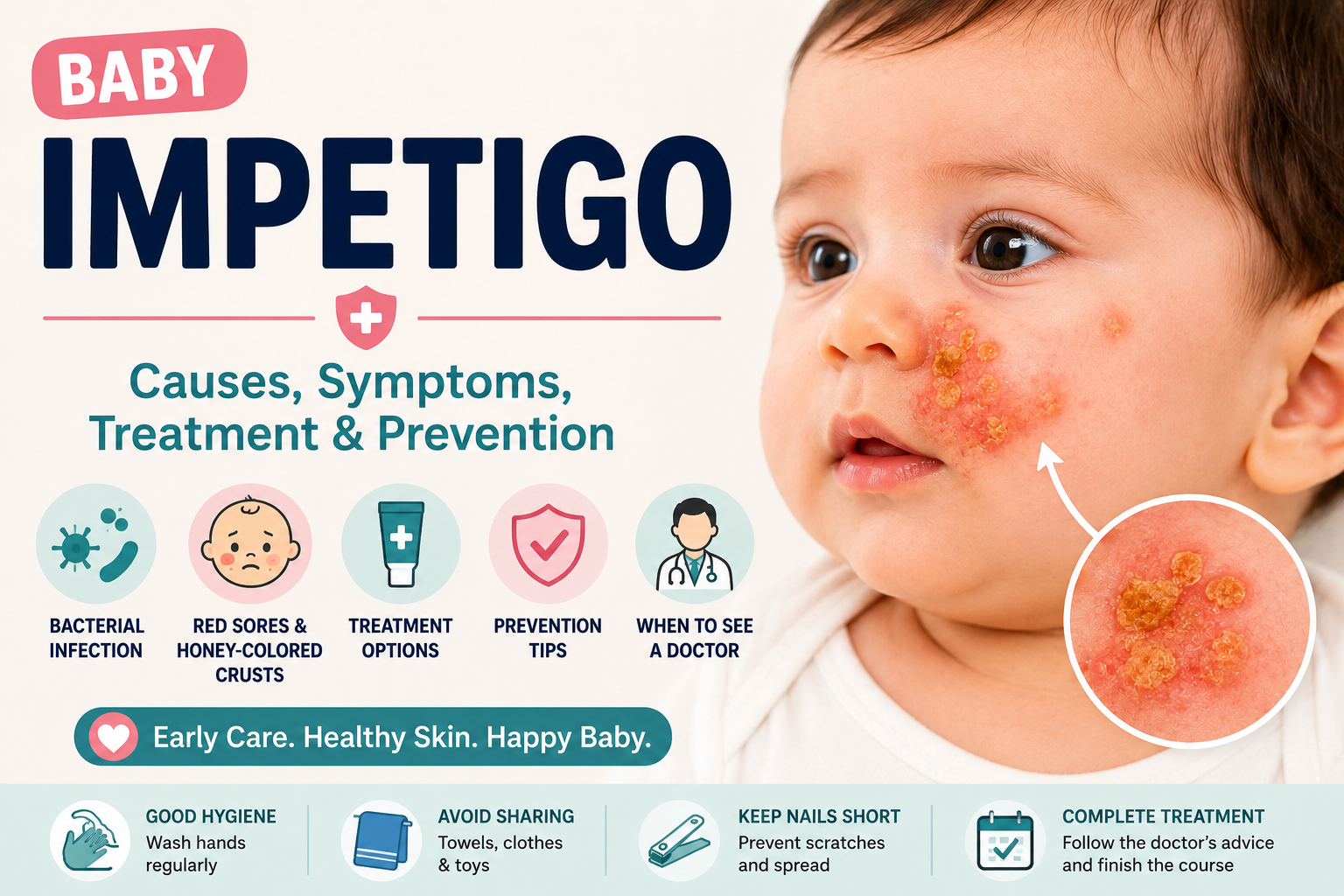
A baby impetigo is a highly contagious bacterial skin infection that commonly affects infants and young children. It usually starts as small red sores or blisters that quickly burst, leaving behind a characteristic honey-colored crust. Although impetigo is generally not serious, early treatment is important to prevent the infection from spreading to other parts of the body or to other children.
Babies are more likely to develop impetigo because their skin is delicate, and minor cuts, insect bites, eczema, or other skin conditions can allow bacteria to enter.
This guide explains the causes, symptoms, diagnosis, treatment, prevention, complications, and when parents should consult a pediatrician.
What Is Baby Impetigo?
Baby impetigo is a superficial bacterial skin infection caused by bacteria that infect the outer layers of the skin.
The two bacteria most commonly responsible are:
- Staphylococcus aureus
- Streptococcus pyogenes (Group A Streptococcus)
The infection often begins after bacteria enter through:
- Scratches
- Eczema
- Insect bites
- Cuts
- Diaper rash
- Chickenpox lesions
Unlike eczema or heat rash, impetigo is contagious and can spread through direct skin contact or shared towels, clothing, and bedding.
Types of Baby Impetigo
1. Non-Bullous Impetigo (Most Common)
Accounts for nearly 70–80% of cases.
Symptoms include:
- Small red sores
- Blisters that burst quickly
- Honey-colored crusts
- Mild itching
2. Bullous Impetigo
Caused mainly by Staphylococcus aureus.
Features include:
- Larger fluid-filled blisters
- Thin blister roof
- Yellow fluid
- Red skin after blisters break
Bullous impetigo is more common in infants.
What Causes Baby Impetigo?
Common causes include:
Bacterial Infection
The infection develops when bacteria enter broken skin.
Eczema
Babies with eczema scratch frequently, increasing infection risk.
➡️ Read also: Baby Eczema
Insect Bites
Mosquito bites and insect bites create small openings in the skin.
➡️ See also: Baby Mosquito Bites
Baby Skin Allergy
Scratching allergic rashes can allow bacteria to enter.
➡️ Also see: Baby Skin Allergy
Contact Dermatitis
Damaged skin from irritation increases infection risk.
➡️ Read Also: Baby Contact Dermatitis
Cuts and Scratches
Even minor skin injuries can become infected.
Poor Hygiene
Although impetigo can occur despite good hygiene, bacteria spread more easily through contaminated hands, clothing, towels, or toys.
Symptoms of Baby Impetigo
Common symptoms include:
- Red sores
- Small blisters
- Honey-colored crusts
- Itching
- Oozing fluid
- Mild pain
- Swollen lymph nodes (occasionally)
- Red inflamed skin
Common locations include:
- Face
- Around the nose
- Around the mouth
- Hands
- Arms
- Legs
- Diaper area
Baby Impetigo vs Baby Eczema
| Baby Impetigo | Baby Eczema |
|---|---|
| Bacterial infection | Chronic inflammatory skin condition |
| Honey-colored crust | Dry itchy patches |
| Highly contagious | Not contagious |
| Requires antibiotics | Requires moisturizers and anti-inflammatory treatment |
| May ooze pus | Usually dry skin |
➡️ Read: Baby Eczema
How Does Impetigo Spread?
Impetigo spreads through:
- Skin-to-skin contact
- Shared towels
- Blankets
- Clothing
- Toys
- Scratching infected sores
Children attending daycare are at higher risk.
Who Is at Higher Risk?
Babies are more likely to develop impetigo if they:
- Have eczema
- Have insect bites
- Have cuts or scratches
- Live in warm, humid climates
- Attend daycare
- Have weakened immunity
- Have poor skin barrier function
How Is Baby Impetigo Diagnosed?
Doctors usually diagnose impetigo by:
- Examining the skin
- Reviewing symptoms
- Looking for honey-colored crusts
Occasionally, a bacterial swab may be taken if:
- Infection is severe
- Antibiotics are not working
- Recurrent infections occur
According to the American Academy of Dermatology (AAD), most cases of impetigo can be diagnosed through a physical examination without additional laboratory tests.
External References:
Can Baby Impetigo Go Away on Its Own?
Mild impetigo may occasionally improve without treatment, but medical treatment is recommended because antibiotics:
- Shorten the illness
- Reduce the spread of infection
- Lower the risk of complications
Treatment for Baby Impetigo
Treatment for baby impetigo focuses on eliminating the bacterial infection, preventing it from spreading, and helping the skin heal. Most babies recover completely within 7–10 days with appropriate treatment.
According to the American Academy of Dermatology (AAD), prompt treatment reduces the duration of the illness and lowers the risk of spreading the infection to others.
How Is Baby Impetigo Treated?
1. Topical Antibiotic Ointment
For mild impetigo, doctors may prescribe antibiotic creams or ointments such as:
- Mupirocin
- Retapamulin
- Ozenoxacin
These medicines are usually applied after gently cleaning the affected skin.
2. Oral Antibiotics
If impetigo is:
- Widespread
- Bullous
- Recurrent
- Accompanied by fever
Your pediatrician may prescribe oral antibiotics.
Always complete the full course even if the rash starts improving.
3. Clean the Sores Daily
Wash the affected area gently using:
- Lukewarm water
- Mild baby cleanser
- Soft cotton cloth
Soak crusts for a few minutes before gently removing loose crusts. Do not force them off.
4. Keep the Skin Moisturized
Once the infection begins to heal, keeping the surrounding skin moisturized helps restore the skin barrier.
➡️ Real Also: Baby Dry Skin
5. Treat Underlying Skin Conditions
Babies with eczema, skin allergies, or contact dermatitis are more likely to develop recurrent impetigo.
Parents should also manage these conditions.
Home Care Tips
Parents can help their baby recover faster by following these simple measures.
Wash Hands Frequently
Wash your hands before and after touching the infected skin.
Keep Nails Short
Trim your baby’s nails to reduce scratching and prevent bacterial spread.
Avoid Sharing Personal Items
Do not share:
- Towels
- Washcloths
- Clothes
- Bedding
- Toys until cleaned
Wash Clothing Daily
Wash clothes, towels, bibs, and bedsheets in hot water whenever possible.
Cover the Sores
If practical, cover the affected area with a loose sterile dressing to reduce the spread of bacteria.
Keep the Baby at Home
If your baby attends daycare, keep them at home until your doctor advises they are no longer contagious.
What Parents Should Avoid
Avoid:
- Picking the crusts
- Scratching the sores
- Using over-the-counter antibiotic creams without medical advice
- Applying toothpaste or home remedies
- Sharing towels or clothing
- Sending your baby to daycare before treatment begins
Can Baby Impetigo Be Prevented?
Yes. Good hygiene significantly reduces the risk.
Parents should:
- Wash hands regularly.
- Keep cuts and insect bites clean.
- Treat eczema promptly.
- Avoid scratching.
- Bathe your baby regularly.
- Wash towels frequently.
- Trim nails.
- Avoid close contact with infected individuals.
The American Academy of Pediatrics (AAP) also recommends prompt treatment of minor skin injuries to reduce bacterial skin infections.
Possible Complications
Most babies recover completely.
Untreated impetigo may occasionally lead to:
- Cellulitis
- Skin abscess
- Scarring (rare)
- Kidney inflammation (Post-streptococcal glomerulonephritis – uncommon)
- Recurrent skin infections
Early treatment greatly reduces these risks.
Baby Impetigo vs Baby Ringworm
| Baby Impetigo | Baby Ringworm |
|---|---|
| Bacterial infection | Fungal infection |
| Honey-colored crust | Ring-shaped rash |
| Highly contagious | Contagious |
| Treated with antibiotics | Treated with antifungal medicines |
| May ooze fluid | Usually dry and scaly |
When Should You See a Doctor?
Consult your pediatrician if:
- Your baby develops fever.
- The rash spreads rapidly.
- Blisters become larger.
- Pus continues despite treatment.
- The infection reaches the eyes.
- Your baby refuses to feed.
- The rash does not improve within 48–72 hours of starting antibiotics.
- The infection keeps returning.
- Your baby is younger than 3 months and develops suspicious skin sores.
According to the NHS, medical review is recommended if impetigo worsens, spreads, or fails to improve after treatment.
Conclusion
Baby impetigo is a common bacterial skin infection that causes red sores and the classic honey-colored crusts, especially around the nose and mouth. Although highly contagious, it is usually mild and responds well to prompt treatment with topical or oral antibiotics.
Parents should also learn to distinguish impetigo from Baby Eczema, Baby Ringworm, Baby Skin Allergy, Baby Contact Dermatitis, Baby Heat Rash, and Baby Fungal Infection, as these conditions have different causes and treatments. Maintaining good hygiene, treating minor skin injuries early, and seeking medical care when symptoms worsen can help prevent complications and support faster healing.
Frequently Asked Questions (FAQs)
What causes baby impetigo?
Impetigo is caused by bacteria, most commonly Staphylococcus aureus or Group A Streptococcus, entering through broken skin.
Is impetigo contagious?
Yes. It spreads easily through direct skin contact or shared towels, clothing, bedding, and toys.
What does impetigo look like?
It usually starts as small red sores or blisters that burst and form honey-colored crusts.
Is impetigo painful?
It is usually mildly painful or itchy, but severe infections may cause discomfort.
Can babies get impetigo from eczema?
Yes. Scratching eczema can damage the skin barrier and allow bacteria to enter.
How long does impetigo last?
With treatment, most babies recover within 7–10 days.
Can impetigo heal without antibiotics?
Some mild cases may improve, but antibiotics are recommended to shorten the illness and reduce transmission.
Can my baby bathe with impetigo?
Yes. Gentle bathing helps keep the affected skin clean.
Should I remove the crusts?
Soften them with warm water first. Do not forcibly remove firmly attached crusts.
Can impetigo spread to family members?
Yes. Good hand hygiene and avoiding shared personal items help prevent spread.
Does impetigo leave scars?
Most cases heal completely without scarring when treated promptly.
Can impetigo return?
Yes. Recurrence is possible, especially if underlying skin conditions like eczema are not well controlled.
When can my baby return to daycare?
Usually 24–48 hours after starting antibiotics, depending on your healthcare provider’s advice and local guidelines.
How can I prevent impetigo?
Keep your baby’s skin clean, treat cuts and insect bites promptly, manage eczema, and encourage good hand hygiene.
When is impetigo an emergency?
Seek urgent medical care if your baby develops difficulty breathing, swelling around the eyes, rapidly spreading redness, high fever, severe pain, or signs of dehydration.