
Medical Note: This article is for educational purposes only and should not replace professional medical advice. If your baby’s rash spreads rapidly, develops blisters, becomes infected, or is accompanied by fever or breathing difficulties, seek immediate medical care.
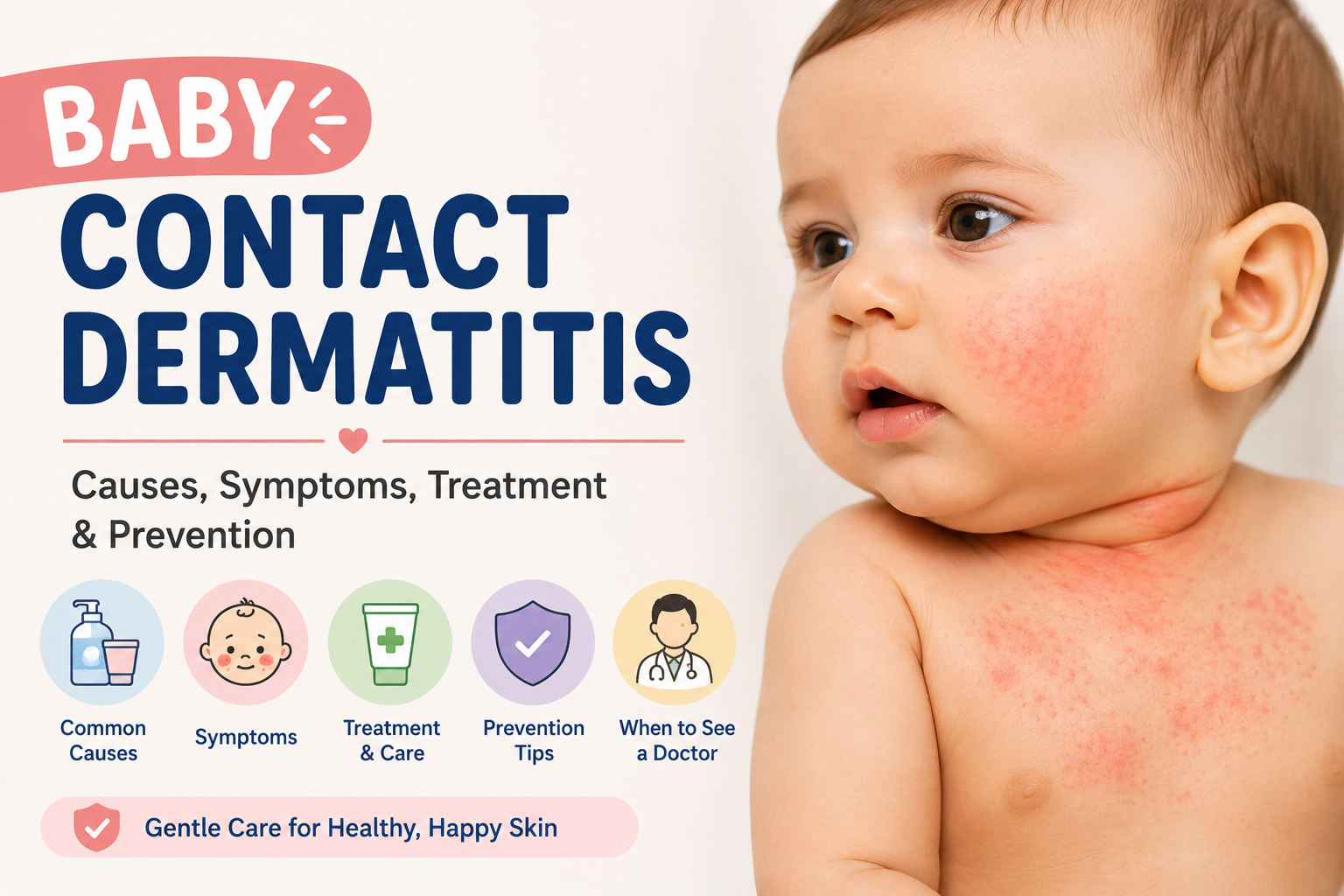
A baby contact dermatitis is a common skin condition that occurs when a baby’s delicate skin comes into contact with an irritant or allergen, causing redness, itching, dryness, or inflammation. Because an infant’s skin barrier is thinner and more sensitive than an adult’s, even mild substances can trigger skin irritation.
Contact dermatitis is not contagious, and in most cases, it improves once the triggering substance is identified and avoided. However, persistent or severe cases may require medical treatment.
This comprehensive guide explains the causes, symptoms, diagnosis, treatment, prevention, and when parents should consult a pediatrician.
What Is Baby Contact Dermatitis?
Baby contact dermatitis is an inflammatory skin reaction that develops after the skin comes into contact with an irritating substance or an allergen.
Unlike eczema, which often has a genetic component, contact dermatitis occurs because of direct exposure to something that irritates or triggers an allergic reaction in the skin.
The rash usually appears where the skin touched the trigger.
Common locations include:
- Face
- Neck
- Hands
- Arms
- Belly
- Back
- Legs
- Diaper area
- Feet
Types of Baby Contact Dermatitis
There are two main types of contact dermatitis.
1. Irritant Contact Dermatitis
This is the most common type in babies.
It develops when substances damage the skin barrier.
Common irritants include:
- Saliva
- Urine
- Stool
- Soap
- Shampoo
- Bubble baths
- Detergents
- Sweat
- Friction
- Rough clothing
2. Allergic Contact Dermatitis
This occurs when the immune system reacts to a specific allergen.
Common allergens include:
- Fragrances
- Nickel
- Latex
- Preservatives
- Certain skincare products
- Adhesives
- Plant extracts
Unlike irritant dermatitis, allergic contact dermatitis may appear 24–48 hours after exposure.
What Causes Baby Contact Dermatitis?
Many everyday products can trigger contact dermatitis.
Baby Wipes
Some wipes contain:
- Alcohol
- Fragrance
- Preservatives
These ingredients may irritate sensitive skin.
Soaps and Shampoos
Strong cleansers remove the skin’s natural oils, causing dryness and irritation.
Laundry Detergents
Fragrances, dyes, and harsh chemicals left on clothing may trigger skin reactions.
Saliva (Drool)
Drooling commonly causes irritation around:
- Mouth
- Chin
- Neck
Parents can also read our Baby Neck Rash guide.
Diapers
Prolonged exposure to moisture and friction may worsen skin irritation.
Read our Baby Diaper Rash guide.
Tight Clothing
Rough fabrics and tight elastic waistbands increase friction and sweating.
Heat and Sweat
Sweat trapped under clothing may irritate delicate skin.
Read our Baby Heat Rash article.
Metals
Buttons, snaps, jewelry, or zippers containing nickel may cause allergic reactions.
Lotions and Creams
Products containing:
- Artificial fragrance
- Essential oils
- Alcohol
- Harsh preservatives
may trigger allergic dermatitis.
Symptoms of Baby Contact Dermatitis
Symptoms usually appear where the skin touched the irritant.
Common symptoms include:
- Red rash
- Dry skin
- Itching
- Burning sensation
- Swelling
- Small bumps
- Blisters
- Cracked skin
- Flaking
- Peeling
- Oozing (in severe cases)
- Tender skin
Babies may also become:
- Irritable
- Fussy
- Unable to sleep comfortably
Baby Contact Dermatitis vs Baby Eczema
| Contact Dermatitis | Baby Eczema |
|---|---|
| Triggered by skin contact | Chronic skin condition |
| Appears only where exposed | Often affects cheeks, elbows, knees |
| Improves after removing trigger | Requires long-term skincare |
| Can occur suddenly | Usually develops gradually |
| Usually localized | May become widespread |
Parents should also read our Baby Eczema guide.
Common Triggers by Age
| Age | Common Trigger |
|---|---|
| Newborn | Baby wipes, soaps |
| 1–3 months | Drool, detergents |
| 4–6 months | Saliva, lotions |
| 6–12 months | Food residue, grass, crawling surfaces |
| Toddlers | Plants, metals, sunscreen |
How Is Baby Contact Dermatitis Diagnosed?
Doctors usually diagnose contact dermatitis by:
- Examining the rash
- Reviewing recent skincare products
- Asking about soaps and detergents
- Reviewing feeding history
- Discussing environmental exposures
Rarely, persistent allergic dermatitis may require:
- Patch testing
- Allergy evaluation
According to the American Academy of Dermatology (AAD), contact dermatitis is primarily diagnosed through medical history and physical examination.
Risk Factors
Babies are more likely to develop contact dermatitis if they:
- Have eczema.
- Have sensitive skin.
- Sweat frequently.
- Have allergies.
- Live in hot climates.
- Wear tight clothing.
- Use fragranced skincare products.
- Have a family history of eczema or allergies.
Is Contact Dermatitis Contagious?
No.
Baby contact dermatitis cannot spread from one child to another because it is not caused by bacteria or viruses.
Can Contact Dermatitis Go Away on Its Own?
Yes.
Most mild cases improve within 3–7 days after the irritant or allergen is removed and the skin is cared for properly.
Persistent or worsening symptoms should be evaluated by a healthcare provider.
Treatment for Baby Contact Dermatitis
Treatment for baby contact dermatitis focuses on identifying and removing the trigger, protecting the skin barrier, and reducing inflammation. Most mild cases improve within a few days once the irritant or allergen is avoided, while more severe cases may require medical treatment.
According to the American Academy of Dermatology (AAD), avoiding the triggering substance is the most effective way to manage contact dermatitis.
How Is Baby Contact Dermatitis Treated?
1. Remove the Trigger
The first and most important step is to stop using the product or material causing the rash.
Common triggers include:
- Baby wipes
- Soaps
- Shampoos
- Laundry detergents
- Fragrances
- Lotions
- Rough fabrics
- Nickel-containing accessories
Once the trigger is removed, the skin often begins to heal naturally.
2. Clean the Skin Gently
Wash the affected area with:
- Lukewarm water
- Mild fragrance-free baby cleanser
Avoid scrubbing the rash, as this can worsen irritation.
3. Moisturize Frequently
Keeping the skin moisturized helps restore the natural skin barrier.
Use:
- Fragrance-free moisturizer
- Hypoallergenic baby cream
- Ceramide-based moisturizer
For babies with dry skin, read our Baby Dry Skin guide.
4. Prescription Creams
For moderate or severe inflammation, your pediatrician may prescribe:
- Mild topical corticosteroids
- Anti-inflammatory creams
Use these medications only as directed by a healthcare professional.
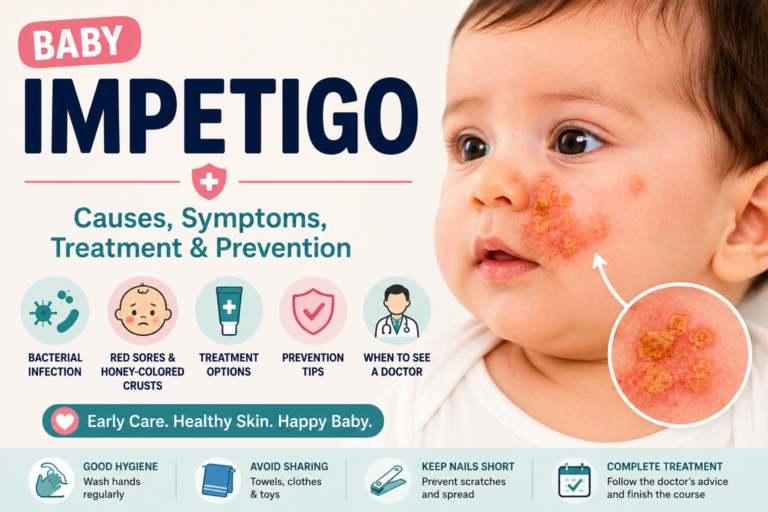
5. Treat Secondary Infection
Excessive scratching may allow bacteria to enter the skin.
If infection develops, treatment may include:
- Topical antibiotic ointment
- Oral antibiotics (if needed)
6. Antihistamines
If itching is severe, your pediatrician may recommend an antihistamine.
Never give allergy medication without medical advice.
Home Care Tips
Simple home care can speed healing and reduce discomfort.
Dress Your Baby in Soft Cotton Clothing
Choose:
- Loose-fitting clothes
- Breathable cotton fabrics
- Tag-free clothing whenever possible
Keep the Skin Cool
Heat and sweating can make the rash worse.
Parents should:
- Avoid overheating
- Use lightweight clothing
- Maintain a comfortable room temperature
Moisturize After Every Bath
Apply moisturizer within three minutes of bathing to lock in moisture.
Wash New Clothes Before Use
New clothes may contain chemicals or dyes that can irritate sensitive skin.
Trim Your Baby’s Nails
Short nails help prevent skin damage from scratching.
Avoid Frequent Bathing
One short bath each day is usually sufficient.
Long baths may dry out the skin.
What Should Parents Avoid?
Avoid:
- Fragranced soaps
- Alcohol-based baby wipes
- Bubble baths
- Essential oils
- Talcum powder
- Adult skincare products
- Tight clothing
- Wool fabrics
- Harsh detergents
- Scratching the rash
Can Baby Contact Dermatitis Be Prevented?
Yes. Many cases can be prevented by protecting your baby’s delicate skin.
Parents should:
- Use fragrance-free baby skincare products.
- Choose hypoallergenic laundry detergents.
- Dress babies in breathable cotton clothing.
- Change wet clothes promptly.
- Keep drool and moisture away from skin folds.
- Moisturize daily.
- Avoid harsh soaps.
- Introduce one new skincare product at a time.
The American Academy of Pediatrics (AAP) recommends using gentle, fragrance-free skincare products for babies with sensitive skin.
Possible Complications
Without proper care, contact dermatitis may lead to:
- Secondary bacterial infection
- Persistent itching
- Skin cracking
- Bleeding
- Thickened skin
- Sleep disturbance
- Skin discoloration after healing
Baby Contact Dermatitis vs Baby Skin Allergy
| Contact Dermatitis | Baby Skin Allergy |
|---|---|
| Caused by direct skin contact | Caused by an immune response to an allergen |
| Usually limited to the exposed area | May affect multiple areas of the body |
| Improves after removing the trigger | May recur after re-exposure to the allergen |
| Can be irritant or allergic | Includes food, medication, and environmental allergies |
| Often triggered by soaps or detergents | May be triggered by foods, pollen, pets, or medications |
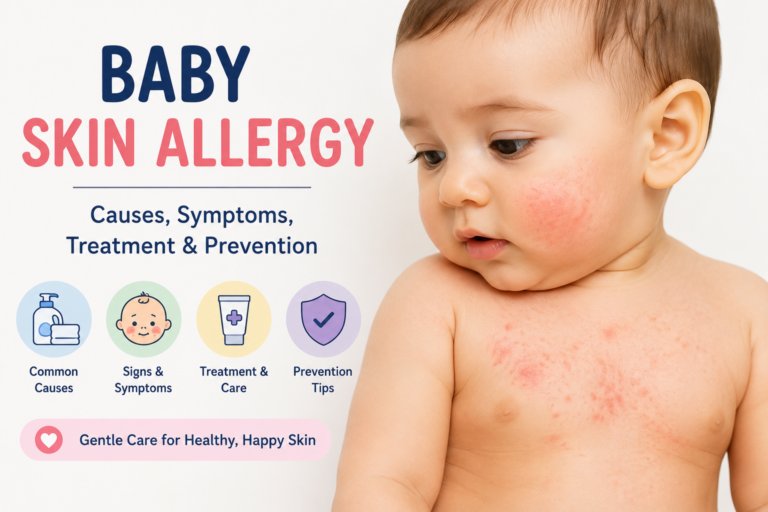
For a broader overview, read our Baby Skin Allergy guide.
When Should You See a Doctor?
Contact your pediatrician if:
- The rash lasts longer than 7 days.
- The rash spreads rapidly.
- Blisters develop.
- The skin oozes pus or yellow discharge.
- Your baby develops a fever.
- The rash becomes painful.
- Your baby refuses to feed or sleep.
- Home care does not improve the rash.
- You suspect an allergic reaction.
According to the NHS, babies with severe, persistent, or infected skin rashes should be evaluated by a healthcare professional.
Conclusion
Baby contact dermatitis is a common but manageable skin condition caused by direct contact with irritants or allergens such as soaps, detergents, saliva, baby wipes, fragrances, and certain fabrics. Most cases improve quickly after the trigger is removed and the skin is cared for with gentle cleansing and regular moisturizing.
Parents should also learn to distinguish contact dermatitis from Baby Eczema, Baby Skin Allergy, Baby Heat Rash, Baby Diaper Rash, Baby Neck Rash, and Baby Dry Skin, as each condition has different causes and treatment approaches. Early identification and proper skincare can help prevent discomfort and keep your baby’s skin healthy.
Frequently Asked Questions (FAQs)
What causes baby contact dermatitis?
Common causes include soaps, detergents, baby wipes, saliva, sweat, rough fabrics, fragrances, and certain metals.
Is contact dermatitis common in babies?
Yes. It is one of the most common skin conditions in infants due to their sensitive skin.
Is baby contact dermatitis contagious?
No. Contact dermatitis cannot spread from one child to another.
How long does contact dermatitis last?
Most mild cases improve within 3–7 days after the trigger is removed.
Can baby wipes cause contact dermatitis?
Yes. Wipes containing fragrances, alcohol, or preservatives may irritate sensitive skin.
Can laundry detergent trigger a rash?
Yes. Fragrances and chemicals left on clothing can cause skin irritation in some babies.
Can drooling cause contact dermatitis?
Yes. Saliva can irritate the skin around the mouth, chin, and neck.
Can contact dermatitis become infected?
Yes. Excessive scratching may allow bacteria to enter the skin.
Should I stop using lotion?
Only if you suspect it is causing the reaction. Use fragrance-free, hypoallergenic moisturizers instead.
Is eczema the same as contact dermatitis?
No. Eczema is a chronic inflammatory skin condition, while contact dermatitis is triggered by direct exposure to an irritant or allergen.
Can babies outgrow contact dermatitis?
Many babies experience fewer episodes as their skin barrier matures, especially when triggers are avoided.
Can I use coconut oil?
Consult your pediatrician before applying natural oils, especially if the rash is severe or infected.
How can I prevent contact dermatitis?
Use gentle skincare products, fragrance-free detergents, breathable cotton clothing, and moisturize your baby’s skin regularly.
Does contact dermatitis leave scars?
Most cases heal completely without scarring when treated early.
When is contact dermatitis an emergency?
Seek immediate medical care if your baby develops facial swelling, difficulty breathing, widespread blistering, or signs of a severe allergic reaction.