
Medical Note: If your newborn develops blisters around the mouth, eyes, or skin, or has a fever, poor feeding, or unusual sleepiness, seek immediate medical attention. Neonatal herpes is a medical emergency.
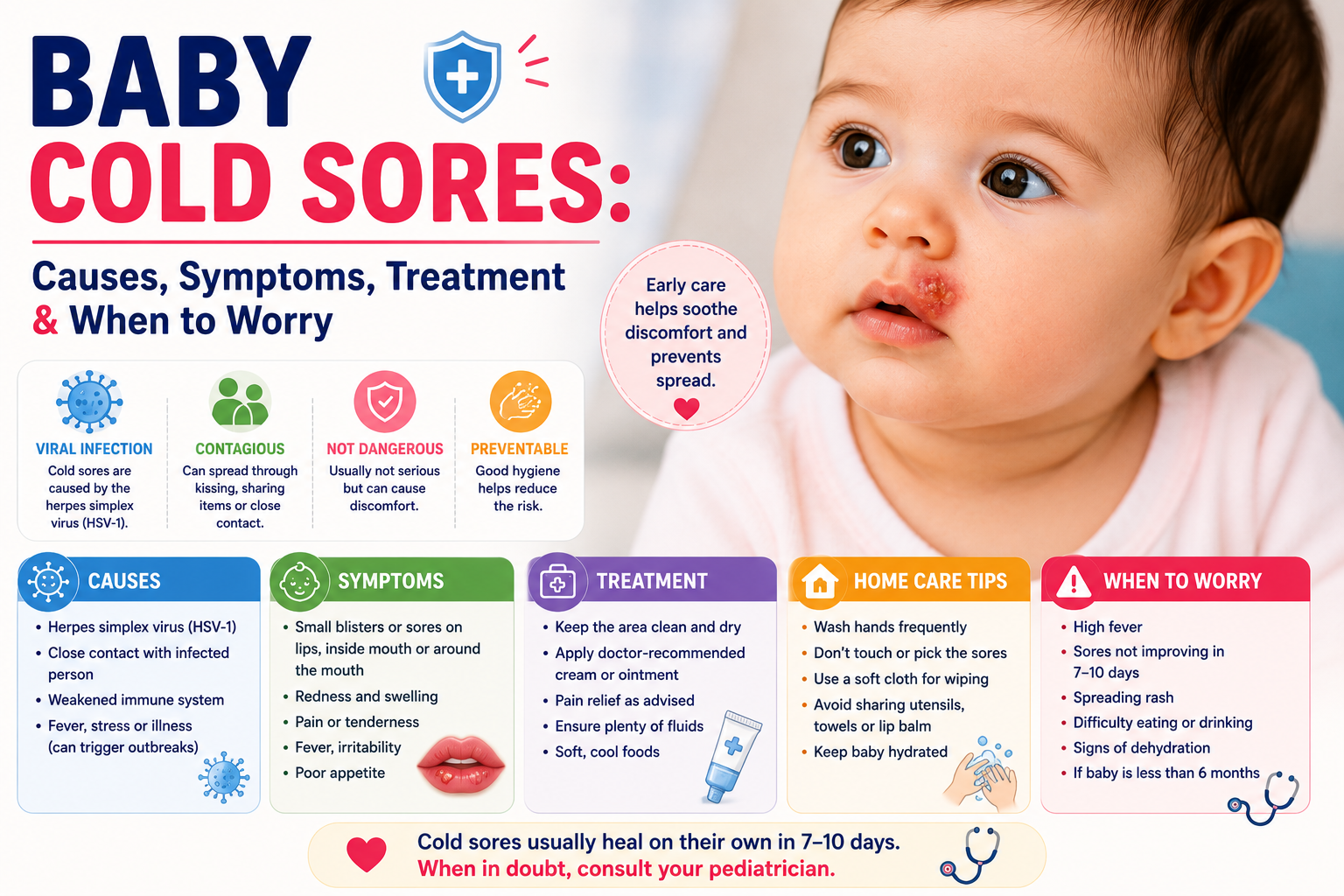
Noticing small blisters or sores around your baby’s lips or mouth can be concerning. While many mouth rashes are harmless, cold sores are caused by the Herpes Simplex Virus Type 1 (HSV-1) and should never be ignored—especially in newborns and young infants.
In older babies, cold sores are usually mild and heal within a couple of weeks. However, in newborn babies (under 4 weeks old), HSV infection can become serious because their immune system is not yet fully developed. Early diagnosis and treatment are essential to prevent complications.
This guide explains everything parents need to know about baby cold sores, including causes, symptoms, treatment, prevention, complications, and when to seek urgent medical care.
What Are Baby Cold Sores?
Baby cold sores are small, fluid-filled blisters caused by the Herpes Simplex Virus Type 1 (HSV-1). These blisters usually appear around the:
- Lips
- Mouth
- Nose
- Chin
- Face
After a few days, the blisters burst, forming crusts before healing.
Once a person is infected with HSV-1, the virus remains inactive in the body and may reactivate later in life, causing recurrent cold sores.
Are Cold Sores Dangerous for Babies?
It depends on your baby’s age.
Newborns (0–4 Weeks)
Cold sores can become a serious, life-threatening infection because the virus may spread to the:
- Brain
- Liver
- Lungs
- Eyes
- Bloodstream
Immediate hospitalization is often required.
Older Babies (Over 6 Months)
In healthy older infants, cold sores are usually mild and improve with supportive care, although they should still be assessed by a healthcare professional.
What Causes Baby Cold Sores?
Cold sores are caused by the Herpes Simplex Virus Type 1 (HSV-1).
The virus spreads through direct contact with infected saliva or skin.
Common sources include:
- Kissing a baby while having a cold sore
- Sharing spoons or cups
- Sharing towels
- Touching a cold sore and then touching the baby
- Close skin-to-skin contact
How Do Babies Catch Cold Sores?
Babies may become infected through:
Kissing
A kiss from someone with an active cold sore is one of the most common ways HSV spreads.
Sharing Personal Items
Avoid sharing:
- Cups
- Bottles
- Spoons
- Pacifiers
- Towels
Touching Active Blisters
If someone touches an active cold sore without washing their hands, they may transfer the virus.
During Birth (Rare)
Some newborns develop herpes during delivery if the mother has an active genital herpes infection.
Risk Factors
Babies are at higher risk if they:
- Are younger than one month
- Have premature birth
- Have weakened immunity
- Are exposed to someone with an active cold sore
- Have eczema or broken skin
- Live with family members who frequently develop cold sores
Symptoms of Baby Cold Sores
Symptoms usually appear 2–12 days after exposure.
Common symptoms include:
- Small fluid-filled blisters
- Redness around the mouth
- Painful sores
- Crusting after blisters burst
- Drooling
- Fussiness
- Poor feeding
- Mild fever
- Swollen gums
- Swollen lymph nodes
In newborns, symptoms may include only poor feeding or sleepiness before blisters appear.
Stages of a Cold Sore
| Stage | What Happens |
|---|---|
| Tingling (older children) | Burning or tingling before blister formation |
| Blister Stage | Small fluid-filled blisters appear |
| Ulcer Stage | Blisters burst, leaving shallow sores |
| Crusting Stage | Yellow or brown crust forms |
| Healing Stage | Skin heals within 1–2 weeks |
Babies may not be able to communicate the tingling stage, so parents usually first notice the blisters.
What Do Baby Cold Sores Look Like?
Cold sores usually appear as:
- Small clustered blisters
- Clear fluid-filled bumps
- Red skin around the blisters
- Yellowish crusts after bursting
- Painful sores around the lips or mouth
Unlike Baby Impetigo, cold sores typically begin as grouped blisters before crusting.
Are Baby Cold Sores Contagious?
Yes.
Cold sores are highly contagious, especially while blisters are present or leaking fluid.
The virus spreads through:
- Saliva
- Skin-to-skin contact
- Kissing
- Shared utensils
- Shared towels
Babies should avoid contact with anyone who has an active cold sore.
How Are Baby Cold Sores Diagnosed?
A pediatrician usually diagnoses cold sores through:
- Physical examination
- Medical history
- Appearance of the blisters
In newborns or severe cases, additional tests may include:
- HSV PCR testing
- Swab from the blister
- Blood tests
- Lumbar puncture (if brain infection is suspected)
- Eye examination
Treatment for Baby Cold Sores
Treatment depends on your baby’s age, overall health, and the severity of the infection. While many older babies recover with supportive care, newborns and very young infants with suspected HSV infection require immediate medical evaluation.
Never apply over-the-counter cold sore creams or antiviral medications without consulting your pediatrician.
Antiviral Medicines
If your doctor confirms a herpes simplex virus (HSV) infection, they may prescribe an antiviral medicine such as acyclovir.
Treatment may include:
- Oral antiviral medicine for selected older infants
- Intravenous (IV) acyclovir for newborns or severe infections
- Hospital admission for babies with widespread infection or signs of illness
- Pain relief medicines if appropriate
Early antiviral treatment significantly reduces the risk of serious complications, particularly in newborns.
Home Care Tips
Home care helps keep your baby comfortable while the sores heal.
Continue Feeding
Offer breast milk or formula regularly.
If mouth sores make feeding painful:
- Offer smaller, more frequent feeds.
- Feed slowly and gently.
- Consult your pediatrician if your baby refuses feeds.
Keep the Area Clean
Gently clean the affected skin with lukewarm water.
Pat dry without rubbing.
Prevent Touching the Sores
Keeping your baby’s fingernails trimmed reduces scratching and lowers the risk of bacterial infection.
Maintain Good Hydration
Watch for signs of dehydration such as:
- Fewer wet diapers
- Dry mouth
- Sunken eyes
- Excessive sleepiness
Seek medical advice if dehydration is suspected.
Give Medicines Exactly as Prescribed
Complete the full course of antiviral medication if prescribed.
Do not stop treatment early, even if the sores begin healing.
What Should You Avoid?
Avoid:
- Kissing your baby while anyone has an active cold sore
- Applying toothpaste or home remedies
- Picking or scratching the blisters
- Sharing towels, bottles, spoons, or pacifiers
- Using steroid creams unless specifically prescribed
- Delaying medical care in newborns
How Long Do Baby Cold Sores Last?
- Blisters usually appear for 2–5 days
- Crusting begins within about 1 week
- Complete healing generally occurs within 10–14 days
Newborns may require longer treatment and close medical monitoring.
Can Baby Cold Sores Come Back?
Yes.
Once infected with HSV-1, the virus remains inactive (dormant) in the body and may reactivate later in life.
Triggers that may contribute to recurrence include:
- Illness
- Fever
- Stress
- Sun exposure (later in childhood)
- Reduced immunity
Not every child experiences recurrent cold sores.
How to Prevent Baby Cold Sores
Do Not Kiss a Baby if You Have a Cold Sore
Anyone with an active cold sore should avoid kissing babies, especially newborns.
Wash Hands Frequently
Wash hands before touching your baby, particularly after touching your face or lips.
Avoid Sharing Personal Items
Do not share:
- Cups
- Bottles
- Pacifiers
- Towels
- Washcloths
- Spoons
Cover Active Cold Sores
If a caregiver has a cold sore, keeping it covered where practical and following good hand hygiene can reduce the chance of spreading the virus.
Protect Babies with Eczema
Babies with Baby Eczema have a weaker skin barrier and may be more vulnerable to widespread HSV infection (eczema herpeticum). Managing eczema well helps reduce this risk.
Possible Complications
Although uncommon in older healthy babies, complications can include:
- Dehydration due to painful feeding
- Secondary bacterial skin infection
- Eye infection (herpes keratitis)
- Eczema herpeticum
- Encephalitis (brain infection)
- Widespread HSV infection in newborns
- Hospitalization
Prompt treatment greatly lowers the risk of severe complications.
Baby Cold Sores vs Impetigo
| Baby Cold Sores | Baby Impetigo |
|---|---|
| Caused by HSV-1 virus | Caused by bacteria |
| Starts as fluid-filled blisters | Starts as sores or blisters that develop honey-colored crusts |
| Usually around the lips or mouth | Common around the nose, mouth, and exposed skin |
| Often painful | Often itchy with mild discomfort |
| Antiviral treatment may be needed | Antibiotics are usually used |
Baby Cold Sores vs Hand, Foot and Mouth Disease
| Baby Cold Sores | Hand, Foot and Mouth Disease |
|---|---|
| Usually around the lips | Mouth sores plus rash on hands and feet |
| HSV-1 virus | Enteroviruses (commonly Coxsackievirus) |
| Localized blisters | Widespread rash and mouth ulcers |
| May recur | Usually does not recur in the same way |
| Often no body rash | Rash commonly appears on hands, feet, and sometimes buttocks |
When Should You See a Doctor?
Contact your pediatrician if your baby:
- Is younger than 3 months with blisters or fever
- Refuses feeds
- Has worsening mouth sores
- Develops eye redness or swelling
- Has sores that continue spreading
- Has repeated cold sore outbreaks
- Appears unusually sleepy
- Has signs of dehydration
- Has eczema with rapidly spreading blisters
Early medical assessment is especially important for newborns and young infants.
Emergency Warning Signs
Seek emergency medical care immediately if your baby:
- Is a newborn with blisters or fever
- Has difficulty breathing
- Develops seizures
- Is difficult to wake
- Stops feeding completely
- Has blue lips or skin
- Has eye swelling or discharge with blisters
- Has rapidly spreading skin lesions
- Appears seriously ill
These symptoms require immediate evaluation.
Conclusion
Baby cold sores are caused by the herpes simplex virus (HSV-1) and can range from a mild infection in older infants to a serious medical emergency in newborns. Early recognition of fluid-filled blisters around the lips or mouth, prompt medical assessment, and appropriate antiviral treatment when indicated are key to preventing complications.
Parents can lower the risk of infection by avoiding direct contact with active cold sores, practicing good hand hygiene, and not sharing personal items. If your baby is very young, has fever, poor feeding, eye involvement, or widespread blisters, seek medical care immediately. Early treatment offers the best chance of a full recovery.
Frequently Asked Questions (FAQs)
What causes cold sores in babies?
Cold sores are caused by the Herpes Simplex Virus Type 1 (HSV-1).
Are baby cold sores contagious?
Yes. They spread easily through saliva, skin-to-skin contact, kissing, and shared personal items.
Can I kiss my baby if I have a cold sore?
No. Avoid kissing your baby until the cold sore has completely healed.
How long do baby cold sores last?
Most cold sores heal within 10–14 days in otherwise healthy older babies.
Do all babies with cold sores need antiviral medicine?
No. Treatment depends on the baby’s age, symptoms, and severity. Newborns usually require urgent medical evaluation.
Can cold sores return?
Yes. HSV remains dormant in the body and may reactivate later.
Are cold sores dangerous for newborns?
Yes. HSV infection in newborns can become life-threatening and requires emergency medical care.
Can breastfeeding continue?
In many cases, yes. However, avoid direct contact between active lesions and the baby, and follow your healthcare provider’s advice. If lesions are present on the breast, seek medical guidance before breastfeeding from the affected side.
Can eczema increase the risk of complications?
Yes. Babies with eczema may develop eczema herpeticum, which requires urgent medical treatment.
Can cold sores spread to the eyes?
Yes. HSV can infect the eyes and may affect vision if not treated promptly.
Can cold sores cause fever?
Yes. Some babies develop mild fever, especially during the first HSV infection.
Can cold sores be prevented?
Risk can be reduced through good hand hygiene, avoiding contact with active cold sores, and not sharing personal items.
Is a cold sore the same as impetigo?
No. Cold sores are caused by a virus, while impetigo is a bacterial skin infection.
When should I take my baby to the emergency room?
Go immediately if your newborn has blisters, fever, poor feeding, difficulty breathing, seizures, unusual sleepiness, or rapidly spreading sores.
Will my baby have cold sores forever?
The virus remains in the body after infection, but many children have infrequent or no future outbreaks.