
Medical Note: This article is for educational purposes only and should not replace professional medical advice. If your baby’s rash spreads rapidly, becomes painful, is accompanied by fever, or does not improve with treatment, consult your pediatrician or dermatologist.
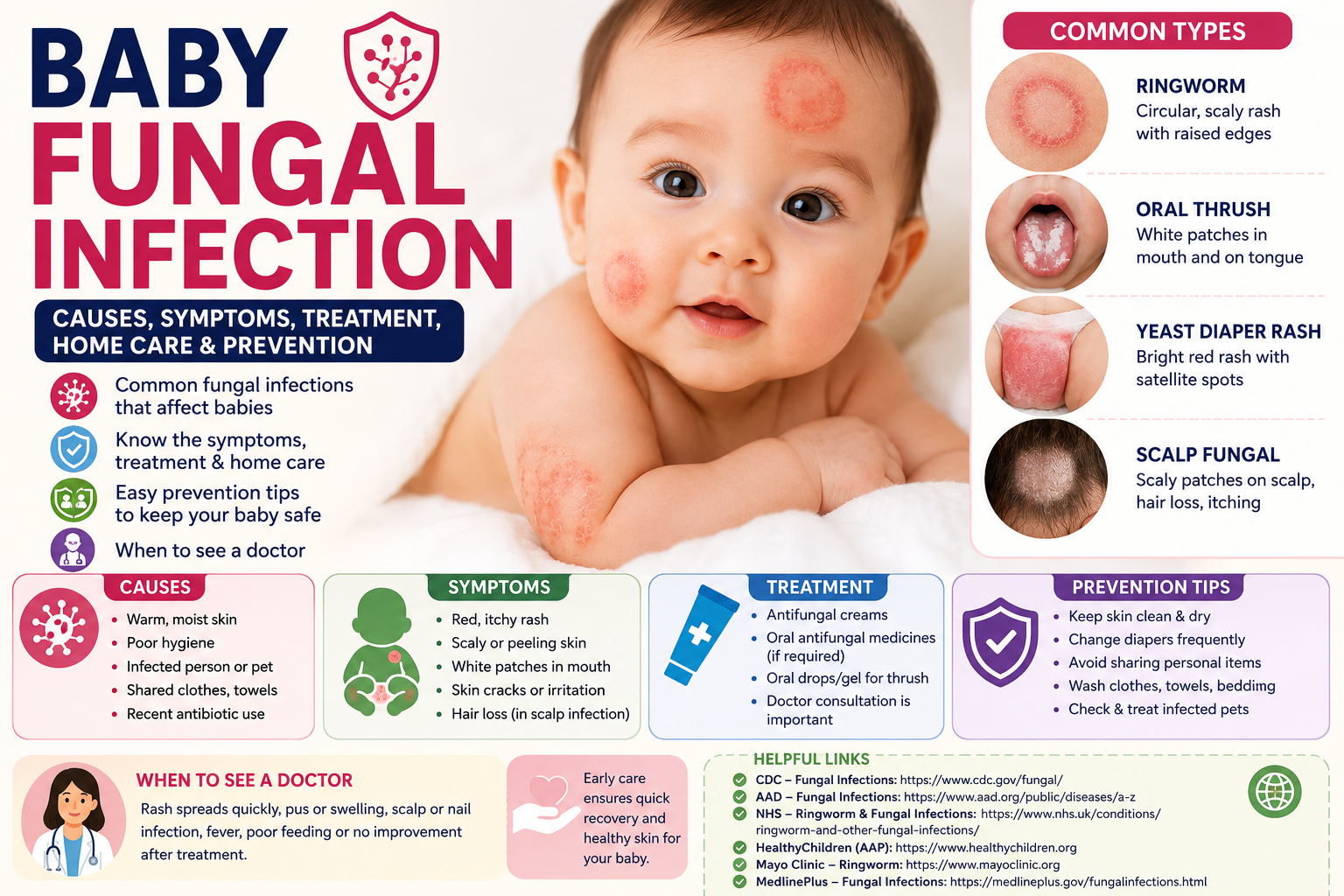
Fungal infections are common in babies because their skin is delicate, their immune system is still developing, and warm, moist areas of the body provide an ideal environment for fungi to grow. A baby fungal infection can affect the skin, scalp, mouth, diaper area, or nails and usually appears as red, itchy, scaly, or white patches.
Most fungal infections are mild and respond well to antifungal treatment. However, without proper care, they can spread to other parts of the body or to other family members.
This guide explains the causes, symptoms, common types, treatment options, home care, prevention strategies, and warning signs parents should know.
What Is a Baby Fungal Infection?
A fungal infection is caused by microscopic fungi that grow on the skin, scalp, nails, or inside the mouth. These fungi thrive in warm, moist environments and feed on keratin, a protein found in skin, hair, and nails.
Unlike bacterial or viral infections, fungal infections usually require antifungal medicines rather than antibiotics.
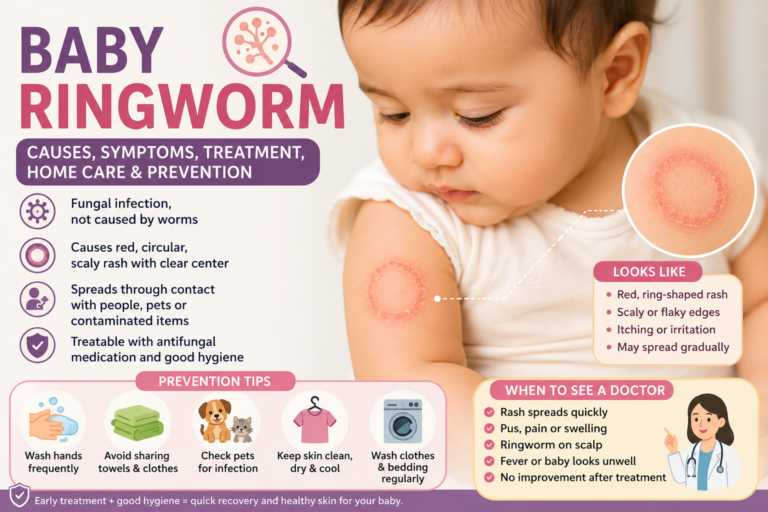
One of the most common fungal skin infections is Baby Ringworm, which causes a circular, scaly rash with a raised border.
Are Fungal Infections Common in Babies?
Yes.
Babies are more likely to develop fungal infections because:
- Their skin barrier is immature.
- Skin folds trap moisture.
- Diaper areas remain warm and humid.
- Their immune system is still developing.
Most fungal infections are mild when diagnosed and treated early.
Common Types of Baby Fungal Infections
1. Ringworm (Tinea Corporis)
Ringworm causes:
- Circular rash
- Raised scaly edges
- Mild itching
- Expanding patches
Read our complete guide on Baby Ringworm to understand its causes, treatment, and prevention.
2. Oral Thrush
Oral thrush is a yeast infection caused by Candida.
Symptoms include:
- White patches on the tongue
- White patches inside the cheeks
- Feeding discomfort
If your baby has persistent white patches that do not wipe away easily, learn more in our article on White Baby Tongue.
3. Yeast Diaper Rash
Candida can also cause diaper rash.
Typical signs include:
- Bright red rash
- Small red satellite spots
- Rash inside skin folds
Unlike simple irritation, yeast diaper rash usually requires antifungal treatment.
4. Scalp Fungal Infection
Scalp infections may cause:
- Scaly patches
- Hair loss
- Broken hairs
- Itching
Medical treatment is usually necessary.
What Causes Baby Fungal Infections?
Common causes include:
Warm, Moist Skin
Fungi grow best in warm, damp areas such as:
- Diaper region
- Neck folds
- Armpits
- Groin
Skin-to-Skin Contact
Babies may acquire fungal infections through direct contact with infected individuals.
Infected Pets
Cats and dogs can carry fungi that cause ringworm.
Shared Personal Items
Fungal infections can spread through:
- Towels
- Clothing
- Bedding
- Hairbrushes
Antibiotic Use
Recent antibiotic treatment may increase the risk of yeast infections by disrupting the natural balance of microorganisms.
Weakened Skin Barrier
Babies with Baby Eczema or Baby Dry Skin may have a compromised skin barrier, making fungal infections more likely.
Symptoms of Baby Fungal Infection
Symptoms vary depending on the type of infection but commonly include:
- Red rash
- Circular skin patches
- White patches inside the mouth
- Itching
- Peeling skin
- Scaling
- Skin cracks
- Small blisters
- Burning sensation
- Mild discomfort
If your baby develops Baby Peeling Skin without redness or itching, the cause may be normal newborn skin shedding rather than a fungal infection.
Baby Fungal Infection vs Other Skin Conditions
| Condition | Key Features |
|---|---|
| Fungal Infection | Red, scaly, itchy patches |
| Baby Ringworm | Circular rash with raised border |
| Baby Eczema | Dry itchy patches |
| Baby Heat Rash | Tiny red bumps from blocked sweat glands |
| Baby Mosquito Bites | Raised itchy bumps with bite marks |
| Baby Hives | Raised itchy welts caused by allergic reactions |
How Is Baby Fungal Infection Diagnosed?
Doctors may diagnose fungal infections by:
- Physical examination
- Medical history
- Skin scraping (if needed)
- Fungal culture in selected cases
According to the American Academy of Dermatology (AAD), many fungal skin infections can be diagnosed based on their characteristic appearance, while persistent or unusual cases may require laboratory testing.
Risk Factors
Your baby is more likely to develop fungal infections if they:
- Live in hot, humid climates
- Wear wet diapers for long periods
- Sweat frequently
- Have eczema
- Recently took antibiotics
- Have close contact with infected people or pets
Can Baby Fungal Infections Heal on Their Own?
Some mild yeast infections may improve with better hygiene, but most fungal infections require antifungal treatment. Delaying treatment may allow the infection to spread.
Treatment for Baby Fungal Infection
Most baby fungal infections require antifungal medication along with proper hygiene and skincare. The exact treatment depends on the type and location of the infection.
According to the American Academy of Dermatology (AAD), early treatment helps prevent fungal infections from spreading and reduces the risk of recurrence.
How Is Baby Fungal Infection Treated?
1. Antifungal Creams
For skin fungal infections, your pediatrician may recommend antifungal creams containing:
- Clotrimazole
- Miconazole
- Ketoconazole
- Terbinafine (age-appropriate use)
Continue treatment for the full prescribed duration, even if the rash appears to improve.
2. Oral Antifungal Medicines
If the fungal infection affects the:
- Scalp
- Nails
- Multiple body areas
- Severe or persistent infections
your doctor may prescribe oral antifungal medication.
The NHS explains that scalp fungal infections usually require oral medicines because topical creams alone are often ineffective.
https://www.nhs.uk/conditions/ringworm-and-other-fungal-infections/
3. Oral Thrush Treatment
If your baby develops oral thrush, your pediatrician may prescribe antifungal oral drops or gel.
If your baby has persistent white patches inside the mouth, also read our guide on White Baby Tongue to understand how milk residue differs from oral thrush.
4. Keep the Skin Clean and Dry
Clean the affected area using:
- Mild baby cleanser
- Lukewarm water
Gently pat the skin dry.
Avoid leaving moisture trapped inside:
- Neck folds
- Armpits
- Groin
- Diaper area
Home Care for Baby Fungal Infection
Besides medication, these measures help promote healing.
Wash Hands Frequently
Wash your hands before and after touching the infected area.
The Centers for Disease Control and Prevention (CDC) recommends good hand hygiene to reduce the spread of fungal infections.
Change Diapers Frequently
If the fungal infection affects the diaper area:
- Change diapers promptly.
- Allow diaper-free time whenever possible.
- Keep the area dry before putting on a fresh diaper.
Wash Clothes and Bedding
Regularly wash:
- Towels
- Baby clothes
- Bedsheets
- Blankets
Avoid sharing these items with siblings.
Dress Your Baby in Breathable Clothing
Loose cotton clothing helps reduce sweating and allows the skin to stay dry.
Check Household Pets
Some fungal infections, particularly Baby Ringworm, can spread from infected cats or dogs.
If your pet has patches of hair loss or scaly skin, consult a veterinarian.
What Parents Should Avoid
Do not:
- Apply steroid creams without medical advice.
- Stop antifungal treatment too early.
- Scratch or rub the rash.
- Share towels or clothing.
- Apply toothpaste or essential oils.
- Keep wet diapers on for long periods.
Can Baby Fungal Infection Be Prevented?
Yes.
Parents can reduce the risk by:
- Washing hands regularly.
- Keeping skin folds dry.
- Changing wet diapers promptly.
- Washing baby clothes frequently.
- Avoiding shared towels.
- Treating infected pets.
- Cleaning toys regularly.
HealthyChildren.org (American Academy of Pediatrics) recommends maintaining good hygiene and seeking medical care if skin infections worsen or fail to improve.
Possible Complications
Without treatment, fungal infections may:
- Spread to other body areas
- Infect other family members
- Cause secondary bacterial infection
- Lead to scalp hair loss
- Become recurrent
Baby Fungal Infection vs Baby Ringworm
| Baby Fungal Infection | Baby Ringworm |
|---|---|
| Includes many fungal infections | Specific fungal infection (Tinea corporis) |
| May affect mouth, skin, scalp, nails | Usually affects the skin |
| Can be caused by Candida or dermatophytes | Caused by dermatophyte fungi |
| Treatment varies | Usually treated with antifungal creams |
If your baby has a circular rash with a raised border, read our detailed article on Baby Ringworm for diagnosis and treatment guidance.
When Should You See a Doctor?
Consult your pediatrician if:
- Your baby is younger than 3 months.
- The rash spreads quickly.
- The infection affects the scalp or nails.
- Pus develops.
- Fever occurs.
- Your baby refuses feeds.
- The rash does not improve after 2 weeks of treatment.
- Multiple fungal infections appear simultaneously.
According to the Mayo Clinic, persistent or worsening fungal infections should always be evaluated by a healthcare professional.
Can Baby Fungal Infections Spread?
Yes.
Many fungal infections are contagious and spread through:
- Skin-to-skin contact
- Shared towels
- Shared clothing
- Bedding
- Hairbrushes
- Pets
The MedlinePlus medical library recommends avoiding shared personal items until treatment has started.
Conclusion
Baby fungal infections are common and usually respond well to early diagnosis, antifungal treatment, and good hygiene. Whether the infection affects the skin, mouth, scalp, or diaper area, prompt treatment helps prevent complications and reduces the risk of spreading the infection to other family members.
Parents should also learn to distinguish fungal infections from other common skin conditions such as Baby Ringworm, Baby Eczema, Baby Heat Rash, Baby Dry Skin, and Baby Mosquito Bites, as each condition requires a different approach to treatment.
Frequently Asked Questions (FAQs)
Is a baby fungal infection contagious?
Yes. Many fungal infections spread through direct contact with infected people, pets, or contaminated objects.
What causes fungal infections in babies?
Warm, moist skin, fungal exposure, recent antibiotic use, and an immature immune system are common causes.
Can fungal infections heal without treatment?
Most fungal infections require antifungal medication for complete recovery.
Is ringworm a fungal infection?
Yes. Ringworm is one of the most common fungal infections affecting babies.
Can pets spread fungal infections?
Yes. Cats and dogs can transmit ringworm fungi to babies.
Can babies get fungal infections in the mouth?
Yes. Oral thrush is a common fungal infection caused by Candida.
Are fungal infections painful?
They are usually itchy or mildly uncomfortable rather than painful.
How long does treatment take?
Most skin fungal infections improve within 2–4 weeks, depending on the type and severity.
Should I stop antifungal cream once the rash fades?
No. Complete the full course recommended by your healthcare provider to reduce the risk of recurrence.
Can fungal infections return?
Yes. Reinfection can occur if the source of infection is not treated or hygiene measures are not followed.
Can diaper rash be fungal?
Yes. Some diaper rashes are caused by Candida and require antifungal treatment.
Can fungal infections spread to siblings?
Yes. Avoid sharing towels, clothing, and bedding until treatment has started.
Should I use home remedies?
Avoid home remedies unless recommended by your pediatrician, as some may irritate your baby’s delicate skin.
When should I worry about a fungal infection?
Seek medical attention if the rash spreads rapidly, affects the scalp, is accompanied by fever, develops pus, or does not improve despite appropriate treatment.
How can I prevent fungal infections?
Keep your baby’s skin clean and dry, change diapers frequently, wash hands regularly, avoid sharing personal items, and seek prompt treatment for infected family members or pets.