

Home » Baby Care » Newborn Care » Baby Mosquito Bites: Causes, Symptoms, Treatment, Home Care & Prevention
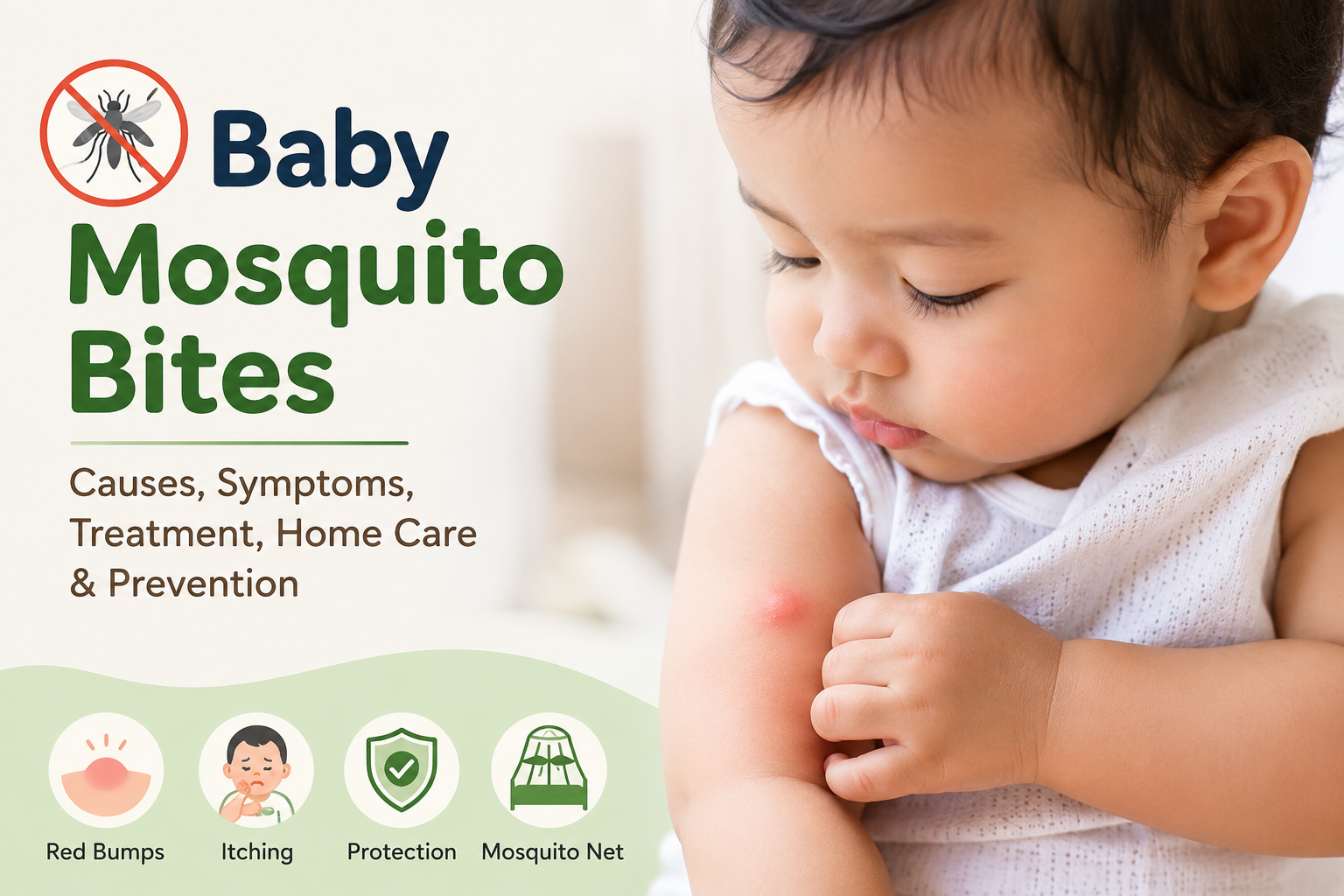
Baby mosquito bites infographic showing common symptoms, treatment tips, home care, mosquito bite prevention, warning signs, and when to consult a doctor.

Baby Mosquito Bites: Causes, Symptoms, Treatment, Home Care & Prevention

Editorial Note: This article is for educational purposes only and should not replace professional medical advice. If your baby develops a high fever, difficulty breathing, severe swelling, or signs of infection after a mosquito bite, seek immediate medical attention.

Mosquito bites are one of the most common skin problems babies experience, especially during warm, humid, and rainy seasons. While most baby mosquito bites are harmless and heal within a few days, they can cause redness, swelling, itching, and discomfort. Babies have delicate skin and an immature immune system, making their reactions to mosquito bites more noticeable than those of older children or adults.

In rare cases, mosquito bites may trigger allergic reactions or transmit mosquito-borne diseases such as dengue, malaria, chikungunya, or Zika virus in regions where these infections are present. Fortunately, with proper protection and skin care, parents can reduce the risk of mosquito bites and help their baby recover comfortably.

According to HealthyChildren.org, most mosquito bites in babies are mild and improve with simple home care, although parents should watch for signs of infection or allergic reactions.

This guide explains the causes, symptoms, treatment, home care, prevention strategies, and warning signs every parent should know.

What Are Baby Mosquito Bites?

A mosquito bite occurs when a female mosquito pierces the skin to feed on blood. During this process, it injects a small amount of saliva into the skin. The baby’s immune system reacts to the saliva, causing a raised, itchy bump.

Most bites disappear within 3–7 days without complications. MedlinePlus explains that mosquito bites commonly cause redness, swelling, itching, and mild irritation, which usually resolve within a few days.


Why Are Babies More Sensitive to Mosquito Bites?

Babies have:

  • Thin, delicate skin
  • A developing immune system
  • Increased skin sensitivity
  • Difficulty avoiding scratching

As a result, mosquito bites may appear larger, redder, or itchier than expected. The CDC recommends using mosquito nets, eliminating standing water, dressing babies in protective clothing, and using age-appropriate insect repellents to prevent mosquito bites.


Common Symptoms of Baby Mosquito Bites

Most babies experience:

  • Small red bumps
  • Mild swelling
  • Itching
  • Warmth around the bite
  • Temporary discomfort

Some babies may develop:

  • Larger swollen bumps
  • Multiple bites
  • Mild blistering
  • Irritability due to itching

If your baby develops persistent rashes unrelated to insect bites, read our guide on Baby Hives to understand allergic skin reactions.


What Causes Mosquito Bite Reactions?

The symptoms occur because the baby’s immune system reacts to proteins in mosquito saliva.

Several factors influence the severity of the reaction:

  • Sensitive skin
  • Previous mosquito bites
  • Family history of allergies
  • Multiple bites at the same time

Babies with Baby Eczema may experience increased itching because their skin barrier is already compromised.


Where Do Mosquitoes Usually Bite Babies?

Mosquito bites commonly appear on exposed skin, including the:

  • Face
  • Cheeks
  • Forehead
  • Arms
  • Hands
  • Legs
  • Feet
  • Neck

Bites around the eyes may cause temporary swelling because the skin in this area is very thin.


Baby Mosquito Bites vs Other Skin Conditions

Condition Key Features
Mosquito Bite Raised itchy red bump
Baby Heat Rash Tiny red bumps caused by blocked sweat glands
Baby Hives Raised itchy welts that appear suddenly
Baby Eczema Dry, itchy patches that recur over time
Baby Acne Small pimples mainly on the face

Risk Factors

Your baby may receive more mosquito bites if they:

  • Spend time outdoors at dawn or dusk
  • Live near standing water
  • Sleep without mosquito protection
  • Wear short-sleeved clothing
  • Live in tropical or humid regions

Possible Complications

Although uncommon, complications include:

  • Excessive scratching
  • Skin infection
  • Allergic reactions
  • Cellulitis
  • Mosquito-borne illnesses in endemic regions

If scratching causes skin damage, keeping the skin moisturized can help maintain the skin barrier. Learn more in our guide on Baby Dry Skin


Can Baby Mosquito Bites Heal on Their Own?

Yes.

Most uncomplicated mosquito bites improve within a week without medical treatment. Gentle skin care and preventing scratching help speed recovery.
Treatment for Baby Mosquito Bites

Most baby mosquito bites heal on their own within a few days. Treatment focuses on relieving itching, reducing swelling, and preventing scratching, which can lead to skin infections.


How to Treat Baby Mosquito Bites

1. Clean the Bite Area

Wash the affected skin gently with:

  • Mild baby soap
  • Clean lukewarm water

Pat the area dry with a soft towel instead of rubbing it.


2. Apply a Cold Compress

Place a clean, cool, damp cloth over the bite for 10–15 minutes.

A cold compress can help:

  • Reduce swelling
  • Relieve itching
  • Soothe irritated skin

3. Prevent Scratching

Babies often rub or scratch itchy bites, increasing the risk of infection.

To reduce scratching:

  • Keep your baby’s nails trimmed.
  • Use soft cotton mittens if needed.
  • Distract your baby with toys or feeding.
See also  Fever in Kids – Safe Home Remedies & When to See a Doctor (India Guide 2026)

If scratching causes dry or flaky skin, keeping the skin moisturized may help. Read our guide on Baby Dry Skin for gentle skincare tips.


4. Moisturize the Surrounding Skin

If the skin becomes dry or irritated after the bite, use a fragrance-free baby moisturizer to help maintain the skin barrier.

Babies with Baby Eczema may require extra moisturizing because their skin is more sensitive.


5. Medications

Do not apply medicated creams or give antihistamines unless advised by your pediatrician.

For severe itching or allergic reactions, your doctor may recommend age-appropriate treatment.


Home Remedies for Baby Mosquito Bites

These simple measures can provide comfort:

Cool Compresses

A cool compress helps reduce itching and swelling naturally.


Dress Your Baby in Loose Cotton Clothing

Soft, breathable fabrics reduce friction over mosquito bites and help prevent irritation.


Keep the Skin Clean

Gently wash the bite area if your baby has been sweating or playing outdoors.


Maintain Proper Hydration

Adequate breastfeeding or formula feeding supports overall skin health and recovery.


How to Prevent Mosquito Bites in Babies

Prevention is the best way to protect your baby.

Use Mosquito Nets

Place a mosquito net over:

  • Cribs
  • Strollers
  • Bassinets

especially while your baby is sleeping.


Dress Your Baby in Protective Clothing

Choose:

  • Long sleeves
  • Long pants
  • Socks
  • Light-colored clothing

whenever possible.


Remove Standing Water

Mosquitoes breed in stagnant water. Empty containers such as:

  • Flower pots
  • Buckets
  • Coolers
  • Bird baths

around your home regularly.


Use Baby-Safe Mosquito Repellents

For babies older than 2 months, use only mosquito repellents recommended by your pediatrician and follow the manufacturer’s instructions carefully.

Avoid applying repellents to:

  • Hands
  • Eyes
  • Mouth
  • Broken skin

Keep Windows Protected

Install window and door screens to reduce mosquitoes indoors.


What Should Parents Avoid?

Do not:

  • Scratch or squeeze mosquito bites.
  • Apply toothpaste, essential oils, or herbal pastes without medical advice.
  • Use adult insect repellents on young infants.
  • Apply strong steroid creams without a doctor’s prescription.
  • Burst blisters if they develop.

Can Mosquito Bites Become Infected?

Yes.

Excessive scratching can allow bacteria to enter the skin, leading to infection.

Signs include:

  • Increasing redness
  • Warmth
  • Swelling
  • Pus
  • Pain
  • Fever

If you notice these symptoms, consult your pediatrician promptly.


Baby Mosquito Bites vs Baby Hives

Baby Mosquito Bites Baby Hives
Usually a single raised bump with a central bite mark Large raised welts that can appear anywhere
Often occur on exposed skin May spread across the body
Caused by mosquito saliva Often triggered by allergies, infections, or medications
Usually improve within a few days Can come and go over hours or days

If your baby’s rash spreads quickly or appears without an insect bite, read our guide on Baby Hives to understand possible allergic reactions.


When Should You See a Doctor?

Consult your pediatrician if:

  • Your baby is younger than 2 months and develops concerning skin reactions.
  • Swelling becomes severe, especially around the eyes.
  • Redness continues to spread.
  • Pus or yellow discharge develops.
  • Your baby has a fever.
  • The bite becomes very painful.
  • Symptoms last longer than 7–10 days.
  • Your baby has difficulty breathing, swelling of the lips or face, or appears unusually sleepy. Seek emergency medical care immediately if these occur.

Can Mosquitoes Spread Diseases?

In some regions, mosquitoes can transmit diseases such as:

  • Dengue
  • Malaria
  • Chikungunya
  • Zika virus

Parents should seek medical attention if a mosquito bite is followed by fever, persistent vomiting, unusual drowsiness, poor feeding, or other concerning symptoms, particularly in areas where these diseases are common.


Conclusion

Baby mosquito bites are common and usually harmless. Most bites heal within a few days with gentle home care, including cleaning the area, applying cool compresses, and preventing scratching. Protecting your baby with mosquito nets, appropriate clothing, and other preventive measures can significantly reduce the risk of bites.

While most mosquito bites are minor, parents should watch for signs of infection, severe allergic reactions, or mosquito-borne illnesses and seek medical advice when necessary. If your baby develops other skin concerns such as Baby Heat Rash , Baby Eczema, or Baby Dry Skin, early care can help keep their skin healthy and comfortable.


Frequently Asked Questions (FAQs)

Are mosquito bites dangerous for babies?

Most mosquito bites are harmless and heal within a few days. Rarely, they can cause allergic reactions or transmit mosquito-borne diseases in endemic areas.

Why do mosquito bites swell more in babies?

Babies have delicate skin and a developing immune system, which can make their reaction to mosquito saliva more noticeable.

How long do baby mosquito bites last?

Most bites improve within 3–7 days.

Can I apply ice directly to the bite?

No. Wrap ice in a clean cloth before applying it briefly to avoid cold injury.

Can mosquito bites become infected?

Yes. Excessive scratching can introduce bacteria into the skin.

Should I let my baby scratch the bite?

No. Keep nails trimmed and try to prevent scratching.

Can I use mosquito repellent on my baby?

Use only age-appropriate, pediatrician-recommended repellents and follow the product instructions.

What clothes help prevent mosquito bites?

Long-sleeved, lightweight cotton clothing provides good protection.

Can mosquito bites cause fever?

A simple mosquito bite usually does not. Fever after a bite should be evaluated by a doctor, especially in areas where mosquito-borne diseases are common.

Can babies be allergic to mosquito bites?

Yes. Some babies develop larger swelling or more intense itching due to an allergic reaction.

Are mosquito nets safe for babies?

Yes. Properly installed mosquito nets are one of the safest and most effective ways to protect babies from mosquito bites.

Can mosquito bites leave scars?

Most bites heal without scarring, but repeated scratching may increase the risk of skin marks.

How can I reduce mosquito breeding at home?

Remove standing water from containers, keep water storage covered, and maintain clean surroundings.

What should I avoid applying to mosquito bites?

Avoid toothpaste, essential oils, alcohol-based products, or home remedies that may irritate a baby’s skin.

When should I worry about a mosquito bite?

Seek medical advice if your baby develops severe swelling, signs of infection, fever, difficulty breathing, or if the bite does not improve after several days.

More Reading

Post navigation

Subscribe
Notify of
guest

0 Comments
Oldest
Newest Most Voted
0
Would love your thoughts, please comment.x
()
x