
Editorial Note: This article is for educational purposes only and should not replace professional medical advice. If your baby’s rash spreads rapidly, affects the scalp, becomes painful, or does not improve after treatment, consult your pediatrician or dermatologist.
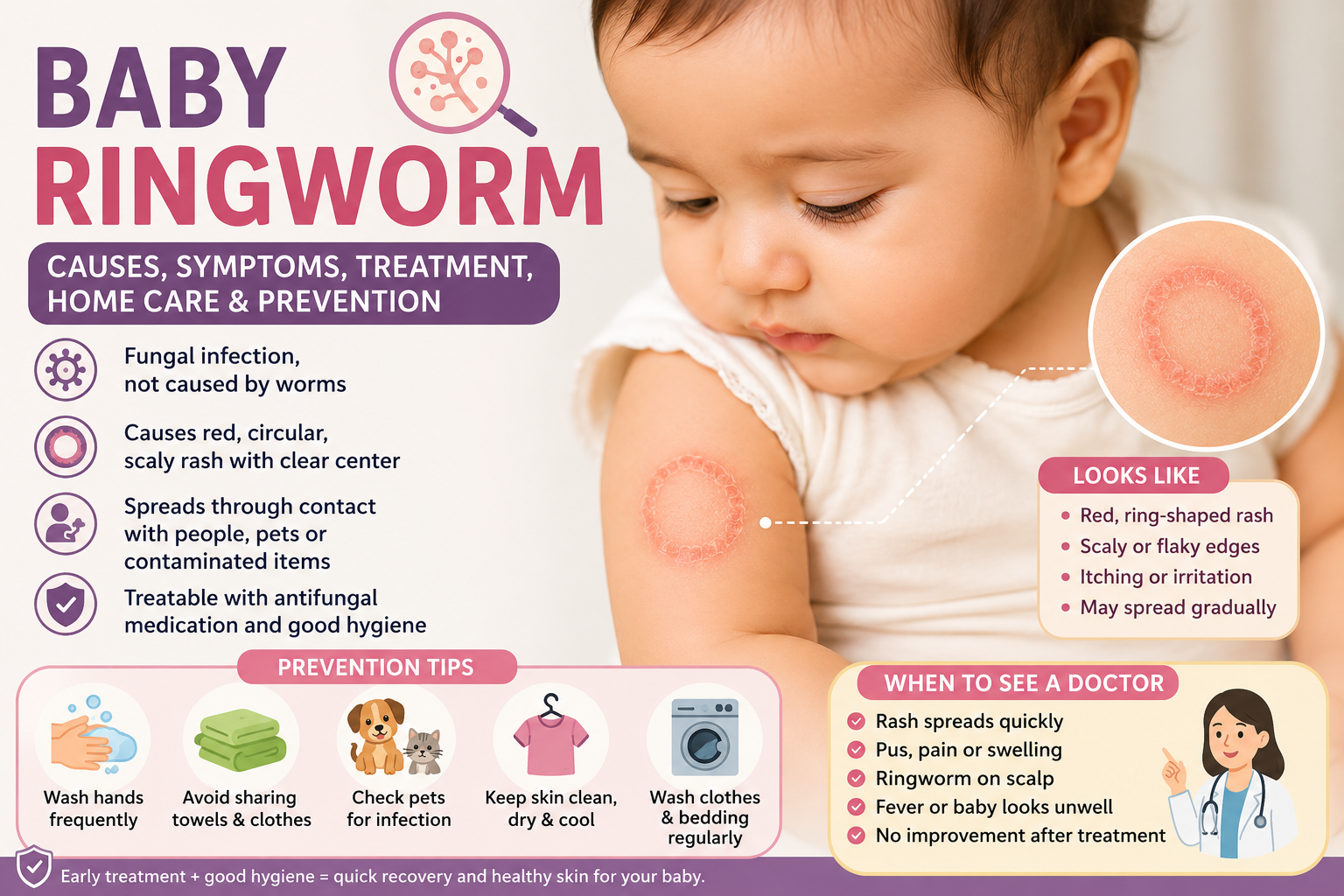
Despite its name, baby ringworm is not caused by worms. It is a common fungal skin infection that affects the outer layer of the skin and can occur in babies and young children. Ringworm causes a characteristic red, circular, scaly rash that may gradually spread outward while the center becomes clearer.
Because babies have delicate skin and developing immune systems, fungal infections can spread more easily if left untreated. Fortunately, most cases of ringworm respond well to antifungal treatment and proper hygiene.
This guide explains the causes, symptoms, diagnosis, treatment, home care, prevention tips, and warning signs parents should know.
What Is Baby Ringworm?
Baby ringworm (also called tinea corporis) is a contagious fungal infection that affects the skin. The fungus feeds on keratin, a protein found in the skin, hair, and nails.
Ringworm commonly appears as:
- Round or oval rash
- Red raised border
- Clearer center
- Dry, scaly skin
- Mild to moderate itching
Although it looks alarming, ringworm is usually treatable with antifungal medication.
Is Ringworm Common in Babies?
Yes.
Although more common in older children, babies can also develop ringworm, particularly if they come into contact with infected people, pets, or contaminated objects.
The infection is more likely in:
- Warm climates
- Humid weather
- Babies attending daycare
- Homes with pets
- Families where another member has ringworm
What Causes Baby Ringworm?
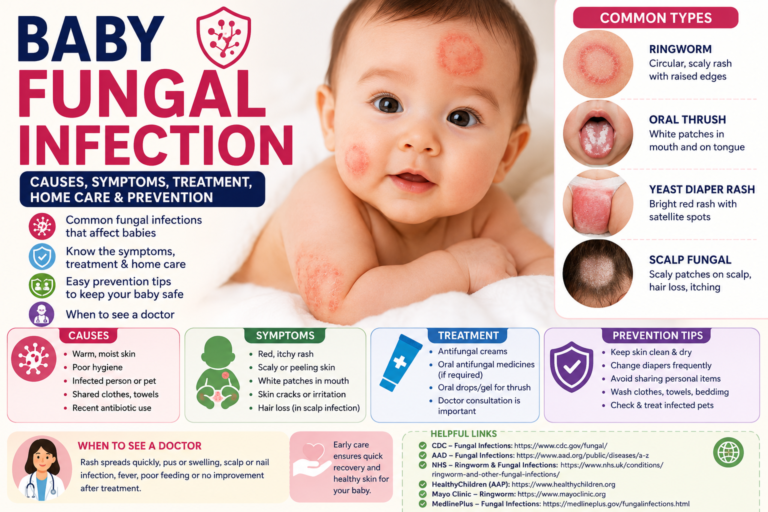
Baby ringworm is caused by dermatophyte fungi, not worms.
Common causes include:
1. Contact with an Infected Person
Ringworm spreads easily through direct skin-to-skin contact with someone who has the infection.
2. Contact with Pets
Cats, dogs, rabbits, and other animals can carry ringworm fungi even if they show few symptoms.
3. Contaminated Objects
The fungus can spread through:
- Towels
- Clothing
- Bedding
- Hair brushes
- Toys
4. Warm and Moist Skin
Sweaty skin provides an ideal environment for fungal growth.
5. Weakened Skin Barrier
Babies with Baby Eczema may have a weakened skin barrier, making them more susceptible to certain skin infections.
Symptoms of Baby Ringworm
Common symptoms include:
- Round or ring-shaped rash
- Red raised edges
- Clear center
- Dry, flaky skin
- Mild itching
- Slight scaling
- Gradually enlarging patches
If your baby develops widespread itchy welts rather than circular patches, read our guide on Baby Hives (https://momsaathi.com/baby-hives/) to understand allergic skin reactions.
Where Does Ringworm Commonly Appear?
Ringworm may develop on the:
- Face
- Neck
- Arms
- Hands
- Legs
- Feet
- Chest
- Back
If it affects the scalp (tinea capitis), hair loss or broken hairs may also occur and medical treatment is usually required.
Baby Ringworm vs Other Skin Conditions
| Condition | Key Features |
|---|---|
| Ringworm | Circular red rash with scaly border |
| Baby Eczema | Dry, itchy patches without a ring-shaped border |
| Baby Heat Rash | Tiny red bumps caused by blocked sweat glands |
| Baby Dry Skin | Rough, flaky skin without a circular pattern |
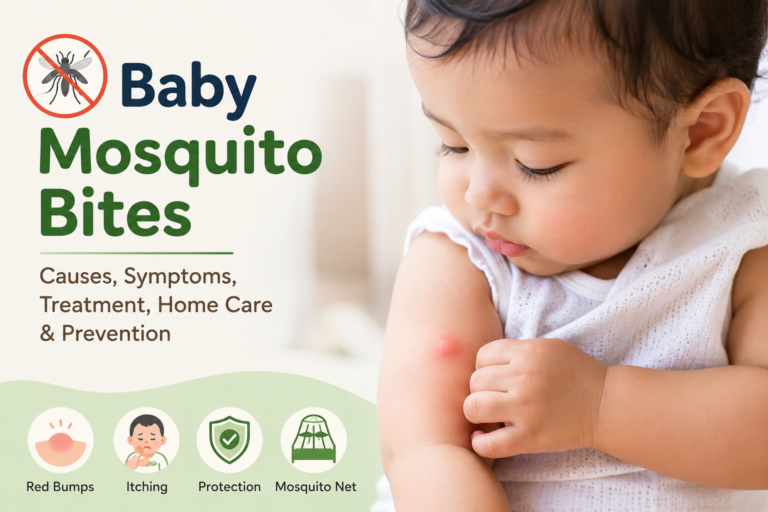
| Baby Mosquito Bites | Raised itchy bumps with a visible bite mark |
| Baby Peeling Skin | General skin peeling rather than a ring-shaped rash |
How Does Ringworm Spread?
Ringworm spreads through:
- Skin-to-skin contact
- Contact with infected animals
- Shared towels
- Shared bedding
- Shared clothing
- Contaminated surfaces
Good hygiene helps reduce transmission.
Can Baby Ringworm Heal on Its Own?
Usually no.
Unlike mild dry skin or heat rash, ringworm generally requires antifungal treatment. Without treatment, the infection may continue to spread to other parts of the body or to family members.
How Is Baby Ringworm Diagnosed?
Doctors usually diagnose ringworm by:
- Examining the rash
- Reviewing symptoms
- Occasionally taking a skin scraping for microscopic examination if the diagnosis is uncertain
Risk Factors
Babies are more likely to develop ringworm if they:
- Live in warm, humid climates
- Have close contact with infected family members
- Play with infected pets
- Share towels or clothing
- Have excessive sweating
- Have a weakened skin barrier