
Medical Note: This article is for educational purposes only and should not replace professional medical advice. Consult your pediatrician or dermatologist if your baby’s eczema is severe, infected, or does not improve with appropriate care.
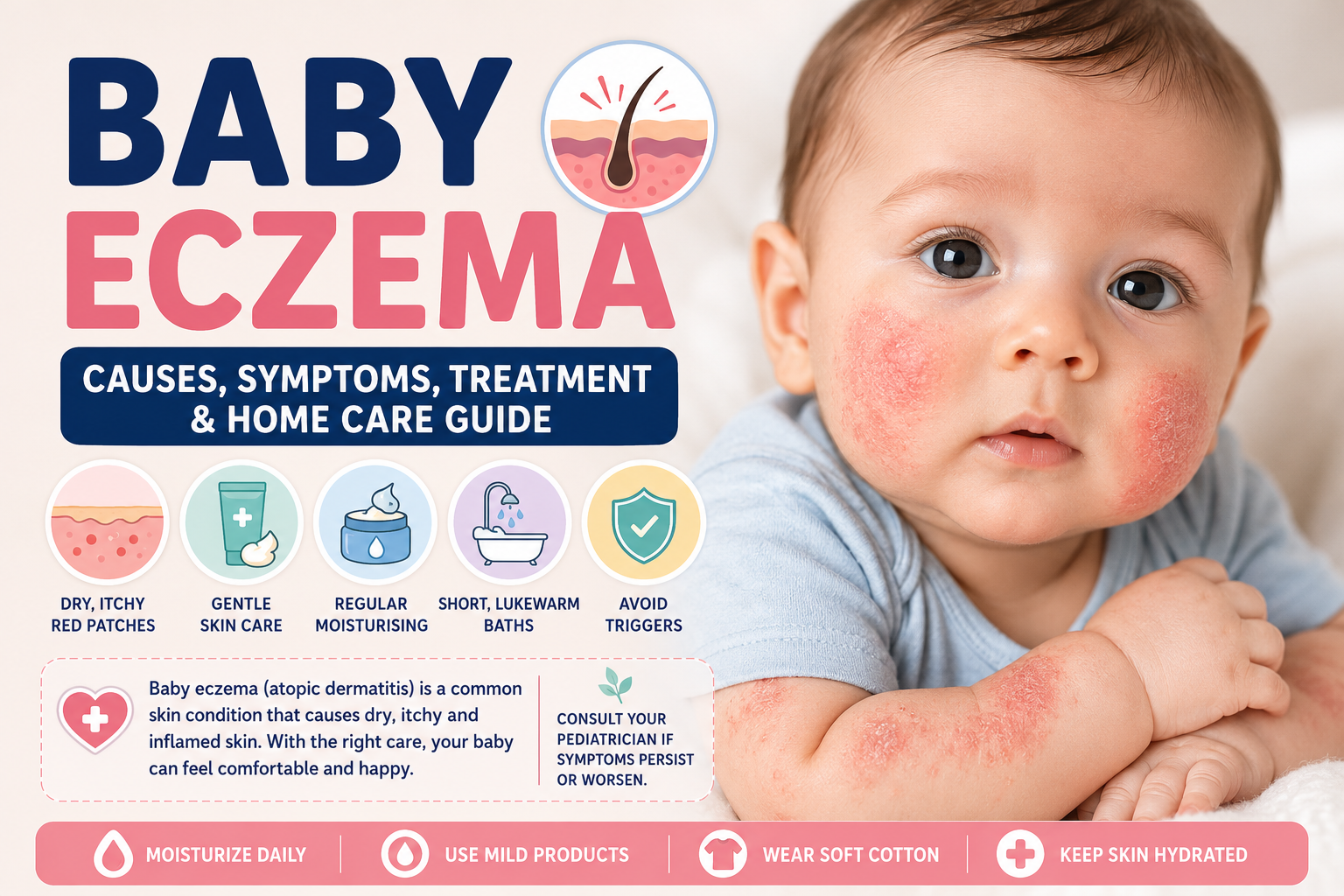
Dry, red, itchy patches on your baby’s skin can be worrying for parents. One of the most common reasons for these symptoms is baby eczema, also known as atopic dermatitis. It often appears during infancy and can affect a baby’s comfort, sleep, and daily routine.
The good news is that baby eczema is manageable with the right skincare routine and medical guidance when needed. While there is no permanent cure, many children experience significant improvement as they grow older.
In this guide, you’ll learn everything about baby eczema, including its causes, symptoms, treatment options, home care, prevention strategies, and when it’s time to consult a doctor. HealthyChildren.org provides trusted guidance on eczema, skincare, and managing common skin conditions in infants.
Quick Answer: Baby eczema (atopic dermatitis) is a long-term skin condition that causes dry, itchy, inflamed skin. It commonly begins in infancy and is managed with regular moisturizers, trigger avoidance, and medical treatment when needed.
What Is Baby Eczema?
Baby eczema, or atopic dermatitis, is a chronic inflammatory skin condition that causes:
- Dry skin
- Red patches
- Intense itching
- Rough or scaly skin
- Skin irritation
It is one of the most common skin conditions in infants and young children.
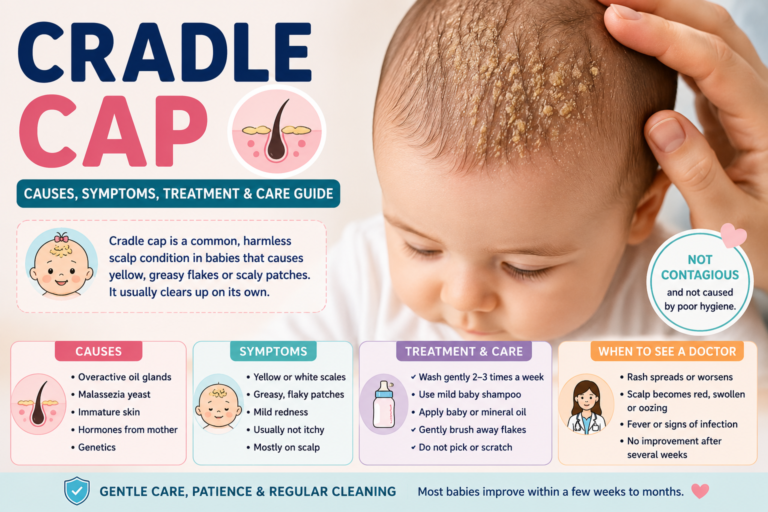
Although eczema is not contagious, it can flare up repeatedly and requires ongoing skincare. Although both conditions affect a baby’s skin, Cradle Cap usually causes greasy yellow scales and is generally not itchy, unlike eczema.
Is Baby Eczema Common?
Yes.
Baby eczema affects approximately 10–20% of children worldwide, with many cases beginning before the age of one year.
Symptoms often start between 2 and 6 months of age, although some babies develop eczema earlier or later. The National Eczema Association offers evidence-based resources on eczema symptoms, triggers, skincare, and treatment options for children.
What Causes Baby Eczema?
There is no single cause. Baby eczema develops due to a combination of genetic and environmental factors.
1. Weak Skin Barrier
Babies with eczema have a skin barrier that loses moisture more easily.
This makes the skin:
- Dry
- Sensitive
- More likely to become irritated
If your baby’s rash appears mainly during hot weather, it may be Baby Heat Rash rather than eczema.
2. Genetics
Your baby is more likely to develop eczema if there is a family history of:
- Eczema
- Asthma
- Hay fever
- Allergies
These conditions are collectively known as the atopic march.
3. Overactive Immune Response
The immune system reacts strongly to everyday irritants, leading to inflammation and itching.
4. Environmental Triggers
Common triggers include:
- Dry weather
- Heat and sweating
- Cold temperatures
- Harsh soaps
- Bubble baths
- Fragrances
- Wool clothing
- Dust mites
- Pet dander
- Cigarette smoke
5. Food Allergies (In Some Babies)
Some babies with moderate to severe eczema may also have food allergies, but food is not the cause of eczema in most infants.
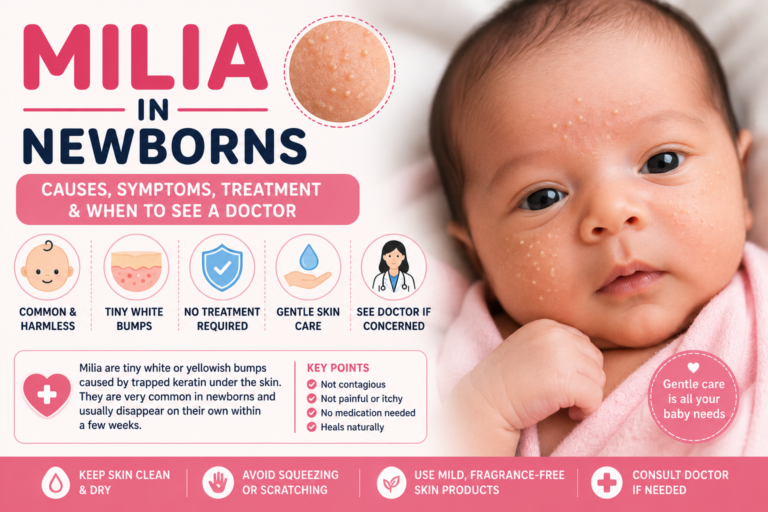
Parents should not eliminate foods without consulting a healthcare professional. Newborns may also develop Baby Acne, a harmless skin condition that usually clears without treatment.
Symptoms of Baby Eczema
Symptoms vary from mild to severe.
Common signs include:
- Dry skin
- Red patches
- Rough skin
- Itchy rash
- Thickened skin
- Small bumps
- Cracked skin
- Skin oozing during severe flare-ups
Itching often becomes worse at night, making babies restless or disrupting sleep. MedlinePlus provides reliable medical information on eczema, common symptoms, and available treatments.
Where Does Baby Eczema Appear?
In babies younger than one year, eczema commonly affects:
- Cheeks
- Forehead
- Chin
- Scalp
- Arms
- Legs
- Chest
As children grow older, eczema often appears in:
- Elbow folds
- Behind the knees
- Wrists
- Ankles
- Neck
Baby Eczema Stages
Mild
- Slight dryness
- Small red patches
- Occasional itching
Moderate
- Larger areas of redness
- Frequent scratching
- Dry, rough skin
Severe
- Intense itching
- Thickened skin
- Cracks
- Bleeding
- Risk of infection
Common Baby Eczema Triggers
Flare-ups may occur due to:
- Dry air
- Excessive bathing
- Hot water
- Scented skincare products
- Sweat
- Overheating
- Dust
- Seasonal weather changes
- Viral illnesses
- Certain fabrics
Baby Eczema vs Cradle Cap
| Baby Eczema | Cradle Cap |
|---|---|
| Very itchy | Usually not itchy |
| Dry, red skin | Greasy yellow scales |
| Can affect cheeks and body | Mostly affects the scalp |
| Chronic condition | Usually temporary |
| Requires regular moisturising | Often clears on its own |
Can Baby Eczema Be Cured?
There is currently no permanent cure for eczema.
However, many children experience:
- Fewer flare-ups as they grow
- Improved skin barrier function
- Better symptom control with proper skincare
With consistent treatment, most babies live comfortably.
Baby Eczema Treatment
The main goals of treatment are to:
- Relieve itching
- Repair the skin barrier
- Prevent flare-ups
- Reduce the risk of infection
Treatment depends on how severe your baby’s eczema is and should be guided by your pediatrician when symptoms are persistent or severe. If your baby’s rash appears suddenly with raised, itchy welts, it could be Baby Hives, which are often linked to allergic reactions.
Daily Skincare Routine for Baby Eczema
A consistent skincare routine is one of the most effective ways to manage eczema.
1. Bathe Your Baby Daily or Every Other Day
- Use lukewarm water.
- Keep baths to 5–10 minutes.
- Avoid hot water.
- Use a fragrance-free, soap-free cleanser if needed.
2. Moisturize Immediately After Bathing
Apply a thick moisturizer within 3 minutes after the bath while the skin is still slightly damp.
Suitable options include:
- Fragrance-free creams
- Ointments
- Petroleum jelly (if recommended)
- Ceramide-based moisturizers
Moisturize at least 2–3 times a day, especially during dry weather. Skin irritation around the mouth caused by saliva is commonly known as Baby Drool Rash and is different from eczema.
3. Use Prescription Medicines When Needed
For moderate or severe eczema, your doctor may prescribe:
- Low-strength topical corticosteroids
- Non-steroidal anti-inflammatory creams
- Antibiotics if a skin infection develops
Always follow your healthcare provider’s instructions and avoid using medicated creams without medical advice.
Home Remedies for Baby Eczema
While home care cannot cure eczema, it can help reduce flare-ups and keep your baby’s skin comfortable.
Keep Nails Short
Trim your baby’s nails regularly to reduce skin damage from scratching.
Dress in Soft Cotton Clothing
Choose breathable cotton fabrics and avoid wool or rough materials that may irritate the skin.
Avoid Overheating
Heat and sweating can worsen itching. Dress your baby in lightweight clothing and keep the room comfortably cool.
Use Fragrance-Free Products
Select:
- Baby shampoo
- Laundry detergent
- Moisturizer
- Soap
that are free from perfumes and dyes.
Identify Triggers
Keeping a symptom diary may help identify triggers such as:
- Heat
- Dry weather
- Certain fabrics
- Skin care products
Discuss any suspected food-related triggers with your pediatrician before making dietary changes.
What Should You Avoid?
Do not:
- Scratch affected areas.
- Use scented lotions or soaps.
- Bathe your baby in hot water.
- Overdress your baby.
- Apply herbal or homemade remedies without medical advice.
- Use steroid creams prescribed for another person.
Can Baby Eczema Be Prevented?
Although eczema cannot always be prevented, these habits may reduce flare-ups:
- Moisturize every day.
- Bathe with lukewarm water.
- Use gentle skin-care products.
- Avoid known triggers.
- Keep your baby’s skin cool and hydrated.
- Dress your baby in soft, breathable clothing.
Possible Complications
Without proper treatment, eczema may lead to:
- Skin infections
- Bleeding from scratching
- Thickened skin
- Sleep disturbances
- Increased discomfort
Seek medical care if you notice pus, yellow crusts, swelling, or fever.
When Should You See a Doctor?
Consult your pediatrician if:
- The rash spreads rapidly.
- Your baby has severe itching that affects sleep.
- The skin becomes swollen, warm, or painful.
- There is yellow crusting, pus, or oozing.
- Home care does not improve symptoms after one to two weeks.
- Your baby develops a fever.
- The eczema covers large areas of the body.
Seek urgent medical attention if your baby shows signs of a severe skin infection.
Baby Eczema vs Heat Rash
| Baby Eczema | Baby Heat Rash |
|---|---|
| Dry, itchy skin | Tiny red bumps |
| Chronic condition | Usually temporary |
| Can occur year-round | Common during hot weather |
| Requires daily moisturising | Improves by keeping the skin cool |
| Often linked to allergies and genetics | Caused by blocked sweat glands |
Conclusion
Baby eczema is a common skin condition that causes dry, itchy, and inflamed skin. Although it can be frustrating for both babies and parents, regular moisturizing, gentle skincare, and avoiding triggers can help manage symptoms and reduce flare-ups.
If your baby’s eczema becomes severe, shows signs of infection, or does not improve with home care, consult your pediatrician or a dermatologist. Early treatment can help keep your baby’s skin healthy and improve their comfort.
Frequently Asked Questions (FAQs)
Is baby eczema contagious?
No. Baby eczema cannot spread from one person to another.
At what age does eczema usually start?
Most babies develop eczema between 2 and 6 months of age.
Can eczema go away on its own?
Many children experience significant improvement as they grow older, although some continue to have eczema into adulthood.
Does eczema itch?
Yes. Itching is one of the most common symptoms and may become worse at night.
Can teething cause eczema?
No. Teething does not cause eczema, although drooling during teething may irritate the skin around the mouth.
Should I bathe my baby every day?
Short baths with lukewarm water followed by immediate moisturizing are generally recommended for babies with eczema.
Which moisturizer is best?
Fragrance-free creams or ointments are usually preferred because they help lock in moisture more effectively than lotions.
Can food allergies cause eczema?
Food allergies may trigger flare-ups in some babies with moderate to severe eczema, but they are not the primary cause of eczema.
Can I use coconut oil?
Some families use coconut oil, but it may not suit every baby. Discuss its use with your pediatrician, especially if your baby has sensitive skin or allergies.
Is eczema painful?
The itching can be uncomfortable, and cracked skin may become painful if left untreated.
Can scratching make eczema worse?
Yes. Scratching can damage the skin, increase inflammation, and raise the risk of infection.
Is eczema hereditary?
Yes. Babies with a family history of eczema, asthma, or allergies have a higher risk of developing eczema.
How can I prevent flare-ups?
Daily moisturizing, gentle skincare, avoiding triggers, and keeping the skin hydrated are the best ways to reduce flare-ups.
Can baby eczema become infected?
Yes. Persistent scratching can allow bacteria to enter the skin, causing an infection that requires medical treatment.
When should I seek emergency care?
Seek immediate medical attention if your baby has a fever along with a rapidly worsening rash, widespread redness, severe swelling, or signs of a serious skin infection.