
Home » Baby Care » Newborn Care » Baby Heat Rash: Causes, Symptoms, Treatment & Prevention
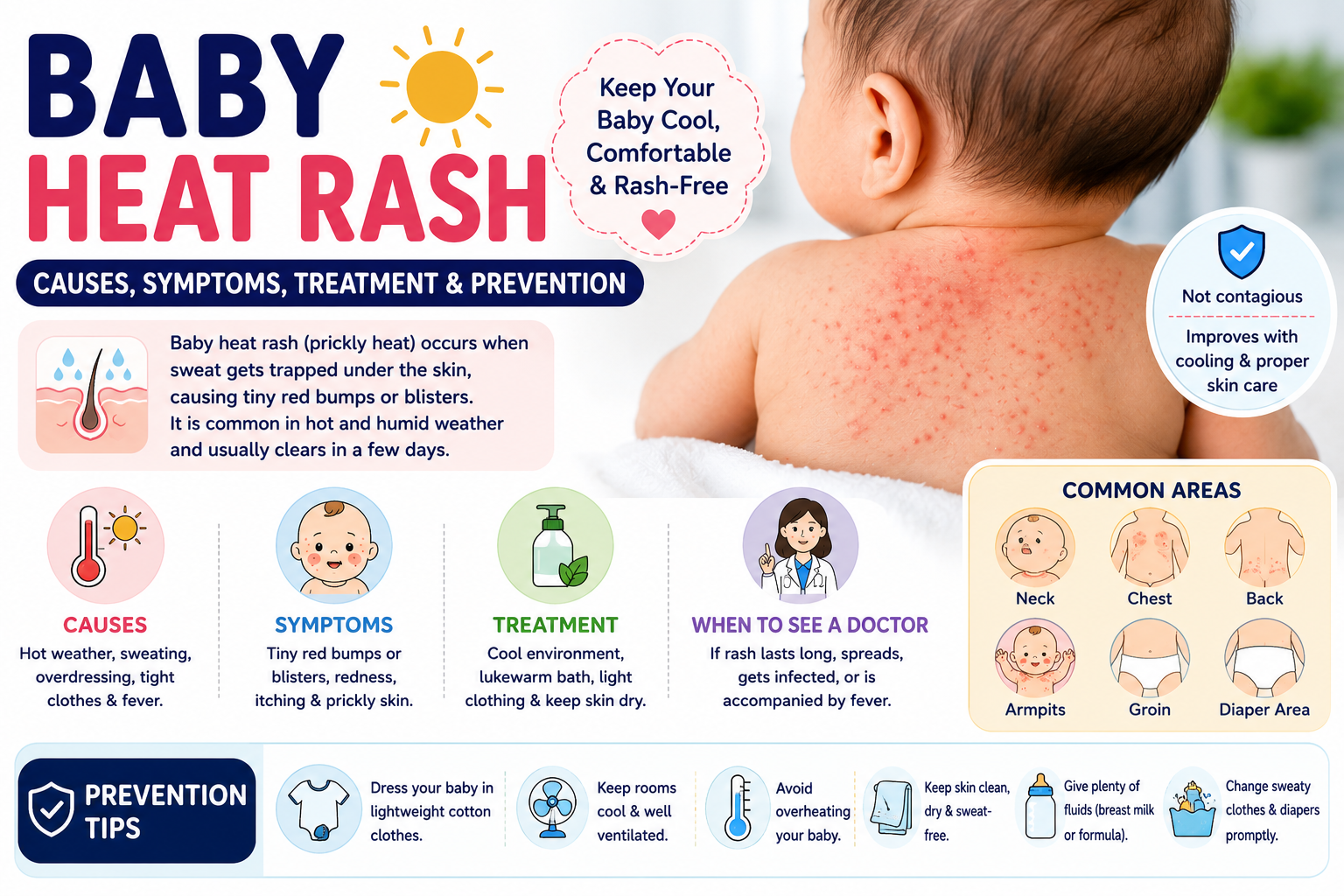
Baby heat rash infographic explaining the causes of prickly heat in babies, common symptoms, treatment options, prevention tips, and warning signs that require medical attention.

Baby Heat Rash: Causes, Symptoms, Treatment & Prevention

Editorial Note: This article is for educational purposes only and should not replace medical advice. If your baby’s rash becomes infected, lasts longer than a few days, is accompanied by fever, or causes significant discomfort, consult your pediatrician.

Seeing tiny red bumps on your baby’s skin after a hot day or while wearing warm clothing can be worrying. Fortunately, baby heat rash is a common and usually harmless skin condition that develops when sweat becomes trapped under the skin.

Also known as prickly heat or miliaria, heat rash is especially common in newborns and young babies because their sweat glands are still developing. It often appears during hot, humid weather or when babies are overdressed.

The good news is that most cases improve within a few days with simple home care and by keeping your baby cool.

What Is Baby Heat Rash?

Baby heat rash is a skin condition that occurs when sweat ducts become blocked, trapping sweat beneath the skin.

This trapped sweat causes tiny bumps, redness, and sometimes mild itching or a prickling sensation.

Heat rash is not contagious and usually resolves quickly once your baby’s skin is cooled.


Is Heat Rash Common in Babies?

Yes.

Heat rash is one of the most common skin conditions in infants, particularly:

  • During summer
  • In humid climates
  • In newborns
  • When babies wear too many layers
  • During fever

Because babies cannot regulate body temperature as efficiently as adults, they are more likely to develop heat rash.


What Causes Baby Heat Rash?

Several factors can contribute to blocked sweat glands.

1. Hot and Humid Weather

Warm temperatures increase sweating, making heat rash more likely.


2. Overdressing

Too many blankets or thick clothing can cause babies to overheat.


3. Fever

Babies with a fever sweat more, increasing the risk of blocked sweat glands.


4. Tight Clothing

Tight or non-breathable fabrics prevent sweat from evaporating properly.


5. Sleeping in Warm Rooms

Rooms that are too warm or poorly ventilated may contribute to excessive sweating during sleep.


6. Immature Sweat Glands

Newborn sweat glands are still developing, making them easier to block.


Symptoms of Baby Heat Rash

Common signs include:

  • Tiny red bumps
  • Small clear blisters
  • Pink patches
  • Mild itching
  • Prickly or irritated skin
  • Increased fussiness if the rash is uncomfortable

Unlike infections, heat rash usually does not cause fever or make babies seriously ill.


Where Does Heat Rash Usually Appear?

Heat rash commonly develops in areas where sweat collects.

These include:

  • Neck
  • Chest
  • Back
  • Armpits
  • Groin
  • Diaper area
  • Elbow creases
  • Face (occasionally)

Types of Heat Rash

Miliaria Crystallina

  • Tiny clear blisters
  • Mildest form
  • No redness
  • Usually painless

Miliaria Rubra

The most common type.

Symptoms include:

  • Red bumps
  • Mild itching
  • Prickly sensation
  • Skin irritation

Miliaria Profunda

A rare form that develops deeper in the skin and usually requires medical evaluation.


Baby Heat Rash vs Baby Acne

Baby Heat Rash Baby Acne
Caused by blocked sweat glands Caused by hormonal changes
Common on neck, chest, back Mostly on cheeks, nose, forehead
Triggered by heat Appears without relation to temperature
Improves after cooling Clears gradually over weeks
Tiny red bumps or blisters Pimples with whiteheads or red bumps

How Long Does Baby Heat Rash Last?

Most cases improve within:

  • 24–72 hours
  • A few days after cooling the skin
  • Occasionally up to one week

If the rash persists longer or worsens, consult your pediatrician.
How Is Baby Heat Rash Treated?

Most cases of baby heat rash improve on their own within a few days once your baby is kept cool and comfortable. Treatment focuses on reducing sweating and preventing further skin irritation.

See also  How to Transition from Breastfeeding to Solids: 6-Month Baby Led Weaning Guide (Complete 2026 Step-by-Step for First-Time Moms)

Home Care Tips for Baby Heat Rash

Move Your Baby to a Cool Environment

Take your baby to a cool, shaded, or air-conditioned room.

Reducing body temperature is the most effective way to help the rash heal.


Dress Your Baby in Lightweight Clothing

Choose:

  • Loose-fitting cotton clothing
  • Breathable fabrics
  • Light layers appropriate for the weather

Avoid synthetic or tight-fitting clothes that trap heat.


Keep the Skin Dry

Gently pat sweaty areas dry using a soft towel.

Avoid rubbing the skin, as friction can worsen irritation.


Give a Lukewarm Bath

A short bath with lukewarm (not cold) water can help cool the skin.

Avoid hot baths, as they may increase sweating.


Allow Air Circulation

When appropriate:

  • Remove extra blankets.
  • Let your baby spend some diaper-free time.
  • Keep rooms well-ventilated.

Use Mild Baby Skincare Products

Wash with:

  • Fragrance-free baby cleanser (if needed)
  • Plain lukewarm water

Avoid heavily scented soaps and lotions.


What Should You Avoid?

To prevent the rash from worsening, avoid:

  • Thick creams or ointments that trap heat
  • Heavy oils and petroleum jelly on the rash
  • Tight clothing
  • Over-bundling your baby
  • Scratching or rubbing the affected skin
  • Talcum powder, as it may irritate the lungs if inhaled

Do not use medicated creams or steroid creams unless prescribed by a doctor.


Can Baby Heat Rash Be Prevented?

Yes. Although it cannot always be avoided, these simple measures can significantly reduce the risk:

  • Dress your baby according to the weather.
  • Choose breathable cotton clothing.
  • Keep indoor temperatures comfortable.
  • Avoid excessive blankets.
  • Change sweaty clothes promptly.
  • Keep skin folds clean and dry.
  • Offer frequent feeds to help maintain hydration (breast milk or formula as age-appropriate).

When Should You See a Doctor?

Most heat rashes resolve without medical treatment. However, contact your pediatrician if:

  • The rash lasts longer than 3–5 days.
  • The bumps become swollen, painful, or filled with pus.
  • Your baby develops a fever.
  • The rash spreads rapidly.
  • Your baby seems unusually irritable or lethargic.
  • The rash bleeds or forms crusts.
  • You suspect eczema, an allergic reaction, or another skin condition.

Seek urgent medical care if your baby has difficulty breathing, a high fever, or signs of a serious infection.


Baby Heat Rash vs Eczema

Baby Heat Rash Baby Eczema
Caused by blocked sweat glands Chronic inflammatory skin condition
Triggered by heat and sweating Triggered by genetics, allergens, and dry skin
Tiny red bumps or blisters Dry, rough, itchy patches
Improves after cooling Requires ongoing skincare and treatment
Usually clears within a few days May recur over time

Conclusion

Baby heat rash is a common and harmless condition that develops when sweat becomes trapped beneath the skin. It often appears during hot weather, after excessive sweating, or when babies are overdressed.

Keeping your baby cool, dressing them in lightweight clothing, and maintaining good skin hygiene usually help the rash disappear within a few days. If the rash worsens, becomes infected, or is accompanied by fever or other concerning symptoms, consult your pediatrician.


Frequently Asked Questions

Is baby heat rash dangerous?

No. Most cases are harmless and improve quickly with simple cooling measures.

What causes baby heat rash?

It develops when sweat ducts become blocked, trapping sweat beneath the skin.

How long does baby heat rash last?

Most rashes improve within 24–72 hours and clear completely within a week.

Can heat rash spread?

The rash may appear in several sweaty areas but is not contagious and cannot spread from one person to another.

Does baby heat rash itch?

Some babies experience mild itching or a prickly sensation, while others are not bothered by it.

Can babies get heat rash in winter?

Yes. Overdressing, heavy blankets, or overheated rooms can cause heat rash even during cooler months.

Should I apply baby powder?

No. Talcum powder is not recommended because inhaling the fine particles may be harmful to babies.

Can I use lotion on heat rash?

Avoid thick lotions or greasy creams that may trap heat. Use only products recommended by your pediatrician.

Is heat rash painful?

It is usually mild, though some babies may become fussy if the rash feels itchy or prickly.

Can heat rash appear on the face?

Yes. While it commonly affects the neck, chest, and back, it can also appear on the face in some babies.

Is heat rash contagious?

No. Heat rash cannot spread to other children or adults.

Can air conditioning help?

Yes. A cool, well-ventilated room can reduce sweating and help the rash heal faster.

How can I prevent baby heat rash?

Dress your baby in lightweight clothing, avoid overheating, keep the skin dry, and maintain a comfortable room temperature.

When should I call a doctor?

Seek medical advice if the rash persists, shows signs of infection, is accompanied by fever, or if your baby appears unwell.

Can heat rash leave scars?

No. Baby heat rash typically heals completely without leaving permanent marks or scars.

More Reading

Post navigation

Subscribe
Notify of
guest

0 Comments
Oldest
Newest Most Voted
0
Would love your thoughts, please comment.x
()
x