
Medical Review Note: This article is intended for educational purposes only and should not replace professional medical advice. Parents concerned about their child’s speech or language development should consult a qualified pediatrician or speech-language pathologist.
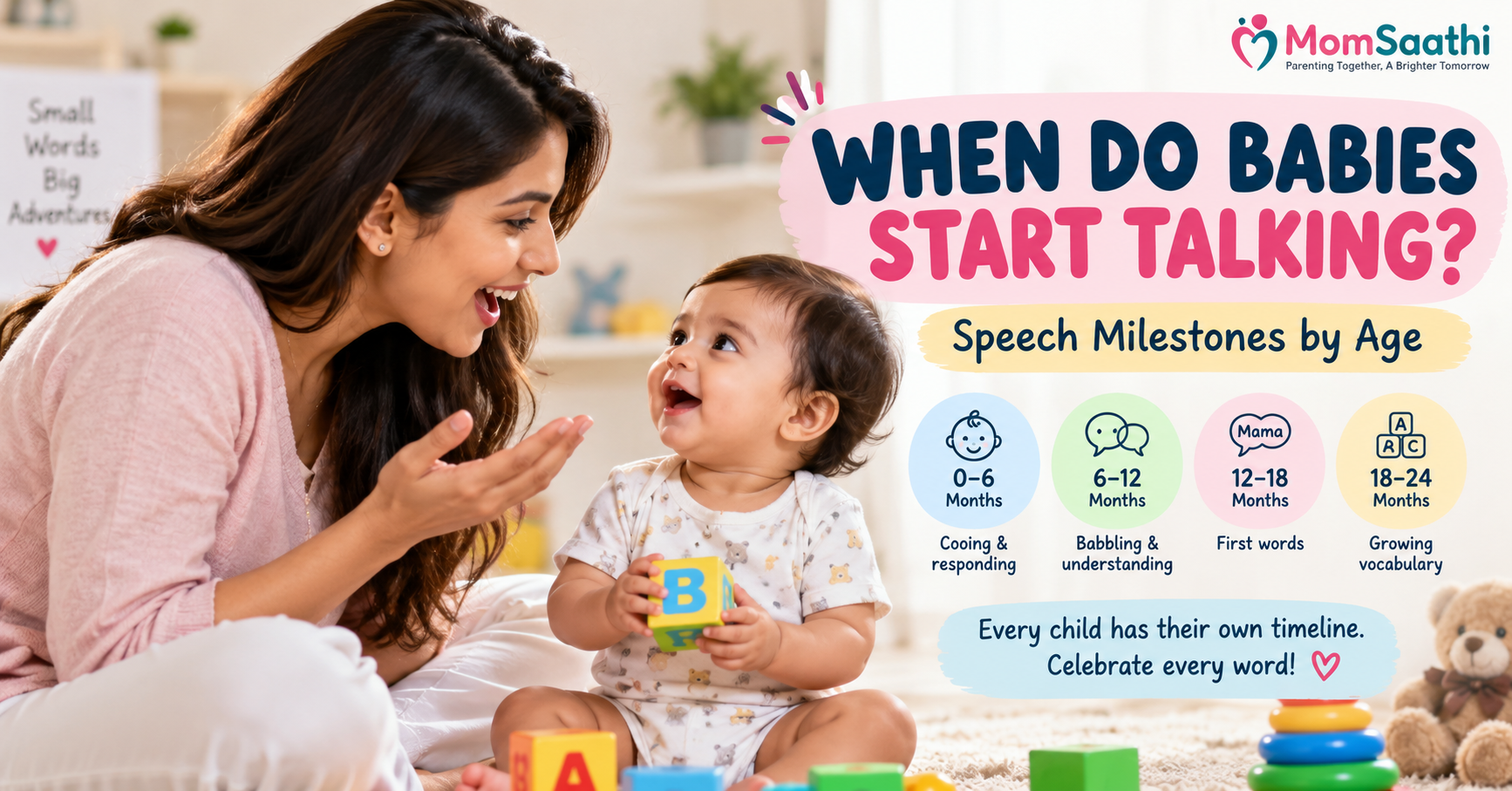
Most babies start saying their first meaningful words between 12 and 18 months of age. However, language development varies from child to child. Some babies may say simple words like “Mama” or “Dada” before their first birthday, while others may take a little longer.
Quick Answer: Most babies start talking between 12 and 18 months of age. Before saying their first words, babies typically communicate through cooing, babbling, gestures, and facial expressions. Every child develops at their own pace, but parents should consult a pediatrician if there are concerns about speech or language delays.
Baby Talking Milestones by Age
Birth to 6 Months
- Responds to sounds
- Makes cooing sounds
- Smiles when spoken to
- Turns head toward voices
6 to 12 Months
- Babbles using sounds like “ba-ba” and “da-da”
- Responds to their name
- Understands simple words such as “no”
- Uses gestures like waving
12 to 18 Months
- Says first meaningful words
- Understands simple instructions
- Points to objects they want
- Learns new words regularly
18 to 24 Months
- Vocabulary grows to around 50 words or more
- Combines two words together
- Follows simple directions
- Names familiar people and objects
Signs Your Baby Is Learning to Talk
Parents may notice several signs before actual words appear:
- Frequent babbling
- Responding to voices
- Copying sounds
- Pointing at objects
- Using gestures to communicate
- Showing interest in conversations
These are positive indicators that speech and language skills are developing normally.
How Parents Can Encourage Talking
Talk Frequently
Speak to your baby throughout the day about everyday activities.
Read Books Daily
Reading introduces new vocabulary and helps language development.
Sing Songs and Rhymes
Simple rhymes improve listening and speech skills.
Respond to Sounds
When your baby babbles, respond enthusiastically to encourage communication.
Limit Screen Time
Face-to-face interaction is far more effective for language learning than screens.
When Should Parents Be Concerned?
Consider speaking with a pediatrician if your child:
- Does not babble by 12 months
- Does not respond to their name
- Has no meaningful words by 18 months
- Loses previously acquired speech skills
- Shows limited eye contact or communication attempts
Early evaluation can help identify speech or hearing concerns and provide appropriate support.
Key Takeaway
Most babies begin speaking their first words between 12 and 18 months. Parents can support language development through talking, reading, singing, and interactive play. Every child develops at their own pace, but regular monitoring of milestones can help identify potential concerns early.
Frequently Asked Questions
Is it normal for a 2-year-old not to talk?
Some children develop speech later than others, but if a 2-year-old has very few words, parents should consult a pediatrician or speech therapist.
What is usually a baby’s first word?
Common first words include Mama, Dada, Bye-Bye, Ball, and No.
Do boys talk later than girls?
Some studies suggest boys may develop language slightly later on average, but individual differences are much more important.
Can screen time delay speech development?
Excessive screen time may reduce opportunities for real-life interaction, which is essential for language learning.
When should I seek professional help?
Parents should seek professional advice if speech milestones are significantly delayed or if there are concerns about hearing, communication, or social interaction.
Trusted Resources for Parents
Parents looking for additional information on child development, speech milestones, and child health can refer to these trusted resources:
- CDC Developmental Milestones
– Official developmental milestone checklists and early childhood development guidance. - American Academy of Pediatrics (HealthyChildren.org)
– Expert-reviewed parenting advice on child growth, speech development, nutrition, and health. - World Health Organization (WHO) Child Health Resources
– Global guidance on child health, development, nutrition, and well-being.