
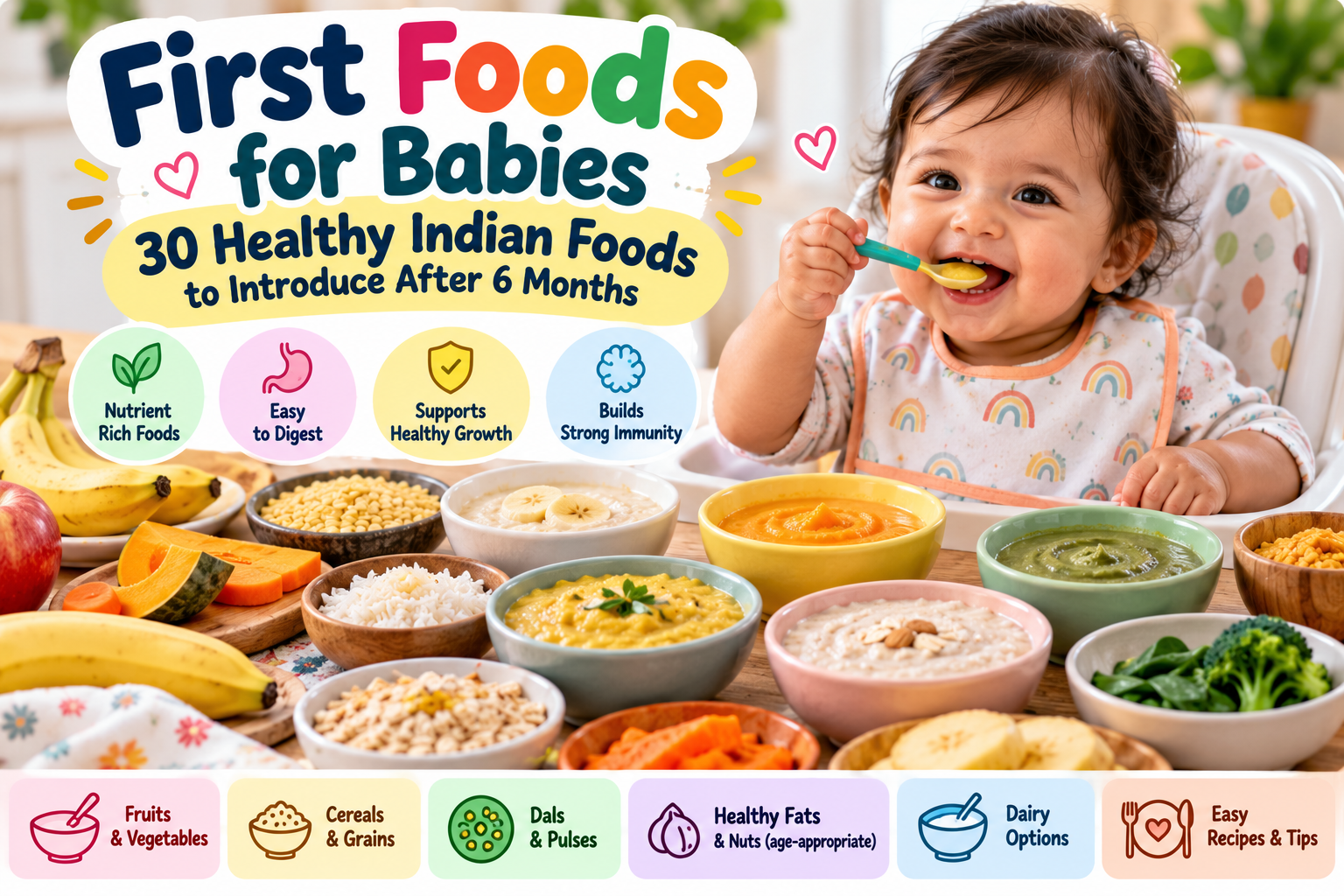
First Foods for Babies: 30 Healthy Indian Foods to Introduce After 6 Months

At around six months, babies can explore nutritious Indian family foods alongside breast milk or infant formula, using safe, age-appropriate textures.
When can babies start eating solid foods?
Most babies are ready for complementary foods at about six months, while continuing breast milk or infant formula. Look for readiness signs: your baby can hold their head steady, sit upright with support, coordinate looking at food and bringing it to the mouth, and swallow food rather than consistently pushing it out with the tongue. Age alone is not the only sign. Do not start solids before four months; if readiness is uncertain, discuss it with your paediatrician.
Breast milk or infant formula remains an important source of nutrition during the first year. Solids gradually add energy, iron and other nutrients; they do not replace milk feeds suddenly. Offer food when your baby is alert, seat them upright in a high chair or supported seat, and stay within arm’s reach throughout the meal. Never leave a baby alone with food.
30 healthy Indian first foods to introduce after 6 months
Begin with small amounts and a soft, thick, smooth or mashed texture. As your baby becomes more skilled, gradually move towards thicker mashes, soft lumps and safe finger foods. Always adapt the shape and texture to your baby’s developmental abilities.
Cereals and grains
- Rice: Cook rice until soft and mash with water, breast milk or prepared formula. Keep it thick enough to stay on a spoon rather than watery. Combine with dal or vegetables for a more varied meal.
- Ragi (finger millet): Cook ragi flour thoroughly into a smooth porridge. Ragi provides iron and calcium; pair plant-based iron foods with vitamin C-rich fruit or vegetables to support iron absorption.
- Oats: Cook plain oats until soft and mash or blend. Avoid flavoured instant oats with added sugar or salt. You can combine cooked oats with mashed pear or banana.
- Suji (semolina): Prepare a soft, well-cooked porridge with water. Add mashed vegetables or fruit for variety; do not add sugar. Stir well so there are no dry or lumpy patches.
- Soft wheat porridge: Cook daliya or broken wheat until very soft. Wheat contains gluten; introduce it in a small, age-appropriate serving and watch for a reaction, as with other allergen-containing foods.
Pulses, dals and protein foods
- Moong dal: Cook split yellow moong until completely soft and mash it. A thick dal mash is easier to eat than thin, watery soup. Mix with rice or pumpkin if your baby accepts both.
- Masoor dal: Cook red lentils until they break down easily. Begin with a smooth texture and gradually leave soft, tiny lumps as skills develop.
- Toor dal: Pressure-cook pigeon pea dal until very soft, then mash or sieve if needed. Use little or no added salt and avoid spicy tempering.
- Well-cooked egg: Offer fully cooked egg, mashed finely. Egg is a common allergen, but guidance does not recommend unnecessarily delaying it once complementary feeding begins. Introduce a small amount when your baby is well.
- Chicken: Cook boneless chicken thoroughly until tender, then finely shred, mince or puree with vegetable mash. Check carefully for bones and ensure there are no tough or stringy pieces.
- Boneless fish: Choose a low-mercury fish, cook fully and flake finely, checking meticulously for bones. Avoid high-mercury fish and raw or undercooked seafood.
- Paneer: Offer fresh, pasteurised paneer cooked until soft and mashed finely. Avoid large, rubbery cubes that may be difficult to chew.
Vegetables
- Carrot: Steam or boil until it can be squashed easily between your fingers, then mash or serve in a safe soft shape. Never give hard raw carrot pieces.
- Sweet potato: Cook until very soft and mash. Its naturally sweet taste can make it an easy first vegetable. Combine with dal for a more substantial meal.
- Pumpkin: Steam or boil and mash to a smooth, thick consistency.
- Potato: Boil until soft and mash with breast milk, formula or water. Avoid salt and packaged seasoning. Add another vegetable or protein food for variety.
- Peas: Cook until very soft and mash thoroughly. Do not serve whole peas to a young baby because round foods can be a choking risk.
- Spinach: Cook thoroughly and finely puree or chop into dal. Use as part of a varied diet rather than relying on spinach alone for iron.
- Beetroot: Steam or boil until soft and mash. A small amount can be mixed into rice or dal; stool may temporarily look pink or reddish after beetroot.
- Bottle gourd (lauki): Peel, remove seeds if mature, cook until soft and mash. Use fresh produce and discard any bitter-tasting bottle gourd.
Fruits
- Banana: Choose a ripe banana and mash thoroughly. If the mash is sticky, loosen it with a little water or milk feed.
- Stewed apple: Peel, cook until soft and mash. Do not offer hard raw apple pieces, which can be a choking hazard.
- Pear: Peel and steam or stew until soft, then mash. Very ripe pear can be mashed if its texture is safe for your baby.
- Papaya: Offer ripe papaya with seeds and skin removed, mashed to a soft consistency. Choose clean, fresh fruit.
- Chikoo (sapota): Use ripe fruit, remove skin and seeds completely, and mash the flesh. Check for hard fibres or seed fragments.
- Avocado: Mash ripe avocado until smooth. It provides energy and unsaturated fats and can be combined with banana or vegetables.
- Mango: Offer ripe mango with skin and stone removed, mashed or pureed. Avoid added sugar, juice or large slippery chunks.
Other nutritious foods
- Plain full-fat curd: Offer pasteurised, unsweetened curd in a small amount. Dairy foods such as curd can be part of complementary foods, although cow’s milk should not be the main drink before 12 months.
- Well-cooked, mashed beans: Rajma, chana or black-eyed peas can be offered after thorough soaking and cooking until very soft. Remove skins if needed and mash well; never serve whole firm beans.
- Nut paste: Smooth, thinned peanut or other nut butter can be introduced in a tiny amount mixed into porridge or puree. Never give whole nuts or a thick spoonful of nut butter. If your baby has severe eczema or an existing food allergy, ask the paediatrician about allergen introduction first.
How to introduce first foods safely
- Begin with small portions: A few teaspoons are enough for early exploration. Follow hunger and fullness cues; never force-feed or distract your baby into eating more.
- Offer variety: Include iron-rich foods such as dal, egg, meat or iron-fortified infant cereal regularly. Combine plant sources of iron with vitamin C foods such as tomato, papaya or mango.
- Introduce common allergens thoughtfully. If you notice a rash after feeding, read our guide to baby food allergy rash, and seek medical advice for suspected reactions: Egg, peanut, wheat, dairy, soy, sesame, fish and shellfish can be introduced in age-appropriate forms. Offer one new allergen at a time and in a small amount so a reaction is easier to identify. Once tolerated, keep it in the diet regularly. Do not delay allergens without a medical reason.
- Progress textures: Do not keep every food as a thin puree. Move towards mashed foods with soft lumps and safe finger foods as your baby develops skills. Texture progression supports learning to chew.
- Practise responsive feeding: Let your baby touch, smell and explore food. Stop when they turn away, close their mouth or show they have had enough. Mealtimes should be calm and supervised.
- Maintain hygiene: Wash hands, clean utensils, cook foods thoroughly, refrigerate leftovers promptly and do not re-feed food that has been in the baby’s mouth.
- Keep meals simple: Avoid adding salt, sugar, chilli or strong seasoning. Family foods can be adapted by setting aside a baby portion before adding salt or chilli to the family dish.
Foods and feeding practices to avoid
- Honey before 12 months: Avoid honey in food or on a pacifier because of infant botulism risk.
- Added salt and sugar: Do not add salt, sugar, jaggery, syrups or sweeteners. Avoid salty packaged snacks and sugary drinks.
- Choking hazards: Avoid whole nuts, popcorn, whole grapes, raw hard carrot, chunks of apple, hard sweets, large pieces of meat and thick spoonfuls of nut butter. Prepare food in a safe shape and texture.
- Unpasteurised or unsafe foods: Avoid unpasteurised milk and dairy, raw or undercooked eggs, meat, fish and seafood.
- Tea, coffee and sugary drinks: These are not suitable for babies. Offer small sips of safe drinking water with meals once solids begin; continue breast milk or formula as the main milk drink.
- Unsafe home remedies: Do not add herbal powders, gripe mixtures, honey or traditional supplements unless your child’s clinician specifically advises it.
How much and how often should a 6-month-old eat?
At the beginning, offer complementary food once or twice a day as your baby learns. WHO guidance generally recommends complementary foods two to three times daily for babies aged 6–8 months, and three to four times daily from 9–23 months, with nutritious snacks as appropriate. Continue breast milk or infant formula and increase food quantity and texture gradually.
For an age-wise feeding overview as your baby grows, read our baby food chart for 0–24 months.
When should you speak to a paediatrician?
Seek urgent help for breathing difficulty, swelling of the lips or tongue, floppiness or a severe allergic reaction. Contact your paediatrician about repeated vomiting, widespread hives, blood in stool, dehydration, poor weight gain or frequent coughing and choking during meals.
Frequently asked questions
What is the best first food for a 6-month-old baby in India?
There is no single best first food. Soft-cooked rice, moong dal, ragi porridge, mashed vegetables, ripe banana and well-cooked egg are examples. Prioritise iron-rich foods, safe textures and variety.
Can I give rice and dal to my 6-month-old baby?
Yes. Cook rice and dal until very soft and mash them into a thick, moist consistency. Keep salt and added sugar out, and make the texture suitable for your baby’s skills.
Should I give only fruit puree first?
No. Fruit can be included, but babies also need iron-rich and protein-containing foods. Offer a variety of vegetables, grains, pulses and suitable animal-source foods where the family eats them.
Can a 6-month-old drink water?
You can offer a few sips of safe drinking water with meals once complementary feeding starts. Breast milk or infant formula remains the main source of milk and fluid during the first year. Do not replace milk feeds with water.
Do I need to wait three days before every new food?
A strict three-day wait for every ordinary food is not necessary for all babies. Introduce common allergens one at a time in a small amount, watch for symptoms, and follow your clinician’s advice if your baby has allergy risk factors.
Can I add ghee to baby food?
A small amount of plain ghee may be used as part of a varied family diet if tolerated, but it is not essential and should not replace nutrient-rich foods. Avoid adding salt or sugar.
What if my baby refuses a new food?
Do not force your baby to eat. Pause and offer it again another day in a familiar, safe texture. Babies may need repeated, relaxed exposures before accepting a new taste. Keep mealtimes positive and watch your baby’s fullness cues.
Final thoughts
Offer a variety of familiar foods in safe textures, include iron-rich options, continue breast milk or formula, and let your baby guide the pace. For individual feeding concerns, consult your paediatrician.
References and further reading
- World Health Organization: WHO Guideline for Complementary Feeding of Infants and Young Children 6–23 Months
- World Health Organization: Infant and Young Child Feeding
- NHS: Foods to Avoid Giving Babies and Young Children
- US Centers for Disease Control and Prevention: Foods and Drinks for Infants and Toddlers
- UNICEF Parenting: Food and Nutrition
Medical disclaimer: This article provides general educational information and is not a substitute for advice from your baby’s paediatrician or a registered dietitian. Feeding needs can differ, particularly for premature babies and babies with medical or allergy concerns.