
Medical Note: Baby poop color varies depending on age, feeding method, medications, and diet. Most color changes are harmless, but white, red, or persistent black stools should always be evaluated by a pediatrician.
One of the first things new parents notice is that their baby’s poop changes color, texture, and consistency frequently. While these changes can seem alarming, most are a normal part of your baby’s digestive development.
From the black meconium passed shortly after birth to mustard-yellow breastfed stools and green or brown poop after introducing solids, each color tells a different story about your baby’s health. However, certain colors—such as white, red, or black (after the newborn period)—may signal an underlying medical problem and require immediate attention.
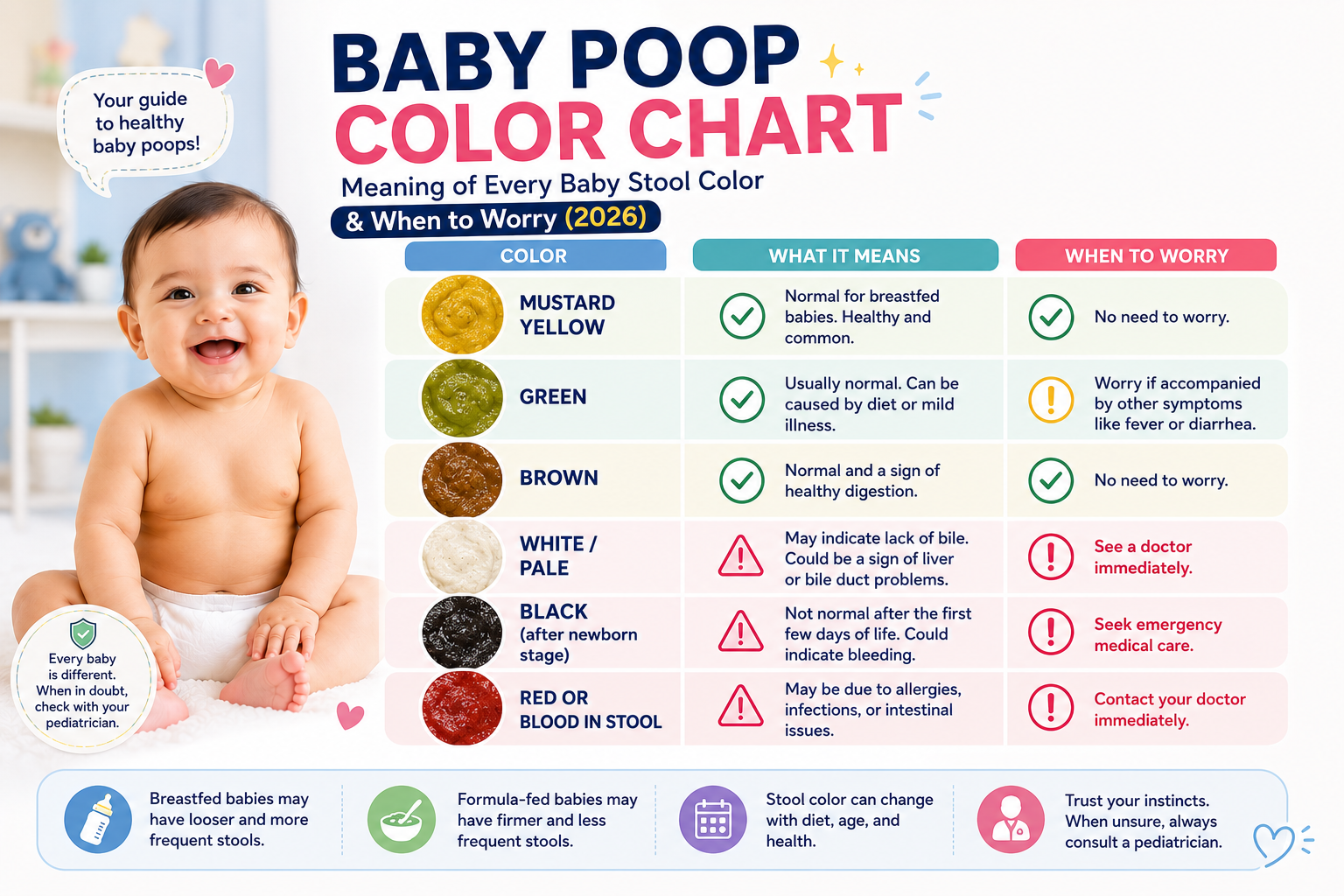
This comprehensive Baby Poop Color Chart explains what each stool color means, the most common causes, what’s considered normal, and when parents should contact a healthcare professional.
As the cornerstone guide for baby stool health on MomSaathi, this article also links to detailed guides covering Yellow Baby Poop, White Baby Poop, Mucus in Baby Poop, Green Baby Poop, Black Baby Poop, and other common stool concerns.
Baby Poop Color Chart at a Glance
| Baby Poop Color | Is It Normal? | What It Usually Means |
|---|---|---|
| Black (Meconium) | ✅ Yes (First 2–3 Days) | First newborn stool |
| Mustard Yellow | ✅ Yes | Healthy breastfed baby |
| Bright Yellow | ✅ Yes | Normal breast milk digestion |
| Green | ✅ Usually | Formula, iron, or digestion |
| Brown | ✅ Yes | Common after solids |
| Tan | ✅ Yes | Formula-fed babies |
| Orange | ✅ Usually | Diet or natural pigments |
| White | ❌ No | Possible liver or bile duct disease |
| Red | ❌ No | Blood in stool or food coloring |
| Gray | ❌ No | Possible bile obstruction |
| Black (After Newborn Stage) | ❌ No | Possible gastrointestinal bleeding |
Why Does Baby Poop Change Color?
Baby stool color changes because of several natural factors, including:
- Breastfeeding
- Formula feeding
- Introduction of solid foods
- Iron supplements
- Medications
- Digestive development
- Illness
- Hydration status
As your baby’s digestive system matures, stool color and consistency will naturally evolve.
What Determines Baby Poop Color?
Several factors influence stool color:
Feeding Type
- Breastfed babies usually pass mustard-yellow stools.
- Formula-fed babies often have tan or light brown stools.
Bile Pigments
Bile produced by the liver gives stool its normal yellow, green, and brown shades.
Intestinal Transit Time
Faster digestion may result in green stool, while slower digestion often produces brown stool.
Foods
After six months, foods such as:
- Carrots
- Pumpkin
- Spinach
- Blueberries
- Beets
may temporarily change stool color.
Baby Poop by Age
| Age | Typical Stool Color |
|---|---|
| Birth–2 Days | Black (Meconium) |
| Day 3–5 | Greenish-Yellow |
| Week 1–6 | Mustard Yellow |
| Formula-fed Infant | Tan or Brown |
| Starting Solids | Brown, Green, Orange |
Black Baby Poop (Meconium)
The first stool passed by newborns is called meconium.
It is:
- Thick
- Sticky
- Black
- Tar-like
- Odorless
Meconium contains:
- Amniotic fluid
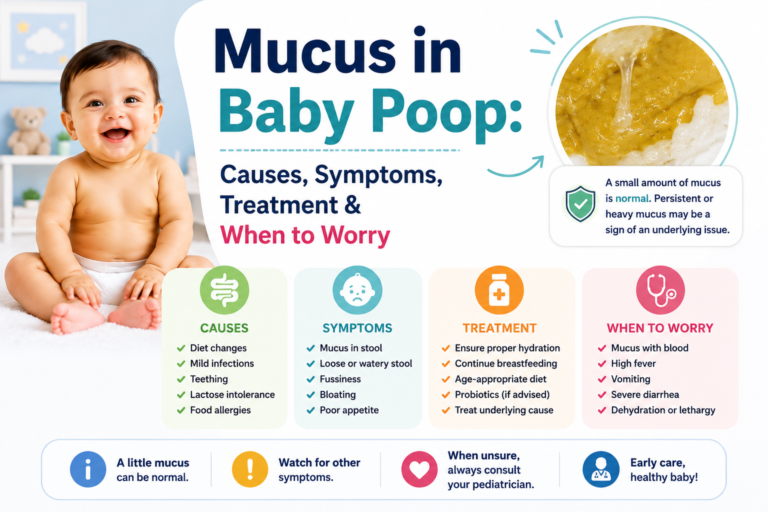
- Mucus
- Skin cells
- Intestinal secretions
This is completely normal during the first 24–48 hours after birth.
However, black stool after the newborn period is not normal and may indicate bleeding in the digestive tract.
Yellow Baby Poop
Mustard-yellow poop is considered the gold standard for healthy breastfed babies.
Typical characteristics include:
- Bright yellow
- Mustard color
- Soft
- Seedy appearance
- Mild odor
Yellow stools indicate that your baby’s digestive system is working properly.
Some babies poop after nearly every feeding, while others may poop less frequently.
👉 Learn more in our complete guide on Yellow Baby Poop, where we explain normal yellow stools, warning signs, and when parents should seek medical advice.
Green Baby Poop
Green stools are very common and usually harmless.
Common causes include:
- Iron-fortified formula
- Foremilk-hindmilk imbalance
- Viral illness
- Digestive changes
- Green vegetables after solids
Green poop alone is usually not a reason for concern if your baby is feeding well and gaining weight.
A dedicated Green Baby Poop guide can help parents understand when green stools are expected and when additional evaluation is needed.
Brown Baby Poop
Brown poop typically appears after introducing solid foods.
It may range from:
- Light brown
- Peanut butter-colored
- Dark brown
This usually indicates healthy digestion and normal bile production.
Brown stool is considered normal in both older infants and toddlers.