Medical Note: This article is for educational purposes only and should not replace professional medical advice. If your baby has persistent diarrhea, blood in the stool, dehydration, severe vomiting, or appears unusually sleepy, consult your pediatrician immediately.
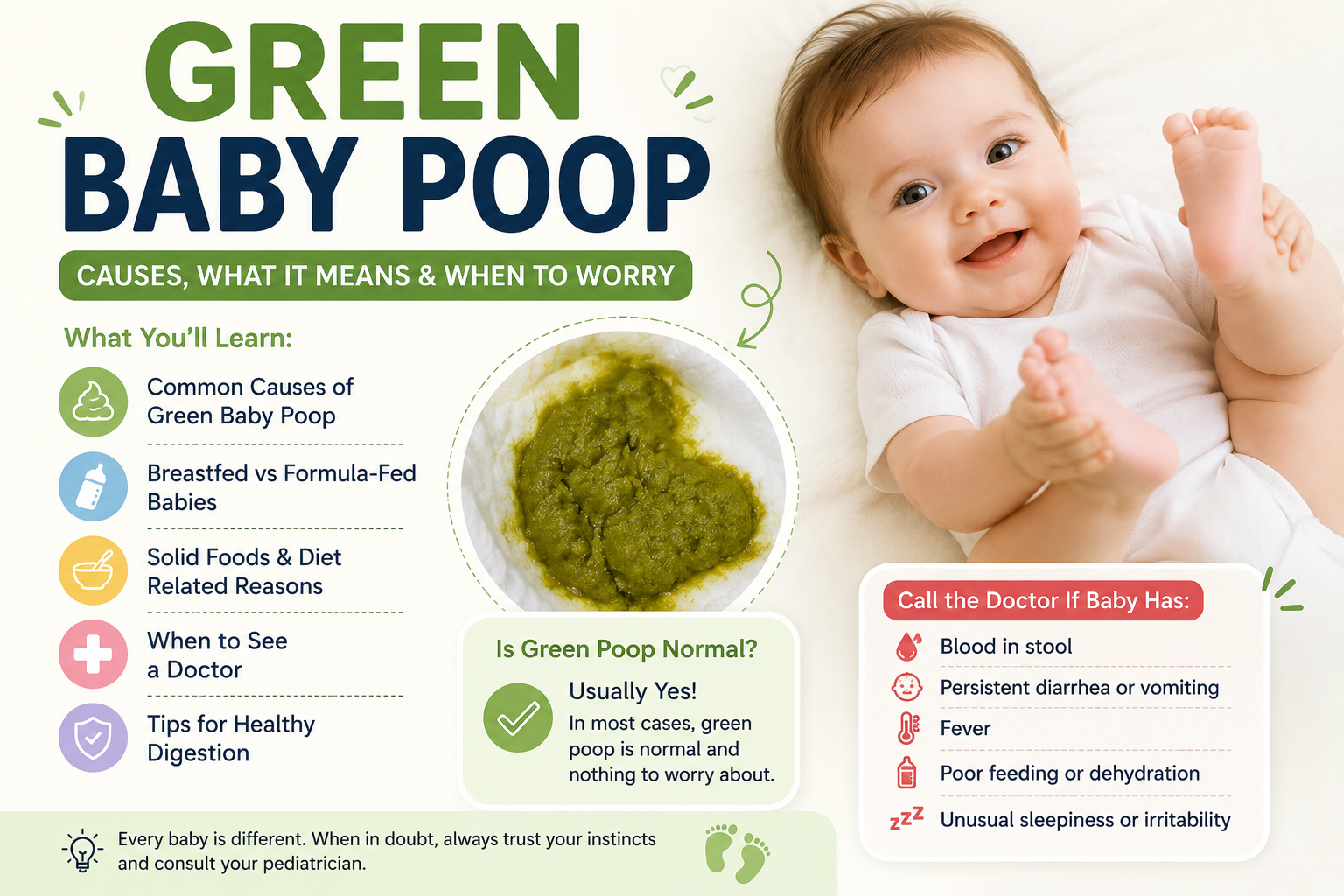
Noticing green baby poop can surprise many parents, especially if they’re expecting the typical yellow or brown stool. The good news is that green poop is usually normal and often linked to your baby’s diet, feeding habits, or digestive system. In most cases, it isn’t a cause for concern.
However, green stools accompanied by diarrhea, blood, fever, poor feeding, or dehydration may indicate an underlying health problem that requires medical attention.
If you’re still expecting, you may also be interested in our guide on How Many Weeks Can You Find Out Gender.
This guide explains the common causes of green baby poop, when it’s considered normal, and the signs that mean it’s time to contact your pediatrician.
For trusted information on infant digestion, feeding, and bowel habits, visit HealthyChildren.org, a resource from the American Academy of Pediatrics.
Is Green Baby Poop Normal?
Yes. Green poop is common in newborns and infants and is often completely normal. A baby’s stool color can change frequently depending on age, diet, feeding method, medications, and digestion.
As long as your baby is feeding well, gaining weight, and doesn’t show signs of illness, green poop alone is usually not a reason to worry.
What Causes Green Baby Poop?
Several factors can change your baby’s stool color.
1. Meconium (First Baby Poop)
During the first few days after birth, newborns pass meconium, a thick, sticky stool that appears blackish-green or dark green.
This is completely normal and usually changes to yellow or mustard-colored stools within a few days as feeding becomes established.
2. Breastfeeding
Breastfed babies occasionally have green stools.
Possible reasons include:
- Fast milk flow
- Receiving more foremilk than hindmilk
- Temporary digestive changes
- Minor viral illnesses
In most cases, babies remain healthy and continue feeding normally.
3. Formula Feeding
Iron-fortified infant formulas commonly produce:
- Dark green poop
- Greenish-brown stool
- Firmer stools
This is a normal effect of iron and doesn’t usually indicate a problem.
4. Starting Solid Foods
Once babies begin eating solids (around 6 months), green vegetables can change stool color.
Common foods include:
- Spinach
- Peas
- Broccoli
- Green beans
- Avocado
- Kale
Food coloring in processed foods can also contribute to green stools.
5. Iron Supplements
Babies taking iron supplements may pass:
- Dark green poop
- Green-black stools
This is a harmless side effect unless other symptoms develop.
6. Mild Stomach Infection
A viral stomach bug may speed up digestion, causing bile to remain green instead of changing to brown during digestion.
Other symptoms may include:
- Loose stools
- Vomiting
- Mild fever
- Fussiness
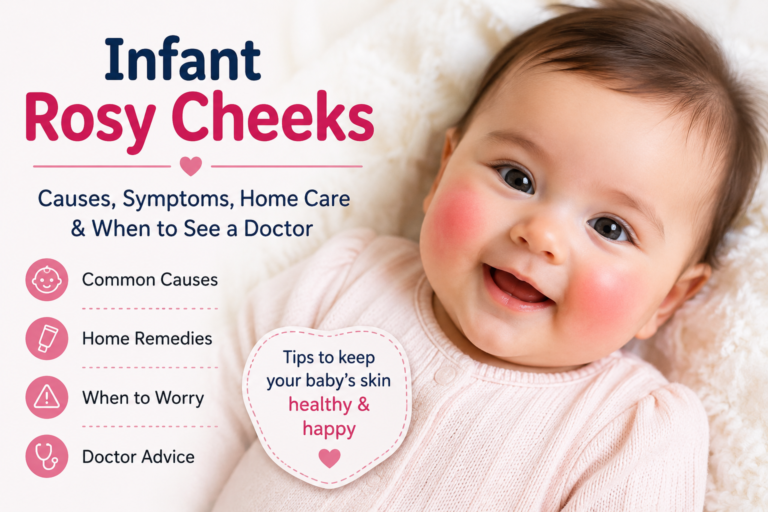
If your baby also has flushed skin or facial redness, read our guide on Infant Rosy Cheeks to understand common causes and when medical care is needed.
7. Food Allergy or Sensitivity
Occasionally, green stools may occur due to an allergy or intolerance, particularly to cow’s milk protein.
Symptoms may include:
- Blood or mucus in stool
- Frequent diarrhea
- Skin rash or eczema
- Poor weight gain
- Excessive crying
Your pediatrician can help determine whether further evaluation is needed. Some babies with food allergies may also develop Baby Hives, which can appear as raised, itchy welts on the skin.
8. Antibiotics
Antibiotics can temporarily alter the balance of bacteria in the gut, leading to green stools.
The stool usually returns to normal after treatment ends.
The CDC Infant & Toddler Nutrition guide provides practical advice on breastfeeding, formula feeding, and introducing solid foods.
Green Baby Poop by Age
| Baby’s Age | Green Poop Normal? |
|---|---|
| 0–3 Days | ✅ Yes (Meconium) |
| 4 Days–6 Months | ✅ Usually normal |
| Breastfed Babies | ✅ Common |
| Formula-fed Babies | ✅ Common |
| After Starting Solids | ✅ Often food-related |
| Toddlers | ✅ Often diet-related |
What Does Healthy Baby Poop Look Like?
| Color | Meaning |
|---|---|
| Mustard Yellow | Normal (breastfed babies) |
| Brown | Normal |
| Tan | Normal |
| Green | Usually normal |
| Black (first days only) | Meconium |
| Red | May indicate blood—seek medical advice |
| White or Pale | May indicate liver or bile duct problems—seek urgent medical care |
Symptoms That May Accompany Green Baby Poop
Depending on the cause, your baby may also experience:
- Mild gas
- Fussiness
- Spitting up
- Loose stools
- Temporary stomach upset
- Mild fever (with viral illness)
- Increased bowel movements
Green poop without other symptoms is generally harmless.
Home Care Tips for Green Baby Poop
In most cases, green baby poop doesn’t require treatment. Instead, focus on keeping your baby healthy and well-fed.
Continue Regular Feeding
Whether your baby is breastfed or formula-fed, continue feeding as usual unless your pediatrician advises otherwise.
Monitor Hydration
Ensure your baby is getting enough fluids.
Signs of good hydration include:
- Regular wet diapers
- Moist mouth
- Active behavior
- Normal tears when crying (for older infants)
Breastfeeding Tips
If you’re breastfeeding:
- Allow your baby to finish one breast before switching to the other.
- Feed on demand.
- Avoid changing breasts too quickly if advised by your lactation consultant.
This helps your baby receive both foremilk and hindmilk.
Formula Feeding Tips
If your baby drinks formula:
- Prepare formula exactly as directed.
- Do not dilute formula.
- Avoid changing formulas frequently unless recommended by your pediatrician.
Introduce Solids Gradually
If your baby has started solids:
- Introduce one new food at a time.
- Expect temporary color changes after eating green vegetables.
- Monitor for any signs of food allergies.
Green Poop in Breastfed vs Formula-Fed Babies
| Breastfed Babies | Formula-Fed Babies |
|---|---|
| Bright green stools may occur occasionally | Dark green stools are common due to iron-fortified formula |
| Usually loose and seedy | Often firmer |
| Often related to digestion or feeding patterns | Usually related to iron content |
| Usually harmless | Usually harmless |
When Should You Call a Doctor?
Contact your pediatrician if your baby has green poop along with:
- Blood in the stool
- White, gray, or chalky-colored stools
- Persistent diarrhea
- Frequent vomiting
- Fever (especially in infants younger than 3 months)
- Poor feeding
- Weight loss or poor weight gain
- Signs of dehydration (dry mouth, fewer wet diapers, no tears when crying)
- Severe fussiness or lethargy
- Green stools lasting several weeks with other concerning symptoms
Seek emergency medical care if your baby has difficulty waking up, trouble breathing, severe dehydration, or large amounts of blood in the stool.
Green Baby Poop vs Diarrhea
| Green Baby Poop | Diarrhea |
|---|---|
| Normal consistency | Very watery stools |
| Baby feeds well | Poor feeding |
| Normal activity | Lethargy or unusual sleepiness |
| No dehydration | Signs of dehydration |
| Often caused by diet or iron | Usually caused by infection or illness |
Can Green Baby Poop Be Prevented?
Green poop isn’t always preventable because it’s often a normal response to digestion or diet. However, you can support healthy digestion by:
- Feeding your baby regularly.
- Following safe formula preparation guidelines.
- Introducing new foods gradually.
- Maintaining good hand hygiene to reduce infections.
- Keeping up with routine pediatric check-ups.
Conclusion
Green baby poop is usually a normal variation in stool color and is commonly seen in newborns, breastfed babies, formula-fed infants, and babies starting solid foods. In most cases, it isn’t a sign of illness and doesn’t require treatment.
However, if green stools occur alongside symptoms such as blood in the stool, persistent diarrhea, vomiting, fever, dehydration, poor feeding, or poor weight gain, it’s important to seek medical advice promptly. Paying attention to your baby’s overall health is more important than focusing on stool color alone. Explore our Child Development Milestones guide to understand how feeding, digestion, and growth change during your baby’s early years.
Frequently Asked Questions
Is green baby poop normal?
Yes. Green poop is common in infants and is often caused by diet, digestion, iron-fortified formula, or normal digestive processes.
Why is my breastfed baby’s poop green?
It may be related to feeding patterns, temporary digestive changes, or minor viral illnesses. If your baby is otherwise healthy, it’s usually not a concern.
Does formula cause green poop?
Yes. Iron-fortified formulas commonly produce dark green stools.
Can teething cause green poop?
Teething itself doesn’t usually cause green poop, but it can increase drooling. Learn how to manage Baby Drool Rash caused by excess saliva.
What foods make baby poop green?
Green vegetables such as spinach, peas, broccoli, kale, green beans, and avocado can temporarily change stool color.
Should I stop breastfeeding if my baby’s poop is green?
No. Continue breastfeeding unless your pediatrician advises otherwise.
Is dark green poop normal?
Yes. Dark green stools are commonly seen in formula-fed babies and those taking iron supplements.
When is green poop an emergency?
Seek immediate medical care if green stools are accompanied by severe dehydration, large amounts of blood, difficulty breathing, or your baby is difficult to wake.
Can antibiotics cause green poop?
Yes. Antibiotics can temporarily change the balance of gut bacteria, leading to green stools.
What stool colors should parents worry about?
Red, white, gray, or black stools (after the newborn meconium stage) should be evaluated by a healthcare provider.
Does green poop mean an infection?
Not always. While infections can cause green stools, diet and normal digestion are much more common causes.
How long does green baby poop last?
It may last a few days or longer, depending on the cause. If it persists with other symptoms, consult your pediatrician.
Can food allergies cause green stools?
Yes. Some babies with cow’s milk protein allergy or other food sensitivities may develop green stools along with blood, mucus, eczema, or poor weight gain.
Is green poop normal after starting solids?
Yes. Green vegetables and certain foods can temporarily turn your baby’s stool green.
Should I change my baby’s formula because of green poop?
Not usually. If your baby is otherwise healthy and growing well, green poop alone is not a reason to switch formulas. Consult your pediatrician before making any changes.