
Editorial Note: This article is for informational purposes only and does not replace professional medical advice. If your baby’s rosy cheeks are accompanied by a high fever, breathing difficulties, swelling, persistent rash, or signs of illness, seek medical care promptly.
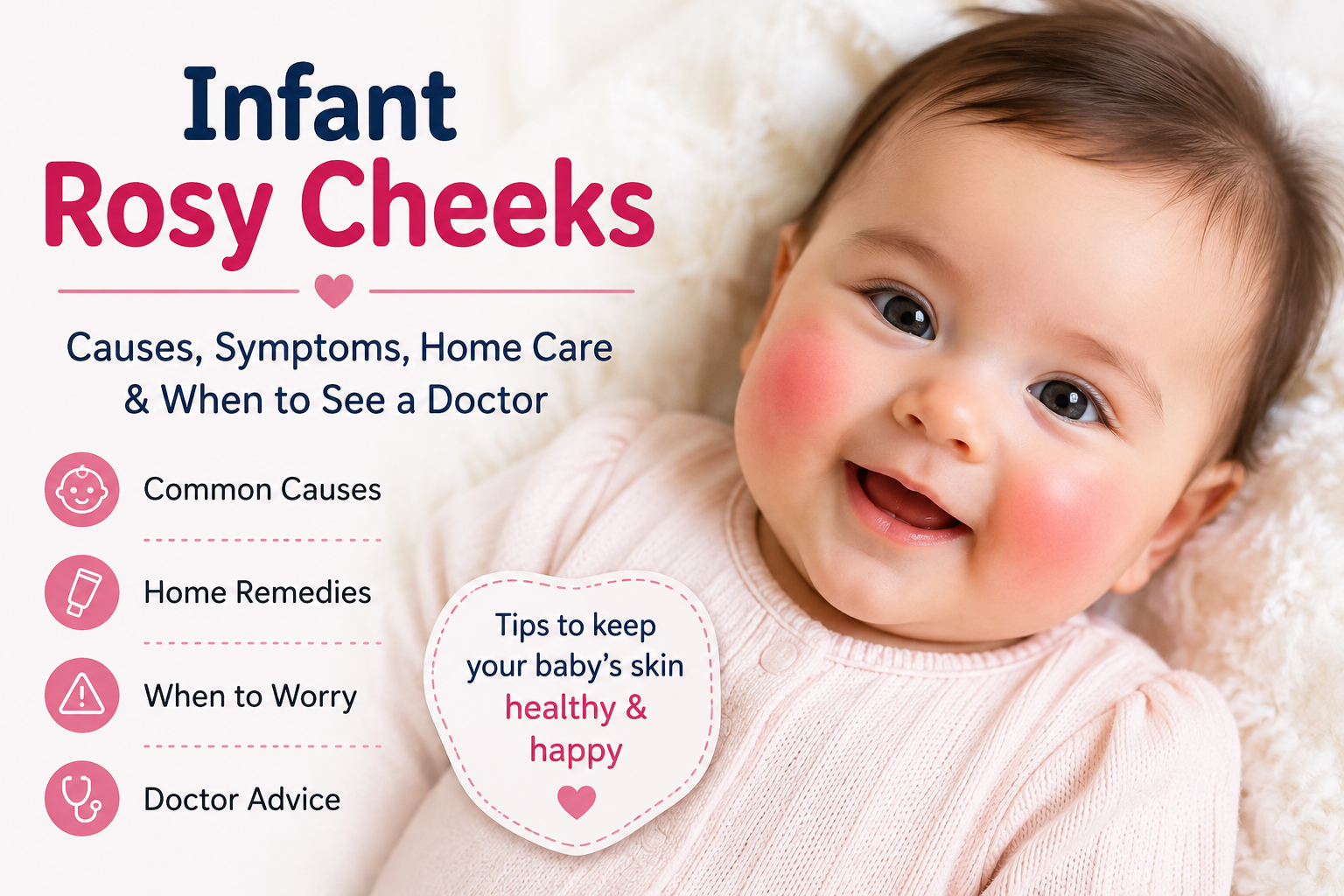
Seeing your baby’s cheeks turn bright pink or rosy can be adorable, but it can also leave parents wondering whether it’s completely normal or a sign of an underlying health issue. In many cases, infant rosy cheeks are harmless and caused by healthy blood circulation, warm weather, excitement, or physical activity. However, persistent redness or cheeks accompanied by a rash, fever, or discomfort may require medical evaluation.
This guide explains the most common causes of rosy cheeks in infants, how to care for your baby’s skin at home, and when it’s important to consult a healthcare provider.
What Are Rosy Cheeks in Infants?
Rosy cheeks refer to a pink or red appearance on one or both cheeks caused by increased blood flow near the skin’s surface. Because an infant’s skin is thinner and more delicate than an adult’s, even small changes in temperature or circulation can make the cheeks appear noticeably red.
In most healthy babies, rosy cheeks are temporary and fade on their own.
HealthyChildren.org provides trusted information on infant skin care, common childhood illnesses, and healthy development.
Common Causes of Rosy Cheeks in Infants
1. Normal Blood Circulation
Healthy infants often have naturally pink cheeks due to their active blood circulation and delicate skin.
This is completely normal and usually doesn’t require treatment.
If your baby develops skin irritation from excessive drooling, you may also find our guide on Baby Drool Rash helpful.
2. Warm Weather or Overheating
Babies can develop flushed cheeks when they become too warm.
Common reasons include:
- Wearing too many layers
- Hot weather
- Warm indoor temperatures
- Sleeping under heavy blankets
Once the baby cools down, the redness usually fades.
3. Cold Weather
Exposure to cold air followed by entering a warm room can temporarily make the cheeks appear rosy.
This is a normal response as blood vessels expand to warm the skin.
If your baby’s red cheeks are accompanied by raised, itchy welts, they may be experiencing Baby Hives rather than simple flushing.
4. Teething
Some babies develop mild cheek redness while teething due to increased drooling and skin irritation.
Teething itself doesn’t directly cause bright red cheeks, but drool collecting around the face can irritate sensitive skin.
Rosy cheeks sometimes appear during teething. Learn more about the Baby Teeth Order and what to expect during tooth eruption.
5. Physical Activity or Crying
Crawling, playing, laughing, or crying vigorously increases blood flow, making the cheeks appear pink for a short period.
The redness usually disappears within a few minutes after your baby calms down.
6. Sensitive Skin
Infants with sensitive skin may experience redness after exposure to:
- Fragranced skincare products
- Rough fabrics
- Saliva
- Certain detergents
- Dry weather
7. Dry Skin or Mild Eczema
Dry skin may cause:
- Red cheeks
- Rough patches
- Itching
- Flaking
Regular moisturizing often helps reduce irritation.
The NHS offers guidance on identifying common rashes in babies and understanding when medical advice is needed.
8. Viral Illnesses
Some viral infections can cause flushed cheeks.
For example, Fifth disease (erythema infectiosum) is known for producing a bright red “slapped cheek” rash, although it is more common in preschool and school-aged children than in young infants.
Symptoms That May Accompany Rosy Cheeks
Depending on the cause, your baby may also experience:
- Warm skin
- Mild drooling
- Dry patches
- Rash
- Itching
- Fussiness
- Teething discomfort
- Temporary flushing after activity
If rosy cheeks occur without other symptoms, they are often harmless.
Home Remedies for Infant Rosy Cheeks
Most cases of rosy cheeks are harmless and improve with simple home care. The treatment depends on the underlying cause.
Keep Your Baby Cool
If your baby’s cheeks become red due to overheating:
- Dress your baby in lightweight, breathable clothing.
- Keep the room comfortably cool.
- Avoid overdressing, especially during naps and bedtime.
- Offer regular feeds to keep your baby hydrated.
Explore our Child Development Milestones guide to understand the important physical, emotional, and developmental changes during your baby’s early years.
Moisturize Dry Skin
If dry skin is causing redness:
- Apply a fragrance-free baby moisturizer twice daily.
- Choose products designed for sensitive infant skin.
- Avoid alcohol-based lotions.
Protect the Skin from Drool
Constant drooling can irritate delicate skin.
- Gently wipe saliva with a soft cloth.
- Pat the skin dry instead of rubbing.
- Apply a baby-safe barrier cream if recommended by your healthcare provider.
Avoid Harsh Products
Use:
- Fragrance-free baby soap
- Mild laundry detergent
- Soft cotton clothing
- Hypoallergenic skincare products
Avoid products containing strong perfumes or dyes.
Keep the Skin Hydrated
Dry indoor air can make redness worse.
Using a cool-mist humidifier during dry weather may help maintain skin moisture.
As your baby grows, you may also be interested in learning When Can Babies Sit Up? and other exciting developmental milestones.
When Should You See a Doctor?
Contact your pediatrician if your baby has:
- Rosy cheeks that last for several days without improving.
- A fever, especially if your baby is younger than 3 months.
- Difficulty breathing or wheezing.
- Swelling of the face or lips.
- A widespread rash.
- Blisters or oozing skin.
- Severe eczema symptoms.
- Poor feeding or unusual sleepiness.
- Persistent irritability along with redness.
Seek emergency medical care if your baby has trouble breathing, becomes difficult to wake, or develops swelling of the face or tongue.
Infant Rosy Cheeks vs Other Skin Conditions
| Condition | Common Features |
|---|---|
| Normal Rosy Cheeks | Temporary pink cheeks without illness |
| Teething Irritation | Mild redness with drooling and gum discomfort |
| Dry Skin | Rough, flaky patches with redness |
| Eczema | Itchy, dry, inflamed skin that may spread beyond the cheeks |
| Fifth Disease | Bright “slapped cheek” appearance with a viral rash, more common in older children |
Can Rosy Cheeks Be Prevented?
Not every cause can be prevented, but these habits may help:
- Avoid overheating your baby.
- Dress your baby appropriately for the weather.
- Moisturize dry skin daily.
- Wipe away drool promptly.
- Use gentle skincare products.
- Protect your baby’s skin from harsh wind and extreme temperatures.
Conclusion
Rosy cheeks in infants are often a normal part of healthy growth and are commonly caused by changes in temperature, physical activity, teething-related drooling, or naturally sensitive skin. In most cases, the redness fades on its own and doesn’t require treatment.
However, if rosy cheeks are accompanied by a persistent rash, fever, swelling, breathing difficulties, or signs that your baby is unwell, it’s important to seek medical advice. Monitoring your baby’s symptoms and providing gentle skin care can help keep their delicate skin healthy and comfortable.
Frequently Asked Questions
Are rosy cheeks normal in infants?
Yes. Many healthy babies naturally develop rosy cheeks because their skin is thin and blood vessels are close to the surface.
Can teething cause rosy cheeks?
Teething may be associated with mild cheek redness, often due to increased drooling that irritates the skin rather than the teething process itself.
Why does my baby’s face get red after crying?
Crying temporarily increases blood flow to the face, making the cheeks appear red. The color usually returns to normal once your baby calms down.
Do rosy cheeks always mean a fever?
No. Rosy cheeks can occur without a fever and are commonly linked to normal circulation, warm weather, or physical activity.
Can cold weather cause rosy cheeks?
Yes. Cold air followed by a warm environment can temporarily make your baby’s cheeks appear pink or red.
What moisturizer is best for rosy cheeks?
A fragrance-free, hypoallergenic baby moisturizer is generally a good choice for dry or sensitive skin. Ask your pediatrician if you’re unsure which product is best for your baby.
When should I worry about rosy cheeks?
Seek medical advice if the redness is persistent or accompanied by fever, swelling, blisters, breathing problems, poor feeding, or a widespread rash.
Is eczema responsible for rosy cheeks?
Sometimes. Infant eczema often begins on the cheeks and may cause red, itchy, dry, or scaly patches.
Can allergies cause rosy cheeks?
Yes. Some babies develop cheek redness after exposure to allergens or skin irritants, though other symptoms are usually present as well.
How can I soothe my baby’s rosy cheeks?
Keep your baby cool, moisturize dry skin, wipe away drool gently, and use mild, fragrance-free skincare products. If symptoms persist or worsen, consult your pediatrician.