

Home » Baby Care » Newborn Care » Baby Teeth Order: Eruption Chart, Timeline & What Parents Should Expect
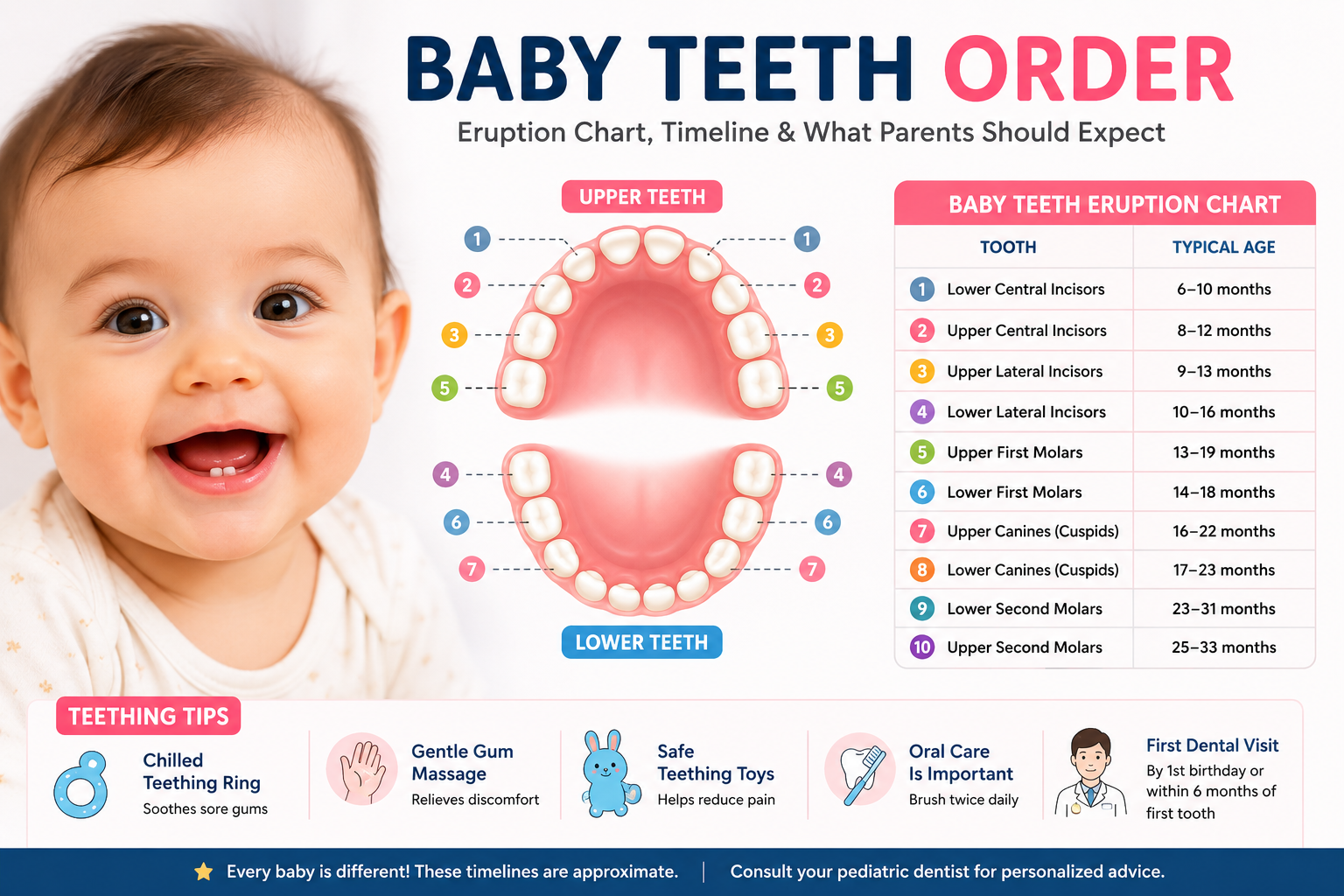
Baby teeth order infographic showing the eruption sequence of primary teeth with an age-wise teething chart, symptoms and oral care tips for infants.

Baby Teeth Order: Eruption Chart, Timeline & What Parents Should Expect

Medical note: This article is for educational purposes only and should not replace professional medical or dental advice. If your baby has not developed any teeth by 18 months or experiences severe pain, swelling, or fever during teething, consult your paediatrician or a paediatric dentist.

Watching your baby’s first tooth appear is an exciting milestone. While every child develops at their own pace, baby teeth usually erupt in a predictable order. Knowing the baby teeth order can help parents understand what to expect, recognize normal teething patterns, and identify when a delay may need medical attention.

Most babies get their first tooth between 4 and 7 months, although some may cut their first tooth earlier or later. The complete set of 20 primary (baby) teeth typically appears by the age of 2½ to 3 years.

In this guide, you’ll learn the complete baby teeth eruption order, teething timeline, symptoms, care tips, and answers to the most common questions parents ask.

What Is the Normal Baby Teeth Order?

Although every baby is different, teeth generally erupt in the following sequence:

  1. Lower central incisors
  2. Upper central incisors
  3. Upper lateral incisors
  4. Lower lateral incisors
  5. First molars
  6. Canines (cuspids)
  7. Second molars

This order helps babies gradually develop the ability to bite, chew, and eventually speak clearly.

According to the American Academy of Pediatric Dentistry (AAPD), most babies begin teething around six months of age, and parents should establish good oral hygiene habits as soon as the first tooth erupts.


Baby Teeth Eruption Chart

Tooth Typical Age
Lower Central Incisors 6–10 months
Upper Central Incisors 8–12 months
Upper Lateral Incisors 9–13 months
Lower Lateral Incisors 10–16 months
Upper First Molars 13–19 months
Lower First Molars 14–18 months
Upper Canines 16–22 months
Lower Canines 17–23 months
Lower Second Molars 23–31 months
Upper Second Molars 25–33 months

These age ranges are approximate, and healthy babies may develop teeth slightly earlier or later.


Why Do Baby Teeth Come in This Order?

Baby teeth erupt in a sequence that supports normal growth and feeding.

The front teeth appear first because they help babies:

  • Bite soft foods
  • Learn to chew
  • Support speech development
  • Maintain space for permanent teeth

Molars and canines appear later because they are primarily used for chewing more solid foods.


Signs That Baby Teeth Are Coming In

Common teething symptoms include:

  • Increased drooling
  • Swollen or tender gums
  • Chewing on fingers or toys
  • Irritability
  • Difficulty sleeping
  • Mild loss of appetite
  • Rubbing the cheeks or ears

Some babies experience very few symptoms, while others are noticeably uncomfortable.


How Long Does Teething Last?

Each tooth may cause symptoms for a few days before and after it erupts.

Overall, the teething period usually lasts from around 6 months until about 30–33 months, when the second molars appear.

There are often symptom-free breaks between the eruption of different teeth.


What If My Baby’s Teeth Come in a Different Order?

A slightly different eruption sequence is usually nothing to worry about.

Some babies may develop:

  • Upper teeth before lower teeth
  • Lateral incisors before central incisors
  • One tooth several weeks before its matching tooth

As long as your baby is otherwise healthy and teeth continue to erupt, these variations are generally considered normal.


What Causes Delayed Baby Teeth?

Several factors can delay tooth eruption:

  • Family history of late teething
  • Premature birth
  • Low birth weight
  • Certain medical conditions
  • Nutritional deficiencies (rare)

If your baby has no teeth by 18 months, consult your paediatrician or paediatric dentist for evaluation.

The American Dental Association (ADA) recommends brushing your baby’s teeth twice daily with a soft toothbrush and using a small amount of fluoride toothpaste appropriate for their age.


Caring for Baby’s New Teeth

Good oral hygiene should begin as soon as the first tooth appears.

Parents should:

  • Brush twice daily with a soft baby toothbrush.
  • Use a tiny smear of fluoride toothpaste (as recommended by your dentist).
  • Avoid putting your baby to bed with a bottle.
  • Limit sugary drinks and snacks.
  • Schedule the first dental visit by your baby’s first birthday or within six months of the first tooth erupting.

Does Teething Cause Fever?

Teething may cause:

  • Mild gum discomfort
  • Slight increase in body temperature

However, high fever, persistent diarrhoea, vomiting or significant illness are not considered normal teething symptoms.

See also  How to Increase Baby Weight — Best Foods, Diet Plan & Expert Tips | MomSaathi

If these occur, consult your healthcare provider promptly.


As your baby grows, you may also find our guide on Child Development Milestones: Birth to 5 Years helpful for understanding other important developmental changes.
Baby Teeth Order Diagram Explained

The eruption of baby teeth usually follows a predictable pattern, beginning with the front teeth and gradually moving toward the back of the mouth.

Lower Jaw (Mandible)

  1. Central Incisors
  2. Lateral Incisors
  3. First Molars
  4. Canines
  5. Second Molars

Upper Jaw (Maxilla)

  1. Central Incisors
  2. Lateral Incisors
  3. First Molars
  4. Canines
  5. Second Molars

Most babies have all 20 primary teeth by the age of 2½ to 3 years.


Baby Teeth vs Permanent Teeth

Baby Teeth Permanent Teeth
20 teeth 32 teeth
Begin erupting around 6 months Begin erupting around 6 years
Fall out naturally Designed to last a lifetime with proper care
Help with chewing and speech Replace baby teeth gradually

Baby teeth are important because they guide permanent teeth into the correct position and support normal jaw development.


How to Relieve Teething Pain

Although teething is a normal part of development, it can make babies uncomfortable.

✔ Give a Chilled Teething Ring

A cool (not frozen) teething ring can soothe sore gums.


✔ Gently Massage the Gums

Wash your hands thoroughly and gently rub your baby’s gums with a clean finger.


✔ Offer Safe Teething Toys

Choose BPA-free teething toys specifically designed for infants.

Avoid toys filled with liquid that could leak if damaged.


✔ Wipe Away Excess Drool

Frequent drooling can cause skin irritation around the mouth and chin.

Keep your baby’s face clean and dry. If your baby develops irritation, you may find our guide on Baby Drool Rash helpful.


✔ Follow Your Healthcare Provider’s Advice

If your baby seems particularly uncomfortable, speak with your paediatrician before using any pain-relieving medicines or teething gels.


When Should You See a Dentist?

Schedule a dental visit if:

  • Your baby’s first tooth hasn’t appeared by 18 months.
  • Teeth erupt with unusual discoloration.
  • Teeth appear damaged or chipped.
  • There are signs of tooth decay.
  • Your baby has persistent gum swelling or bleeding.
  • You have concerns about tooth alignment.

Experts recommend the first dental visit by age one or within six months after the first tooth erupts.

American Academy of Pediatrics, recommends scheduling a child’s first dental visit by their first birthday or within six months after the first tooth appears.


Common Teething Myths vs Facts

Myth Fact
Teething causes high fever. ❌ High fever is not a normal symptom of teething.
Diarrhoea is caused by teething. ❌ Persistent diarrhoea should be evaluated by a doctor.
Babies always get lower teeth first. ❌ Most do, but some healthy babies follow a different order.
Delayed teething always indicates a medical problem. ❌ Many babies simply develop teeth later than others.
Baby teeth don’t need brushing. ❌ Oral care should begin as soon as the first tooth appears.

Conclusion

Watching your baby’s teeth emerge is an exciting milestone. While the baby teeth order usually follows a predictable pattern, every child develops at their own pace. Small variations in timing or eruption sequence are often completely normal.

Good oral hygiene, a balanced diet and regular dental check-ups help ensure healthy primary teeth that support chewing, speech and the proper eruption of permanent teeth.

If your baby has no teeth by 18 months or you notice unusual symptoms such as persistent swelling, severe pain or tooth discoloration, consult your paediatrician or paediatric dentist for further evaluation.


Frequently Asked Questions

Which baby teeth come first?

The lower central incisors are usually the first teeth to erupt, typically between 6 and 10 months of age.

At what age do babies start teething?

Most babies begin teething between 4 and 7 months, although some start earlier or later.

How many baby teeth do children have?

Children have 20 primary (baby) teeth.

What is the normal order of baby teeth?

The usual sequence is central incisors, lateral incisors, first molars, canines and second molars.

Is it normal for upper teeth to come before lower teeth?

Yes. While less common, some healthy babies develop upper teeth before lower teeth.

Can teething cause fever?

Teething may cause a slight rise in temperature, but high fever should be assessed by a healthcare provider.

Does teething cause diarrhoea?

There is no strong evidence that teething directly causes diarrhoea. Persistent diarrhoea should be medically evaluated.

How long does teething last?

The teething period usually continues until about 30–33 months, when the second molars erupt.

When should I start brushing my baby’s teeth?

Begin brushing as soon as the first tooth appears using a soft baby toothbrush and a tiny smear of fluoride toothpaste, following your dentist’s recommendations.

When should my baby visit the dentist?

By their first birthday or within six months after the first tooth erupts.

What if my baby has no teeth at one year?

Some babies naturally teethe later. However, if no teeth have erupted by 18 months, consult a paediatric dentist.

Can teething affect sleep?

Yes. Gum discomfort may temporarily disturb your baby’s sleep.

How can I soothe sore gums?

Offer a chilled teething ring, gently massage the gums with a clean finger and provide safe teething toys.

Do baby teeth affect speech?

Yes. Baby teeth help children develop clear speech and proper pronunciation.

Why are baby teeth important if they fall out?

Baby teeth support chewing, speech, facial development and act as placeholders for permanent teeth, making them essential for long-term oral health.

More Reading

Post navigation

Subscribe
Notify of
guest

0 Comments
Oldest
Newest Most Voted
0
Would love your thoughts, please comment.x
()
x