
Edited by: MomSaathi Editorial Team
Reviewed by: WHO Infant Feeding Guidelines, AAP/CDC growth standards, and pediatric nutrition reviews
As a parent, watching your little one grow healthy and strong brings immense joy, but concerns about weight gain can feel overwhelming. Many moms in India notice slower gains, especially with smaller babies, active ones, or during growth spurts. The encouraging news is that you can support natural, healthy weight gain through optimised breastfeeding, nutrient-rich complementary foods rooted in Indian traditions, simple lifestyle habits, and responsive care.
This guide combines evidence-based advice from WHO guidelines, pediatric recommendations, and time-tested Indian practices. Every baby grows at their own pace—focus on steady progress rather than speed. Always consult your paediatrician first to rule out medical causes like latch issues, reflux, or allergies before trying new strategies.
Understanding Normal Baby Weight Gain Patterns
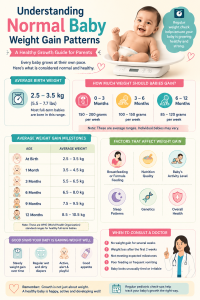
Newborns typically lose 7-10% of their birth weight in the first few days (mostly fluids) and regain it by 10-14 days. After that, expect these approximate gains (using WHO growth standards, ideal for breastfed babies):
- 0-3 months: 150-200g (5-7 oz) per week.
- 3-6 months: 100-150g per week.
- 6-12 months: Slower, steady gains—most babies triple their birth weight by their first birthday.
Breastfed babies may gain slightly slower than formula-fed ones early on, but often develop better long-term body composition. Use WHO growth charts at check-ups. More important than numbers: 6+ wet diapers daily, regular poops, alertness, good muscle tone, and meeting milestones.
If your baby is healthy but tracking lower on the curve, natural approaches can help without putting pressure on you.
For Babies Under 6 Months: Master Breastfeeding for Optimal Gain
Breast milk remains the perfect, complete food for natural weight gain—calorie-balanced, bioavailable, and immunity-boosting. Many slow-gain cases improve dramatically with better feeding frequency, latch, and supply support.
Practical Tips to Boost Milk Transfer and Supply:
- Feed frequently on demand: 8-12 times in 24 hours, every 2-3 hours during the day. Respond to early hunger cues (rooting, hand-sucking, fussing) instead of waiting for cries. Night feeds matter—prolactin peaks then.
- Achieve a deep, effective latch: Baby’s mouth should cover most of the areola. You should hear swallowing, not just clicking. Pain-free feeding signals success. A lactation consultant can help quickly.
- Empty one breast fully: Hindmilk (richer in fats) comes later—offer the same breast until baby slows, then switch. Gentle breast compression during feeds helps.
- Prioritise skin-to-skin contact: Carry your baby often and co-sleep safely. This boosts oxytocin supply and bonding.
- Support mom’s nutrition and recovery: Eat calorie-dense Indian foods like almonds, fenugreek laddoos, oats, ghee, garlic, and cumin. Stay hydrated, rest when baby rests, and consider a short “nursing vacation” (focus on feeding and rest for 2-3 days).
- Daily baby massage: Use warm coconut or sesame oil, and gently stroke the tummy, limbs, and back. Evidence shows regular massage improves digestion, circulation, sleep, and weight gain.
Avoid early supplements or pacifiers that reduce breastfeeding. If needed, use expressed breast milk first.
Introducing Complementary Foods at 6 Months+: Calorie-Dense Indian Options
Around 6 months, when the baby shows readiness (good head control, reaching for food, losing tongue thrust), introduce solids while continuing breastfeeding on demand. Focus on energy-dense foods with added healthy fats, such as ghee.
Best Natural Foods for Healthy Weight Gain:
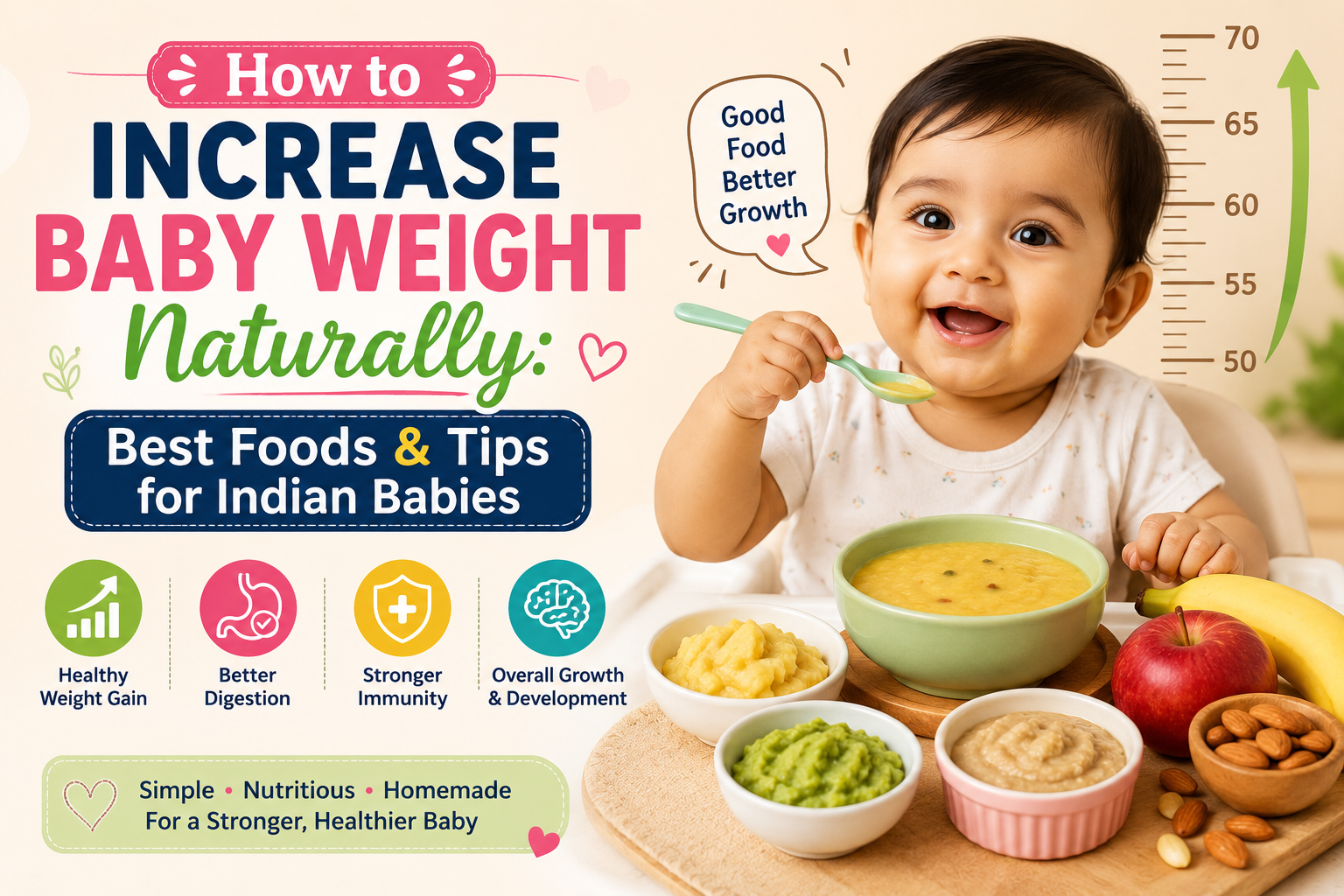
- Banana — Easy-to-digest calories and natural sugars. Mash ripe banana with breast milk or a touch of ghee.
- Avocado — Packed with healthy fats for the brain and weight. Mash smoothly.
- Sweet Potato — Nutrient-rich carbs. Boil, mash, and mix with ghee or curd.
- Ragi (Finger Millet) — Traditional Indian superfood high in calcium and iron. Make porridge with milk/water, banana, and ghee. Soak or sprout for better digestion.
- Ghee (Desi) — Concentrated calories that aid nutrient absorption. Start with ¼–½ tsp in khichdi or porridges after 7-8 months.
- Moong Dal Khichdi — Balanced protein + carbs. Cook soft with veggies and top with ghee.
- Full-fat dairy (after 8-9 months) — Homemade curd, paneer.
- Oats porridge — Cook with milk, fruits, and nut powders (after allergy check).
- Egg yolk (around 8 months) — Protein and healthy fats.
Sample Daily Feeding Routine (6-12 Months – Adjust by Age):
- Early morning & bedtime: Breastfeed.
- Breakfast: Ragi-banana porridge + ghee.
- Mid-morning: Mashed avocado or banana.
- Lunch: Moong dal khichdi with veggies + ghee + curd.
- Snack: Sweet potato mash or paneer.
- Dinner: Oats/suji with fruits.
Start with 1-2 meals, build to 2-3 meals + snacks. Keep textures smooth initially, then lumpier. Introduce one food at a time and watch for reactions. Add ghee or oil to increase energy density without increasing volume.
For Toddlers (12+ Months): Continue breastfeeding if desired. Offer family meals with whole grains, dals, veggies, and full-fat dairy. Make eating enjoyable.
Supportive Lifestyle Habits
- Responsive feeding: Never force—follow baby’s hunger and fullness cues.
- Balanced activity and sleep: Playtime builds appetite; aim for 14+ hours of sleep daily for younger babies.
- Mom’s diet: Galactagogues like methi, fennel, and oats support supply.
- Prevent illnesses: Hygiene, timely vaccinations, and prompt care keep growth on track.
- Avoid: Excessive watery foods, juices, honey (under 1 year), or processed snacks that displace nutrient-dense options.
Common Myths vs Facts
- Myth: A chubby baby is always healthier. Fact: Steady, proportional growth along your baby’s curve matters more.
- Myth: Early solids fix slow weight gain. Fact: Before 6 months, solids may displace milk and reduce overall intake.
Seek professional help if:
- Weight loss or very slow gain.
- Fewer than 6 wet diapers/day.
- Lethargy, feeding refusal, or developmental concerns.
- Frequent vomiting or diarrhoea.
Final Encouragement
Many moms see wonderful improvements with consistent tweaks to breastfeeding, ghee-enriched traditional foods like ragi porridge and khichdi, and loving daily routines. Progress is often gradual—celebrate better energy, more wet diapers, and fitting into new clothes.
Your baby is unique. With patience, evidence-based care, and Indian nutritional wisdom, they will thrive. Trust the process, enjoy the cuddles, and partner with your doctor for personalised guidance.
Frequently Asked Questions (FAQs)
How to increase baby weight naturally at 6 months?
Start complementary foods alongside breastfeeding. Focus on calorie-dense options like mashed banana with ghee, ragi porridge, avocado, sweet potato mash, and moong dal khichdi. Feed frequently (every 2-3 hours) and add ¼–½ tsp of desi ghee to meals to boost energy density without increasing volume.
How much ghee is safe?
Start small (¼ tsp per meal) and increase as tolerated.
What are the best foods for baby weight gain in India?
Top Indian-friendly foods include banana, ragi (finger millet), ghee, moong dal khichdi, sweet potato, homemade curd, avocado, oats porridge with nuts powder (after 8-9 months), and ripe fruits. These provide healthy fats, carbs, protein, and essential nutrients for steady growth.
Is it normal for breastfed babies to gain weight slowly?
Yes, many exclusively breastfed babies gain slightly slower than formula-fed ones in the early months but follow a healthy curve. Focus on 8-12 feeds per day, good latch, and hindmilk intake. If the baby has 6+ wet diapers, regular poops, and is active, growth is usually fine.
How much weight should a baby gain per month?
- 0-3 months: 600–800g per month (150-200g/week)
- 3-6 months: 400–600g per month
- 6-12 months: 300–500g per month Babies usually double birth weight by 5-6 months and triple it by 1 year. Always track on WHO growth charts.
Can I give ghee to my baby for weight gain? How much?
Yes, pure desi ghee is excellent for healthy weight gain. Start with ¼ teaspoon per meal after 6-7 months and gradually increase to ½–1 tsp per day (divided across meals). It improves calorie intake and nutrient absorption. Consult your paediatrician if your baby has any digestive issues.
What to do if my 1-year-old baby is not gaining weight?
Continue breastfeeding or full-fat milk, offer 3 meals + 2-3 snacks daily with ghee, nuts powder, banana, curd, and family foods. Ensure adequate sleep and playtime. Rule out medical causes like worms, anaemia, or food allergies with your doctor.
Start complementary foods alongside breastfeeding. Focus on calorie-dense options like mashed banana with ghee, ragi porridge, avocado, sweet potato mash, and moong dal khichdi. Feed frequently (every 2-3 hours) and add ¼–½ tsp of desi ghee to meals to boost energy density without increasing volume.
Start small (¼ tsp per meal) and increase as tolerated.
Top Indian-friendly foods include banana, ragi (finger millet), ghee, moong dal khichdi, sweet potato, homemade curd, avocado, oats porridge with nuts powder (after 8-9 months), and ripe fruits. These provide healthy fats, carbs, protein, and essential nutrients for steady growth.
Yes, many exclusively breastfed babies gain slightly slower than formula-fed ones in the early months but follow a healthy curve. Focus on 8-12 feeds per day, good latch, and hindmilk intake. If the baby has 6+ wet diapers, regular poops, and is active, growth is usually fine.
- 0-3 months: 600–800g per month (150-200g/week)
- 3-6 months: 400–600g per month
- 6-12 months: 300–500g per month. Babies usually double their birth weight by 5-6 months and triple it by 1 year. Always track on WHO growth charts.
Yes, pure desi ghee is excellent for healthy weight gain. Start with ¼ teaspoon per meal after 6-7 months and gradually increase to ½–1 tsp per day (divided across meals). It improves calorie intake and nutrient absorption. Consult your paediatrician if your baby has any digestive issues.
Continue breastfeeding or full-fat milk, offer 3 meals + 2-3 snacks daily with ghee, nuts powder, banana, curd, and family foods. Ensure adequate sleep and playtime. Rule out medical causes like worms, anaemia, or food allergies with your doctor.
References & Useful External Links
- WHO Child Growth Standards – Weight-for-Age
- WHO – Breastfeeding Recommendations
- Mayo Clinic – Infant Growth: What’s Normal?
- NHS UK – How to Help Your Child Gain Weight Safely
- CDC Growth Charts (US)
- BabyCenter India – Baby Weight Gain Guide
- Increasing Your Breast Milk Supply
- Indian Pediatrics Journal – Nutrition Guidelines