
Medical Note: Every baby has different bowel habits. This article is for educational purposes only and should not replace professional medical advice. Contact your pediatrician if your baby has white, black, or bloody stools, severe diarrhea, persistent vomiting, fever, or signs of dehydration.
Seeing changes in your baby’s poop can make any parent anxious, especially during the first few months. One of the most common questions parents ask is, “Is yellow baby poop normal?” The reassuring answer is yes—in most cases, yellow baby poop is completely normal, particularly for breastfed babies.
A baby’s stool can vary in color, texture, and frequency depending on age, diet, feeding method, and overall health. While yellow poop is usually a sign of healthy digestion, certain changes in color, consistency, or accompanying symptoms may indicate an underlying medical condition that requires attention.
As your baby’s digestive system develops during the first year, changes in stool color are common. Our Complete Baby Care Guide for Indian Parents (0–12 Months) explains what to expect during each stage of infancy.
This comprehensive guide explains everything parents need to know about yellow baby poop, including its causes, appearance, when it’s normal, warning signs, treatment, and when to seek medical care.
According to the American Academy of Pediatrics (HealthyChildren.org), yellow, mustard-colored stools are normal in most breastfed infants.
What Is Yellow Baby Poop?
Yellow baby poop refers to mustard-yellow, golden-yellow, or light yellow stool that is commonly seen in newborns and infants. It is usually soft and may contain tiny seed-like particles, especially in breastfed babies.
Yellow stool is generally considered a sign that your baby’s digestive system is functioning normally.
Is Yellow Baby Poop Normal?
Yes.
Yellow poop is normal for most healthy babies, particularly:
- Breastfed newborns
- Exclusively breastfed infants
- Formula-fed babies (slightly different shade)
- Babies who have recently transitioned from meconium
The exact color may range from:
- Bright yellow
- Mustard yellow
- Golden yellow
- Yellow-orange
Minor variations are usually not a cause for concern.
What Does Healthy Yellow Baby Poop Look Like?
Healthy yellow baby poop is usually :
- Mustard yellow
- Soft or loose
- Seedy (small white or yellow flecks)
- Mild-smelling
- Easy to pass
Breastfed babies often have stools that resemble mustard with tiny seeds .
Why Is My Baby’s Poop Yellow?
Several normal factors can cause yellow stools.
Breastfeeding
Breastfed babies typically pass bright mustard-yellow stools because breast milk is easily digested.
This is the most common cause of yellow poop during the first few months. If you’re exclusively breastfeeding, you may also find our guide on Signs Baby Getting Enough Breast Milk helpful for understanding whether your baby is feeding well.
Formula Feeding
Formula-fed babies also have yellow stools, although they may appear:
- Tan
- Yellow-brown
- Light brown
- Peanut butter-like in consistency
Transition After Meconium
During the first few days after birth, babies pass meconium, which is black and sticky.
As feeding increases, stools gradually change from:
- Black
- Dark green
- Greenish-yellow
- Mustard yellow
This transition is completely normal.
Healthy Digestion
Yellow stool often indicates that bile is moving normally through your baby’s digestive system.
Bile helps digest fats and naturally gives stool its yellow or brown color.
Introduction of Solid Foods
Once babies begin eating solid foods (around six months), stool color may vary depending on what they eat.
Yellow stools can still occur after eating foods such as:
- Sweet potatoes
- Corn
- Squash
- Mango
- Pumpkin
Ragi vs Cerelac vs Oats: Best First Food for Baby India
Yellow Baby Poop by Feeding Type
| Feeding Type | Normal Stool Color |
|---|---|
| Breastfed | Mustard yellow, seedy |
| Formula-fed | Yellow, tan, yellow-brown |
| Mixed feeding | Yellow to light brown |
| After solids | Yellow, brown, green, depending on foods |
How Often Should a Baby Poop?
Frequency varies widely.
Newborns
- Several times daily
- Sometimes after every feed
Breastfed Babies
Some breastfed babies poop:
- After every feeding
- Once every few days
Both patterns can be normal if the baby is feeding well and gaining weight.
Formula-Fed Babies
Usually poop:
- Once or twice daily
- Every other day
What Causes Bright Yellow Poop?
Bright yellow stool is often caused by:
- Breast milk
- Efficient digestion
- Rapid intestinal movement
- Healthy gut bacteria
It is rarely a sign of illness if your baby is otherwise healthy.
Can Yellow Baby Poop Mean Diarrhea?
Sometimes.
Normal breastfed stools are naturally loose.
However, diarrhea may be suspected if stools become:
- Extremely watery
- Much more frequent than usual
- Explosive
- Accompanied by fever
- Associated with poor feeding
- Associated with vomiting
Persistent diarrhea can lead to dehydration and should be assessed by a doctor.
When Is Yellow Baby Poop NOT Normal?
Yellow poop may require medical evaluation if accompanied by:
- Blood
- Mucus
- Very foul smell
- Fever
- Vomiting
- Weight loss
- Poor feeding
- Dehydration
- Persistent diarrhea
- Extreme fussiness
Yellow Baby Poop vs Diarrhea
| Normal Yellow Poop | Diarrhea |
|---|---|
| Soft | Very watery |
| Mild odor | Strong odor |
| Normal feeding | Poor feeding |
| Happy baby | Irritable baby |
| Normal frequency | Much more frequent stools |
| Good weight gain | Possible weight loss |
Other Baby Poop Colors
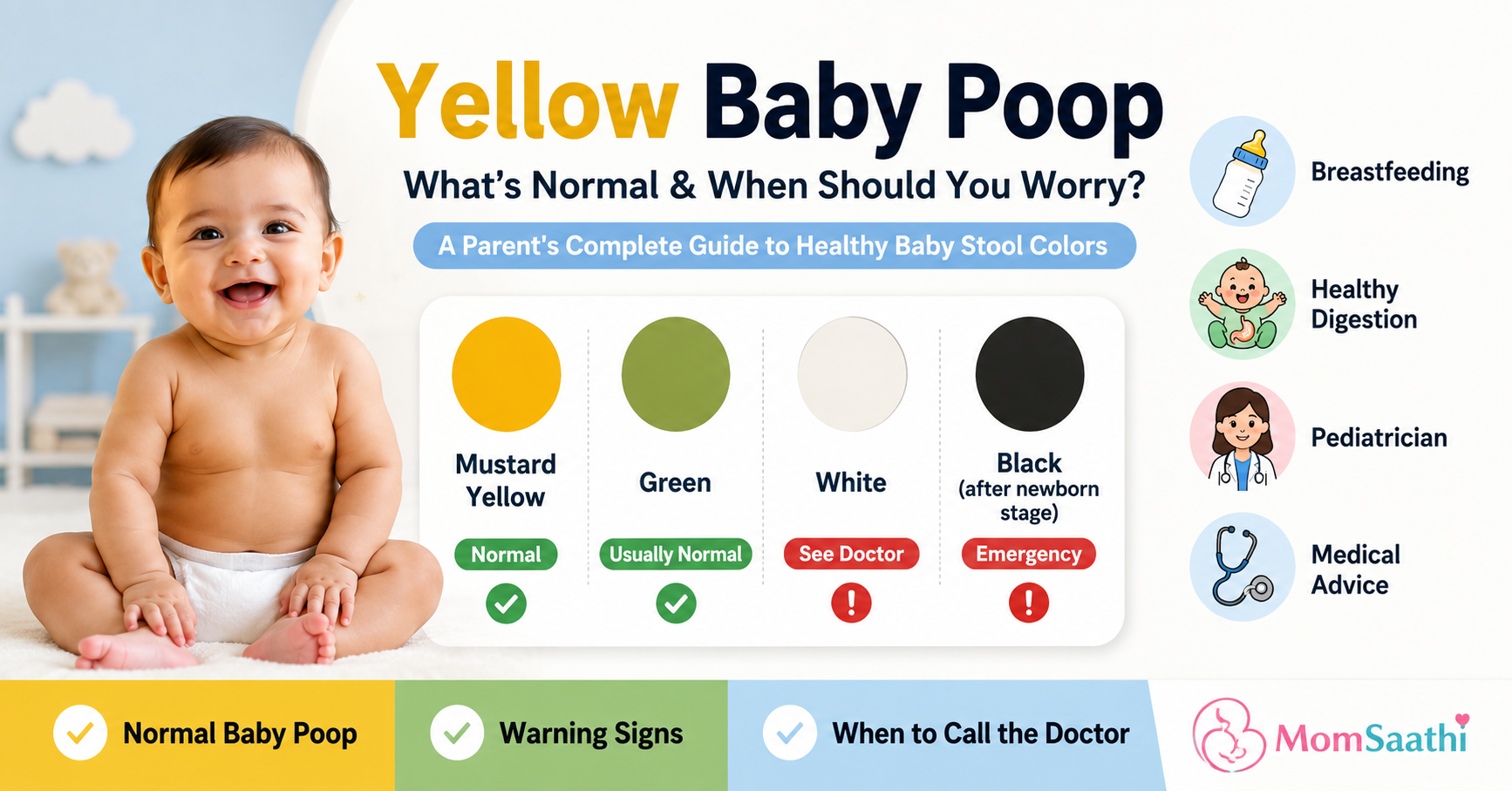
| Color | Usually Means |
|---|---|
| Mustard Yellow | Normal |
| Brown | Normal |
| Green | Usually normal |
| Orange | Usually normal |
| Black (after first week) | Needs medical evaluation |
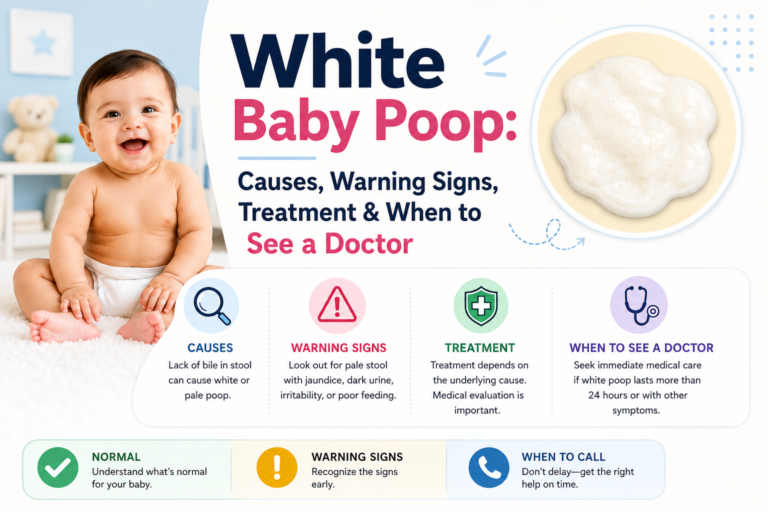
| White/Gray | Medical emergency (possible liver or bile duct problem) |
| Red/Bloody | Needs immediate medical evaluation |
Is Treatment Needed for Yellow Baby Poop?
In most cases, yellow baby poop does not require any treatment because it is a normal sign of healthy digestion, especially in breastfed infants.
Treatment is only necessary if the yellow stool is caused by an underlying condition such as:
- Diarrhea
- Food intolerance
- Viral or bacterial infection
- Digestive disorders
- Dehydration
Your pediatrician will recommend treatment based on the underlying cause rather than the stool color itself.
Home Care Tips
Most babies with healthy yellow stools simply need routine care.
Continue Breastfeeding or Formula Feeding
Breast milk and infant formula provide the nutrition and fluids your baby needs.
Do not stop breastfeeding simply because your baby’s stool is yellow. Check our Complete Baby Care Guide.
Keep Your Baby Hydrated
Adequate hydration supports healthy digestion.
Watch for:
- Regular wet diapers
- Moist lips
- Alertness
- Normal feeding
Introduce Solid Foods Gradually
When your baby begins solids (around six months), introduce one new food at a time.
This makes it easier to identify foods that may affect digestion or trigger allergies.
Maintain Good Hygiene
Wash your hands before preparing feeds and after diaper changes to reduce the risk of stomach infections.
Monitor Stool Changes
Occasional changes in color or texture are common.
Keep track of:
- Stool frequency
- Color
- Consistency
- Feeding habits
- Any accompanying symptoms
If your baby develops constipation, our guide on Baby Constipation explains safe ways to relieve discomfort. Likewise, babies with Baby Diarrhea may require closer monitoring for dehydration.
What Should You Avoid?
Avoid:
- Changing formula without medical advice
- Giving water to babies under six months unless instructed by a healthcare professional
- Using home remedies for diarrhea
- Giving anti-diarrheal medicines to infants
- Ignoring persistent diarrhea or dehydration
Signs of Dehydration
Seek medical advice if your baby has:
- Fewer than six wet diapers per day (after the newborn period)
- Dry mouth
- No tears when crying
- Sunken eyes
- Sunken soft spot (fontanelle)
- Excessive sleepiness
- Poor feeding
- Dark-colored urine
Dehydration requires prompt medical attention.
Yellow Baby Poop vs Green Baby Poop
| Yellow Baby Poop | Green Baby Poop |
|---|---|
| Usually normal | Often normal |
| Common in breastfed babies | May occur after iron-fortified formula, green vegetables, or rapid digestion |
| Mustard yellow | Light to dark green |
| Seedy texture | May be loose or slightly thicker |
| Usually no concern | Usually no concern unless accompanied by illness |
Yellow Baby Poop vs White Baby Poop
| Yellow Baby Poop | White Baby Poop |
|---|---|
| Healthy digestion | Possible liver or bile duct problem |
| Normal bile flow | Lack of bile reaching the intestine |
| Common in healthy babies | Medical emergency |
| Usually soft | May be pale, chalky, or clay-colored |
| No treatment needed | Immediate medical evaluation required |
When Should You See a Doctor?
Contact your pediatrician if your baby has:
- Yellow stool with blood
- Persistent watery diarrhea
- Fever
- Repeated vomiting
- Poor feeding
- Weight loss
- Signs of dehydration
- Severe abdominal swelling
- Stool that suddenly changes to white, gray, or black (after the first week of life)
- Persistent mucus in the stool
According to the American Academy of Pediatrics (HealthyChildren.org), changes in stool color accompanied by illness, dehydration, or feeding difficulties should always be assessed by a healthcare professional.
Emergency Warning Signs
Seek immediate medical care if your baby:
- Has white, gray, or clay-colored stools
- Has black stools after the newborn period
- Passes large amounts of blood in the stool
- Is difficult to wake
- Has repeated vomiting with dehydration
- Refuses all feeds
- Has difficulty breathing
- Develops seizures
- Has a high fever, especially if under three months of age
These symptoms may indicate a serious underlying condition requiring urgent treatment. The NHS notes that yellow or mustard-colored stools are common and healthy in breastfed babies.
Conclusion
Yellow baby poop is one of the most common and healthiest stool colors seen in infants, particularly those who are breastfed. Its mustard-yellow color, soft texture, and seedy appearance usually indicate that your baby’s digestive system is functioning well.
While occasional variations in stool color are normal, parents should remain alert for warning signs such as blood, persistent diarrhea, white or gray stools, black stools after the newborn period, poor feeding, or signs of dehydration. If any of these symptoms occur, seek prompt medical advice.
Understanding what is normal for your baby’s stool can help you feel more confident during those early months and know when a change truly requires medical attention.
Frequently Asked Questions (FAQs)
Is yellow baby poop normal?
Yes. Yellow poop is completely normal, especially in breastfed babies.
Why is my baby’s poop mustard yellow?
Breast milk commonly produces mustard-yellow, seedy stools because it is easily digested.
Is yellow poop normal for formula-fed babies?
Yes. Formula-fed babies may have yellow, tan, or light brown stools.
How many times should a newborn poop?
Many newborns poop several times a day, often after every feeding.
Can yellow baby poop mean diarrhea?
Yes, if it becomes very watery, unusually frequent, and is accompanied by fever, vomiting, or dehydration.
Why does my baby’s poop have little seeds?
The seed-like appearance is common in breastfed babies and is considered completely normal.
Can teething cause yellow poop?
Teething itself does not directly cause yellow stool, although increased saliva swallowing and dietary changes may temporarily affect stool consistency.
Is bright yellow poop healthy?
Yes. Bright yellow stool is usually a sign of healthy digestion in infants.
When should I worry about yellow baby poop?
Seek medical advice if yellow stool contains blood, mucus, is persistently watery, or is associated with fever, vomiting, dehydration, or poor feeding.
What foods make baby poop yellow?
Foods such as pumpkin, squash, corn, mango, and sweet potatoes can contribute to yellow-colored stools after solids are introduced.
Can antibiotics change stool color?
Yes. Antibiotics may temporarily alter stool color and consistency by affecting gut bacteria.
What stool colors are dangerous?
White, gray, black (after the first week of life), or bloody stools require prompt medical evaluation.
How do I know if my baby is dehydrated?
Look for fewer wet diapers, dry mouth, no tears when crying, sunken eyes, and unusual sleepiness.
Can yellow poop indicate a food allergy?
Sometimes. If yellow stool is accompanied by blood, mucus, eczema, vomiting, or poor weight gain, consult your pediatrician to rule out a food allergy or intolerance.
Should I change my baby’s formula because of yellow poop?
No. Yellow stool alone is not a reason to change formula. Always consult your pediatrician before switching formulas.