
Home » Baby Care » Baby Food Allergy Rash: Causes, Symptoms, Treatment & When to Worry
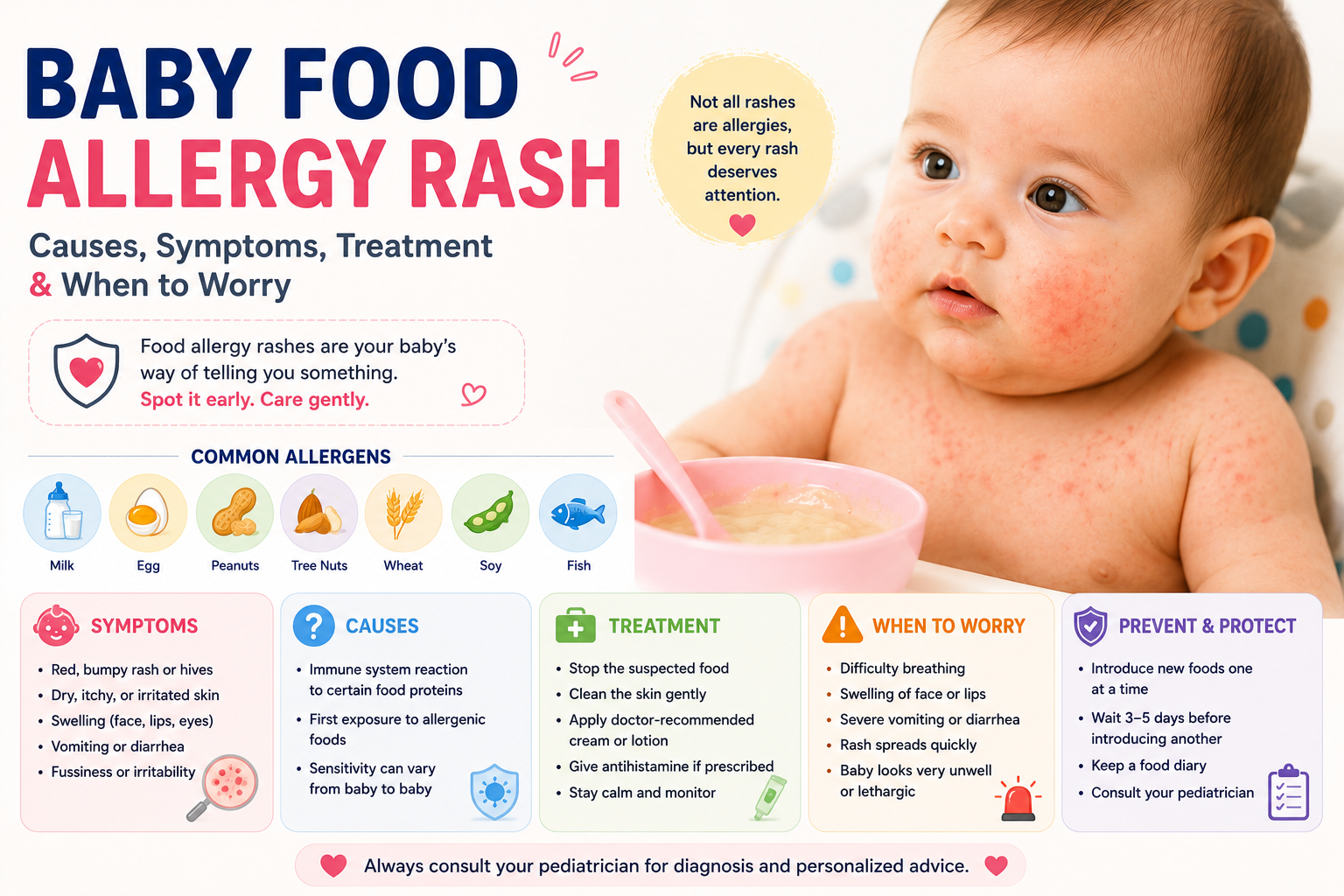
Baby food allergy rash infographic showing common food allergens, hives, skin rash symptoms, treatment tips, and emergency warning signs in babies.

Baby Food Allergy Rash: Causes, Symptoms, Treatment & When to Worry

Medical Note: A rash after eating does not always mean your baby has a food allergy. Viral infections, heat rash, eczema, and skin irritation can look similar. A healthcare professional can help identify the cause.

Introducing solid foods is an exciting milestone, but it can also bring new concerns for parents—especially when a rash appears soon after a baby eats a new food. While many skin rashes in babies are harmless, a rash that develops after eating may sometimes be a sign of a food allergy.

Food allergies occur when the immune system mistakenly identifies a food protein as harmful and reacts against it. The reaction may affect the skin, digestive system, respiratory tract, or, in rare cases, multiple body systems at once. In babies, the skin is often the first place where a food allergy becomes visible, making rashes one of the most common symptoms.

Most food allergy rashes are mild and improve after the trigger food is avoided. However, some allergic reactions can progress rapidly and become life-threatening. Recognizing the early signs of a food allergy rash and knowing when to seek emergency care are essential for every parent.

This comprehensive guide explains the causes, symptoms, diagnosis, treatment, prevention, and emergency warning signs of  baby food allergy rash, helping you respond confidently if your baby develops a rash after eating.

If your baby also has eczema, contact dermatitis, or skin allergies, explore our related MomSaathi guides for additional skin care advice.

Quick Answer

What causes a baby food allergy rash?

A baby food allergy rash occurs when the immune system reacts to a food protein. Common trigger foods include cow’s milk, eggs, peanuts, tree nuts, soy, wheat, fish, shellfish, and sesame. The rash often appears within minutes to two hours after eating and may be accompanied by hives, swelling, vomiting, coughing, or difficulty breathing.

What Is a Baby Food Allergy Rash?

A food allergy rash is a skin reaction that develops after eating or sometimes touching a food that triggers an allergic response.

The rash may appear as:

  • Raised hives (urticaria)
  • Red itchy patches
  • Small bumps
  • Swollen skin
  • Flushed cheeks
  • Worsening eczema

Some babies develop only a mild skin rash, while others experience symptoms affecting several body systems.

Is It Common?

Yes.

Food allergies affect many infants and young children, particularly during the first few years of life when new foods are being introduced.

The most common food allergies begin in infancy, although many children outgrow allergies to foods such as milk and eggs over time.

Common Foods That Cause Allergy Rashes

The foods responsible for most allergic reactions include:

Cow’s Milk

Symptoms may include:

  • Hives
  • Vomiting
  • Eczema flare-ups
  • Swelling

Eggs

Egg allergy is common during infancy.

Symptoms include:

  • Rash
  • Hives
  • Swollen lips
  • Vomiting

Peanuts

Peanut allergy can cause reactions ranging from mild hives to severe anaphylaxis.

Tree Nuts

Examples include:

  • Almonds
  • Cashews
  • Walnuts
  • Pistachios

Soy

Soy allergy may cause:

  • Rash
  • Vomiting
  • Digestive symptoms
  • Eczema flare-ups

Wheat

Some babies react to wheat proteins with:

  • Hives
  • Rash
  • Digestive symptoms

Fish and Shellfish

Although less commonly introduced in early infancy, these foods can cause allergic reactions in susceptible children.

Sesame

Sesame allergy is becoming more common worldwide and may trigger skin or more severe allergic reactions.

What Does a Food Allergy Rash Look Like?

The appearance varies depending on the type and severity of the reaction.

Common features include:

  • Raised, itchy hives
  • Bright red patches
  • Small bumps
  • Swollen eyelids or lips
  • Red cheeks
  • Eczema flare-ups
  • Blotchy skin

The rash may appear anywhere on the body but often affects:

  • Face
  • Neck
  • Chest
  • Arms
  • Abdomen

When Does the Rash Appear?

Food allergy rashes usually appear:

  • Within a few minutes
  • Within 30 minutes
  • Up to 2 hours after eating

Delayed reactions, especially those linked to eczema, may appear several hours later.

Symptoms That May Occur Along with the Rash

A food allergy may also cause:

Skin Symptoms

  • Hives
  • Itching
  • Swelling
  • Redness

Digestive Symptoms

  • Vomiting
  • Diarrhea
  • Stomach pain
  • Refusing feeds

Respiratory Symptoms

  • Coughing
  • Wheezing
  • Noisy breathing
  • Nasal congestion

General Symptoms

  • Fussiness
  • Irritability
  • Sleepiness
  • Pale skin

Food Allergy Rash vs Eczema vs Heat Rash

Condition Appearance Itching Trigger
Food Allergy Rash Raised hives, red patches Usually severe Food exposure
Eczema Dry, scaly patches Persistent Genetics, irritants
Heat Rash Tiny red bumps Mild Heat and sweating
Contact Dermatitis Localized red rash Moderate Skin contact with irritants
Viral Rash Flat pink or red spots Usually mild Viral infection

Can a Food Allergy Rash Spread?

Yes.

Hives often begin in one area before spreading to:

  • Face
  • Neck
  • Chest
  • Back
  • Arms
  • Legs

Individual hives may disappear while new ones appear elsewhere.
How Is a Baby Food Allergy Rash Diagnosed?

A pediatrician or allergy specialist will diagnose a food allergy by reviewing your baby’s symptoms, examining the rash, and discussing recent foods.

Your doctor may ask:

  • What food did your baby eat?
  • How long after eating did the rash appear?
  • Was this the first time your baby tried the food?
  • Were there any breathing problems or vomiting?
  • Does your baby have eczema?
  • Is there a family history of allergies or asthma?

In some cases, additional testing may be recommended.

According to the American Academy of Pediatrics (HealthyChildren.org), a detailed medical history combined with the timing of symptoms is one of the most important steps in diagnosing food allergies in children.

See also  Baby Dry Scalp: Causes, Symptoms, Treatment & Prevention

Allergy Tests Your Doctor May Recommend

Depending on your baby’s symptoms, your healthcare provider may recommend:

  • Skin prick test
  • Blood test (specific IgE)
  • Supervised oral food challenge
  • Elimination diet (under medical supervision)

The American Academy of Allergy, Asthma & Immunology (AAAAI) considers the supervised oral food challenge the most reliable test for confirming many food allergies

Treatment for Baby Food Allergy Rash

Treatment depends on the severity of the allergic reaction.

1. Mild Food Allergy Rash

Most mild rashes improve by:

  • Stopping the suspected food
  • Keeping the skin clean
  • Preventing scratching
  • Monitoring symptoms

Always contact your pediatrician before reintroducing the suspected food.

2. Hives (Urticaria)

If your baby develops hives, your doctor may recommend an age-appropriate antihistamine.

Do not give allergy medication unless advised by your healthcare provider.

3. Eczema Flare-Up

Some food allergies worsen eczema.

Treatment may include:

  • Daily moisturizers
  • Prescription creams if recommended
  • Avoiding confirmed trigger foods
  • Gentle skin care

The National Eczema Association explains that food allergies may worsen eczema in some children, but not every eczema flare is caused by food.

4. Severe Allergic Reaction (Anaphylaxis)

A severe allergic reaction is a medical emergency.

Immediate treatment includes:

  • Emergency medical care
  • Epinephrine (if prescribed)
  • Observation in the hospital

Do not wait to see if symptoms improve.

Home Care Tips

If your baby develops a mild food allergy rash:

Stop the Suspected Food

Avoid giving the suspected food again until your pediatrician or allergy specialist advises it is safe.

Keep Your Baby Comfortable

Dress your baby in:

  • Soft cotton clothing
  • Loose-fitting outfits
  • Breathable fabrics

Avoid overheating, as heat can worsen itching.

Moisturize the Skin

If the rash is dry or eczema-like:

  • Apply a fragrance-free moisturizer.
  • Use gentle baby cleansers.
  • Avoid heavily scented products.

Keep Fingernails Short

Babies often scratch itchy skin, increasing the risk of infection.

Keeping nails trimmed can reduce skin damage.

Continue Feeding Other Safe Foods

Do not unnecessarily remove multiple foods from your baby’s diet.

Only avoid foods recommended by your healthcare provider.

The World Allergy Organization (WAO) recommends avoiding only confirmed allergenic foods to help maintain balanced nutrition during infancy.

How to Introduce Allergenic Foods Safely

Current recommendations encourage introducing common allergenic foods around 6 months of age, once your baby is developmentally ready for complementary feeding.

Introduce foods:

  • One at a time
  • In small amounts
  • During the daytime
  • At home rather than at daycare
  • Wait 2–3 days before introducing another new food if you are monitoring for reactions

The Centers for Disease Control and Prevention (CDC) recommends introducing a variety of nutritious complementary foods from around 6 months while continuing breast milk or formula.

Can Food Allergies Be Prevented?

Not always.

However, current research suggests that introducing common allergenic foods at the appropriate age may reduce the risk of developing certain food allergies in some children.

Do not delay introducing allergenic foods without medical advice.

The National Institute of Allergy and Infectious Diseases (NIAID) recommends discussing peanut introduction with your pediatrician, especially if your baby has severe eczema or an existing egg allergy.

Do’s and Don’ts

Do Don’t
Introduce one new food at a time Introduce several new foods together
Read food labels carefully Ignore previous allergic reactions
Follow your pediatrician’s advice Reintroduce suspected allergenic foods without guidance
Keep an allergy diary Delay seeking medical care for breathing problems
Know emergency symptoms Assume every rash is a food allergy

When Should You See a Pediatrician?

Arrange a medical evaluation if your baby:

  • Develops hives after eating
  • Has repeated vomiting after a specific food
  • Experiences swelling around the mouth
  • Has worsening eczema after meals
  • Refuses feeds repeatedly
  • Has poor weight gain
  • Has recurrent allergic reactions
  • Needs frequent medication for allergic symptoms

HealthyChildren.org recommends discussing any suspected food allergy with your pediatrician before permanently removing major food groups from your baby’s diet.

Emergency Warning Signs

Seek immediate emergency medical care if your baby develops:

  • Difficulty breathing
  • Wheezing
  • Swelling of the lips, tongue, or throat
  • Persistent coughing after eating
  • Difficulty swallowing
  • Pale or blue skin
  • Severe vomiting
  • Collapse or loss of consciousness
  • Extreme sleepiness
  • A rapidly spreading rash with breathing difficulty

These symptoms may indicate anaphylaxis, a life-threatening allergic reaction.

The Food Allergy Research & Education (FARE) organization advises that suspected anaphylaxis should be treated as a medical emergency and requires immediate emergency care.

Conclusion

A baby food allergy rash is often one of the earliest signs that your baby’s immune system is reacting to a particular food. While many reactions are mild and improve after avoiding the trigger food, some allergies can become serious and require immediate medical attention.

Introducing new foods one at a time, watching for symptoms, and seeking prompt medical advice if a reaction occurs can help keep your baby safe while supporting healthy nutrition. Most importantly, never eliminate major food groups or reintroduce suspected allergenic foods without guidance from your pediatrician or an allergy specialist.

For more guidance, explore our Baby Food Chart (0–24 Months), First Foods for Baby, Baby Skin Allergy, Baby Contact Dermatitis, Baby Rash After Fever, Baby Rash After Vaccination, and Baby Eczema guides on MomSaathi.

Frequently Asked Questions (FAQs)

What does a baby food allergy rash look like?

A food allergy rash often appears as raised, itchy hives, red patches, swelling, or worsening eczema shortly after eating a trigger food.

How quickly can a food allergy rash appear?

Most reactions occur within minutes to two hours after eating, although some eczema-related reactions may appear later.

Which foods most commonly cause allergies in babies?

Cow’s milk, eggs, peanuts, tree nuts, soy, wheat, fish, shellfish, and sesame are among the most common food allergens.

Can eczema be caused by food allergies?

Food allergies can worsen eczema in some babies, but not every case of eczema is caused by food. A healthcare professional can help determine whether allergy testing is appropriate.

Should I stop giving a food if my baby develops a rash?

Yes. Stop the suspected food and contact your pediatrician before offering it again.

Can babies outgrow food allergies?

Many children outgrow allergies to milk, eggs, soy, and wheat, while allergies to peanuts, tree nuts, fish, and shellfish are more likely to persist, although some children may outgrow them as well.

Is every rash after eating a food an allergy?

No. Viral infections, heat rash, eczema, and skin irritation can resemble food allergy rashes. A proper medical evaluation is important for an accurate diagnosis.

When should I seek emergency care?

Call emergency services immediately if your baby develops difficulty breathing, swelling of the face or throat, persistent coughing, severe vomiting, or becomes limp or unresponsive after eating. These may be signs of anaphylaxis.

More Reading

Post navigation

Subscribe
Notify of
guest

0 Comments
Oldest
Newest Most Voted
0
Would love your thoughts, please comment.x
()
x