
Medical Note: A rash that appears after a fever is often caused by a viral infection and is usually not dangerous. However, any rash accompanied by difficulty breathing, persistent fever, unusual sleepiness, or a rash that does not fade when pressed requires immediate medical evaluation.
It can be alarming when your baby’s fever goes away, only for a rash to appear soon afterward. Many parents worry that the rash signals a serious illness, but in many cases, a rash after a fever is part of the body’s normal response to a viral infection. Certain childhood illnesses, such as roseola, commonly cause a high fever followed by a pink rash once the fever subsides.
While most post-fever rashes are mild and resolve on their own, some may indicate bacterial infections, allergic reactions, or more serious medical conditions that require prompt evaluation. Knowing what the rash looks like, how your baby behaves, and whether other symptoms are present can help you decide when home care is appropriate and when medical attention is needed.
This comprehensive guide explains the common causes of a baby rash after fever, symptoms to watch for, treatment options, home care measures, and warning signs that should never be ignored.
If your baby also has a fever, skin allergy, eczema, or viral rash, explore our related MomSaathi guides for additional support.
Quick Answer
Why does my baby develop a rash after a fever?
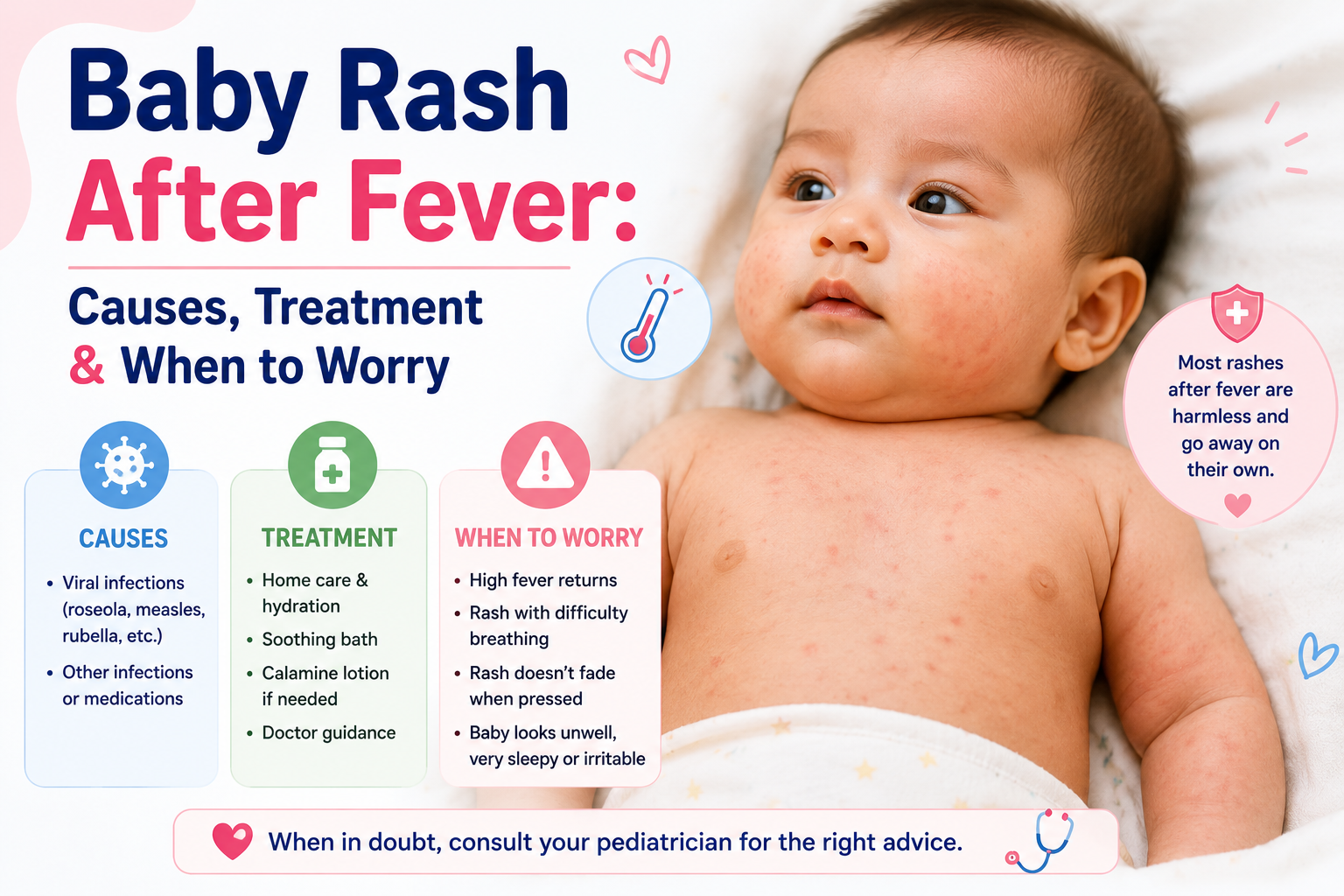
A rash after a fever is commonly caused by viral infections, especially roseola. Other possible causes include hand, foot and mouth disease, scarlet fever, measles, medication reactions, or less commonly, bacterial infections. Most viral rashes improve within a few days, but babies with severe symptoms should be seen by a healthcare professional.
What Is a Baby Rash After Fever?
A baby rash after fever is a skin eruption that develops during or shortly after a fever. The rash may appear as:
- Pink or red spots
- Flat patches
- Small raised bumps
- Tiny red dots
- Widespread rash over the chest, back, face, or limbs
The appearance depends on the underlying cause.
Is It Normal for a Baby to Get a Rash After a Fever?
Yes. Many viral infections cause fever first and a rash later.
According to the American Academy of Pediatrics (HealthyChildren.org), several common viral illnesses in young children, including roseola, may cause a rash after the fever subsides.
In fact, for illnesses like roseola, the rash often appears after the fever has resolved, which can surprise parents because the baby may begin acting better just as the rash develops.
Most viral rashes:
- Are not itchy
- Fade within a few days
- Do not leave scars
- Resolve without specific treatment
Common Causes of Baby Rash After Fever
1. Roseola (Sixth Disease)
Roseola is the most common cause of a rash appearing after a high fever in babies between 6 months and 2 years.
Typical features include:
- High fever for 3–5 days
- Fever suddenly disappears
- Pink rash develops on the chest and abdomen
- Rash spreads to the neck, face, and arms
- Baby often appears happier once the rash appears
The rash usually fades within 1–3 days.
The Centers for Disease Control and Prevention (CDC) explains that roseola typically affects children under two years of age and often causes a high fever followed by a pink rash.
2. Hand, Foot and Mouth Disease (HFMD)
HFMD is caused by enteroviruses.
Symptoms include:
- Fever
- Painful mouth sores
- Rash on the hands
- Rash on the feet
- Blisters on the buttocks or legs
- Reduced appetite
The CDC provides detailed guidance on the symptoms, transmission, and prevention of Hand, Foot and Mouth Disease.
3. Scarlet Fever
Scarlet fever is caused by Group A Streptococcus bacteria.
Symptoms include:
- Fever
- Sore throat
- Bright red “sandpaper-like” rash
- Red tongue (“strawberry tongue”)
- Swollen glands
This condition requires antibiotic treatment.
4. Measles
Although less common in vaccinated children, measles can still occur.
Symptoms include:
- High fever
- Cough
- Runny nose
- Red eyes
- Rash beginning on the face before spreading downward
Immediate medical evaluation is important if measles is suspected.
5. Medication Reaction
Some babies develop a rash after taking antibiotics or other medications.
The rash may:
- Be widespread
- Be itchy
- Appear after several days of medication
- Occur with or without fever
Never stop prescribed medication without consulting your healthcare provider.
6. Other Viral Infections
Many viruses can cause fever followed by a temporary rash, including adenovirus, enteroviruses, and parvovirus infections.
These illnesses often improve with supportive care.
What Does a Rash After Fever Look Like?
Depending on the cause, the rash may appear as:
- Pink flat spots
- Small raised bumps
- Blotchy red patches
- Tiny red dots
- Sandpaper-like rash
- Blisters (HFMD)
The location and texture of the rash can help your pediatrician identify the underlying illness.
Symptoms That May Occur Along with the Rash
Your baby may also have:
- Fever that has recently resolved
- Mild cough
- Runny nose
- Irritability
- Reduced appetite
- Swollen glands
- Mouth sores
- Mild diarrhea
- Fatigue
- Sleepiness
Some babies appear playful and active once the fever subsides, especially with roseola.
Roseola vs Measles vs Scarlet Fever
| Feature | Roseola | Measles | Scarlet Fever |
|---|---|---|---|
| Fever | High fever before rash | Fever continues with rash | Fever with sore throat |
| Rash Starts | After fever ends | Face | Neck/chest |
| Rash Texture | Pink spots | Red blotchy | Sandpaper-like |
| Cause | Virus | Virus | Bacteria |
| Antibiotics Needed | No | No | Yes |
Is the Rash Contagious?
The rash itself is usually not contagious, but the infection causing it may spread to others.
Viruses commonly spread through:
- Respiratory droplets
- Saliva
- Close contact
- Contaminated surfaces
Good hand hygiene and limiting contact with vulnerable individuals can help reduce transmission.
How Is a Rash After Fever Diagnosed?
A pediatrician usually diagnoses the cause by reviewing your baby’s symptoms and examining the rash.
The doctor may ask about:
- When the fever started
- How high the fever was
- When the rash appeared
- Whether the rash is itchy or painful
- Recent illnesses
- Vaccination history
- Exposure to sick children
- Recent medications
- Feeding and hydration
In most viral illnesses, laboratory tests are not necessary. However, blood tests, throat swabs, or other investigations may be recommended if a bacterial infection or another serious condition is suspected.
Treatment for Baby Rash After Fever
Treatment depends on the underlying cause.
1. Viral Rash (Most Common)
Most viral rashes, including roseola, improve without specific medication.
Treatment focuses on:
- Keeping your baby comfortable
- Ensuring adequate fluids
- Continuing regular feeds
- Allowing plenty of rest
- Monitoring for worsening symptoms
2. Fever Management
If your baby still has a fever or discomfort, your pediatrician may recommend an age-appropriate fever-reducing medicine.
Never give medication without following your healthcare provider’s advice regarding dosage and age.
3. Bacterial Infections
Conditions such as scarlet fever require antibiotics prescribed by a healthcare professional.
Complete the full course of antibiotics even if your baby begins to feel better.
4. Allergic Reactions
If the rash is caused by a medication or allergic reaction, your doctor may advise stopping the triggering medicine and recommend appropriate treatment.
Never discontinue prescribed medication without medical advice.
Home Care Tips
Most babies with a viral rash recover with supportive care.
Keep Your Baby Hydrated
Offer:
- Breast milk
- Infant formula
- Small sips of water (if age-appropriate)
- Oral rehydration solution if recommended by your doctor
Watch for signs of dehydration, such as fewer wet diapers or a dry mouth.
Dress Your Baby Comfortably
Choose:
- Loose cotton clothing
- Lightweight fabrics
- Breathable sleepwear
Avoid overdressing, especially if your baby recently had a fever.
Keep the Skin Cool
A comfortably cool room may help if your baby seems uncomfortable.
Avoid very hot baths or excessive heat.
Continue Feeding
Even if your baby has a reduced appetite, continue offering:
- Breastfeeds
- Formula
- Age-appropriate foods
- Fluids
Small, frequent feeds are often easier to tolerate.
Let Your Baby Rest
Sleep supports recovery from viral illnesses.
Avoid overstimulating activities until your baby feels better.
Skin Care Tips
If the rash is not itchy:
- Keep the skin clean.
- Bathe with lukewarm water.
- Pat the skin dry instead of rubbing.
- Avoid heavily scented lotions or soaps.
If itching develops, speak with your pediatrician before using any creams or medications.
Do’s and Don’ts
| Do | Don’t |
|---|---|
| Monitor your baby’s temperature | Scratch or rub the rash |
| Continue fluids and feeds | Use over-the-counter creams without advice |
| Dress your baby in lightweight clothing | Give antibiotics unless prescribed |
| Watch for warning signs | Ignore a rapidly spreading rash |
| Follow your doctor’s advice | Delay medical care if serious symptoms develop |
Can a Rash Appear After the Fever Is Gone?
Yes.
This is especially common with roseola, where:
- Fever lasts 3–5 days
- Fever suddenly disappears
- Rash appears afterward
- Baby often seems happier once the rash develops
This pattern is reassuring in many cases but should still be assessed if other concerning symptoms are present.
Is a Rash After Fever Dangerous?
Usually not.
Most post-fever rashes caused by viruses improve within a few days without complications.
However, some rashes require urgent medical attention, particularly if they are associated with:
- Difficulty breathing
- Purple spots that do not fade when pressed
- Persistent high fever
- Severe lethargy
- Stiff neck
- Repeated vomiting
Can the Rash Spread?
Yes.
Many viral rashes begin on the chest or abdomen before spreading to:
- Neck
- Face
- Arms
- Legs
The appearance and spread depend on the illness causing the rash.
Prevention
Although not all viral infections can be prevented, you can reduce your baby’s risk by:
- Washing hands frequently
- Keeping vaccinations up to date
- Avoiding close contact with sick individuals
- Cleaning frequently touched surfaces
- Practicing good cough and sneeze hygiene
- Encouraging adequate rest and nutrition
When Should You See a Pediatrician?
Arrange a medical evaluation if your baby:
- Is younger than 3 months and has had a fever
- Has a rash lasting more than 3–4 days
- Develops blisters or large areas of peeling skin
- Appears very uncomfortable
- Refuses feeds
- Has signs of dehydration
- Has a rash that is becoming worse
- Has swollen joints or persistent swelling
- Has a fever that returns after improving
Emergency Warning Signs
Seek immediate medical care if your baby:
- Has difficulty breathing
- Has a rash that does not fade when pressed (non-blanching rash)
- Develops purple or dark red spots
- Is difficult to wake
- Has seizures
- Has a stiff neck
- Has repeated vomiting
- Has severe swelling of the face or lips
- Shows signs of a severe allergic reaction
- Becomes unusually limp or unresponsive
These symptoms are not typical of a simple viral rash and require urgent evaluation.
Conclusion
A rash that appears after a fever is common in babies and is most often caused by viral infections such as roseola. In many cases, the fever resolves before the rash develops, and babies begin to feel better as the rash appears. Supportive care, including fluids, rest, and monitoring, is usually all that is needed.
However, parents should remain alert for warning signs such as difficulty breathing, a rash that does not fade when pressed, severe lethargy, or dehydration. If you are ever unsure about your baby’s symptoms, consult your pediatrician promptly.
For more information, explore our Baby Fever, Baby Skin Allergy, Baby Eczema, Baby Contact Dermatitis, Baby Boils, and Baby Cold Sores guides on MomSaathi.
Frequently Asked Questions (FAQs)
Is it normal for a rash to appear after a fever?
Yes. Many viral illnesses, especially roseola, cause a rash after the fever has gone away.
What causes a baby rash after fever?
Common causes include roseola, hand, foot and mouth disease, scarlet fever, measles, medication reactions, and other viral infections.
How long does the rash last?
Many viral rashes fade within 1–3 days, though some may last slightly longer.
Is roseola dangerous?
Roseola is usually a mild viral illness. Most babies recover fully with supportive care, although some may experience febrile seizures during the high-fever stage.
Can a rash appear when the fever is gone?
Yes. This is a classic feature of roseola and several other viral infections.
Is the rash contagious?
The rash itself is generally not contagious, but the virus causing it may spread before or during the illness.
Should I apply cream to the rash?
Not usually. If the rash is not itchy or painful, special creams are often unnecessary. Consult your pediatrician before using medicated creams.
Can antibiotics treat a viral rash?
No. Antibiotics do not work against viral infections. They are only used for bacterial illnesses such as scarlet fever when prescribed by a doctor.
When should I worry about a rash after fever?
Seek urgent medical care if your baby develops difficulty breathing, a non-blanching rash, seizures, severe lethargy, persistent vomiting, dehydration, or swelling of the face or lips.
Can vaccinations prevent some causes of rash after fever?
Yes. Routine childhood immunizations help protect against illnesses such as measles and other vaccine-preventable diseases that can cause fever and rash.