

Home » Uncategorized » Baby Dry Skin: Causes, Symptoms, Treatment & Home Care
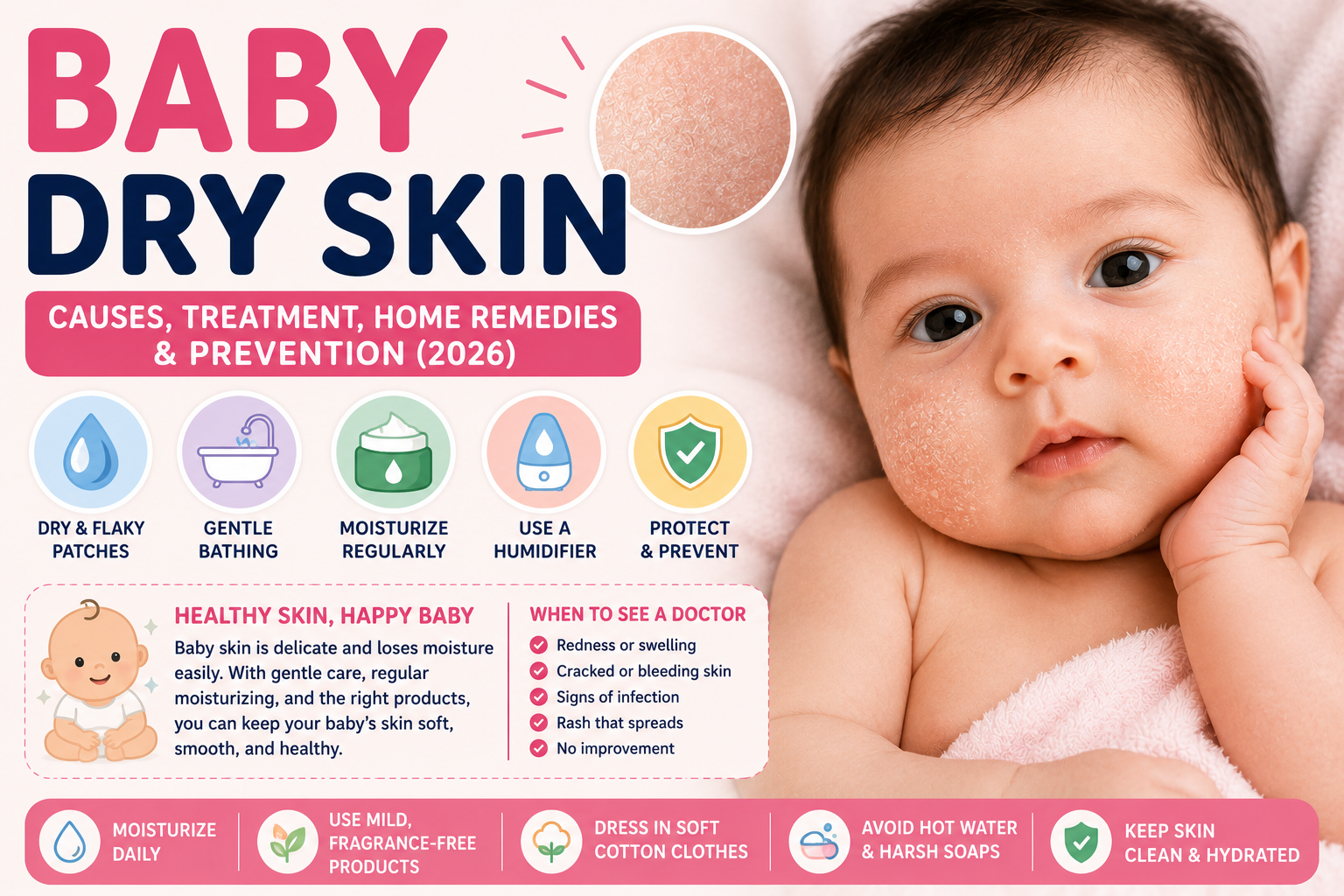
Baby dry skin infographic explaining the causes of dry, flaky skin in babies, common symptoms, moisturizing tips, home remedies, prevention strategies, and when to see a doctor.

Baby Dry Skin: Causes, Symptoms, Treatment & Home Care

Medical Note: This article is for educational purposes only and should not replace professional medical advice. If your baby’s skin becomes cracked, bleeds, develops signs of infection, or does not improve with proper skincare, consult your pediatrician.

Dry, rough, or flaky skin is one of the most common skin concerns parents notice during their baby’s first year. While baby dry skin is usually harmless and temporary, it can sometimes cause discom fort, itching, or irritation if not cared for properly.

A baby’s skin is much thinner and more delicate than an adult’s, making it more prone to moisture loss. Weather changes, frequent bathing, harsh soaps, or certain skin conditions like eczema can all contribute to dry skin.

The good news is that most cases of baby dry skin improve with gentle skincare, regular moisturizing, and avoiding common irritants.

This guide explains the causes, symptoms, treatment options, home remedies, prevention tips, and when parents should seek medical advice. Learn what to expect as your baby grows with our complete guide to Child Development Milestones, covering physical, cognitive, and emotional development from birth to 5 years.

The American Academy of Dermatology (AAD) recommends regular moisturizing with fragrance-free products to help manage dry skin in babies.

What Is Baby Dry Skin?

Baby dry skin occurs when the outer layer of the skin loses moisture faster than it can replace it. This causes the skin to become:

  • Dry
  • Rough
  • Flaky
  • Tight
  • Sometimes mildly itchy

Dry skin is very common during the newborn period because a baby’s skin barrier is still developing.

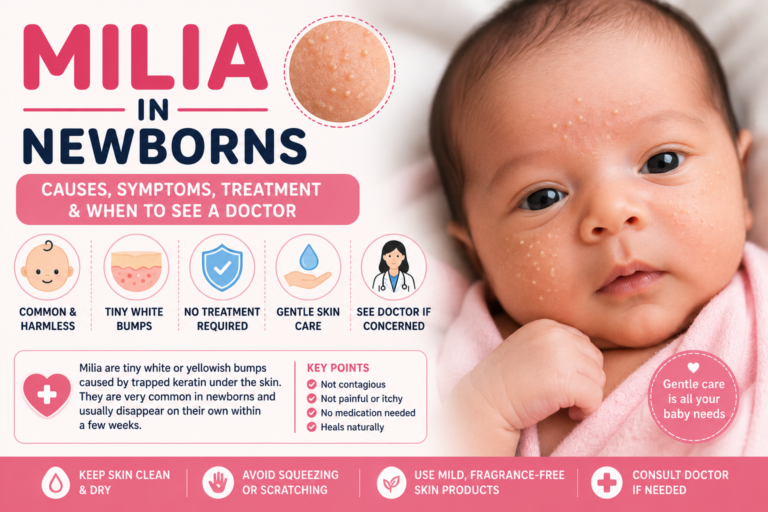
Unlike eczema, simple dry skin usually does not cause severe redness or intense itching. Tiny white bumps known as Milia in Newborns are different from dry skin and usually disappear naturally within a few weeks.


Is Baby Dry Skin Common?

Yes.

Most babies experience dry or peeling skin during the first few weeks after birth. It is especially common in:

  • Newborns
  • Babies born after their due date
  • Infants during winter
  • Babies living in dry climates

In many cases, dry skin improves naturally as the skin matures. Some newborns also experience Baby Acne, a common skin condition that usually resolves without treatment.


What Causes Baby Dry Skin?

Several factors can contribute to dry skin in babies.

1. Immature Skin Barrier

A newborn’s skin loses moisture more easily than adult skin, making dryness common during the first few months of life.


2. Cold or Dry Weather

Low humidity during winter removes moisture from the skin, increasing dryness and flaking.


3. Frequent Bathing

Bathing too often or using hot water can strip the skin of its natural protective oils.


4. Harsh Soaps and Fragrances

Products containing:

  • Alcohol
  • Fragrances
  • Strong detergents
  • Antibacterial ingredients

may irritate your baby’s skin.


5. Eczema

Persistent dry, itchy, and inflamed skin may indicate baby eczema (atopic dermatitis) rather than simple dry skin.


6. Heat and Indoor Heating

Air conditioners, heaters, and low indoor humidity can reduce moisture in the skin.


7. Genetics

Babies with a family history of eczema, asthma, or allergies may have more sensitive skin.


Symptoms of Baby Dry Skin

Common symptoms include:

  • Dry patches
  • Rough skin
  • Flaking
  • Mild peeling
  • Fine cracks
  • Tight skin
  • Mild itching
  • Dull-looking skin

Severe dryness may lead to redness or small cracks if left untreated. Unlike Cradle Cap, which causes greasy yellow scales on the scalp, baby dry skin usually appears as dry, flaky patches on the face and body.


Where Does Baby Dry Skin Commonly Occur?

Dry skin may appear on the:

  • Face
  • Cheeks
  • Forehead
  • Hands
  • Arms
  • Legs
  • Feet
  • Elbows
  • Knees

Newborns may also experience temporary peeling on the:

  • Hands
  • Feet
  • Ankles

during the first few weeks after birth.


Baby Dry Skin vs Baby Eczema

Baby Dry Skin Baby Eczema
Mild dryness Dry, red, inflamed patches
Slight flaking Intense itching
Usually painless Often uncomfortable
Improves with moisturizer May require medical treatment
Temporary Can be a chronic condition

If your baby’s skin is extremely itchy, inflamed, or develops recurring flare-ups, it may be Baby Eczema rather than simple dry skin.


Risk Factors

Your baby may be more likely to develop dry skin if they:

  • Are younger than one year
  • Live in a cold climate
  • Take frequent baths
  • Have eczema in the family
  • Have naturally sensitive skin

Can Baby Dry Skin Go Away on Its Own?

Yes.

Many babies outgrow simple dry skin as their skin barrier becomes stronger. With gentle skincare and regular moisturizing, the skin usually becomes softer and healthier within a few weeks.
Treatment for Baby Dry Skin

Most cases of baby dry skin improve with a gentle skincare routine and regular moisturizing. The goal of treatment is to restore the skin’s natural moisture barrier and prevent further irritation.

See also  Diya Name Meaning, Origin & Personality Traits

Best Moisturizers for Baby Dry Skin

Choose a moisturizer that is:

  • Fragrance-free
  • Dye-free
  • Hypoallergenic
  • Designed for babies
  • Thick cream or ointment rather than a lotion

Ingredients that help lock in moisture include:

  • Ceramides
  • Glycerin
  • Petrolatum (petroleum jelly)
  • Shea butter (baby-safe formulations)

Apply moisturizer at least twice daily, especially after bathing.


Daily Skincare Routine

1. Give Short, Lukewarm Baths

  • Bathe your baby for 5–10 minutes.
  • Use lukewarm—not hot—water.
  • Avoid prolonged baths, which can dry out the skin.

2. Use a Mild Baby Cleanser

Choose a gentle, soap-free cleanser only where needed. Washing with plain water is often enough for areas that are not visibly dirty.


3. Moisturize Immediately After Bathing

Within 3 minutes of the bath:

  • Gently pat the skin dry.
  • Leave the skin slightly damp.
  • Apply a generous layer of moisturizer to lock in moisture.

4. Moisturize Throughout the Day

Reapply moisturizer whenever your baby’s skin feels dry, especially:

  • After washing hands
  • After face cleaning
  • During winter
  • In air-conditioned rooms

Home Remedies for Baby Dry Skin

These simple measures can help keep your baby’s skin soft and hydrated.

Use a Humidifier

Adding moisture to indoor air during winter or in air-conditioned rooms can reduce skin dryness. During hot weather, babies may also develop Baby Heat Rash, which causes tiny red bumps rather than dry, flaky skin.


Dress Your Baby in Soft Cotton Clothing

Choose breathable cotton fabrics and avoid wool or rough synthetic materials that may irritate sensitive skin.


Wash Clothes with Mild Detergent

Use fragrance-free, baby-safe laundry detergent and avoid fabric softeners if they seem to irritate your baby’s skin.


Keep Your Baby Hydrated

For babies old enough to drink water and those who are breastfed or formula-fed, maintaining appropriate hydration supports overall skin health.


What Should You Avoid?

Do not:

  • Use hot water for bathing.
  • Bathe your baby multiple times a day.
  • Apply scented lotions or soaps.
  • Use adult skincare products.
  • Scrub peeling skin.
  • Peel off loose skin.
  • Apply essential oils directly to your baby’s skin without medical advice.

Can Baby Dry Skin Be Prevented?

Although some dryness is normal, these tips may help reduce it:

  • Moisturize daily.
  • Bathe only once a day or every other day if appropriate.
  • Use fragrance-free skincare products.
  • Keep baths short.
  • Dress your baby appropriately for the weather.
  • Maintain comfortable indoor humidity.
  • Protect the skin from excessive cold or dry air.

Possible Complications

Untreated severe dry skin may lead to:

  • Cracked skin
  • Bleeding
  • Skin irritation
  • Increased itching
  • Secondary bacterial infection
  • Eczema flare-ups in susceptible babies

Prompt treatment helps reduce these risks.


When Should You See a Doctor?

Consult your pediatrician if:

  • Dry skin does not improve after 1–2 weeks of regular moisturizing.
  • The skin becomes red, swollen, or painful.
  • Cracks begin to bleed.
  • Yellow crusts or pus appear.
  • Your baby develops a fever.
  • The rash spreads rapidly.
  • Your baby scratches constantly or has trouble sleeping.
  • You suspect eczema or another skin condition.

Seek urgent medical attention if signs of a skin infection develop. If your baby’s rash appears suddenly with raised, itchy welts, it may be Baby Hives, which can be associated with an allergic reaction.


Baby Dry Skin vs Cradle Cap

Baby Dry Skin Cradle Cap
Dry, flaky skin Greasy yellow scales
May affect the face, arms, and legs Mostly affects the scalp
May feel rough Oily appearance
Improves with moisturizer Improves with gentle scalp care
May be mildly itchy Usually not itchy

Persistent redness around the mouth may be Baby Drool Rash, which is caused by prolonged exposure to saliva.


Conclusion

Baby dry skin is a common and usually temporary condition caused by an immature skin barrier, weather changes, frequent bathing, or environmental factors. With gentle cleansing, regular moisturizing, and avoiding harsh skincare products, most babies develop soft, healthy skin within a few weeks.

If your baby’s dry skin becomes severe, painful, infected, or does not improve despite proper home care, consult your pediatrician for further evaluation and treatment.


Frequently Asked Questions (FAQs)

Is dry skin normal in newborns?

Yes. Many newborns experience dry or peeling skin during the first few weeks of life as their skin adapts to the outside environment.

Why is my baby’s skin peeling?

Peeling is often a normal part of newborn skin shedding and usually resolves without treatment.

How often should I moisturize my baby’s skin?

Apply a fragrance-free moisturizer at least twice daily, especially after bathing.

Can I use coconut oil?

Some parents use coconut oil, but it may not be suitable for every baby. Speak with your pediatrician before using natural oils, particularly if your baby has sensitive skin or eczema.

Is petroleum jelly safe for babies?

Petroleum jelly is commonly used to help lock in moisture and may be recommended by healthcare providers for dry skin.

Can bathing every day cause dry skin?

Frequent bathing, especially with hot water or harsh soaps, can remove natural oils and contribute to dryness.

Which soap is best?

Use a mild, fragrance-free, soap-free baby cleanser designed for sensitive skin.

Can dry skin become eczema?

Simple dry skin does not always become eczema, but babies with eczema often have very dry skin.

Should I scrub peeling skin?

No. Allow peeling skin to shed naturally to avoid irritation.

Can weather affect my baby’s skin?

Yes. Cold weather, low humidity, wind, and indoor heating can all contribute to dry skin.

Is baby lotion enough?

For mild dryness, lotion may help. For moderate or severe dryness, thicker creams or ointments are usually more effective.

Can dry skin cause itching?

Yes. Mild itching may occur, especially if the skin becomes very dry.

How long does baby dry skin last?

Most cases improve within a few weeks with consistent skincare and moisturizing.

Can dry skin become infected?

Yes. Deep cracks can allow bacteria to enter the skin, increasing the risk of infection.

When should I worry about baby dry skin?

Consult your pediatrician if the dryness is severe, persistent, accompanied by redness, swelling, bleeding, pus, fever, or significant discomfort.

More Reading

Post navigation

Subscribe
Notify of
guest

0 Comments
Oldest
Newest Most Voted
0
Would love your thoughts, please comment.x
()
x