
Home » Baby Care » Baby Chicken Skin (Keratosis Pilaris): Causes, Symptoms, Treatment & Home Care
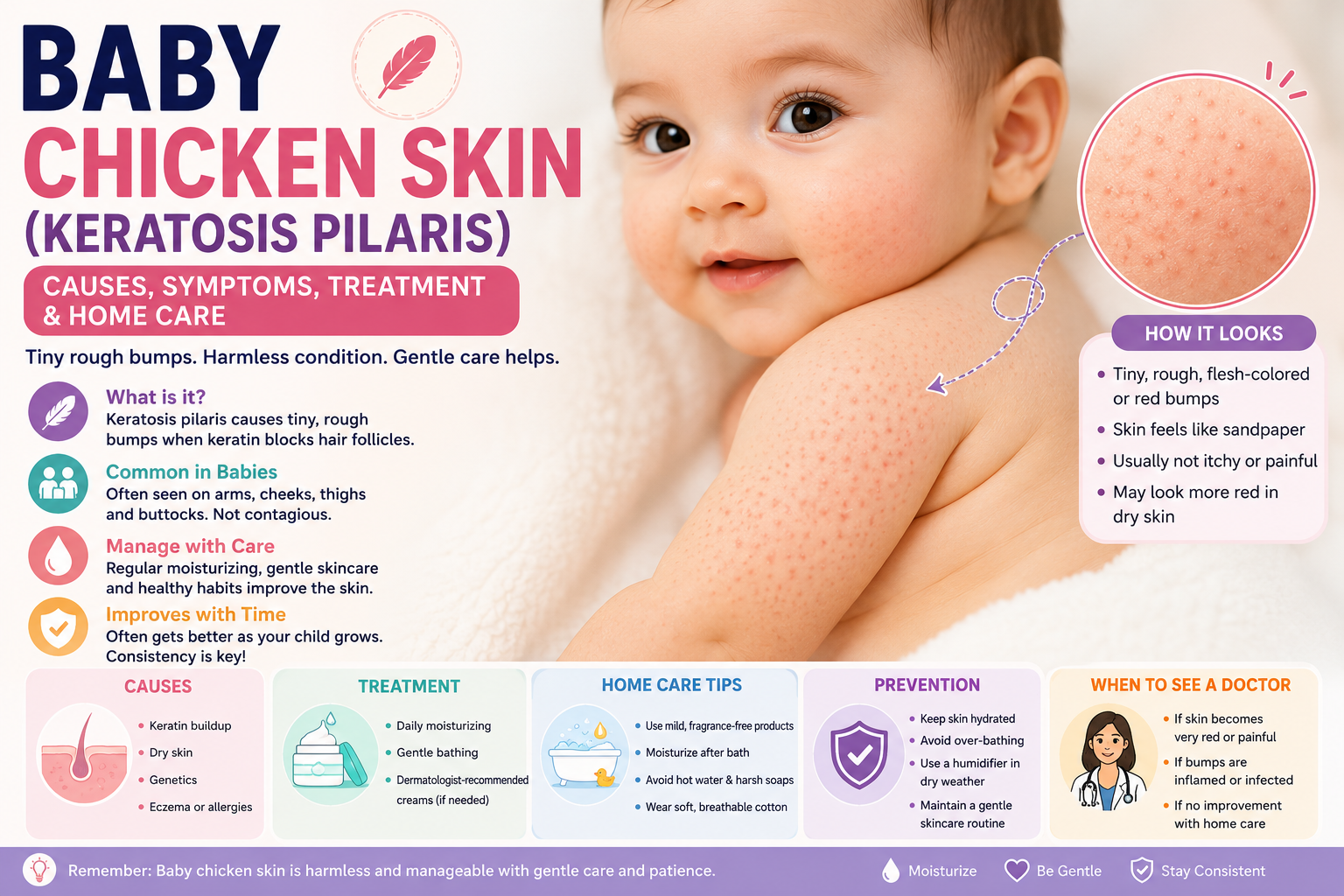
Baby chicken skin (keratosis pilaris) infographic showing tiny rough bumps on a baby's cheeks and arms, common symptoms, causes, skincare routine, treatment options, and prevention tips.

Baby Chicken Skin (Keratosis Pilaris): Causes, Symptoms, Treatment & Home Care

Medical Note: This article is for educational purposes only and should not replace professional medical advice. If your baby’s skin becomes very red, painful, develops pus, or the rash spreads rapidly, consult your pediatrician or dermatologist.

Have you noticed tiny rough bumps on your baby’s arms, cheeks, or thighs that feel like sandpaper? This condition is often called baby chicken skin and is medically known as keratosis pilaris (KP). It is a harmless and very common skin condition caused by a buildup of keratin that blocks hair follicles.

Although baby chicken skin may look concerning, it is not contagious, not an infection, and usually does not cause pain. Many children gradually improve as they grow older, while others may continue to have mild symptoms into adolescence or adulthood.

The good news is that gentle skincare, regular moisturizing, and avoiding harsh products can significantly improve the appearance of the skin.

This guide explains the causes, symptoms, diagnosis, treatment, home care, prevention tips, and when parents should consult a doctor.


What Is Baby Chicken Skin?

Baby chicken skin, or keratosis pilaris, occurs when keratin, a natural protein that protects the skin, builds up and blocks tiny hair follicles.

This creates small, rough bumps that resemble:

  • Goosebumps
  • Sandpaper
  • Chicken skin

The condition is completely harmless and is not caused by poor hygiene.


Is Baby Chicken Skin Common?

Yes.

Keratosis pilaris is one of the most common skin conditions in children and can begin during infancy or early childhood.

It is especially common in babies who have:

  • Dry skin
  • Sensitive skin
  • A family history of keratosis pilaris
  • Eczema
  • Asthma
  • Allergies

Babies with Baby Eczema often have a weakened skin barrier, making keratosis pilaris more noticeable.


What Causes Baby Chicken Skin?

The exact cause is unknown, but several factors contribute.

1. Keratin Buildup

Excess keratin blocks hair follicles, creating tiny raised bumps.


2. Dry Skin

Dry skin often makes keratosis pilaris appear rougher and more noticeable.

If your baby also has flaky skin, read our guide on Baby Dry Skin for moisturizing tips.


3. Genetics

Keratosis pilaris frequently runs in families.

If one or both parents have KP, their child is more likely to develop it.


4. Eczema and Allergies

Babies with eczema or allergic conditions have a higher chance of developing chicken skin.


Symptoms of Baby Chicken Skin

Common symptoms include:

  • Tiny rough bumps
  • Skin that feels like sandpaper
  • Small flesh-colored or red bumps
  • Mild skin dryness
  • Slight redness
  • Rough patches on the cheeks, arms, or thighs

Unlike fungal infections such as Baby Ringworm, keratosis pilaris does not produce circular scaly rashes.


Where Does Baby Chicken Skin Commonly Appear?

The bumps are most commonly found on the:

  • Upper arms
  • Cheeks
  • Thighs
  • Buttocks

Less commonly, they may appear on the:

  • Forearms
  • Legs

Baby Chicken Skin vs Other Skin Conditions

Condition Key Features
Baby Chicken Skin Tiny rough bumps, sandpaper texture
Baby Eczema Dry, itchy inflamed patches
Baby Heat Rash Tiny red sweat bumps
Baby Ringworm Circular fungal rash
Baby Fungal Infection Red, scaly fungal patches
Baby Mosquito Bites Raised itchy bumps with bite marks

Is Baby Chicken Skin Contagious?

No.

Keratosis pilaris:

  • Does not spread
  • Is not infectious
  • Is not caused by bacteria
  • Is not caused by viruses
  • Is not caused by fungi

Unlike Baby Fungal Infection, chicken skin cannot spread to siblings or other family members.


How Is Baby Chicken Skin Diagnosed?

Doctors usually diagnose keratosis pilaris through:

  • Physical examination
  • Medical history
  • Skin appearance

According to the American Academy of Dermatology (AAD), laboratory tests are rarely needed because keratosis pilaris has a characteristic appearance.


Risk Factors

Your baby is more likely to develop chicken skin if they have:

  • Dry skin
  • Eczema
  • Asthma
  • Seasonal allergies
  • Family history of keratosis pilaris

Can Baby Chicken Skin Go Away?

Yes.

Many children notice gradual improvement with age, although some continue to have mild symptoms into adulthood.

Regular moisturizing can significantly improve the skin’s texture.
Treatment for Baby Chicken Skin (Keratosis Pilaris)

There is no permanent cure for keratosis pilaris, but the condition can be effectively managed with gentle skincare. Most babies improve with consistent moisturizing and avoiding skin irritation.

According to the American Academy of Dermatology (AAD), treatment focuses on softening the keratin plugs and keeping the skin well moisturized.

See also  Do Diapers Expire? Is It Safe to Use Old Diapers for Baby?

How Is Baby Chicken Skin Treated?

1. Moisturize Daily

Daily moisturizing is the most important step in managing keratosis pilaris.

Choose fragrance-free moisturizers containing ingredients such as:

  • Ceramides
  • Glycerin
  • Petrolatum
  • Colloidal oatmeal

Babies with Baby Dry Skin often notice significant improvement when their skin is well hydrated.


2. Gentle Bathing

Use:

  • Lukewarm water
  • Mild fragrance-free baby cleansers
  • Soft towels

Avoid:

  • Hot water
  • Harsh soaps
  • Bubble baths

These products can dry out the skin and make the bumps more noticeable.


3. Apply Moisturizer Immediately After Bathing

Moisturize within 3 minutes after bathing to help lock in moisture.

This simple habit can reduce roughness over time.


4. Prescription Creams (When Needed)

In older children with persistent keratosis pilaris, dermatologists may prescribe creams containing:

  • Urea
  • Lactic acid
  • Salicylic acid

These treatments should not be used on babies unless specifically recommended by a healthcare professional.

The Mayo Clinic advises using medicated creams only under medical supervision for young children.


Home Care Tips

Parents can help improve baby chicken skin by following a gentle skincare routine.

Keep Skin Moisturized

Apply moisturizer:

  • After every bath
  • During dry weather
  • Whenever the skin feels rough

Use Soft Cotton Clothing

Loose cotton clothing reduces friction that can worsen keratosis pilaris.


Avoid Scrubbing

Do not:

  • Use loofahs
  • Scrub the bumps
  • Scratch the skin

Scrubbing can irritate the skin and increase redness.


Maintain Indoor Humidity

Using a humidifier during winter may help reduce skin dryness.


Be Patient

Keratosis pilaris improves gradually over weeks to months with consistent care.


What Parents Should Avoid

Avoid:

  • Picking the bumps
  • Scrubbing rough patches
  • Using harsh soaps
  • Frequent hot baths
  • Strong exfoliating products
  • Home remedies like lemon juice or baking soda

Can Baby Chicken Skin Be Prevented?

Since keratosis pilaris has a genetic component, it cannot always be prevented.

However, parents can reduce flare-ups by:

  • Moisturizing daily
  • Avoiding dry skin
  • Using gentle cleansers
  • Limiting hot baths
  • Dressing babies in breathable cotton clothing
  • Keeping indoor humidity comfortable

The HealthyChildren.org (American Academy of Pediatrics) recommends maintaining a gentle skincare routine for babies with dry or sensitive skin.


Possible Complications

Baby chicken skin is harmless and rarely causes complications.

Occasionally:

  • Scratching may lead to skin irritation.
  • Inflamed bumps may temporarily darken after healing.
  • Dry skin may worsen the rough texture.

Babies with Baby Eczema may experience more noticeable flare-ups because both conditions are associated with dry skin.


Baby Chicken Skin vs Baby Eczema

Baby Chicken Skin Baby Eczema
Tiny rough bumps Red inflamed patches
Usually not itchy Often intensely itchy
Hair follicles blocked Skin barrier inflammation
Mostly cosmetic May require medical treatment
Improves with moisturizers May need medicated creams

If your baby’s skin is mainly dry rather than rough, our Baby Dry Skin guide explains how to choose the right moisturizers.


When Should You See a Doctor?

Consult your pediatrician if:

  • The bumps become painful.
  • Pus develops.
  • There is significant redness or swelling.
  • Your baby has severe itching.
  • Moisturizing does not improve the condition after several weeks.
  • You are unsure whether the rash is eczema, fungal infection, or another skin condition.

According to MedlinePlus, most cases of keratosis pilaris are harmless, but medical advice is recommended if symptoms worsen or the diagnosis is uncertain.


Does Baby Chicken Skin Go Away?

Yes.

Many babies and children experience gradual improvement as they grow older.

Although the bumps may not disappear completely, regular moisturizing can significantly improve the skin’s appearance and texture.


Conclusion

Baby chicken skin, also known as keratosis pilaris, is a common and harmless skin condition that causes tiny rough bumps on the arms, cheeks, thighs, or buttocks. While it may look concerning, it is not contagious and is not caused by poor hygiene or an infection.

A gentle skincare routine, daily moisturizing, and avoiding harsh products can greatly improve the condition. Parents should also learn to distinguish keratosis pilaris from other skin conditions such as Baby Eczema, Baby Heat Rash, Baby Ringworm, Baby Fungal Infection, and Baby Dry Skin to ensure the right care and treatment.


Frequently Asked Questions (FAQs)

Is baby chicken skin contagious?

No. Keratosis pilaris cannot spread from one person to another.

What causes baby chicken skin?

It is caused by a buildup of keratin that blocks hair follicles.

Is keratosis pilaris painful?

No. It is usually painless, though some babies may have mild dryness or occasional itching.

Can baby chicken skin go away on its own?

Yes. Many children improve naturally as they grow older.

Is chicken skin the same as eczema?

No. Keratosis pilaris causes rough bumps, while eczema causes inflamed, itchy patches.

Can moisturizers help?

Yes. Daily moisturizing is the most effective way to improve skin texture.

Does bathing make it worse?

Hot baths can dry the skin and worsen symptoms. Use lukewarm water instead.

Should I scrub the bumps?

No. Scrubbing may irritate the skin and increase redness.

Can food allergies cause chicken skin?

There is no strong evidence that food allergies directly cause keratosis pilaris.

Can babies outgrow keratosis pilaris?

Yes. Many children notice improvement during late childhood or adolescence.

Does cold weather make it worse?

Yes. Dry winter air often makes the bumps more noticeable.

Can baby oil cure chicken skin?

Baby oil helps retain moisture but does not remove the keratin plugs.

Is baby chicken skin a fungal infection?

No. Unlike Baby Fungal Infection, keratosis pilaris is not caused by fungi.

Can chicken skin appear on the face?

Yes. The cheeks are one of the most common areas affected in babies.

When should I see a dermatologist?

If the skin becomes painful, infected, very inflamed, or if you’re uncertain about the diagnosis, consult a pediatric dermatologist.

More Reading

Post navigation

Subscribe
Notify of
guest

0 Comments
Oldest
Newest Most Voted
0
Would love your thoughts, please comment.x
()
x