

Edited by: MomSaathi Editorial Team
Reviewed by: Dr. Pooja Joshi – Dental Health Expert & Oral Care Reviewer
Hey there, wonderful mama! Does your baby have red gums, seem fussy, drool constantly, and seem to have lost sleep? You might be questioning if your baby is teething, and what you can do to help without medication.
This is one of the challenging phases new parents go through in the first two years, and we understand how overwhelming it can be at Momsaathi. That is why we have created a guide named Teething Relief that focuses on remedies without medication. You will also be informed on the description of symptoms, the timelines in which they appear, and the safest methods to soothe your baby.
This guide is also designed to be safe. That means no gels, no other medications, just safe, natural, and evidence-based methods designed to get through this phase with more smiles and fewer tears. Together, we can get through this! 🌟
When Does Teething Start? Typical Timeline (0–24 Months)
Most babies get their first tooth between 4 and 7 months, but it can start as early as 3 months or as late as 12 months. By the age of 2-3 years, we expect to see 20 primary teeth.
Common Age Ranges for First Teeth to Erupt Include:
- 6-10 Months – Lower Central Incisors
- 8-12 Months – Upper Central Incisors
- 9-13 Months – Upper and Lower Lateral Incisors
- 13-19 Months – First Molars
- 16-23 Months – Canines
- 23-33 Months – Second Molars
If a baby is 5 months old and suddenly becomes very upset, it could be related to teething. Prior to a tooth breaking through the gums, a baby can show signs of teething as early as a few weeks before it occurs.
If you want to stay on track for your baby’s development during this time, we recommend checking out this guide: Baby Milestones by Month: What to Expect 0-12 Months (With Red Flags).
Normal Teething Symptoms
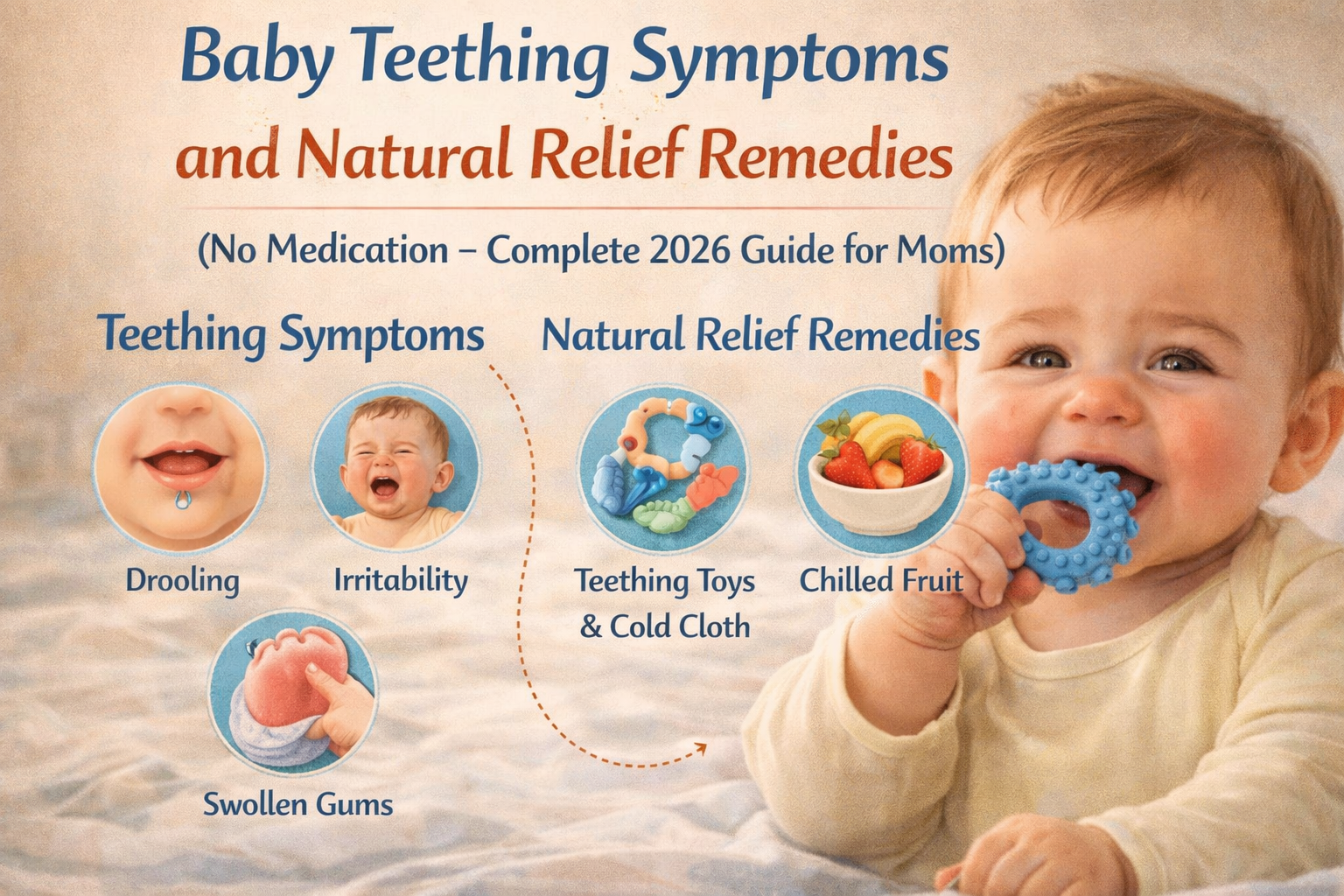
- Excessive drooling (may lead to chin rash)
- Irritability and fussiness, particularly at night
- Rubs ears and/or cheeks
- Chews on anything and everything, which may lead to a loss of appetite (for breast milk, this is usually not the case)
- Night waking
- Increased fussiness (may lead to a loss of appetite)
- Having a very mild fever (under 100.4°F / 38°C)
- Rash caused by exposure to stools (may be a sign of insufficient sleep)
- Sleep problems (may be caused by a rash caused by exposure to stools)
- Chewing on hands, toys, and/or clothing
Please remember that babies do not typically show signs of teething with fever (greater than 101°F), vomiting, rash, or a severe reduction in appetite. Contact your child’s doctor if you believe that your child may have an infection.
If you’re noticing increased spit-up or changes in feeding frequency, it may be related to teething. You may want to refer to our guide: Why Does My Baby Spit Up After Every Feeding? Safe Remedies.
12 Safe Natural Teething Relief Remedies
These mom-created, pediatric-approved, teething baby relievers include:
- Chilled Teething Rings — Teething silicone or rubber rings can be placed in the fridge for 15-20 minutes. They tend to numb the gums and become more comfortable.
- Cold Washcloth — A clean, soft, cold washcloth is great for the baby to chew on. You can even add a little breast milk for added comfort.
- Frozen Breast Milk Popsicles — You can pour your accumulated breast milk into a clean baby feeder or ice tray with a handle. Then, freeze it, and it can be great for older babies (6+ months).
- Gentle Gum Massage — You’ll want to wash your hands, then wrap a clean finger in soft gauze, and then you can firmly rub the gums in a circular motion for 1-2 minutes.
- Chilled Cucumber or Carrot Sticks (for 6+ months) — Cucumber or Carrot sticks may be given when your little one turns 6 months. You’ll want to supervise closely — and definitely don’t leave the baby alone.
- Amber Teething Necklace? Only if… — The soothing effect Amber necklaces have is loved by many mothers; however, they should only be used under constant supervision, as there is a risk of choking. If you do choose to get an Amber necklace, use Baltic amber with an appropriate safety clasp.
- Babywearing & Extra Cuddles — Staying close together, as with babywearing, causes the release of calming hormones and diverts attention from the discomfort.
- White Noise + Dim Lights for Teething Discomfort Sleep — Disrupted sleep caused by teething is to be expected. Using a consistent sleep routine and white noise at bedtime is a good idea, as described in our Best Newborn Sleep Schedule 0-3 Months for First-Time Moms.
- Breastfeeding on Demand — Extra nursing sessions provide comfort and closeness, help with hydration, and relieve pain.
- Chilled Silicone Teething Toys — Safe brands with no detachable small parts.
- Face & Chin Care — Wipe drool frequently and use coconut oil or lanolin to soothe raw skin.
Avoid Homeopathic Remedies — Some mothers use chamomile or calendula gels (which are natural and do not have benzocaine), but they should always check with a doctor before giving these remedies.
For the most up-to-date safe teething information provided by the American Academy of Pediatrics, please visit: Teething Pain Relief – American Academy of Pediatrics
Teething Nights & Fussy Days (Gentle Parenting Style)
Teething babies need a calm, predictable routine. An overtired baby will feel the discomfort much more and will be more cranky. Skin-to-skin with the baby is recommended, and babywearing is highly effective. Distraction with soft, calming songs and gentle play is recommended. Preferred toys are also recommended as good sources of distraction. You and your partner should alternate shifts so that you both have some time to rest.
These strategies combine wonderfully with our Gentle Parenting Techniques for Newborns and Toddlers (No Cry Methods).
Safe Practices & When to Call the Doctor
Always Safe:
- The Teething Toy should be supervised
- The Toys should be cleaned daily
- Amber necklaces should not be used during sleep
You should Call Your Pediatrician If:
- A fever that is over 100.4°F (38°C)
- You have diarrhea lasting more than 24 hours
- A refusal to be fed for long periods
- Extreme lethargy or hours of inconsolable crying
- Swelling or pus around the gum area
- Any symptoms that trouble you
10 FAQs About Baby Teething Symptoms and Natural Relief
- Can teething cause fever? Yes, it can cause mild low-grade fever, but high fever is usually something else.
- How long does each tooth take to come in? Each tooth takes 3–7 days of noticeable symptoms, on average.
- Is drooling always a sign of teething? Crying is a common result of infant behavior.
- Should I use teething gels? Avoid any with benzocaine. Natural options are the way to go.
- Do molars hurt more than front teeth? Yes, because of the larger surface area and because they are deeper in the gums.
- Will my baby stop eating during teething? Baby might eat less solids, but typically will continue breastfeeding or formula well.
- Can I give frozen fruit? Only soft options like banana or watermelon in a feeder bag after 6 months.
- How do I prevent chin rash from drool? Wipe gently and apply a thin layer of coconut oil or barrier cream.
- Is an amber teething necklace safe? Only with a proper breakaway clasp and constant supervision.
- When should the first tooth appear? The average is 6 months, but anywhere from 3 to 12 months is normal.
You’re Doing an Amazing Job, Mama!
Teething can feel endless, but every tooth your baby gets gets them that little bit closer to that beautiful smile. With a little bit of extra patience, these natural teething relief remedies, and a few more cuddles, you’ll both get through the process that little bit stronger.
You’ve got natural tools, the community support, and more importantly, the love your baby needs. Save this guide and come back whenever a new tooth is on the way.
Which natural remedy was most effective for your teething baby? Which symptoms surprised you? The Momsaathi community is here for you!
If you know a mom whose baby is chewing everything, send her this no-medication teething guide. You’re helping more mamas than you know.
This article was medically reviewed by our in-house Dr. Pooja Joshi, pediatric consultant, and last updated March 2026. Always consult your pediatrician for personalized advice.