
Edited by: MomSaathi Editorial Team
Reviewed by: Certified Lactation Consultants (IBCLC) and Maternal Health Specialists
You’re sitting on the edge of your bed, it’s 3:00 AM, and your little one is finally—finally—asleep. You’re feeling that familiar, heavy fullness in your chest, and you’ve got this small, plastic contraption in your hand that looks more like a high school science project than a life-saving tool.
If you’re staring at your manual breast pump wondering, “How on earth is this supposed to help me?” believe me, I have been there.
When I first brought my pump home, I thought it would be as simple as ‘press and go.’ Instead, I spent twenty minutes getting zero drops of milk and a very sore thumb. But here’s the secret: once you get the rhythm down, a manual pump can be your absolute best friend.
Whether you’re looking to build a small freezer stash, relieve engorgement, or just need a backup for when you’re on the move, mastering the manual breast pump is a skill that will save your sanity. Let’s dive into how to go from “zero milk” to “pro pumper.”
What Exactly is a Manual Breast Pump?
In a world of high-tech gadgets, the manual breast pump is refreshingly simple. It is a hand-operated device that uses a lever or a handle to create suction. Unlike electric pumps that require a wall outlet or batteries, this is powered entirely by you—specifically, your hand muscles.
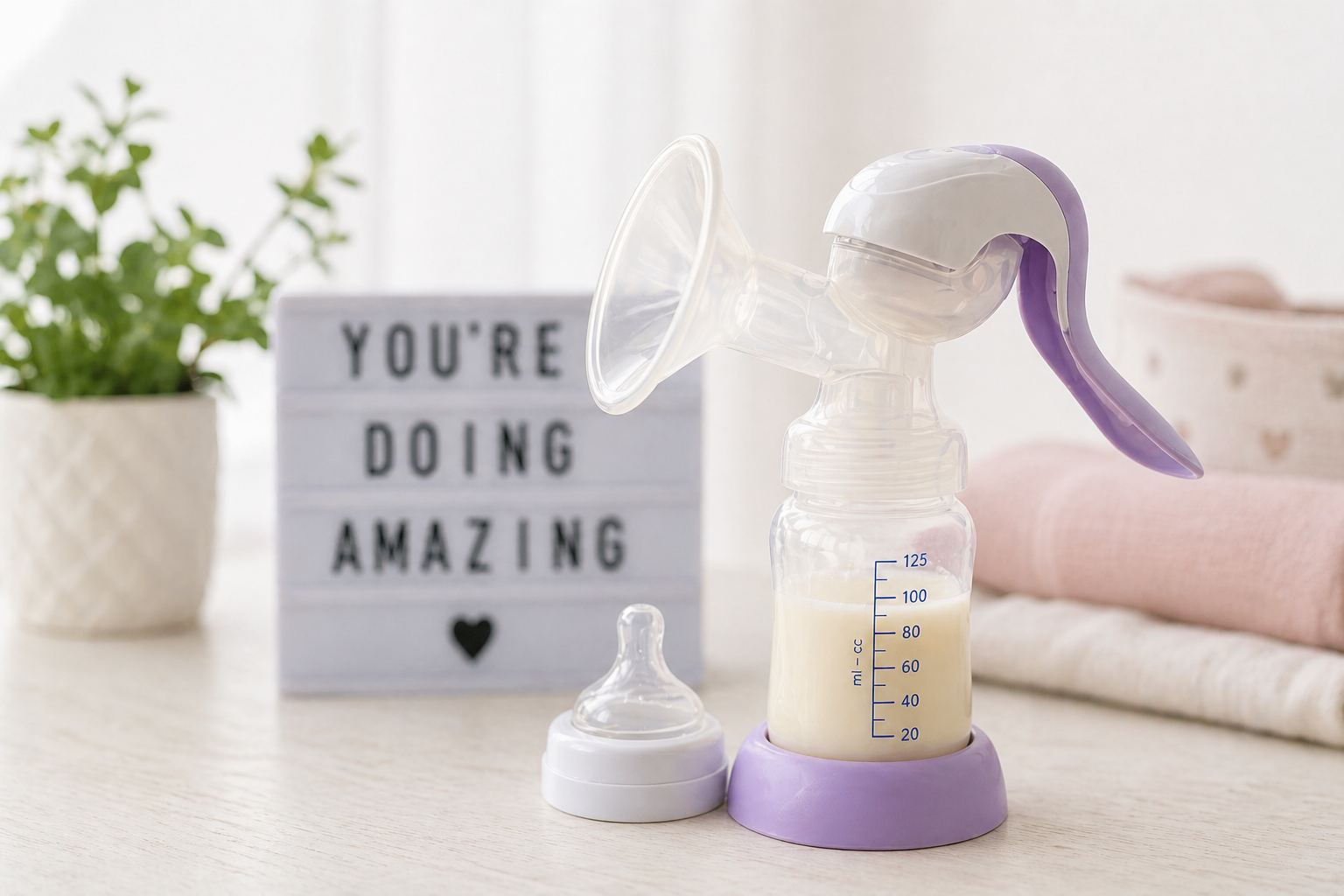
Most manual pumps consist of a few basic parts:
-
The Flange (Shield): The funnel-shaped part that goes over your nipple.
-
The Handle: What you squeeze to create the vacuum.
-
The Valve and Diaphragm: The “engine” that creates the suction.
-
The Bottle: Where the liquid gold collects.
Moms often choose a manual pump because it’s incredibly portable, affordable, and—most importantly—silent. You can pump right next to a sleeping baby without that “hiss-whoosh” sound of an electric motor waking them up.
My First Experience: The “No Milk” Meltdown
I remember the first time I tried a manual breast pump for beginners. I had read the manual, watched a YouTube video, and felt ready. I sat down, squeezed the handle with all my might, and nothing. Not a single drop.
I felt like a failure. I assumed my milk had dried up or that the pump was broken. My hand started cramping after five minutes, and I was ready to throw the whole thing in the trash.
What I didn’t realize then was that pumping is 10% mechanics and 90% biology. I was stressed, cold, and my body wasn’t “letting down” the milk. If you are struggling right now, know that hand fatigue and initial confusion are part of the process. It gets easier, I promise.
How to Use a Manual Breast Pump (Step-by-Step)
If you want to see results, you have to follow the rhythm of how a baby actually nurses. Here is the foolproof method:
1. Clean and Assemble
Always start with clean hands. Make sure all the tiny white valves are pushed in tight. If there’s even a tiny air leak, you won’t get any suction.
2. Position the Flange
Center your nipple in the middle of the flange. It shouldn’t be rubbing against the sides. If it feels like it’s being pinched, you might need a different flange size.
3. Trigger the “Letdown”
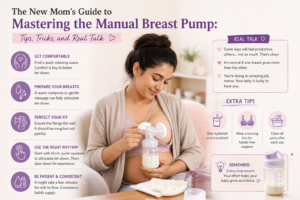
This is the most common mistake. Don’t start with long, slow squeezes. Instead, mimic a hungry baby. Use short, fast, shallow pumps (about 2 per second). This tells your brain, “Hey, the baby is hungry! Release the milk!”
4. Transition to Rhythmic Pumping
Once you see milk starting to drip or spray (the letdown), switch to long, steady squeezes. Press the handle, hold for a second, and release. This pulls the milk out efficiently once the flow has started.
5 Pro-Tips for Manual Breast Pump Success
If you want to increase your output and decrease your frustration, try these manual breast pump tips used by seasoned moms:
-
Apply Warmth: Use a warm compress or a heated gel pack on your breast for 5 minutes before you start. Warmth expands the milk ducts and helps the milk flow much faster.
-
The “Milk Massage”: Gently massage your breast in a circular motion toward the nipple before and during pumping. This helps break up any “stuck” milk.
-
Relaxation is Key: Your milk won’t flow if you’re stressed. Look at photos or videos of your baby, listen to soothing music, or even eat a snack.
-
Don’t Watch the Bottle: Staring at the drips can cause “performance anxiety.” Cover the bottle with a baby sock and just focus on the feeling.
-
Consistency over Quantity: It’s better to pump for 10 minutes consistently every day than for an hour once a week.
Common Mistakes New Moms Make
-
Using the Wrong Flange Size: If your nipple is rubbing the sides or too much of your areola is being pulled in, it will be painful and ineffective.
-
Pumping Too Hard: More suction does not mean more milk. It only means more pain. If it hurts, you are squeezing too hard or the vacuum is too high.
-
Expecting Instant Results: Your body needs to learn how to respond to plastic and silicone instead of a warm baby. Give it 3–5 days of practice before you judge the results.
Manual vs. Electric Breast Pump: Which is Better?
Every mom’s journey is different. Here is the “Real Talk” breakdown:
| Feature | Manual Breast Pump | Electric Breast Pump |
| Portability | Fits in a handbag; no cords. | Bulkier; needs power/batteries. |
| Cost | Very budget-friendly. | Can be quite expensive. |
| Effort | Requires manual hand power. | Hands-free or minimal effort. |
| Speed | Takes longer to empty the breast. | Much faster; can double-pump. |
| Noise | Completely silent. | Buzzing or humming motor sound. |
The Verdict: If you are exclusively pumping, get an electric. If you are a stay-at-home mom who just needs to go out for a few hours or wants to relieve fullness, the manual pump is the winner.
Is a Manual Breast Pump Effective?
A common question is: Is manual breast pump effective enough to maintain a supply?
The answer is Yes, but with caveats. Manual pumps are highly effective for:
-
Relieving engorgement.
-
Occasional use (once or twice a day).
-
Travel or power outages.
-
Increasing supply by “power pumping” one side while baby nurses on the other.
However, if you are returning to a full-time office job and need to pump three times a day, your hand will likely get too tired, and an electric pump would be a better investment.
Real Talk: What No One Tells You
No one tells you that the first few times you use a manual pump, you might feel like a farm animal. It feels weird!
You might only get 5ml (half a teaspoon) your first time. That is normal. Your body is smart; it knows the difference between a pump and a baby. You have to “train” your breasts to trust the pump. Also, your mental state matters more than the brand of the pump. If you’re crying or stressed, your “Oxytocin” (the hormone that releases milk) stays low. Take a deep breath. You’re doing great.
Conclusion
The manual breast pump is a small tool that can provide a huge amount of freedom. It might take a few tries to find your rhythm, and your hand might feel a little like you’ve been at the gym for the first week, but don’t give up.
Once you master the short-fast/long-slow rhythm and learn to relax, you’ll find that this little plastic gadget is one of the most empowering tools in your parenting kit.
If you’re a new mom struggling with pumping, you’re not alone
Pumping Resources & Guides
For more expert advice on breastfeeding and choosing the right equipment, explore these trusted sources:
FAQs About Manual Breast Pumps
Is using a manual breast pump painful?
It shouldn’t be! If you feel pinching or sharp pain, check your flange size or reduce the strength of your squeeze. It should feel like a strong “pull,” but never pain.
How long should I pump with a manual pump?
Usually, 10–15 minutes per side is enough. Pumping longer than 20 minutes can cause tissue soreness without necessarily getting more milk.
Can I increase my milk supply with a manual pump?
Yes. By pumping for 5-10 minutes after a nursing session, you send a signal to your body to produce more milk for the next time. Consistency is key!