

Home » Baby Care » Baby Skin Abscess: Causes, Symptoms, Treatment & When to Worry
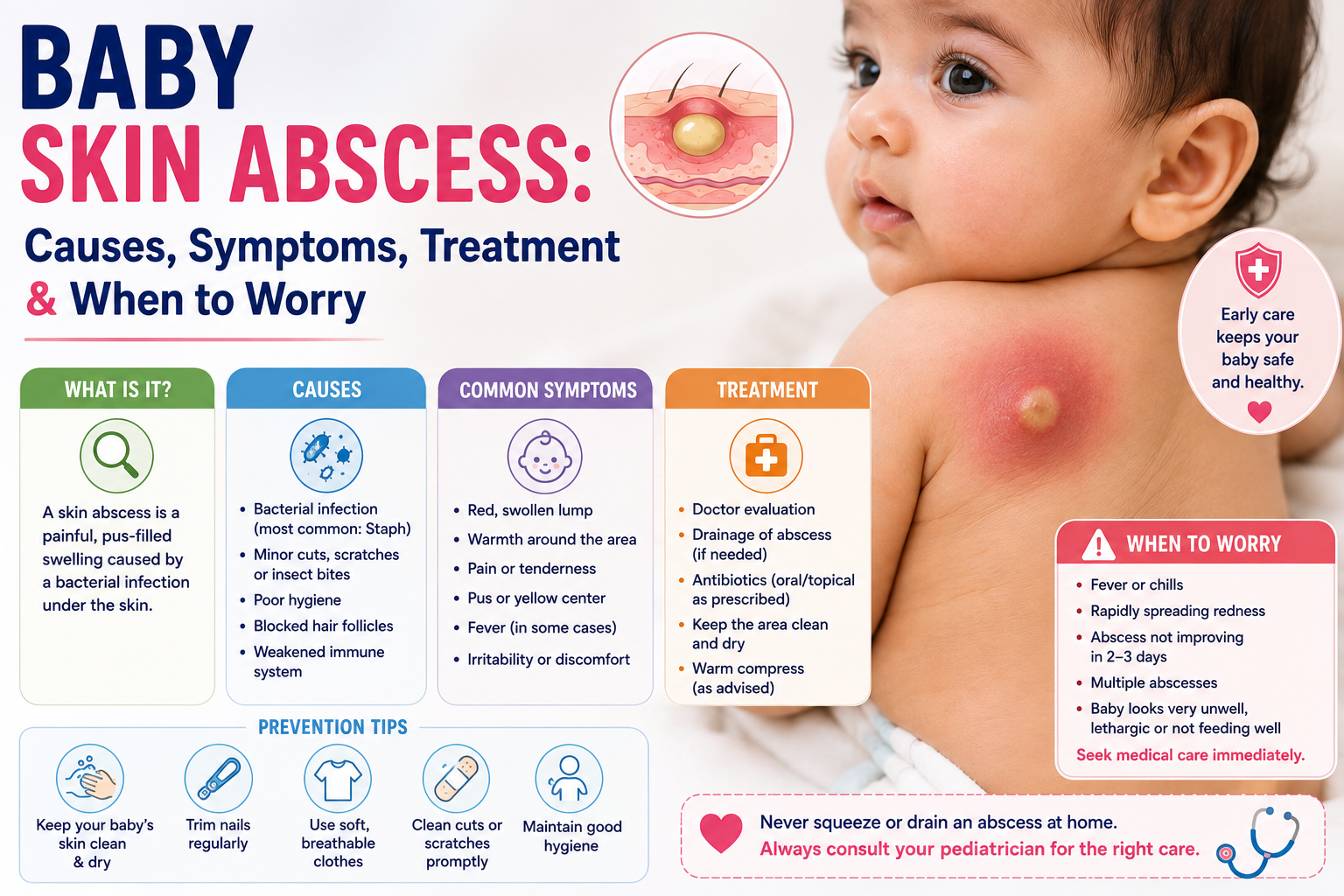
Baby skin abscess infographic showing a red swollen lump, symptoms, bacterial infection causes, treatment options, home care tips, and warning signs.

Baby Skin Abscess: Causes, Symptoms, Treatment & When to Worry

Medical Note: Never squeeze, puncture, or attempt to drain a skin abscess at home. Doing so can worsen the infection, increase pain, and spread bacteria to surrounding tissues.

Finding a painful, swollen lump on your baby’s skin can be worrying for any parent. In many cases, this lump may be a skin abscess, a pocket of pus that develops when bacteria enter the skin through a tiny cut, insect bite, scratch, or blocked hair follicle. Although skin abscesses are relatively common and often treatable, they should never be ignored because the infection can spread if left untreated.

A skin abscess may begin as a small red bump but can quickly become larger, warm, swollen, and tender. Babies may become unusually fussy, refuse feeds, or develop a fever if the infection becomes more serious. Prompt recognition and appropriate medical care can help prevent complications and support faster healing.

This comprehensive guide explains everything parents need to know about baby skin abscesses, including their causes, symptoms, diagnosis, treatment, home care, prevention strategies, and emergency warning signs.

If your baby also has boils, cellulitis, impetigo, or skin allergies, explore our related MomSaathi guides for additional skin care advice.

Quick Answer

What is a baby skin abscess?

A baby skin abscess is a localized collection of pus beneath the skin, usually caused by a bacterial infection. It often appears as a painful, red, swollen lump that feels warm to the touch. Small abscesses may respond to medical treatment, while larger ones sometimes require drainage by a healthcare professional.

What Is a Skin Abscess?

A skin abscess is a pocket of infected fluid (pus) that forms when the body’s immune system tries to fight bacteria.

The pus contains:

  • White blood cells
  • Dead skin cells
  • Bacteria
  • Tissue debris

As the infection progresses, the surrounding skin becomes inflamed, causing redness, warmth, swelling, and pain.

Is It Common in Babies?

Yes.

Although skin abscesses are more common in older children and adults, babies can also develop them because their skin is delicate and their immune system is still developing.

Abscesses may occur anywhere on the body but are most often seen in areas exposed to friction or moisture.

Common Causes of Baby Skin Abscess

1. Bacterial Infection (Most Common)

The majority of skin abscesses are caused by bacteria, particularly Staphylococcus aureus, which normally lives on the skin but can enter through a small break in the skin.

2. Insect Bites

Mosquitoes, ants, or other insect bites may become infected if bacteria enter through scratching.

3. Minor Cuts and Scratches

Small skin injuries provide an entry point for bacteria.

Examples include:

  • Scratches
  • Abrasions
  • Small cuts
  • Nail scratches

4. Blocked Hair Follicles

Occasionally, a blocked or infected hair follicle can develop into a boil, which may progress into an abscess.

5. Eczema or Broken Skin

Babies with eczema often scratch itchy skin, creating tiny openings that increase the risk of bacterial infection.

6. Diaper Area Infections

Warm, moist conditions in the diaper area may encourage bacterial growth, increasing the risk of boils and abscesses.

What Does a Skin Abscess Look Like?

A skin abscess often begins as a small red bump but may gradually become:

  • Red
  • Swollen
  • Warm
  • Painful
  • Filled with yellow or white pus
  • Soft or firm to touch

As it enlarges, the center may appear yellow or white because of accumulated pus.

Symptoms of a Baby Skin Abscess

Your baby may experience:

Skin Symptoms

  • Painful lump
  • Redness
  • Swelling
  • Warm skin
  • Pus drainage (if the abscess opens)
  • Tenderness

General Symptoms

  • Fever
  • Fussiness
  • Poor feeding
  • Irritability
  • Difficulty sleeping
  • Reduced activity

Large abscesses are more likely to cause fever or make your baby appear unwell.

Common Locations

Skin abscesses may develop on the:

  • Face
  • Neck
  • Scalp
  • Arms
  • Legs
  • Buttocks
  • Groin
  • Diaper area
  • Armpits

Skin Abscess vs Boil vs Cellulitis

Condition Appearance Pus Spread
Skin Abscess Large swollen lump ✅ Yes Localized
Boil Smaller painful bump ✅ Yes Usually localized
Cellulitis Red, swollen skin ❌ Usually no Spreads through skin
Impetigo Honey-colored crusts ❌ Usually no Superficial skin infection

Is a Skin Abscess Contagious?

The abscess itself is not contagious, but the bacteria inside it can spread through:

  • Direct contact with pus
  • Shared towels
  • Poor hand hygiene
  • Touching infected skin

Wash your hands thoroughly after caring for the affected area and avoid sharing personal items until the infection has healed.
How Is a Baby Skin Abscess Diagnosed?

A pediatrician can usually diagnose a skin abscess by examining the affected area and reviewing your baby’s symptoms.

Your doctor may ask:

  • When did the lump first appear?
  • Has it become larger or more painful?
  • Has pus started draining?
  • Does your baby have a fever?
  • Has your baby had similar skin infections before?
  • Does your baby have eczema or another skin condition?
  • Has there been an insect bite, scratch, or cut recently?

If the abscess is severe or keeps returning, your doctor may recommend:

  • A sample of the pus (culture) to identify the bacteria causing the infection.
  • Blood tests if a widespread infection is suspected.
  • Imaging tests such as an ultrasound in rare cases where the infection is deeper beneath the skin.

According to the American Academy of Pediatrics (HealthyChildren.org), skin infections in children should be evaluated promptly if they are painful, spreading, or associated with fever.

See also  Newborn Essentials Checklist India: Must-Haves for New Parents (Budget-Friendly Guide)

Treatment for Baby Skin Abscess

Treatment depends on the size, location, and severity of the abscess.

1. Small Skin Abscess

Small abscesses may improve with medical guidance and careful observation.

Your pediatrician may recommend:

  • Keeping the area clean
  • Monitoring for changes
  • Follow-up visits to ensure healing

Never attempt to squeeze or pop the abscess yourself.

2. Warm Compresses

For some small abscesses, your healthcare provider may recommend applying a warm, clean compress several times a day to encourage natural drainage.

Only do this if advised by your pediatrician, especially for young infants.

3. Drainage Procedure

Larger abscesses often require incision and drainage (I&D) performed by a qualified healthcare professional under sterile conditions.

This procedure:

  • Removes pus
  • Relieves pressure
  • Reduces pain
  • Promotes faster healing

Do not attempt to drain an abscess at home.

The American Academy of Dermatology (AAD) advises against squeezing or lancing boils or abscesses at home because it can spread the infection and delay healing.

4. Antibiotics

Some babies require antibiotics, particularly if:

  • The abscess is large.
  • Fever is present.
  • Cellulitis surrounds the abscess.
  • The infection is spreading.
  • The baby is very young or has a weakened immune system.

Always complete the full course of antibiotics exactly as prescribed.

The Centers for Disease Control and Prevention (CDC) advises taking antibiotics only as prescribed and completing the full course to reduce the risk of antibiotic resistance.

Home Care Tips

Most babies recover well with appropriate treatment.

Keep the Area Clean

  • Wash your hands before touching the area.
  • Follow your doctor’s wound-care instructions.
  • Keep dressings clean and dry if one has been applied.

Avoid Squeezing the Abscess

Trying to pop an abscess can:

  • Push bacteria deeper into the skin
  • Spread infection
  • Increase pain
  • Cause scarring

Allow only a healthcare professional to drain it if necessary.

Continue Feeding

Offer:

  • Breast milk
  • Formula
  • Age-appropriate foods

Good nutrition supports healing and recovery.

Encourage Rest

Adequate sleep and rest help your baby’s immune system fight infection.

Monitor for Changes

Watch the abscess daily for:

  • Increasing redness
  • More swelling
  • Additional drainage
  • Fever
  • New abscesses

Seek medical advice if symptoms worsen.

Skin Care Tips

Once the infection begins to heal:

  • Use fragrance-free cleansers.
  • Keep the surrounding skin dry.
  • Avoid tight clothing that rubs against the area.
  • Change diapers frequently if the abscess is in the diaper region.

Can a Skin Abscess Come Back?

Yes.

Some babies experience recurrent abscesses, particularly if they:

  • Have eczema
  • Frequently scratch their skin
  • Have repeated bacterial skin infections
  • Live with someone who has recurrent boils

If abscesses keep returning, your pediatrician may recommend further evaluation to identify underlying causes.

Prevention Tips

You can reduce the risk of skin abscesses by:

  • Washing your baby’s hands regularly.
  • Keeping fingernails trimmed.
  • Treating cuts and scratches promptly.
  • Cleaning insect bites gently.
  • Managing eczema effectively.
  • Changing wet or soiled diapers frequently.
  • Avoiding sharing towels, washcloths, or personal items.

The World Health Organization (WHO) emphasizes that good hand hygiene is one of the most effective ways to reduce the spread of bacterial and viral infections.

Do’s and Don’ts

Do Don’t
Keep the area clean Squeeze or pop the abscess
Wash your hands before touching it Share towels or washcloths
Complete prescribed antibiotics Stop antibiotics early
Follow wound-care instructions Ignore fever or increasing redness
Contact your pediatrician if symptoms worsen Apply home remedies without medical advice

When Should You See a Pediatrician?

Arrange a medical evaluation if your baby:

  • Has a painful lump that continues to enlarge.
  • Develops fever.
  • Has pus draining from the skin.
  • Appears unusually sleepy or irritable.
  • Refuses feeds.
  • Develops multiple abscesses.
  • Has increasing redness or swelling.
  • Does not improve within 24–48 hours of treatment.

HealthyChildren.org recommends prompt medical evaluation for painful skin infections, especially in infants and young children.

Emergency Warning Signs

Seek immediate medical care if your baby develops:

  • Difficulty breathing
  • High fever
  • Rapidly spreading redness
  • Swelling around the eyes or face
  • Persistent vomiting
  • Seizures
  • Extreme sleepiness or difficulty waking
  • Blue or pale skin
  • Signs of dehydration
  • Red streaks spreading away from the abscess

These symptoms may indicate a serious bacterial infection requiring urgent treatment.

Conclusion

A baby skin abscess is a bacterial skin infection that forms a pocket of pus beneath the skin. Although many abscesses can be treated successfully, early medical assessment is important because untreated infections can spread to surrounding tissues or become more serious.

Parents should never squeeze or drain an abscess at home. Instead, keep the area clean, follow your pediatrician’s treatment plan, complete any prescribed antibiotics, and monitor for warning signs such as fever, increasing redness, or worsening pain.

For more baby skin care advice, explore our Baby Boils, Baby Cellulitis, Baby Impetigo, Baby Skin Allergy, Baby Contact Dermatitis, and Baby Eczema guides on MomSaathi.

Frequently Asked Questions (FAQs)

What is a skin abscess in babies?

A skin abscess is a collection of pus beneath the skin caused by a bacterial infection. It usually appears as a painful, red, swollen lump.

What causes a skin abscess in babies?

Common causes include bacterial infections, insect bites, small cuts, scratches, blocked hair follicles, eczema, and diaper-area skin infections.

Can a skin abscess heal on its own?

Very small abscesses may improve with medical guidance, but many require evaluation by a healthcare professional. Larger abscesses may need drainage and antibiotics.

Should I squeeze my baby’s abscess?

No. Squeezing or popping an abscess can spread the infection and make it worse. Always seek medical care instead.

Are antibiotics always needed?

Not always. Small abscesses may not require antibiotics, while larger or more severe infections often do. Your pediatrician will determine the best treatment.

Is a skin abscess contagious?

The abscess itself is not contagious, but the bacteria inside the pus can spread through direct contact or shared personal items.

Can skin abscesses return?

Yes. Babies with eczema, frequent skin injuries, or recurrent bacterial infections may develop repeated abscesses and should be evaluated by a healthcare provider.

How can I prevent skin abscesses?

Keep your baby’s skin clean, treat cuts promptly, manage eczema, trim fingernails, change diapers regularly, and avoid sharing towels or washcloths.

When should I seek emergency care?

Seek immediate medical attention if your baby develops high fever, rapidly spreading redness, difficulty breathing, swelling around the face or eyes, persistent vomiting, seizures, unusual drowsiness, or red streaks extending from the abscess, as these may indicate a serious infection.

More Reading

Post navigation

Subscribe
Notify of
guest

0 Comments
Oldest
Newest Most Voted
0
Would love your thoughts, please comment.x
()
x