
Medical Note: Baby cellulitis should always be evaluated by a healthcare professional. Do not attempt to treat suspected cellulitis at home with over-the-counter creams or leftover antibiotics.
Seeing your baby’s skin suddenly become red, swollen, warm, and painful can be alarming. While many skin rashes in babies are harmless, cellulitis is a bacterial skin infection that requires prompt medical attention. Without timely treatment, the infection can spread quickly to deeper layers of the skin and, in rare cases, to the bloodstream.
The good news is that most babies recover completely when cellulitis is diagnosed early and treated with appropriate antibiotics.
This comprehensive guide explains everything parents need to know about baby cellulitis, including its causes, symptoms, risk factors, treatment options, home care, prevention, and warning signs that require urgent medical attention.
What Is Baby Cellulitis?
Baby cellulitis is a bacterial infection of the deeper layers of the skin (dermis) and the tissue beneath it. It usually develops when bacteria enter the skin through a small cut, insect bite, scratch, eczema patch, surgical wound, or other break in the skin.
Unlike mild skin irritation, cellulitis spreads beneath the skin and usually requires prescription antibiotics.
Although cellulitis can occur anywhere on the body, it most commonly affects the:
- Face
- Arms
- Legs
- Hands
- Feet
- Around insect bites
- Around scratches or wounds
In infants, cellulitis may spread more quickly than in older children because their immune systems are still developing.
Is Baby Cellulitis Serious?
Yes—but it is usually treatable when diagnosed early.
If left untreated, cellulitis can spread into:
- Nearby tissues
- Lymph nodes
- Bloodstream
- Bones (rare)
- Joints (rare)
Prompt treatment greatly reduces the risk of complications.
What Causes Baby Cellulitis?
Baby cellulitis occurs when bacteria enter through damaged skin.
The most common bacteria include:
- Streptococcus (Group A Streptococcus)
- Staphylococcus aureus
- Occasionally MRSA (Methicillin-resistant Staphylococcus aureus)
Common Causes of Baby Cellulitis
Insect Bites
Mosquito bites, ant bites, and other insect bites that are scratched excessively can allow bacteria to enter the skin. If your baby develops redness after a bite, it’s important to monitor the area. Our article on Baby Mosquito Bites explains how to reduce itching and prevent infection.
Cuts and Scratches
Even tiny scratches from fingernails or toys can become infected if bacteria enter the broken skin.
Baby Eczema
Babies with Baby Eczema often have dry, cracked skin that weakens the skin barrier, making bacterial infections more likely.
Baby Skin Allergy
Persistent scratching caused by Baby Skin Allergy may damage the skin and increase the risk of cellulitis.
Baby Contact Dermatitis
Skin inflamed by Baby Contact Dermatitis may develop cracks that allow bacteria to enter.
Impetigo
Untreated Baby Impetigo, another bacterial skin infection, can occasionally spread deeper into the skin and lead to cellulitis.
Animal or Human Bites
Although uncommon in infants, bites that break the skin increase infection risk.
Surgical Wounds
After certain medical procedures, bacteria may enter healing wounds if proper wound care is not followed.
Risk Factors
Some babies are more likely to develop cellulitis.
Risk factors include:
- Eczema
- Frequent scratching
- Dry, cracked skin
- Insect bites
- Cuts and abrasions
- Poor wound care
- Weakened immune system
- Existing bacterial skin infections
- Chronic skin conditions
Symptoms of Baby Cellulitis
Symptoms usually appear suddenly and worsen over several hours.
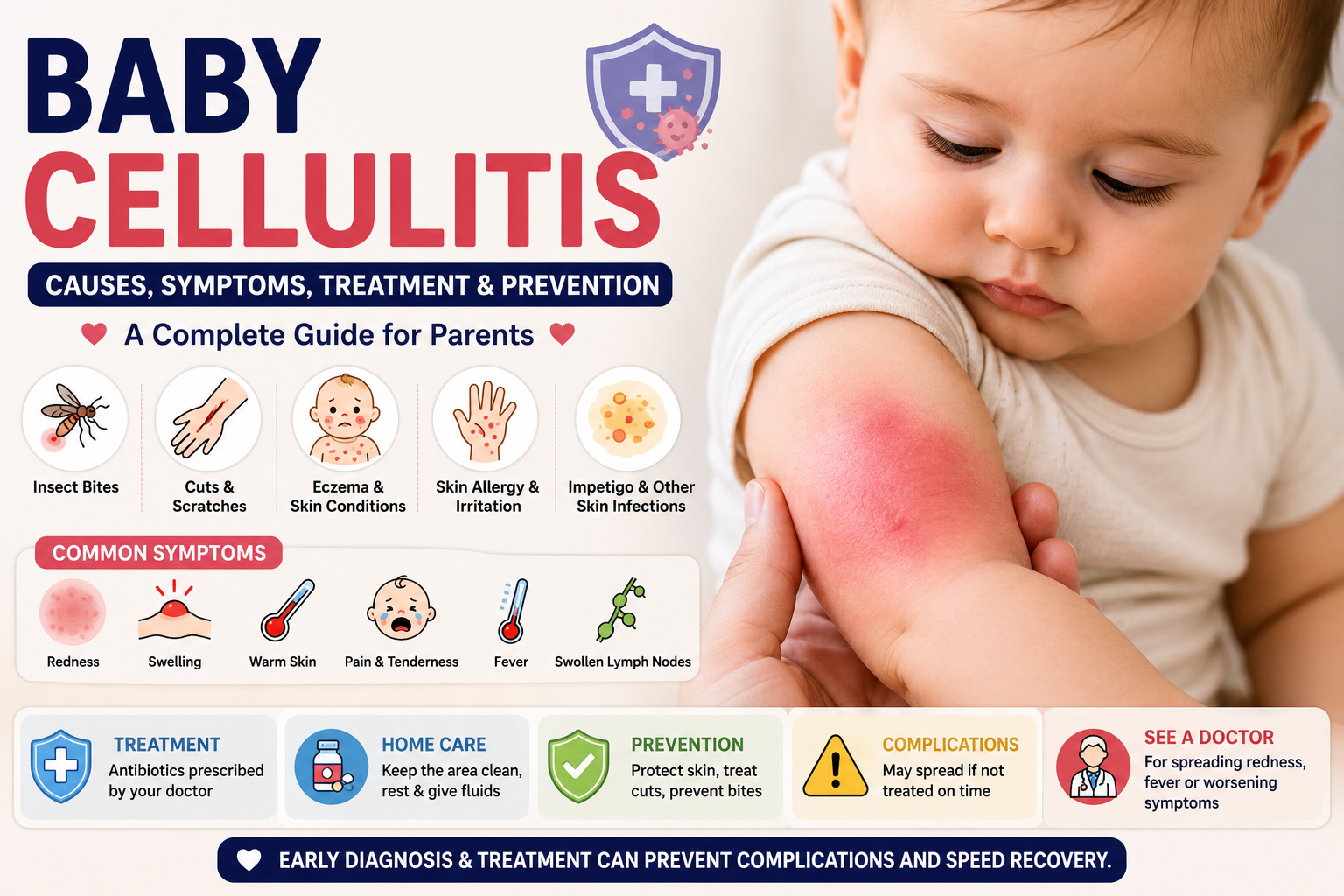
Common signs include:
- Red skin
- Swollen area
- Warm skin
- Pain or tenderness
- Skin that feels tight
- Increasing redness
- Fever
- Fussiness
- Poor feeding
- Reduced activity
- Swollen nearby lymph nodes
In babies, cellulitis may appear as a rapidly enlarging red patch.
Early Symptoms vs Severe Symptoms
| Early Symptoms | Severe Symptoms |
|---|---|
| Mild redness | Rapidly spreading redness |
| Warm skin | High fever |
| Mild swelling | Severe swelling |
| Tenderness | Intense pain |
| Fussiness | Lethargy |
| Small affected area | Large expanding area |
What Does Baby Cellulitis Look Like?
Cellulitis often appears as:
- Bright red skin
- Swollen patch
- Warm to the touch
- Tender when touched
- Smooth, stretched skin
- Redness that gradually spreads outward
Unlike many rashes, cellulitis usually affects one specific area rather than appearing all over the body.
Can Baby Cellulitis Be Contagious?
No.
Cellulitis itself is not contagious and does not spread through casual contact.
However, the bacteria that cause cellulitis may spread through direct contact with infected wounds or drainage. Practicing good hand hygiene and proper wound care helps reduce this risk.
How Is Baby Cellulitis Diagnosed?
A pediatrician usually diagnoses cellulitis through:
- Physical examination
- Medical history
- Evaluation of recent injuries or insect bites
- Assessment of fever and other symptoms
In severe cases, additional tests may include:
- Blood tests
- Wound culture (if drainage is present)
- Ultrasound (to check for an abscess)
Treatment for Baby Cellulitis
Because cellulitis is a bacterial infection, it usually requires prescription antibiotics. Early treatment helps prevent the infection from spreading to deeper tissues or the bloodstream.
Treatment depends on your baby’s:
- Age
- Overall health
- Severity of the infection
- Presence of fever
- Size and location of the affected area
Never give antibiotics without consulting a pediatrician.
Antibiotics for Baby Cellulitis
Your pediatrician may prescribe:
- Oral antibiotics for mild cellulitis
- Intravenous (IV) antibiotics if the infection is severe or your baby is very young
- Pain-relieving medication (if appropriate)
- Treatment for any underlying skin condition, such as eczema
It is important to:
- Complete the full course of antibiotics
- Give medicines exactly as prescribed
- Never stop treatment early, even if the skin looks better
Most babies begin improving within 24 to 48 hours after starting antibiotics.
Home Care Tips
Home care supports recovery but does not replace antibiotics.
Keep the Area Clean
Wash gently with clean water and pat dry.
Prevent Scratching
Trim your baby’s fingernails to reduce skin damage and prevent further bacterial entry.
Encourage Rest
Rest helps the immune system fight infection.
Offer Plenty of Fluids
Continue regular breastfeeding or formula feeding to help prevent dehydration.
Follow Medicine Instructions Carefully
Give every antibiotic dose on time.
Never skip doses.
Monitor the Infection
Parents can gently mark the edge of the redness (if advised by the doctor) to see whether it is spreading or improving.
What Should You Avoid?
Avoid:
- Applying steroid creams unless prescribed
- Squeezing swollen skin
- Popping blisters
- Using leftover antibiotics
- Home remedies that may irritate the skin
- Delaying medical treatment
How Long Does Baby Cellulitis Last?
With appropriate treatment:
- Mild cellulitis usually improves within 2–3 days
- Most infections heal in 7–10 days
- Swelling may take slightly longer to disappear completely
Your baby should be reviewed if symptoms worsen instead of improving.
Can Baby Cellulitis Come Back?
Yes.
Recurrence is more likely if the underlying cause is not treated.
For example, babies with Baby Eczema, Baby Dry Skin, or Baby Skin Allergy may continue developing small skin cracks that allow bacteria to enter.
Treating these conditions properly can reduce the risk of future infections.
How to Prevent Baby Cellulitis
Although cellulitis cannot always be prevented, these steps can significantly lower the risk.
Keep Skin Moisturized
Dry, cracked skin is easier for bacteria to enter.
If your baby has Baby Dry Skin, moisturizing regularly helps protect the skin barrier.
Treat Eczema Early
Managing Baby Eczema helps reduce scratching and broken skin.
Clean Minor Cuts Immediately
Wash scratches and cuts with clean water.
Keep them clean until healed.
Prevent Insect Bites
Protect your baby from mosquitoes and other insects.
If your baby develops itchy bites, avoid excessive scratching.
Trim Fingernails
Short nails reduce accidental scratching.
Maintain Good Hygiene
Regular bathing with gentle baby cleansers helps keep bacteria from accumulating on the skin.
Possible Complications
Without treatment, cellulitis can occasionally lead to:
- Abscess formation
- Bloodstream infection (sepsis)
- Infection of the lymphatic system
- Bone infection (osteomyelitis)
- Joint infection
- Tissue damage
- Hospitalization
Fortunately, these complications are uncommon when cellulitis is treated promptly.
Baby Cellulitis vs Impetigo
| Baby Cellulitis | Baby Impetigo |
|---|---|
| Infection of deeper skin layers | Infection of the outer skin |
| Swollen skin | Honey-colored crusts |
| Painful | Usually itchy |
| Warm to touch | Less warmth |
| Often accompanied by fever | Fever is uncommon |
| Usually requires oral antibiotics | Often treated with topical or oral antibiotics |
Baby Cellulitis vs Baby Eczema
| Baby Cellulitis | Baby Eczema |
|---|---|
| Bacterial infection | Chronic inflammatory skin condition |
| Sudden onset | Often develops gradually |
| Warm, painful skin | Dry, itchy skin |
| Usually affects one area | Often affects multiple areas |
| Fever may occur | Fever is uncommon |
| Requires antibiotics | Managed with moisturizers and anti-inflammatory treatment |
When Should You See a Doctor?
Seek medical attention if your baby has:
- Rapidly spreading redness
- Fever
- Increasing swelling
- Pain when touched
- Pus or drainage
- Poor feeding
- Excessive sleepiness
- Swollen lymph nodes
- No improvement after 48 hours of antibiotics
- Recurrent cellulitis
Early medical evaluation helps prevent complications.
Emergency Warning Signs
Go to the emergency department immediately if your baby:
- Is younger than 3 months and develops a fever
- Has difficulty breathing
- Becomes unusually sleepy or difficult to wake
- Refuses all feeds
- Has rapidly spreading redness
- Develops blue or black skin discoloration
- Has seizures
- Shows signs of dehydration
- Appears very ill
These symptoms may indicate a serious infection requiring urgent treatment.
Conclusion
Baby cellulitis is a bacterial skin infection that should never be ignored. Although it can spread quickly, early diagnosis and prompt antibiotic treatment usually lead to a full recovery. Parents should watch for signs such as rapidly spreading redness, swelling, warmth, tenderness, and fever, and seek medical attention without delay.
Keeping your baby’s skin healthy is one of the best ways to prevent cellulitis. Promptly treating cuts, insect bites, and skin conditions such as Baby Eczema, Baby Dry Skin, Baby Skin Allergy, and Baby Impetigo can reduce the risk of bacteria entering the skin.
If you ever notice a red, swollen area that is getting larger or your baby appears unwell, contact your pediatrician immediately. Acting early can prevent complications and help your little one recover quickly.
Frequently Asked Questions (FAQs)
Is baby cellulitis contagious?
No. Cellulitis itself is not contagious, although the bacteria can spread through direct contact with infected wounds or drainage.
Can cellulitis go away without antibiotics?
No. Most cases require prescription antibiotics and should not be left untreated.
What causes cellulitis in babies?
The most common causes include cuts, insect bites, eczema, skin allergies, impetigo, and other breaks in the skin that allow bacteria to enter.
How quickly does cellulitis spread?
Cellulitis can spread over hours or days, which is why prompt medical evaluation is important.
Is cellulitis painful?
Yes. The affected skin is usually warm, swollen, tender, and painful to touch.
Can mosquito bites cause cellulitis?
Yes. Excessive scratching of mosquito bites can break the skin and allow bacteria to enter.
Can eczema lead to cellulitis?
Yes. Cracked skin caused by eczema increases the risk of bacterial infection.
How long do antibiotics take to work?
Many babies begin improving within 24–48 hours, although the full course of antibiotics should always be completed.
Can cellulitis return?
Yes. Recurrence is possible if the underlying skin condition or repeated skin injuries are not addressed.
Does cellulitis always cause fever?
No. Mild cellulitis may occur without fever, but fever is more common in moderate to severe infections.
Can cellulitis leave scars?
Most babies recover without scarring when treated promptly.
Is hospitalization always necessary?
No. Mild cases are usually treated at home with oral antibiotics, while severe infections may require hospitalization and IV antibiotics.
Can cellulitis be prevented?
Many cases can be prevented by keeping the skin healthy, treating cuts promptly, moisturizing dry skin, and managing eczema or other skin conditions.
Is cellulitis different from impetigo?
Yes. Cellulitis affects deeper skin layers, whereas impetigo affects the surface of the skin and typically causes honey-colored crusts.
When should I take my baby to the emergency room?
Seek emergency care if your baby has rapidly spreading redness, high fever, difficulty breathing, poor feeding, lethargy, seizures, or signs of severe illness.