

Home » Baby Care » Baby Rash After Swimming: Causes, Symptoms, Treatment & When to Worry
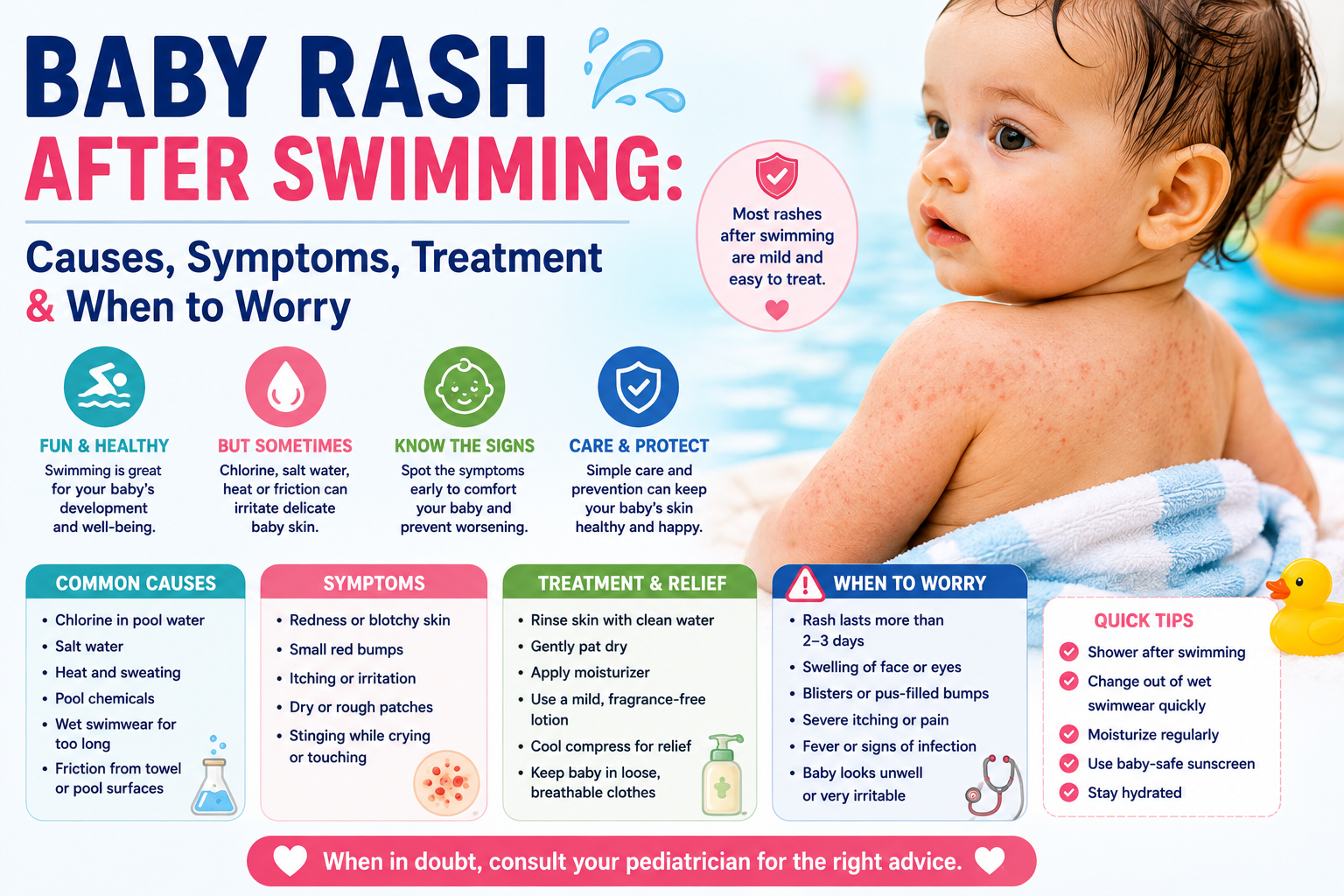
Baby rash after swimming infographic showing chlorine rash, swimmer's itch, eczema flare-up, treatment tips, prevention measures, and warning signs.

Baby Rash After Swimming: Causes, Symptoms, Treatment & When to Worry

Medical Note: A mild rash after swimming is often caused by chlorine or prolonged moisture on the skin. However, if the rash is accompanied by fever, blisters, swelling, difficulty breathing, or signs of infection, seek medical care immediately.

Swimming is a fun and healthy activity for babies and toddlers, especially during warm weather. However, some babies develop a skin rash after spending time in a swimming pool, lake, ocean, or water park. While many of these rashes are mild and disappear within a few days, others may be caused by chlorine irritation, allergic reactions, infections, or underlying skin conditions such as eczema.

Seeing red bumps or irritated skin after swimming can be worrying for parents. Fortunately, most swimming-related rashes are temporary and improve with gentle skin care and by avoiding the trigger. In rare cases, a rash may signal an infection or a severe allergic reaction that requires medical attention.

This comprehensive guide explains why babies develop rashes after swimming, the most common causes, symptoms, treatment options, home care, prevention tips, and warning signs that should never be ignored.

If your baby also has eczema, contact dermatitis, heat rash, or skin allergies, explore our related MomSaathi guides for more skin care advice.

Quick Answer

Is it normal for a baby to get a rash after swimming?

Yes. Babies may develop a mild rash after swimming due to chlorine irritation, sensitive skin, prolonged exposure to moisture, friction, or allergic reactions. Most rashes improve within a few days with gentle skin care, but persistent, painful, or infected rashes should be evaluated by a healthcare professional.

What Is a Baby Rash After Swimming?

A baby rash after swimming is skin irritation or inflammation that develops during or after swimming in:

  • Swimming pools
  • Water parks
  • Lakes
  • Rivers
  • Oceans
  • Hot tubs

The rash may appear immediately after swimming or several hours later, depending on the underlying cause.

Is a Rash After Swimming Common?

Yes.

Babies have delicate skin that is thinner and more sensitive than adult skin. Exposure to:

  • Chlorine
  • Saltwater
  • Pool chemicals
  • Bacteria
  • Wet swimsuits
  • Heat
  • Friction

can sometimes irritate the skin and lead to a rash.

Most swimming-related rashes are mild and temporary.

Common Causes of Baby Rash After Swimming

1. Chlorine Irritation (Most Common)

Chlorine is added to swimming pools to kill harmful germs, but it can also irritate sensitive baby skin.

Symptoms include:

  • Redness
  • Dry skin
  • Mild itching
  • Tiny red bumps
  • Rough patches

Babies with eczema are more likely to develop chlorine-related irritation.

2. Contact Dermatitis

Some babies react to chemicals found in:

  • Pool disinfectants
  • Sunscreens
  • Swim diapers
  • Laundry detergents used on swimwear

Symptoms include:

  • Red rash
  • Itching
  • Dry patches
  • Mild swelling

The rash usually appears where the skin comes into contact with the irritant.

3. Heat Rash

Warm weather combined with a wet swimsuit can trap sweat against the skin.

Common locations include:

  • Neck
  • Chest
  • Back
  • Diaper area
  • Skin folds

The rash appears as tiny red bumps that may feel prickly.

4. Eczema Flare-Up

Swimming may temporarily improve eczema for some babies, while others experience worsening symptoms due to chlorine or frequent washing.

Signs include:

  • Dry skin
  • Red patches
  • Itching
  • Cracked skin

5. Swimmer’s Itch (Cercarial Dermatitis)

This itchy rash can occur after swimming in lakes or ponds contaminated with tiny parasites.

Symptoms include:

  • Small red bumps
  • Intense itching
  • Rash on exposed skin
  • Rash developing within hours

Swimmer’s itch is uncommon in chlorinated pools.

6. Hot Tub Rash (Folliculitis)

Poorly maintained hot tubs or heated pools may contain bacteria such as Pseudomonas aeruginosa.

Symptoms include:

  • Red bumps around hair follicles
  • Small pus-filled bumps
  • Itching
  • Tender skin

Hot tub rash is less common in babies because they are generally not advised to use hot tubs.

7. Saltwater Irritation

Swimming in the ocean may irritate babies with:

  • Dry skin
  • Eczema
  • Small cuts
  • Sensitive skin

Salt can sting broken skin but usually does not cause serious problems.

8. Friction Rash

Wet clothing rubbing against the skin may cause irritation, particularly:

  • Under the arms
  • Around the neck
  • Groin area
  • Inner thighs

What Does the Rash Look Like?

The appearance depends on the cause.

It may include:

  • Red patches
  • Tiny bumps
  • Dry skin
  • Rough skin
  • Mild swelling
  • Itchy spots
  • Blisters (rare)
  • Small pimples (folliculitis)

Symptoms That May Occur Along with the Rash

Your baby may also have:

  • Itching
  • Dry skin
  • Mild burning sensation
  • Fussiness
  • Scratching
  • Irritability
  • Warm skin
  • Mild swelling

Most babies otherwise remain active and playful.

Chlorine Rash vs Heat Rash vs Eczema

Condition Appearance Common Location Itching
Chlorine Irritation Red, dry patches Anywhere exposed Mild
Heat Rash Tiny red bumps Neck, chest, folds Mild–Moderate
Eczema Dry, scaly patches Cheeks, elbows, knees Moderate–Severe
Contact Dermatitis Red inflamed patches Area touching irritant Moderate
Swimmer’s Itch Small itchy bumps Exposed skin Severe

Is the Rash Contagious?

Most swimming-related rashes caused by chlorine, eczema, or irritation are not contagious.

However, bacterial infections such as folliculitis may spread through contaminated water or direct contact in some situations.
How Is a Baby Rash After Swimming Diagnosed?

A pediatrician can usually identify the cause of a swimming-related rash by examining your baby’s skin and asking about recent activities.

Your doctor may ask:

  • Where did your baby swim (pool, lake, ocean, or water park)?
  • When did the rash appear?
  • How long was your baby in the water?
  • Does your baby have eczema or allergies?
  • Is the rash itchy or painful?
  • Has your baby had a fever?
  • Are there blisters or pus-filled bumps?
  • Has your baby recently used a new sunscreen, soap, or swim diaper?

Most babies do not need blood tests or skin tests unless the rash is severe, persistent, infected, or keeps returning.

See also  Baby Teething Symptoms and Natural Relief Remedies (No Medication – Complete 2026 Guide for Moms)

Treatment for Baby Rash After Swimming

Treatment depends on the cause of the rash.

1. Chlorine Irritation

Most chlorine-related rashes improve within a few days.

Treatment includes:

  • Rinsing the skin with fresh water immediately after swimming
  • Applying a fragrance-free moisturizer
  • Dressing your baby in loose cotton clothing
  • Avoiding swimming until the rash improves

2. Contact Dermatitis

If the rash is caused by an irritant:

  • Identify and avoid the trigger
  • Wash the affected skin with lukewarm water
  • Use gentle, fragrance-free skincare products
  • Follow your pediatrician’s advice regarding medicated creams if needed

3. Heat Rash

Heat rash usually improves when the skin is kept cool and dry.

Helpful measures include:

  • Removing wet swimsuits promptly
  • Dressing your baby in lightweight clothing
  • Keeping the skin dry
  • Avoiding overheating

4. Eczema Flare-Up

If swimming triggers eczema:

  • Rinse the skin immediately after swimming
  • Apply moisturizer within a few minutes after bathing
  • Continue any eczema treatment prescribed by your pediatrician
  • Limit prolonged exposure to chlorinated water if it consistently worsens symptoms

5. Swimmer’s Itch

Swimmer’s itch usually resolves without specific treatment.

Your pediatrician may recommend:

  • Cool compresses
  • Anti-itch treatment if appropriate for your baby’s age
  • Measures to prevent scratching

6. Bacterial Skin Infection

If scratching leads to infection or folliculitis develops:

Treatment may include:

  • Prescription antibiotic cream
  • Oral antibiotics if necessary
  • Keeping the affected area clean

Always complete the prescribed treatment.

Home Care Tips

Most swimming-related rashes can be managed at home.

Rinse Immediately After Swimming

Shower or bathe your baby with fresh, lukewarm water as soon as possible after swimming to remove chlorine, salt, sand, or other irritants.

Moisturize the Skin

Apply a fragrance-free baby moisturizer immediately after bathing while the skin is still slightly damp to help lock in moisture.

Keep the Skin Dry

Change your baby’s wet swimsuit and swim diaper promptly after leaving the water to reduce irritation and moisture buildup.

Avoid Scratching

Keep your baby’s fingernails short and consider using soft cotton mittens if scratching becomes a problem.

Choose Gentle Skin Products

Use:

  • Fragrance-free cleansers
  • Mild baby soap
  • Hypoallergenic moisturizers
  • Gentle laundry detergents for swimwear

Avoid harsh or heavily scented products that may worsen irritation.

Can My Baby Swim Again?

Yes.

Most babies can return to swimming once:

  • The rash has completely healed.
  • The skin is no longer irritated.
  • Your pediatrician has ruled out infection.

If chlorine repeatedly triggers your baby’s eczema or skin irritation:

  • Shorten swimming sessions.
  • Rinse immediately afterward.
  • Apply moisturizer before and after swimming if recommended by your pediatrician.

Prevention Tips

To reduce the risk of swimming-related rashes:

  • Shower your baby before entering the pool.
  • Rinse immediately after swimming.
  • Moisturize after every swim.
  • Change wet clothing promptly.
  • Choose well-maintained swimming pools.
  • Avoid hot tubs for babies.
  • Limit swimming if your baby has severe eczema flare-ups.
  • Use baby-friendly sunscreen when appropriate for your child’s age and according to product instructions.

Swimming Safety Tips for Babies

Keep swimming enjoyable and safe by:

  • Supervising your baby at all times around water.
  • Avoiding long periods in cold water.
  • Taking frequent breaks.
  • Keeping your baby hydrated.
  • Avoiding swimming if your baby has an open skin infection or is unwell.
  • Following recommended age guidelines for swimming activities.

Do’s and Don’ts

Do Don’t
Rinse your baby after swimming Leave your baby in a wet swimsuit for long periods
Moisturize immediately after bathing Use heavily scented skincare products
Keep the skin cool and dry Allow excessive scratching
Watch for signs of infection Ignore worsening redness or swelling
Consult your pediatrician if symptoms persist Return to swimming before the skin has healed

When Should You See a Pediatrician?

Arrange a medical evaluation if your baby:

  • Has a rash lasting longer than one week.
  • Develops pus-filled bumps.
  • Has increasing redness or swelling.
  • Appears to be in significant pain.
  • Has a fever along with the rash.
  • Develops blisters.
  • Has worsening eczema despite treatment.
  • Shows signs of infection, such as warmth, tenderness, or drainage from the skin.

Emergency Warning Signs

Seek immediate medical care if your baby develops:

  • Difficulty breathing
  • Swelling of the lips, tongue, or face
  • A rapidly spreading rash
  • Severe blistering or peeling skin
  • High fever with rash
  • Purple spots that do not fade when pressed
  • Seizures
  • Extreme sleepiness or difficulty waking
  • Signs of severe dehydration

These symptoms are not typical of a simple swimming-related rash and require urgent medical evaluation.

Conclusion

A baby rash after swimming is usually caused by chlorine irritation, contact dermatitis, heat rash, eczema flare-ups, or prolonged exposure to moisture. Most cases improve within a few days with gentle skin care, moisturizing, and avoiding further irritation.

Parents can help prevent future rashes by rinsing their baby immediately after swimming, changing wet clothing promptly, moisturizing regularly, and choosing clean, well-maintained swimming facilities. If the rash becomes severe, lasts longer than expected, or is accompanied by fever, swelling, blisters, or breathing difficulties, seek medical attention promptly.

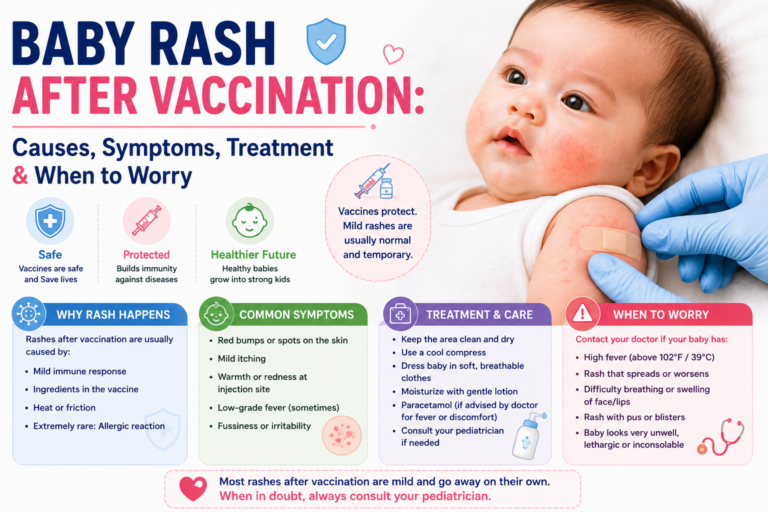
For more baby skin care advice, explore our Baby Skin Allergy, Baby Contact Dermatitis, Baby Eczema, Baby Heat Rash, Baby Rash After Fever, and Baby Rash After Vaccination guides on MomSaathi.

Frequently Asked Questions (FAQs)

Is it normal for my baby to get a rash after swimming?

Yes. Mild skin irritation after swimming is common, especially in babies with sensitive skin or eczema. Chlorine, prolonged moisture, friction, and certain pool chemicals are frequent causes.

Can chlorine cause a rash in babies?

Yes. Chlorine can dry and irritate delicate skin, leading to redness, itching, or rough patches, particularly in babies with eczema.

How long does a swimming rash last?

Most mild swimming-related rashes improve within 2–5 days once the skin is kept clean, moisturized, and away from the trigger.

Should I stop swimming if my baby gets a rash?

It is best to pause swimming until the rash has healed. If rashes recur after swimming, discuss preventive strategies with your pediatrician.

What does swimmer’s itch look like?

Swimmer’s itch usually appears as small, itchy red bumps on exposed skin after swimming in freshwater lakes or ponds.

Can swimming make eczema worse?

Yes. For some babies, chlorine or prolonged exposure to water may trigger an eczema flare-up, while others may not notice any worsening.

How can I prevent a rash after swimming?

Rinse your baby immediately after swimming, apply a fragrance-free moisturizer, change out of wet swimwear promptly, and avoid prolonged exposure to chlorinated water if it consistently irritates your baby’s skin.

Is a swimming rash contagious?

Most chlorine rashes, heat rashes, eczema flare-ups, and contact dermatitis are not contagious. However, bacterial skin infections require medical evaluation.

When should I worry about a rash after swimming?

Seek medical advice if the rash lasts longer than a week, becomes painful, develops blisters or pus, spreads rapidly, or is accompanied by fever or signs of infection.

Can babies with eczema go swimming?

Yes. Many babies with eczema can enjoy swimming. Rinsing the skin immediately afterward and applying moisturizer can help reduce irritation. If swimming consistently triggers flare-ups, consult your pediatrician or dermatologist for personalized advice.

More Reading

Post navigation

Subscribe
Notify of
guest

0 Comments
Oldest
Newest Most Voted
0
Would love your thoughts, please comment.x
()
x