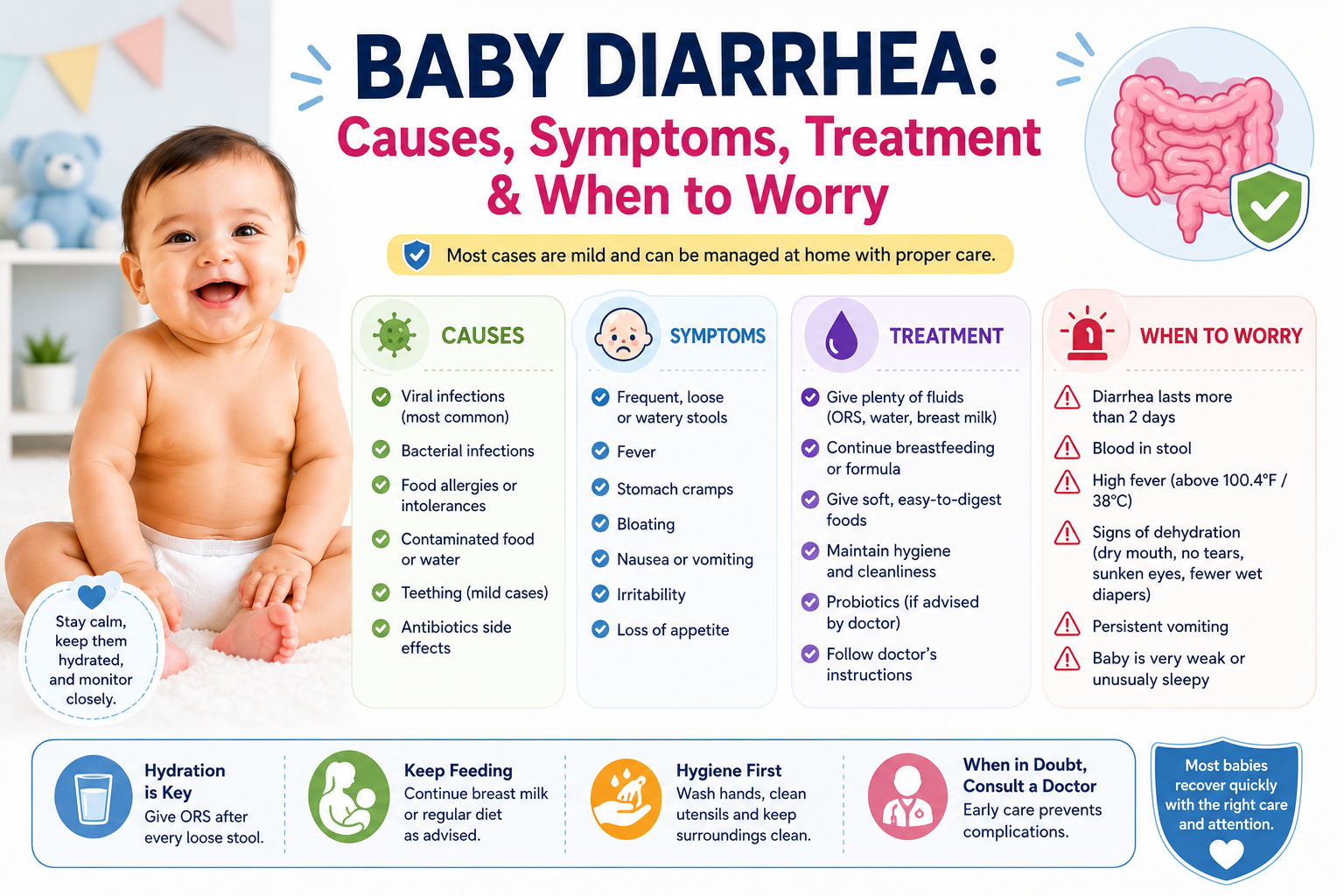

Medical Note: Frequent watery stools accompanied by poor feeding, fever, vomiting, blood in the stool, or signs of dehydration should always be evaluated by a pediatrician.
Diarrhea is one of the most common digestive problems in babies and can be worrying for parents, especially when frequent loose stools lead to dehydration. While many cases of baby diarrhea are caused by mild viral infections and improve within a few days, some cases require prompt medical attention.
Babies naturally pass soft stools, particularly if they are breastfed. This can make it difficult for parents to distinguish between normal bowel movements and true diarrhea. Understanding the difference is essential because infants lose fluids much faster than adults and can become dehydrated quickly.
This comprehensive guide explains the causes, symptoms, diagnosis, treatment, prevention, and warning signs of baby diarrhea. It also discusses diarrhea in breastfed and formula-fed babies, diarrhea after introducing solid foods, and when to seek emergency medical care.
If you’re also concerned about stool color or mucus, explore our Baby Poop Color Chart, Mucus in Baby Poop, and Yellow Baby Poop guides for a complete understanding of your baby’s digestive health.
What Is Baby Diarrhea?
Baby diarrhea refers to frequent, loose, watery bowel movements that are different from your baby’s usual stool pattern.
Because babies—especially those who are exclusively breastfed—normally have soft stools, diarrhea is identified more by a sudden increase in frequency and wateriness than by consistency alone.
A baby with diarrhea may have:
- Very watery stools
- More frequent bowel movements than usual
- Explosive stools
- Increased diaper changes
- Stool leaking out of the diaper
- Signs of dehydration
Is Baby Diarrhea Normal?
Occasional loose stools are common, but persistent diarrhea is not considered normal.
Short-term diarrhea often results from:
- Viral infections
- Mild digestive upset
- Temporary food intolerance
However, diarrhea lasting more than 24–48 hours in young infants, or accompanied by other concerning symptoms, should be assessed by a healthcare professional.
What Causes Baby Diarrhea?
Several conditions can cause diarrhea in babies.
1. Viral Gastroenteritis
Viruses are the most common cause of diarrhea in infants.
Common viruses include:
- Rotavirus
- Norovirus
- Adenovirus
- Astrovirus
Symptoms may include:
- Loose stools
- Vomiting
- Fever
- Reduced appetite
- Mild dehydration
Most viral infections improve with hydration and supportive care.
2. Bacterial Infection
Bacterial infections are less common but may cause more severe illness.
Common bacteria include:
- Salmonella
- Campylobacter
- Shigella
- Escherichia coli (E. coli)
Babies may develop:
- Bloody diarrhea
- Fever
- Severe abdominal discomfort
- Vomiting
These infections require prompt medical evaluation.
3. Food Allergy
Cow’s Milk Protein Allergy (CMPA) is one of the leading causes of persistent diarrhea in infants.
Additional symptoms may include:
- Blood or mucus in stool
- Eczema
- Vomiting
- Excessive crying
- Poor weight gain
Your pediatrician may recommend dietary changes or a hypoallergenic formula if CMPA is suspected.
4. Food Intolerance
Some babies develop diarrhea after introducing new foods.
Possible triggers include:
- Fruit juices
- Dairy products
- Certain grains
- Artificial sweeteners (older infants)
Introduce one new food every 3–5 days to help identify sensitivities.
5. Antibiotic-Associated Diarrhea
Antibiotics can disturb the normal balance of gut bacteria, resulting in temporary diarrhea.
Most cases improve after treatment is completed, but persistent diarrhea should be discussed with your pediatrician.
6. Parasitic Infection
Although uncommon in young infants, parasites such as Giardia may cause prolonged diarrhea, especially after contaminated food or water exposure.
7. Teething (A Common Myth)
Many parents believe teething causes diarrhea.
Current evidence suggests that teething itself does not directly cause diarrhea. However, babies often put objects in their mouths during teething, increasing exposure to viruses and bacteria that can lead to gastrointestinal infections.
8. Digestive Disorders
Rarely, persistent diarrhea may result from conditions such as:
- Celiac disease
- Inflammatory bowel disease
- Cystic fibrosis
- Malabsorption disorders
- Congenital digestive disorders
These conditions require specialist evaluation.
Signs and Symptoms of Baby Diarrhea
Common symptoms include:
- Frequent watery stools
- Loose bowel movements
- Explosive stools
- Vomiting
- Fever
- Poor feeding
- Fussiness
- Increased diaper rash
- Mucus in stool
- Blood in stool (sometimes)
Parents should monitor both stool changes and their baby’s overall behavior.
Baby Diarrhea vs Normal Baby Poop
| Normal Baby Poop | Baby Diarrhea |
|---|---|
| Soft or seedy | Very watery |
| Regular pattern | Sudden increase in frequency |
| Mild odor | Strong or foul odor |
| Baby feeds normally | Poor feeding may occur |
| No dehydration | Risk of dehydration |
Baby Diarrhea in Breastfed Babies
Breastfed babies naturally pass soft, loose stools.
However, diarrhea may be suspected if:
- Stool becomes much more watery
- Frequency increases suddenly
- Baby develops fever or vomiting
- Baby becomes unusually sleepy or feeds poorly
Breastfeeding should continue during diarrhea, as breast milk helps provide fluids, nutrients, and protective antibodies.
Baby Diarrhea in Formula-Fed Babies
Formula-fed babies generally have firmer stools.
Possible causes of diarrhea include:
- Viral infection
- Formula intolerance
- Cow’s Milk Protein Allergy
- Incorrect formula preparation
- Bacterial infection
Always prepare formula according to the manufacturer’s instructions to reduce the risk of digestive problems.
Baby Diarrhea After Starting Solids
Introducing complementary foods changes stool consistency.
Temporary loose stools may occur after introducing:
- Fruit purees
- Pears
- Prunes
- Peaches
- High-fiber foods
Introduce foods gradually and avoid offering multiple new foods at the same time.
What Does Diarrhea Look Like?
Diarrhea may appear:
- Watery
- Explosive
- Green
- Yellow
- Brown
- Containing mucus
- Occasionally streaked with blood
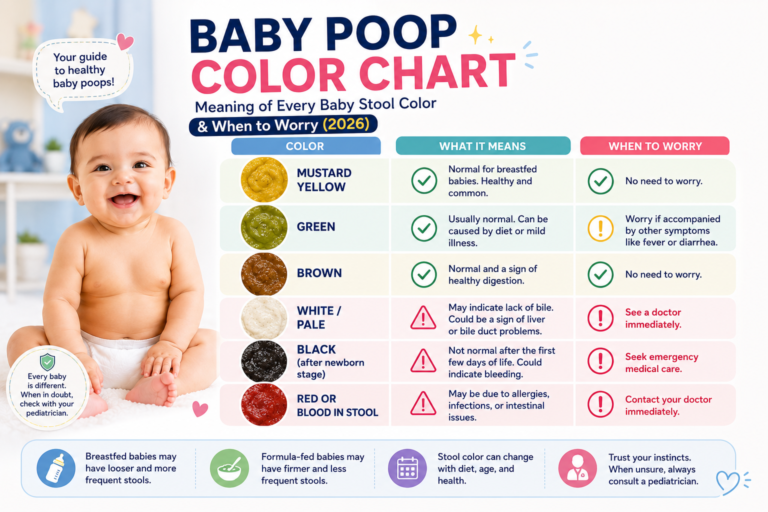
Changes in color alone do not always indicate serious illness. It’s important to consider accompanying symptoms such as fever, vomiting, or dehydration.