
Medical Note: Straining alone does not always mean constipation. Babies often grunt or turn red while passing soft stools because their abdominal muscles are still developing. Hard, dry, pebble-like stools are a better indicator of constipation.
Seeing your baby struggle to pass hard stools can be upsetting for any parent. Babies may strain, cry, or appear uncomfortable during bowel movements, leading many parents to wonder whether constipation or another digestive issue is the cause.
While occasional hard stools can happen—especially after introducing formula or solid foods—persistent hard stool is not considered normal. If left untreated, it can lead to pain, anal fissures, poor feeding, and worsening constipation.
Understanding why hard stools develop and how to manage them safely can help keep your baby’s digestive system healthy.
This guide explains the common causes, symptoms, treatment options, home care strategies, and warning signs of hard stool in babies.
If you’re also concerned about stool color or bowel habits, explore our Baby Poop Color Chart, Baby Constipation, and Baby Diarrhea guides for a complete understanding of infant digestive health.
What Is Hard Stool in Babies?
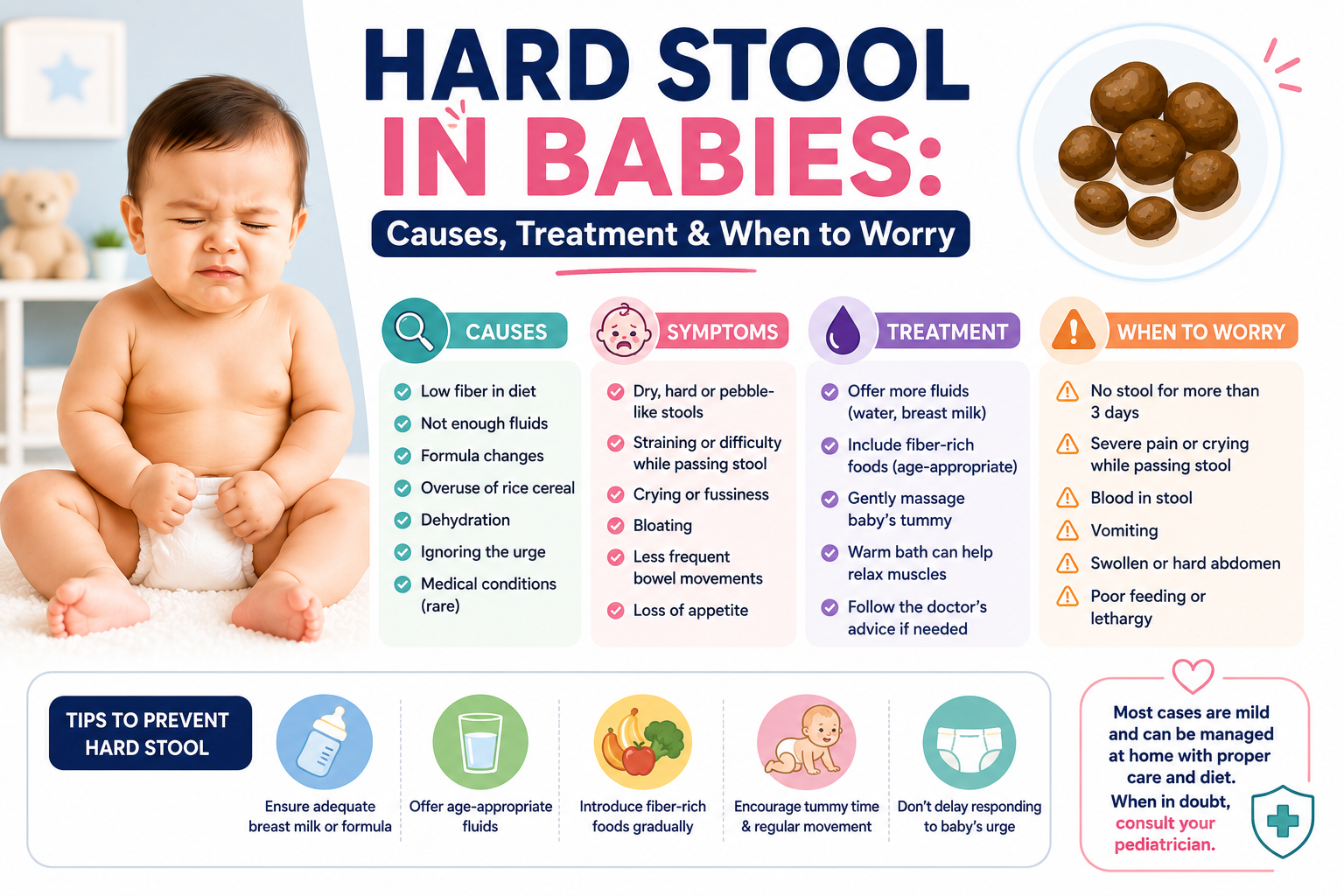
Hard stool refers to bowel movements that are dry, firm, difficult to pass, or pebble-like.
Instead of soft, mushy stools, babies with hard stools may pass:
- Small pellets
- Dry lumps
- Large hard stools
- Cracked stools
- Pebble-like stool
Hard stools usually indicate that the stool has remained in the intestines longer than normal, allowing more water to be absorbed.
Is Hard Stool Normal in Babies?
Occasional hard stools may occur during periods of dietary change.
However, repeated hard stools are not considered normal, especially if they cause:
- Pain
- Crying during bowel movements
- Bleeding
- Refusal to feed
- Persistent constipation
Parents should monitor both stool consistency and frequency.
What Causes Hard Stool in Babies?
Several factors can contribute to hard stools.
1. Starting Solid Foods
One of the most common reasons is introducing complementary foods around six months of age.
Foods that may temporarily firm stools include:
- Rice cereal
- Bananas
- Potatoes
- White bread
- Cheese
Introduce solids gradually and offer a balanced variety of fruits, vegetables, and whole grains when age-appropriate.
2. Formula Feeding
Some formula-fed babies develop firmer stools than breastfed infants.
Possible reasons include:
- Individual response to formula
- Incorrect formula preparation
- Mild dehydration
Never add extra powder or reduce water when preparing formula.
3. Low Fluid Intake
As babies grow and start solids, inadequate fluid intake may contribute to hard stools.
Breast milk or formula should remain the primary source of hydration during the first year unless your pediatrician advises otherwise.
4. Low-Fiber Diet
Older babies eating solids may develop constipation if their diet contains too little fiber.
Fiber-rich foods suitable for age may include:
- Pears
- Prunes
- Peaches
- Oats
- Vegetables
- Whole grains (when appropriate)
5. Cow’s Milk Protein Allergy (CMPA)
Some babies with Cow’s Milk Protein Allergy may experience constipation and hard stools along with:
- Eczema
- Blood in stool
- Excessive crying
- Vomiting
- Poor weight gain
Your pediatrician may recommend dietary adjustments if CMPA is suspected.
6. Holding Stool
Older infants may occasionally avoid passing stools because of previous painful bowel movements.
This creates a cycle:
Hard stool → Pain → Holding stool → Even harder stool
Breaking this cycle early is important.
7. Certain Medical Conditions
Although uncommon, persistent hard stools may be associated with:
- Hirschsprung disease
- Hypothyroidism
- Celiac disease
- Neuromuscular disorders
- Metabolic disorders
These conditions require specialist evaluation.
Symptoms of Hard Stool in Babies
Signs may include:
- Dry stools
- Pebble-like stools
- Large hard bowel movements
- Crying during bowel movements
- Straining
- Red face while passing stool
- Blood on the stool or diaper
- Reduced appetite
- Irritability
- Abdominal bloating
Some babies may pass stools less frequently, while others pass hard stools daily.
What Does Hard Baby Stool Look Like?
Hard stools may appear as:
- Small dry pellets
- Round pebble-like stools
- Large hard masses
- Cracked stools
- Dry brown lumps
Unlike normal soft stools, hard stools are usually difficult to pass.
Hard Stool in Breastfed Babies
Constipation is rare in exclusively breastfed babies.
Breast milk is easily digested, so stools are usually:
- Soft
- Yellow
- Seedy
- Easy to pass
If an exclusively breastfed baby develops hard stools, medical evaluation is recommended to identify the cause.
Hard Stool in Formula-Fed Babies
Formula-fed babies are more likely to develop firm stools.
Possible reasons include:
- Formula composition
- Low fluid intake
- Incorrect formula preparation
- Transition between formulas
Never change formulas without discussing it with your pediatrician.
Hard Stool After Starting Solids
Many babies experience temporary constipation after beginning solid foods.
Common foods that may contribute include:
- Rice cereal
- Bananas
- White rice
- Potatoes
- Processed snacks (older infants)
Balanced meals containing fruits, vegetables, and adequate fluids often help maintain softer stools.
Hard Stool with Blood
Blood may appear when a hard stool causes a small tear (anal fissure) around the anus.
Signs include:
- Bright red streaks on the stool
- Small spots of blood on the diaper
- Pain during bowel movements
Although anal fissures are common, blood in the stool should always be discussed with your pediatrician to rule out other causes.
Can Teething Cause Hard Stools?
No. There is no strong scientific evidence that teething directly causes hard stools or constipation.
However, changes in appetite or fluid intake during teething may indirectly affect bowel movements.
Hard Stool vs Constipation
| Hard Stool | Constipation |
|---|---|
| Refers to stool consistency | Refers to a bowel movement disorder |
| Stool is dry or pebble-like | Infrequent, difficult, or painful bowel movements |
| May occur occasionally | Often persists until treated |
| Can be a symptom | May include hard stools, pain, and stool withholding |