
Medical Note: This article is for educational purposes only and should not replace professional medical advice. If your baby has persistent inconsolable crying, difficulty breathing, fever (especially in newborns), or appears unusually sleepy or unresponsive, seek immediate medical care.
One of the most common questions new parents ask is, “Why is my baby crying?” Since babies cannot communicate with words, crying is their primary way of expressing hunger, discomfort, tiredness, pain, or the need for comfort.
While crying is a normal part of infant development, understanding your baby’s different cries and body language can make it easier to identify what they need. Most newborns cry 2 to 3 hours a day, with crying often peaking around 6 to 8 weeks of age before gradually decreasing.
Although most crying is harmless, excessive or unusual crying may sometimes signal an illness or medical condition that requires attention.
This guide explains the common reasons babies cry, how to soothe them, warning signs to watch for, and when it’s time to consult your pediatrician.
Is It Normal for Babies to Cry?
Yes.
Crying is completely normal and is one of the earliest ways babies communicate with their parents. A baby’s cry tells you they need something—even if it’s simply comfort or a cuddle.
According to the American Academy of Pediatrics (HealthyChildren.org), crying is a healthy part of infant development, particularly during the first few months of life. As babies grow and learn other ways to communicate, the amount of crying usually decreases.
Why Do Babies Cry?
There are many reasons why babies cry. Sometimes, the cause is obvious, while other times it may take a little detective work.
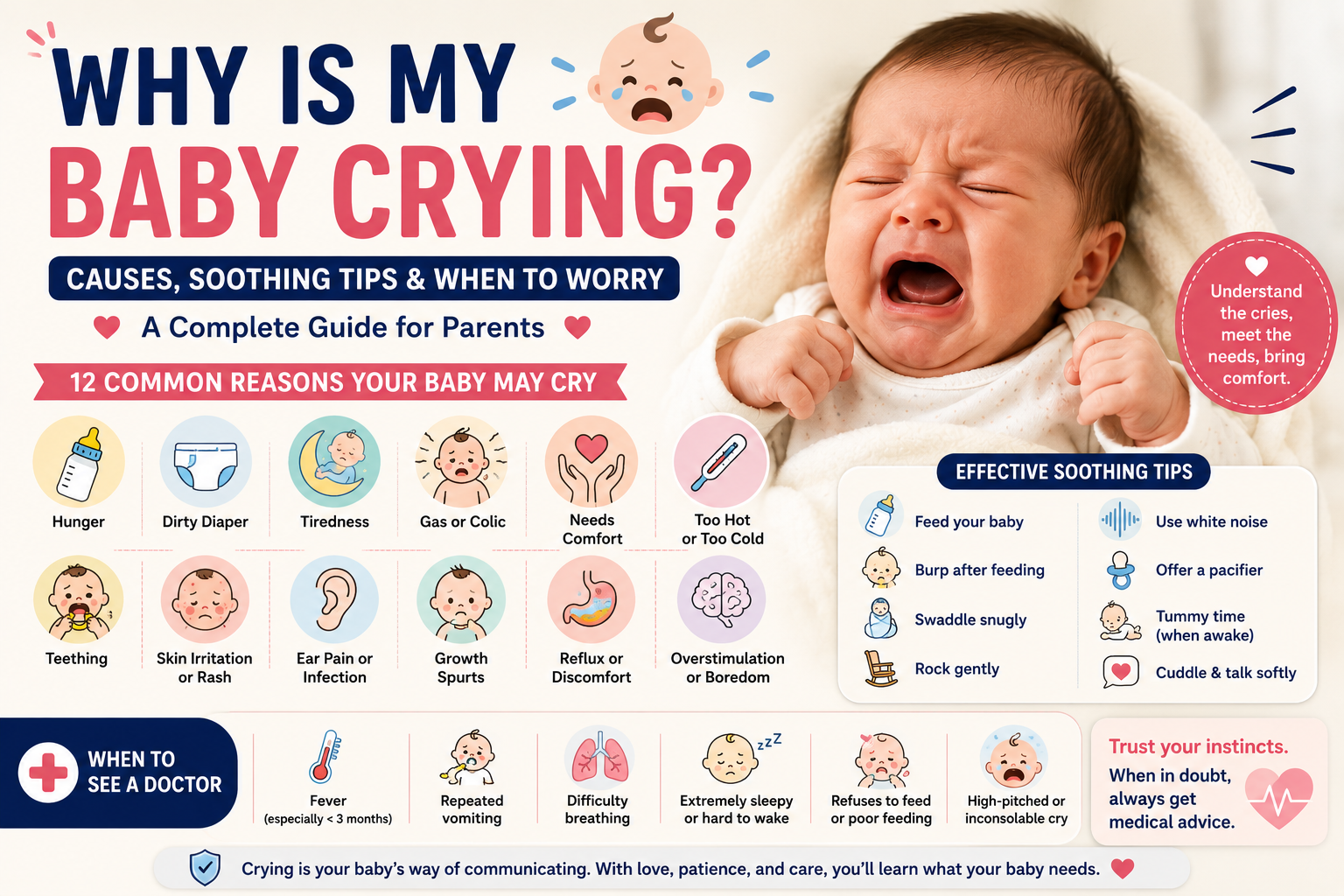
1. Hunger (The Most Common Reason)
Hunger is the leading cause of crying in newborns and young infants. Babies have small stomachs and need frequent feeding.
Signs your baby may be hungry include:
- Sucking on fingers
- Rooting (turning toward the breast or bottle)
- Smacking lips
- Opening the mouth repeatedly
- Putting hands in the mouth
Feeding your baby before they become overly hungry often makes them easier to soothe.
2. Dirty or Wet Diaper
A wet or soiled diaper can make babies uncomfortable.
Check for:
- Wet diapers
- Soiled diapers
- Diaper rash
- Tight diapers
If you notice redness around the diaper area, our guide on Baby Diaper Rash explains how to prevent and treat irritation.
3. Tiredness
Overtired babies often become fussy and cry instead of falling asleep.
Signs of tiredness include:
- Rubbing eyes
- Yawning
- Looking away
- Becoming less active
- Fussiness
Creating a calm bedtime routine helps babies fall asleep more easily.
4. Gas or Colic
Swallowed air during feeding may cause gas, making babies uncomfortable.
Your baby may:
- Pull their legs toward the tummy
- Clench fists
- Arch their back
- Pass gas frequently
If crying happens mostly during the evening and lasts for several hours despite feeding and diaper changes, it could be colic. Gentle burping and tummy massages may provide relief.
5. Wants Comfort
Sometimes babies simply want to be held.
Skin-to-skin contact, rocking, cuddling, or hearing a parent’s heartbeat can help babies feel secure.
6. Too Hot or Too Cold
Babies are sensitive to temperature changes.
Check whether your baby:
- Feels sweaty
- Has cold hands and feet
- Is overdressed
- Is underdressed
Dress your baby in one more light layer than you’re wearing.
7. Teething
Babies usually begin teething between 4 and 7 months.
Common signs include:
- Drooling
- Chewing on toys
- Swollen gums
- Irritability
Providing a clean, chilled teething ring may help soothe sore gums.
8. Illness or Pain
Sometimes crying signals that your baby is unwell.
Possible causes include:
- Ear infection
- Fever
- Cold
- Constipation
- Reflux
- Urinary infection
If your baby develops a fever along with unusual crying, contact your pediatrician immediately.
9. Skin Irritation
Skin problems can make babies uncomfortable.
Conditions such as Baby Eczema, Baby Heat Rash, Baby Skin Allergy, or Baby Contact Dermatitis often cause itching or irritation that may lead to persistent crying. If you notice red patches, dry skin, or rashes, treating the underlying skin condition may help your baby feel more comfortable.
10. Growth Spurts
Babies often become fussier during growth spurts because they need more frequent feeding and comfort.
Growth spurts commonly occur around:
- 2–3 weeks
- 6 weeks
- 3 months
- 6 months
Understanding Different Types of Baby Cries
Different cries may indicate different needs.
| Cry Type | Possible Meaning |
|---|---|
| Rhythmic, repetitive cry | Hunger |
| Whiny cry | Tiredness |
| Loud, high-pitched cry | Pain |
| Fussy, intermittent cry | Wants attention or comfort |
| Evening crying | Colic or overstimulation |
Learning your baby’s unique crying patterns becomes easier with time.
When Does Crying Peak?
Most babies cry the most between 6 and 8 weeks of age.
This period is sometimes called the “Peak of Crying” and is considered a normal stage of infant development. Crying gradually decreases after 3 to 4 months in most healthy babies.
Can You Spoil a Baby by Holding Them Too Much?
No.
According to the American Academy of Pediatrics, responding to your baby’s cries with comfort and affection helps build trust and emotional security. Holding, cuddling, and responding promptly do not spoil young babies during the first few months of life.
How to Calm a Crying Baby
Although every baby is different, many infants calm down when their basic needs are met and they feel safe, warm, and comforted. If your baby continues crying after feeding and changing their diaper, try one or more of the following soothing techniques.
Feed Your Baby
If it’s been a while since the last feed, your baby may simply be hungry.
Look for early hunger cues such as:
- Rooting
- Sucking on hands
- Lip smacking
- Opening the mouth
- Restlessness
Responding before your baby cries loudly often makes feeding easier.
Burp After Feeding
Some babies swallow air while feeding, leading to trapped gas and discomfort.
Burp your baby by:
- Holding them against your shoulder
- Sitting them upright with head support
- Gently patting or rubbing their back
If your baby frequently cries after feeding and spits up often, discuss possible reflux with your pediatrician.
Check the Diaper
A clean, dry diaper can make a big difference.
If you notice redness, irritation, or soreness in the diaper area, treating Baby Diaper Rash promptly can help reduce discomfort and prevent your baby from crying during diaper changes.
Hold and Cuddle Your Baby
Babies often cry because they want comfort and reassurance.
Try:
- Skin-to-skin contact
- Gentle rocking
- Holding your baby close
- Talking softly
- Singing lullabies
According to the American Academy of Pediatrics (HealthyChildren.org), responding to your baby’s cries helps build emotional security and strengthens the parent-child bond.
Swaddle Your Baby (For Young Infants)
For babies who are not yet rolling over, swaddling may help recreate the feeling of being in the womb.
Always:
- Use lightweight blankets
- Leave room for hip movement
- Stop swaddling once your baby begins to roll
Offer a Pacifier
Some babies have a strong need to suck even when they are not hungry.
A pacifier may help soothe babies during sleep or periods of fussiness.
Reduce Overstimulation
Too much noise, bright lights, or visitors can overwhelm young babies.
Try:
- Dimming the lights
- Turning off the television
- Moving to a quiet room
- Speaking softly
A calm environment often helps babies settle more quickly.
The 5 S’s Method to Soothe a Crying Baby
Many parents find the 5 S’s technique helpful during periods of excessive crying.
These include:
Swaddle
Wrap your baby securely if age-appropriate.
Side or Stomach Position (Only While Awake and Being Held)
Holding your baby on their side or tummy while comforting may help calm them.
Always place your baby on their back to sleep.
Shush
White noise, soft humming, or “shhh” sounds may remind babies of the sounds they heard in the womb.
Swing
Gentle rocking or slow rhythmic movement often helps babies relax.
Suck
Breastfeeding, bottle feeding, or using a pacifier may satisfy a baby’s natural sucking reflex.
Understanding PURPLE Crying
Some babies experience a period called PURPLE Crying, which usually begins around 2 weeks of age, peaks at about 2 months, and gradually improves by 3 to 5 months.
PURPLE stands for:
- P – Peak of crying
- U – Unexpected crying
- R – Resists soothing
- P – Pain-like face
- L – Long-lasting crying
- E – Evening crying
Although it can be stressful for parents, PURPLE Crying is considered a normal developmental phase in many healthy infants.
What Parents Should Avoid
Avoid:
- Shaking your baby
- Yelling or showing frustration
- Feeding every time your baby cries without checking other needs
- Using over-the-counter medicines without medical advice
- Giving honey to infants under one year
- Leaving your baby unattended in unsafe places
If you feel overwhelmed, place your baby safely in the crib for a few minutes and ask another trusted adult for help if possible.
Can You Prevent Crying?
You cannot prevent all crying because it is a normal form of communication.
However, you can reduce unnecessary crying by:
- Feeding before your baby becomes very hungry
- Following a regular sleep routine
- Burping after every feed
- Responding to early hunger and tiredness cues
- Keeping your baby comfortable
- Avoiding overheating
- Maintaining gentle daily routines
If your baby has itchy skin due to Baby Eczema, Baby Heat Rash, or Baby Skin Allergy, managing these conditions early may also reduce fussiness and crying caused by discomfort.
When Should You See a Doctor?
Consult your pediatrician if your baby:
- Cries for several hours every day without an obvious reason
- Develops a fever
- Refuses to feed
- Vomits repeatedly
- Has diarrhea
- Is difficult to wake
- Cries whenever touched
- Has a swollen abdomen
- Shows signs of dehydration
- Develops a rash with fever
- Is losing weight
- Suddenly changes their usual crying pattern
The NHS recommends medical evaluation for babies with persistent inconsolable crying, especially when accompanied by fever, breathing difficulties, or poor feeding.
Emergency Warning Signs
Seek emergency medical care immediately if your baby:
- Has difficulty breathing
- Turns blue
- Has a seizure
- Is extremely sleepy or difficult to wake
- Has a bulging soft spot (fontanelle)
- Develops a high-pitched, weak, or inconsolable cry
- Stops feeding completely
- Has persistent vomiting
- Shows signs of serious injury
These symptoms require immediate medical attention.
Conclusion
Crying is a normal and healthy part of your baby’s early development. Whether your baby is hungry, tired, uncomfortable, overstimulated, or simply seeking comfort, crying is their primary way of communicating with you.
Most babies cry less as they grow, especially after the first three to four months. Learning your baby’s hunger cues, sleep patterns, and soothing preferences will make it easier to respond confidently. However, if crying becomes unusually intense, persistent, or is accompanied by fever, poor feeding, breathing difficulties, or signs of illness, seek medical advice without delay.
Remember that every baby is unique, and there is no single “perfect” way to calm a crying infant. Patience, gentle care, and prompt attention to your baby’s needs are the best tools for helping them feel safe and secure.
Frequently Asked Questions (FAQs)
Why is my newborn crying all the time?
Newborns cry to communicate needs such as hunger, tiredness, discomfort, or the need for comfort. This is a normal part of development.
How much crying is normal?
Many newborns cry for 2–3 hours a day, with crying usually peaking around 6–8 weeks of age.
How do I know if my baby is hungry?
Look for early signs such as rooting, sucking on fingers, lip smacking, or bringing hands to the mouth.
Why does my baby cry after feeding?
Gas, reflux, overfeeding, or the need to burp are common reasons.
What is colic?
Colic is frequent, prolonged crying in an otherwise healthy baby, often occurring in the evening and resolving by 3–4 months.
Can teething make babies cry?
Yes. Sore gums during teething can cause fussiness, drooling, and increased crying.
Should I pick up my baby every time they cry?
Yes. Responding to your baby’s cries during the early months helps build trust and emotional security.
Can a dirty diaper make my baby cry?
Absolutely. Wet diapers, bowel movements, or diaper rash can make babies uncomfortable.
Why does my baby cry at night?
Night crying may be due to hunger, tiredness, discomfort, or changes in sleep cycles.
Is it okay to let a baby cry?
Short periods may happen while you prepare a bottle or use the bathroom, but babies should not be left to cry for long periods without checking their needs.
Can overstimulation make babies cry?
Yes. Too much noise, bright lights, or activity can overwhelm young infants.
When should I worry about my baby’s crying?
Seek medical advice if crying is persistent, unusually intense, associated with fever, poor feeding, breathing problems, vomiting, or if your baby seems unwell.
Can skin rashes make babies cry?
Yes. Conditions such as eczema, heat rash, contact dermatitis, or diaper rash can cause itching and discomfort.
What is PURPLE Crying?
PURPLE Crying describes a normal developmental phase of increased crying that usually improves by 3–5 months of age.
When does baby crying get better?
For most infants, crying begins to decrease after 2–3 months and continues to improve as they grow and develop better ways to communicate.