
Medical Note: This article is for educational purposes only and should not replace medical advice. If your baby’s scalp becomes swollen, develops pus, bleeds, or is accompanied by fever, consult a pediatrician immediately.
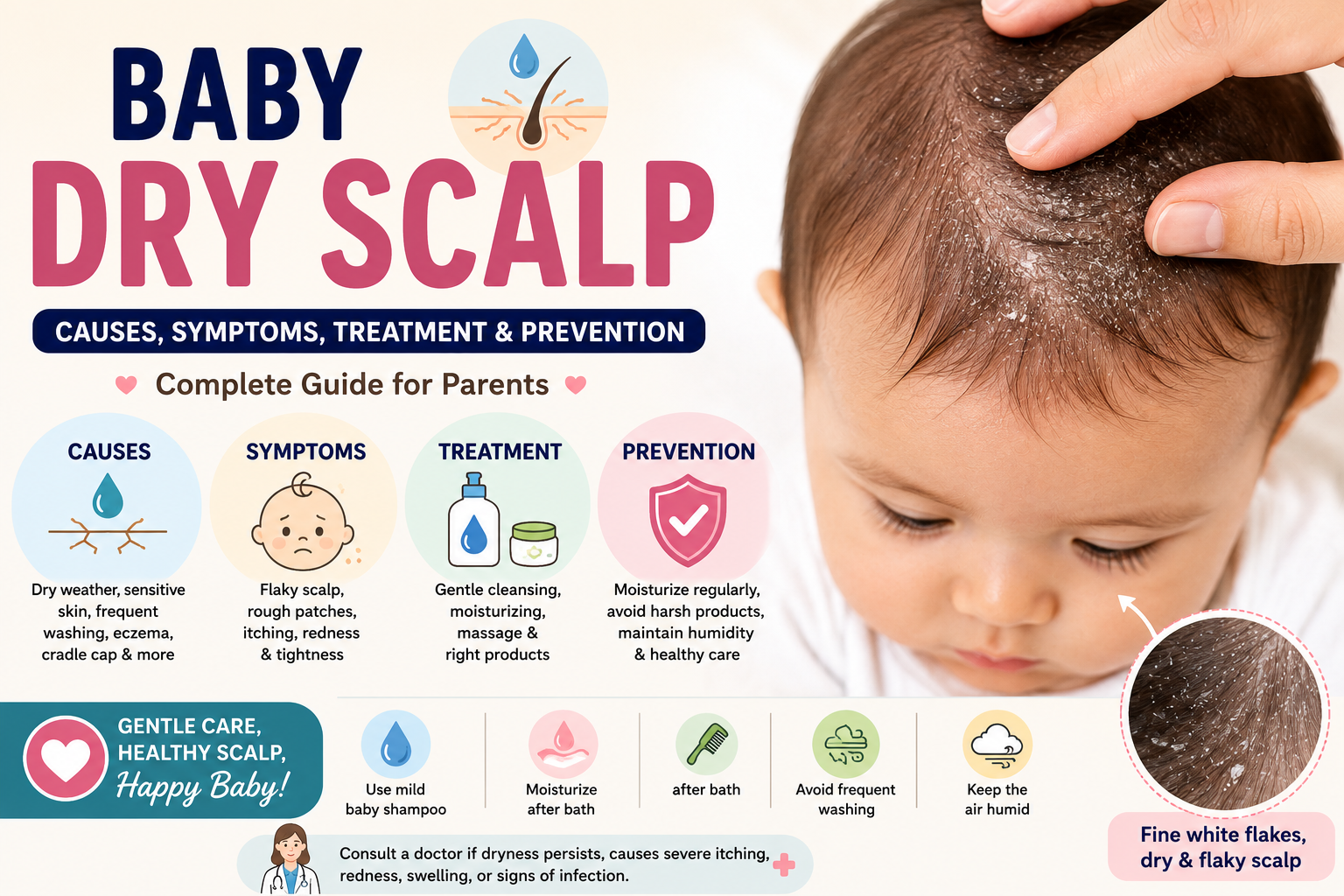
A baby dry scalp is a common condition in newborns and infants where the skin on the scalp becomes dry, flaky, rough, or mildly itchy. While it may look similar to dandruff or cradle cap, a dry scalp is usually harmless and improves with gentle care and proper hydration.
A baby’s scalp is thinner and more delicate than an adult’s, making it more prone to moisture loss. Weather changes, frequent hair washing, sensitive skin, eczema, and certain baby care products can all contribute to dryness. In most cases, parents can manage the condition at home with simple skincare measures.
What Is Baby Dry Scalp?
Baby dry scalp occurs when the scalp loses its natural moisture, causing the outer layer of skin to become flaky or rough. It is common during the first few months of life because a baby’s skin barrier is still developing.
Unlike dandruff in adults, dry scalp in babies is not usually associated with excessive oil production or fungal overgrowth. Most cases resolve naturally with gentle scalp care.
What Causes Baby Dry Scalp?
Several factors can cause a baby’s scalp to become dry.
Naturally Dry Skin
Some babies naturally have dry skin due to genetics or a weaker skin barrier. If your baby’s cheeks, arms, or legs also feel rough, they may have generalized dry skin. Learning how to moisturize properly can help prevent dryness from spreading to the scalp. You can also read our guide on Baby Dry Skin for tips on protecting your baby’s skin barrier.
Cold or Dry Weather
Low humidity during winter or living in air-conditioned environments can reduce moisture in the skin, leaving the scalp flaky and dry.
Using a humidifier indoors may help maintain healthy moisture levels.
Frequent Shampooing
Washing your baby’s hair every day can strip away the natural oils that protect the scalp. Most babies only need their hair washed two or three times a week with a mild, fragrance-free baby shampoo.
Cradle Cap
Parents often mistake baby dry scalp for cradle cap, but they are different conditions. Dry scalp produces fine white flakes, whereas cradle cap usually causes thick, greasy yellow scales that stick to the scalp. If you’re unsure which condition your baby has, our detailed guide on Baby Cradle Cap explains the differences and treatment options.
Baby Eczema
Babies with eczema frequently develop dry, itchy skin on the scalp. If your baby also has red, itchy patches behind the ears, on the face, or in the skin folds, eczema may be the underlying cause. Our comprehensive Baby Eczema guide explains how to identify eczema and manage flare-ups safely.
Baby Skin Allergy
Some babies develop scalp dryness after exposure to shampoos, lotions, fragrances, or hair oils. If the dryness is accompanied by redness or itching shortly after using a new product, it could be a skin allergy. Read our Baby Skin Allergy article to learn about common triggers and prevention strategies.
Contact Dermatitis
Certain detergents, fabric softeners, or baby hair products may irritate the scalp and lead to dryness or redness. If you suspect a reaction to a skincare product, our guide on Baby Contact Dermatitis can help you recognize the symptoms and understand when to seek medical advice.
Hard Water
Bathing with hard water may leave mineral deposits on the scalp, making it feel dry and rough in some babies.
Heated Indoor Air
Room heaters and air conditioners reduce humidity, allowing moisture to evaporate from the skin more quickly.
Symptoms of Baby Dry Scalp
The symptoms usually develop gradually and may include:
- Fine white flakes
- Dry scalp skin
- Rough patches
- Mild itching
- Tiny flakes in the hair
- Mild redness
- Tight or rough scalp
- Small peeling areas
Unlike cradle cap, the flakes are usually dry rather than greasy.
Baby Dry Scalp vs Cradle Cap
| Baby Dry Scalp | Cradle Cap |
|---|---|
| Dry white flakes | Thick yellow greasy scales |
| Caused by moisture loss | Caused by excess oil production |
| May be itchy | Usually not itchy |
| Skin feels dry | Skin feels oily |
| Moisturizers often help | Gentle brushing and baby oil may help loosen scales |
Understanding this difference is important because treatment varies. Parents who notice greasy yellow scales should refer to our detailed article on Baby Cradle Cap, while persistent itching or widespread dry skin may indicate eczema.
Who Is More Likely to Develop Baby Dry Scalp?
Some babies have a higher risk of developing dry scalp, including those who:
- Have naturally dry skin
- Have eczema
- Live in cold or dry climates
- Bathe frequently
- Use harsh shampoos
- Have a family history of allergies or eczema
- Spend long hours in air-conditioned rooms
How Is Baby Dry Scalp Diagnosed?
Doctors usually diagnose dry scalp through a physical examination.
During the visit, they may ask about:
- Recent changes in shampoo or skincare products
- Family history of eczema or allergies
- Frequency of hair washing
- Itching or redness
- Weather changes
Additional tests are rarely necessary unless the doctor suspects a fungal infection, psoriasis, or another skin disorder.
According to the American Academy of Dermatology (AAD), most cases of dry skin in infants can be diagnosed based on a clinical examination without laboratory tests.
Is Baby Dry Scalp Contagious?
No.
Baby dry scalp is not contagious and cannot spread through touching, sharing towels, or close contact. Unlike fungal infections such as ringworm or bacterial infections like impetigo, dry scalp is simply caused by moisture loss or skin irritation.
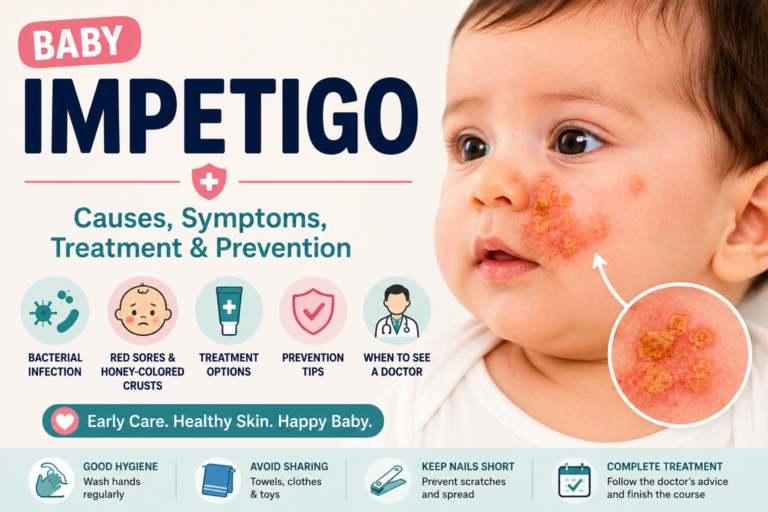
If you notice circular patches with hair loss or crusting, it could indicate another condition such as Baby Ringworm or Baby Impetigo, both of which require different treatments.
Can Baby Dry Scalp Go Away on Its Own?
Yes.
Many babies outgrow dry scalp as their skin barrier matures over the first few months of life. Gentle cleansing, regular moisturizing, and avoiding harsh products usually speed up recovery.
The American Academy of Pediatrics (HealthyChildren.org) recommends using fragrance-free cleansers and moisturizers designed for babies to help maintain healthy skin. Similarly, the NHS advises parents to avoid excessive bathing and harsh soaps, as these can worsen skin dryness in infants.
With proper care, most babies experience noticeable improvement within a few weeks.
Treatment for Baby Dry Scalp
Treatment for baby dry scalp focuses on restoring moisture, protecting the scalp’s natural barrier, and preventing further irritation. In most cases, dry scalp improves within a few weeks with gentle skincare and proper hydration.
According to the American Academy of Dermatology (AAD), babies with dry skin benefit from fragrance-free cleansers, short baths, and regular application of moisturizers to lock in moisture.
1. Use a Gentle Baby Shampoo
Choose a fragrance-free, tear-free baby shampoo designed for sensitive skin.
Avoid:
- Adult shampoos
- Strong fragrances
- Alcohol-based products
- Anti-dandruff shampoos (unless prescribed)
Washing your baby’s hair 2–3 times a week is usually enough to keep the scalp clean without removing its natural oils.
2. Moisturize the Scalp
After bathing, gently pat the scalp dry and apply a baby-safe moisturizer or emollient if recommended by your pediatrician.
Keeping the skin hydrated also helps prevent dryness on other parts of the body. If your baby has flaky skin on the face, arms, or legs as well, our guide on Baby Dry Skin explains how to build an effective moisturizing routine.
3. Massage the Scalp Gently
Using clean fingertips, gently massage the scalp for a few minutes during bath time.
Benefits include:
- Improves blood circulation
- Helps loosen dry flakes
- Distributes natural scalp oils
- Relaxes your baby
Avoid scratching or rubbing aggressively, as this can damage delicate skin.
4. Brush Softly
A soft baby brush can remove loose flakes after moisturizing.
Do not:
- Pick flakes
- Peel dry skin
- Use hard brushes
If your baby’s scalp has thick yellow greasy scales instead of dry flakes, it may be Cradle Cap rather than dry scalp. Our detailed Baby Cradle Cap guide explains how to safely loosen and remove these scales without injuring the scalp.
5. Treat Underlying Skin Conditions
Sometimes dry scalp is only one symptom of another skin condition.
For example:
- Babies with Baby Eczema often develop dry, itchy patches on the scalp and behind the ears.
- Babies with Baby Contact Dermatitis may react to shampoos, oils, or fragrances.
- Babies with Baby Skin Allergy can develop redness, itching, and irritation after exposure to allergens.
Managing these underlying conditions often improves scalp dryness as well.
Home Care Tips
Simple home care measures can speed up healing and keep your baby’s scalp healthy.
Keep Baths Short
Limit baths to 5–10 minutes using lukewarm water.
Hot water removes natural oils and makes dryness worse.
Apply Moisturizer Immediately After Bathing
The American Academy of Pediatrics (HealthyChildren.org) recommends applying moisturizer within a few minutes after bathing to lock in moisture before the skin dries completely.
Avoid Harsh Hair Products
Use only products specifically formulated for babies.
Avoid:
- Hair gels
- Adult conditioners
- Perfumed oils
- Strong soaps
Maintain Indoor Humidity
Dry indoor air can worsen scalp dryness.
Using a humidifier during winter may help reduce moisture loss.
Wash Hats Frequently
Baby hats collect sweat, oils, and dirt.
Wash them regularly using fragrance-free detergent.
Keep Your Baby Well Hydrated
Older babies who have started complementary feeding should receive adequate fluids throughout the day, as hydration supports healthy skin from within.
What Should Parents Avoid?
Avoid:
- Scratching the scalp
- Picking flakes
- Daily shampooing
- Strong soaps
- Hot water baths
- Essential oils without medical advice
- Adult anti-dandruff shampoos
- Tight woolen caps for long periods
These habits may worsen dryness or irritate the scalp.
Can Baby Dry Scalp Be Prevented?
Although not every case can be prevented, parents can reduce the risk by following healthy skincare habits.
You can help prevent dry scalp by:
- Using mild baby shampoo
- Avoiding frequent hair washing
- Moisturizing after baths
- Keeping indoor humidity comfortable
- Dressing your baby appropriately for the weather
- Avoiding heavily fragranced skincare products
- Protecting the scalp from excessive sun and cold winds
Following these steps also helps reduce the risk of other skin problems, including Baby Heat Rash during summer and Baby Sunburn when spending time outdoors.
Possible Complications
Most babies recover without complications.
However, untreated dryness can sometimes lead to:
- Skin cracks
- Bleeding from scratching
- Secondary bacterial infection
- Persistent itching
- Worsening eczema
If you notice yellow crusts, oozing sores, or rapidly spreading redness, the dryness may have developed into an infection such as Baby Impetigo, which requires medical treatment.
Baby Dry Scalp vs Baby Dandruff
| Baby Dry Scalp | Baby Dandruff |
|---|---|
| Common in infants | More common in older children and adults |
| Caused by dry skin | Often associated with excess oil and yeast |
| Fine white flakes | Larger oily flakes |
| Mild itching | Moderate itching |
| Improves with moisturizers | May require medicated shampoo |
Parents often confuse these conditions, but dandruff is uncommon during infancy.
When Should You See a Doctor?
Consult your pediatrician if:
- Dryness persists for more than 2–4 weeks
- The scalp becomes swollen
- Yellow crusts develop
- Pus appears
- Your baby develops fever
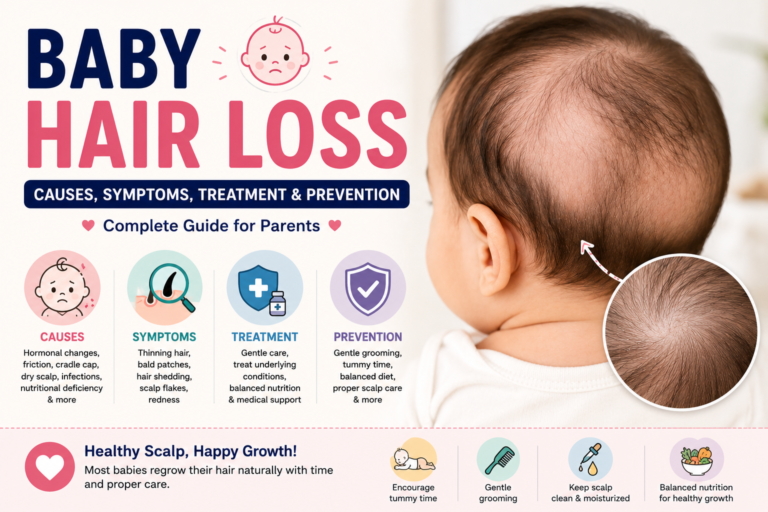
- There is significant hair loss
- The rash spreads to the face or body
- Your baby scratches excessively
- Home care does not improve symptoms
The NHS advises parents to seek medical evaluation if a baby’s skin becomes infected, painful, or fails to improve with routine skincare.
Conclusion
Baby dry scalp is a common and usually harmless condition that affects many newborns and infants. It is often caused by dry weather, frequent washing, sensitive skin, or underlying conditions such as eczema. Most babies recover with gentle cleansing, regular moisturizing, and avoiding harsh hair products.
Because dry scalp can resemble Cradle Cap, Baby Eczema, Baby Skin Allergy, or even early Baby Contact Dermatitis, identifying the correct cause is important for choosing the right treatment. If symptoms worsen, become infected, or do not improve with home care, consult your pediatrician for an accurate diagnosis and appropriate treatment.
Frequently Asked Questions (FAQs)
Is baby dry scalp normal?
Yes. It is very common during infancy and usually improves as the baby’s skin barrier matures.
What causes baby dry scalp?
Common causes include dry weather, frequent shampooing, eczema, sensitive skin, and reduced skin moisture.
Is baby dry scalp contagious?
No. Dry scalp cannot spread from one person to another.
Can I apply coconut oil?
Some parents use coconut oil, but consult your pediatrician first, especially if your baby has eczema or sensitive skin.
How often should I wash my baby’s hair?
Generally, 2–3 times a week is enough unless advised otherwise by your healthcare provider.
Can dry scalp cause itching?
Yes. Mild itching is common because dry skin loses moisture.
Is dry scalp the same as cradle cap?
No. Dry scalp causes fine white flakes, while cradle cap produces thick, greasy yellow scales.
Can eczema affect the scalp?
Yes. Babies with eczema frequently develop dry, itchy scalp patches.
Does dry scalp cause hair loss?
Temporary mild hair shedding may occur, but permanent hair loss is uncommon.
Can hard water cause dry scalp?
Yes. Minerals in hard water may contribute to scalp dryness in some babies.
Should I remove the flakes?
Only loose flakes should be brushed away gently. Never pick or peel attached flakes.
Can baby shampoo cause dry scalp?
Some shampoos with fragrances or harsh ingredients may irritate sensitive skin.
When should I worry about my baby’s dry scalp?
Seek medical advice if you notice swelling, pus, bleeding, fever, widespread rash, or no improvement after a few weeks.
Can dry scalp return?
Yes. It may recur during cold weather or if the scalp becomes dry again.
Will my baby outgrow dry scalp?
Most babies outgrow it naturally as their skin matures and the scalp develops a stronger moisture barrier.