
Home » Baby Care » Baby Ringworm: Causes, Symptoms, Treatment, Home Care & Prevention
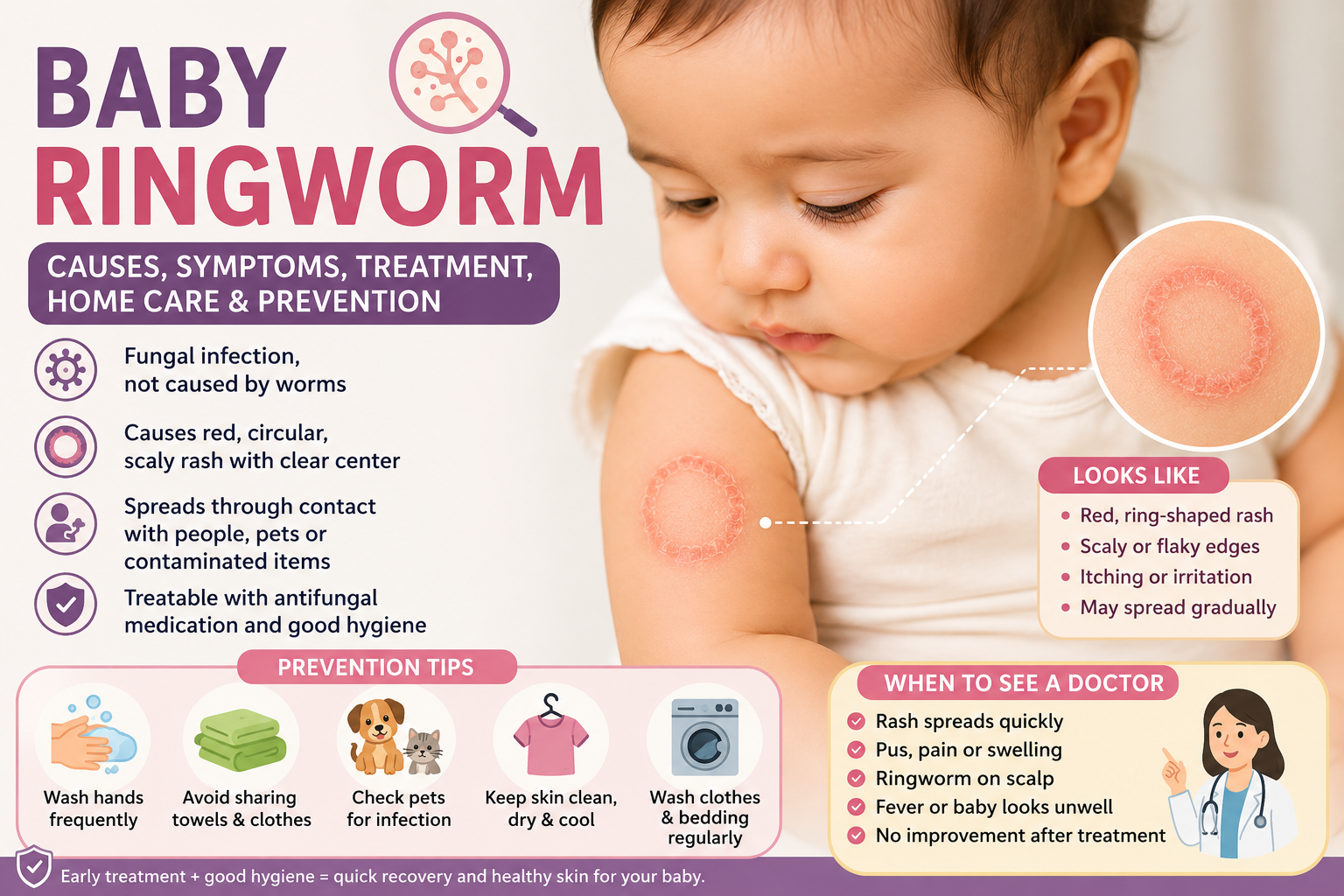
Baby ringworm infographic showing a circular fungal rash, common symptoms, causes, antifungal treatment, prevention tips, and signs that require medical attention.

Baby Ringworm: Causes, Symptoms, Treatment, Home Care & Prevention

Editorial Note: This article is for educational purposes only and should not replace professional medical advice. If your baby’s rash spreads rapidly, affects the scalp, becomes painful, or does not improve after treatment, consult your pediatrician or dermatologist.

Despite its name, baby ringworm is not caused by worms. It is a common fungal skin infection that affects the outer layer of the skin and can occur in babies and young children. Ringworm causes a characteristic red, circular, scaly rash that may gradually spread outward while the center becomes clearer.

Because babies have delicate skin and developing immune systems, fungal infections can spread more easily if left untreated. Fortunately, most cases of ringworm respond well to antifungal treatment and proper hygiene.

This guide explains the causes, symptoms, diagnosis, treatment, home care, prevention tips, and warning signs parents should know.

What Is Baby Ringworm?

Baby ringworm (also called tinea corporis) is a contagious fungal infection that affects the skin. The fungus feeds on keratin, a protein found in the skin, hair, and nails.

Ringworm commonly appears as:

  • Round or oval rash
  • Red raised border
  • Clearer center
  • Dry, scaly skin
  • Mild to moderate itching

Although it looks alarming, ringworm is usually treatable with antifungal medication.


Is Ringworm Common in Babies?

Yes.

Although more common in older children, babies can also develop ringworm, particularly if they come into contact with infected people, pets, or contaminated objects.

The infection is more likely in:

  • Warm climates
  • Humid weather
  • Babies attending daycare
  • Homes with pets
  • Families where another member has ringworm

What Causes Baby Ringworm?

Baby ringworm is caused by dermatophyte fungi, not worms.

Common causes include:

1. Contact with an Infected Person

Ringworm spreads easily through direct skin-to-skin contact with someone who has the infection.


2. Contact with Pets

Cats, dogs, rabbits, and other animals can carry ringworm fungi even if they show few symptoms.


3. Contaminated Objects

The fungus can spread through:

  • Towels
  • Clothing
  • Bedding
  • Hair brushes
  • Toys

4. Warm and Moist Skin

Sweaty skin provides an ideal environment for fungal growth.


5. Weakened Skin Barrier

Babies with Baby Eczema may have a weakened skin barrier, making them more susceptible to certain skin infections.


Symptoms of Baby Ringworm

Common symptoms include:

  • Round or ring-shaped rash
  • Red raised edges
  • Clear center
  • Dry, flaky skin
  • Mild itching
  • Slight scaling
  • Gradually enlarging patches

If your baby develops widespread itchy welts rather than circular patches, read our guide on Baby Hives (https://momsaathi.com/baby-hives/) to understand allergic skin reactions.


Where Does Ringworm Commonly Appear?

Ringworm may develop on the:

  • Face
  • Neck
  • Arms
  • Hands
  • Legs
  • Feet
  • Chest
  • Back

If it affects the scalp (tinea capitis), hair loss or broken hairs may also occur and medical treatment is usually required.


Baby Ringworm vs Other Skin Conditions

Condition Key Features
Ringworm Circular red rash with scaly border
Baby Eczema Dry, itchy patches without a ring-shaped border
Baby Heat Rash  Tiny red bumps caused by blocked sweat glands
Baby Dry Skin Rough, flaky skin without a circular pattern
Baby Mosquito Bites Raised itchy bumps with a visible bite mark
Baby Peeling Skin General skin peeling rather than a ring-shaped rash

How Does Ringworm Spread?

Ringworm spreads through:

  • Skin-to-skin contact
  • Contact with infected animals
  • Shared towels
  • Shared bedding
  • Shared clothing
  • Contaminated surfaces

Good hygiene helps reduce transmission.


Can Baby Ringworm Heal on Its Own?

Usually no.

Unlike mild dry skin or heat rash, ringworm generally requires antifungal treatment. Without treatment, the infection may continue to spread to other parts of the body or to family members.


How Is Baby Ringworm Diagnosed?

Doctors usually diagnose ringworm by:

  • Examining the rash
  • Reviewing symptoms
  • Occasionally taking a skin scraping for microscopic examination if the diagnosis is uncertain

Risk Factors

Babies are more likely to develop ringworm if they:

  • Live in warm, humid climates
  • Have close contact with infected family members
  • Play with infected pets
  • Share towels or clothing
  • Have excessive sweating
  • Have a weakened skin barrier

Treatment for Baby Ringworm

Unlike simple dry skin or heat rash, baby ringworm usually requires antifungal treatment. Most mild cases improve within 2–4 weeks when treated early.

According to the American Academy of Dermatology (AAD), antifungal creams are the first-line treatment for most cases of ringworm affecting the body.

See also  Why Does My Baby Cry in Sleep But Not Wake Up? Safe Tips for Indian-American Moms in 2026

How Is Baby Ringworm Treated?

1. Antifungal Creams

Your pediatrician may recommend an antifungal cream containing ingredients such as:

  • Clotrimazole
  • Miconazole
  • Terbinafine (age-dependent)
  • Ketoconazole

Continue treatment for the full duration prescribed, even if the rash appears to improve earlier.


2. Oral Antifungal Medicines

If ringworm affects the:

  • Scalp (Tinea capitis)
  • Multiple body areas
  • Nails

your doctor may prescribe oral antifungal medication.

The NHS notes that scalp ringworm usually requires oral medication because creams alone are not effective.


3. Keep the Skin Clean and Dry

Wash the affected area gently using:

  • Mild baby cleanser
  • Lukewarm water

Pat the skin dry instead of rubbing.


4. Prevent Scratching

Trim your baby’s fingernails to reduce scratching and lower the risk of bacterial infection.

If your baby has sensitive or itchy skin, our guide on Baby Eczema  explains how to protect the skin barrier and reduce irritation.


Home Care for Baby Ringworm

Besides medication, these simple steps help speed recovery.

Wash Hands Frequently

Wash your hands before and after touching the rash to reduce the spread of infection.

The Centers for Disease Control and Prevention (CDC) recommends practicing good hand hygiene to reduce fungal infections.


Wash Clothes and Bedding Regularly

Clean:

  • Towels
  • Bedsheets
  • Baby blankets
  • Clothing

using hot water whenever appropriate.

Avoid sharing these items with siblings.


Keep Your Baby Cool

Sweating creates a moist environment that encourages fungal growth.

Dress your baby in:

  • Loose cotton clothing
  • Breathable fabrics

Check Family Members and Pets

Since ringworm spreads easily, examine other family members and household pets if your baby develops ringworm.


What Should Parents Avoid?

Do not:

  • Apply steroid creams without medical advice.
  • Cover the rash tightly.
  • Scratch or rub the rash.
  • Share towels or clothing.
  • Stop antifungal treatment too early.
  • Use home remedies like toothpaste or essential oils.

Can Baby Ringworm Be Prevented?

Yes.

Parents can reduce the risk by:

  • Washing hands frequently.
  • Keeping your baby’s skin clean and dry.
  • Avoiding shared towels.
  • Cleaning toys regularly.
  • Treating infected pets promptly.
  • Washing bedding frequently.

HealthyChildren.org (American Academy of Pediatrics) recommends maintaining good hygiene and seeking medical advice if skin infections worsen or spread.


Possible Complications

Without treatment, ringworm may lead to:

  • Larger skin patches
  • Spread to other body areas
  • Secondary bacterial infection
  • Infection of other family members
  • Scalp infection with hair loss

Baby Ringworm vs Baby Eczema

Baby Ringworm Baby Eczema
Circular rash Irregular dry patches
Raised scaly border No ring-shaped border
Caused by fungus Caused by skin inflammation
Contagious Not contagious
Requires antifungal medicine Managed with moisturizers and prescribed medications

If your baby’s skin is mainly dry without a ring-shaped rash, read our article on Baby Dry Skin to learn about gentle skincare and moisturizing.


When Should You See a Doctor?

Consult your pediatrician if:

  • Your baby is younger than 3 months.
  • The rash spreads quickly.
  • Ringworm affects the scalp.
  • Pus develops.
  • Fever occurs.
  • Multiple patches appear.
  • The rash does not improve after 2 weeks of antifungal treatment.
  • Your baby seems uncomfortable or unusually irritable.

The Mayo Clinic advises seeking medical attention if the rash worsens despite treatment or shows signs of bacterial infection.


Can Ringworm Spread to Other Family Members?

Yes.

Ringworm is highly contagious.

To reduce spread:

  • Wash hands often.
  • Avoid sharing towels.
  • Wash bedding regularly.
  • Clean toys frequently.
  • Treat infected pets.
  • Complete the prescribed treatment.

The MedlinePlus medical library also recommends avoiding close contact until treatment has started. https://medlineplus.gov/ringworm.html


Conclusion

Baby ringworm is a common fungal skin infection that causes a circular, scaly rash. Although it can spread easily through close contact, it is usually treated successfully with antifungal medication and good hygiene. Early diagnosis and treatment help prevent complications and reduce transmission within the family.

If your baby develops other skin conditions such as Baby Heat Rash , Baby Mosquito Bites, Baby Dry Skin , or Baby Peeling Skin , identifying the correct cause will help ensure appropriate care.


Frequently Asked Questions (FAQs)

Is baby ringworm caused by worms?

No. Ringworm is a fungal infection, not a worm infection.

Is ringworm contagious?

Yes. It spreads through direct contact with infected people, animals, or contaminated objects.

Can babies get ringworm from pets?

Yes. Cats, dogs, rabbits, and other pets can carry ringworm fungi.

How long does ringworm last?

With treatment, most cases improve within 2–4 weeks.

Does ringworm itch?

Yes. Mild to moderate itching is common.

Can I use antifungal cream without seeing a doctor?

It is best to consult your pediatrician before treating a baby, especially infants younger than 12 months.

Can ringworm spread to siblings?

Yes. Good hygiene helps reduce transmission.

Should I cover the rash?

No. Keep the area clean, dry, and uncovered unless advised otherwise.

Can ringworm leave scars?

Most cases heal without scarring if treated early and scratching is minimized.

Can ringworm return?

Yes. Reinfection can occur through infected family members, pets, or contaminated items.

Is ringworm dangerous?

Most cases are mild and respond well to treatment.

Can ringworm affect the scalp?

Yes. Scalp ringworm usually requires oral antifungal medication.

Should I stop treatment once the rash fades?

No. Complete the full course of treatment to prevent recurrence.

Can babies attend daycare with ringworm?

Ask your pediatrician. Many childcare centers allow return after appropriate treatment has started.

When should I worry about baby ringworm?

Seek medical care if the rash spreads rapidly, affects the scalp, becomes painful, develops pus, is accompanied by fever, or does not improve after appropriate antifungal treatment.

More Reading

Post navigation

Subscribe
Notify of
guest

0 Comments
Oldest
Newest Most Voted
0
Would love your thoughts, please comment.x
()
x