

Every parent has that moment. Your baby is fussing, and suddenly their little fists go straight to their eyes, rubbing away with surprising determination. It’s one of those universal baby behaviours that can make you smile (“Nap time!”) or worry (“Is something wrong with their eyes?”).
As a parent myself—or at least someone who’s spent countless hours talking to exhausted moms and dads—I know how easy it is to overthink every little thing your newborn or infant does. Eye rubbing is incredibly common, usually harmless, and often just a sign that your little one needs rest. But it can also point to other things worth understanding.
In this comprehensive guide, we’ll explore every possible reason why babies rub their eyes, when it’s normal developmental behaviour, when you should pay closer attention, and practical steps you can take to keep those precious peepers healthy. By the end, you’ll feel more confident reading your baby’s signals and knowing when to call the paediatrician.
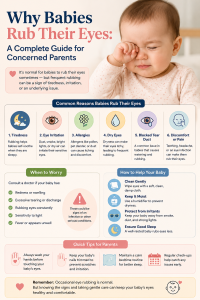 Let’s start with the obvious one, because it really is the most frequent culprit. Babies rub their eyes when they’re tired for the same reasons adults do: their eye muscles get fatigued, their eyes feel dry or heavy, and rubbing provides a momentary sense of relief while helping block out overstimulation.
Newborns and young infants are taking in an enormous amount of visual information every waking moment. Their brains are working overtime to process faces, lights, colours, and movements. By the time they’ve been awake for a while, that mental workout catches up with them. Rubbing their eyes is an instinctive self-soothing behaviour, much like thumb-sucking or twirling hair in older kids. It signals “I’ve had enough for now.”
How to spot tiredness-related rubbing:
Let’s start with the obvious one, because it really is the most frequent culprit. Babies rub their eyes when they’re tired for the same reasons adults do: their eye muscles get fatigued, their eyes feel dry or heavy, and rubbing provides a momentary sense of relief while helping block out overstimulation.
Newborns and young infants are taking in an enormous amount of visual information every waking moment. Their brains are working overtime to process faces, lights, colours, and movements. By the time they’ve been awake for a while, that mental workout catches up with them. Rubbing their eyes is an instinctive self-soothing behaviour, much like thumb-sucking or twirling hair in older kids. It signals “I’ve had enough for now.”
How to spot tiredness-related rubbing:
The Most Common Reason: They’re Simply Tired
Let’s start with the obvious one, because it really is the most frequent culprit. Babies rub their eyes when they’re tired for the same reasons adults do: their eye muscles get fatigued, their eyes feel dry or heavy, and rubbing provides a momentary sense of relief while helping block out overstimulation.
Newborns and young infants are taking in an enormous amount of visual information every waking moment. Their brains are working overtime to process faces, lights, colours, and movements. By the time they’ve been awake for a while, that mental workout catches up with them. Rubbing their eyes is an instinctive self-soothing behaviour, much like thumb-sucking or twirling hair in older kids. It signals “I’ve had enough for now.”
How to spot tiredness-related rubbing:
- It usually happens toward the end of wake windows (typically 45–90 minutes for newborns, gradually increasing with age).
- Accompanied by yawning, fussiness, ear pulling, or zoning out.
- Baby often calms down and falls asleep after a quick cuddle and nap routine.
Normal Developmental Exploration and Self-Discovery
For very young babies (especially under 4–6 months), eye rubbing can be part of discovering their hands and body. Infants have limited motor control at first, but once they realise those wiggly things at the end of their arms can touch their face, they experiment. Eyes are particularly interesting because touching them produces interesting sensations and sometimes makes the world temporarily darker or more interesting. This phase is exciting for them, but can worry parents. It’s usually gentle and exploratory rather than frantic. As fine motor skills improve, this behaviour often decreases or shifts to other discoveries, such as feet or toys. Vision development itself plays a role here. A baby’s visual system is rapidly maturing in the first year. At birth, they see mostly in black and white with blurry vision best at 8–12 inches (perfect for seeing your face during feeding). Over months, they develop colour vision, depth perception, tracking ability, and better focus. During these transitions, temporary eye strain or adjustment can lead to rubbing.Eye Irritation, Dryness, and Environmental Factors
Babies’ eyes are more delicate and more sensitive than adults’. Dry air (common in air-conditioned homes or winter), dust, smoke, pet dander, or even a stray eyelash can cause mild irritation that prompts rubbing. New parents often notice increased rubbing after bath time if soap or shampoo gets near the eyes, or in rooms with strong scents or poor ventilation. A humidifier in the nursery can make a surprising difference for some families. Quick environmental checks:- Is the air too dry? Try a cool-mist humidifier.
- Are there allergens? Keep pets out of the sleeping area if needed, wash bedding frequently in hot water, and use dust-mite covers.
- Bright lights? Use softer lighting during playtime and avoid direct sunlight in their eyes.
Allergies in Babies: Less Common But Possible
While true eye allergies (allergic conjunctivitis) are less common in very young infants than in toddlers, they do happen. Symptoms might include watery eyes, redness, and persistent itching that leads to rubbing even when the baby isn’t tired. Seasonal allergens, like pollen, or indoor allergens, like dust mites, can trigger this. You might notice other signs, such as sneezing, a runny nose, or a rash. If allergies are suspected, a paediatrician can guide safe management—often starting with identifying and reducing triggers rather than medication for the youngest babies.Infections: Pink Eye and Beyond
This is where parents understandably get concerned. Bacterial or viral conjunctivitis (pink eye) can cause itching, redness, swelling, discharge, and increased rubbing. In newborns, eye infections require prompt medical attention as they can be serious. Other signs to watch for:- Redness that doesn’t resolve after sleep
- Yellow or green discharge, crusting (especially after naps)
- Swelling of eyelids
- Excessive tearing or sensitivity to light
- Fever or general unwellness
Teething Discomfort: An Unexpected Connection
Many parents are surprised to learn that teething can cause eye rubbing. The nerves in a baby’s face are interconnected, so gum pain from incoming teeth (especially upper ones) can radiate and make them rub their cheeks, ears, or eyes for relief. This often clusters with other teething signs, such as drooling, chewing on hands/objects, mild fever, irritability, or swollen gums. Offering a chilled (not frozen) teething ring, gentle gum massage, or paediatrician-approved pain relief can help ease the whole picture.Could It Be a Vision Problem?
This is a big worry for many parents, but actual vision issues are relatively uncommon in newborns and are worth monitoring. Frequent, persistent eye rubbing, combined with other signs such as squinting, holding objects very close, turning the head to one side, or crossed eyes, beyond the early months might warrant a check. Paediatricians screen vision at well-baby visits, but a comprehensive eye exam around 6–12 months (or earlier if concerns) by a pediatric optometrist can provide peace of mind. Early detection of issues like refractive errors or strabismus makes a huge difference.When Should You Worry and See a Doctor?
Most eye rubbing is benign, but contact your paediatrician if:- Rubbing is constant, forceful, or happens all day, regardless of tiredness.
- There’s redness, discharge, swelling, or light sensitivity.
- Baby seems in pain or unusually fussy.
- Vision seems off (poor tracking, crossing after 4–6 months).
- It started suddenly after possible exposure to irritants or illness.
Practical Tips to Manage and Prevent Excessive Rubbing
- Establish solid sleep routines — Consistent bedtime and nap schedules reduce fatigue-related rubbing.
- Keep hands clean and nails trimmed — Reduces risk of introducing bacteria or scratching.
- Use mittens strategically—especially for newborns who rub vigorously.
- Gentle cleaning — Use a soft, warm cloth to wipe the eyes from the inner to the outer corner, if needed.
- Distract and redirect — Offer toys, songs, or cuddles when you see rubbing starting.
- Create a calm environment — dim lights before naps, reduce screen time (ideally none for under 18 months), and maintain good air quality.
- Regular eye care habits — Gentle face washing daily and protecting from harsh winds/sun.
Long-Term Eye Health: Building Good Habits Early
The first year is critical for vision development. Support it by:- Offering high-contrast toys and books.
- Plenty of face-to-face time.
- Tummy time to encourage head control and visual exploration.
- Limiting close-up screen exposure.
- Scheduling recommended well-visits and eye checks.