
Medical note: Hospital policies and individual birth needs vary. Check with your maternity hospital, obstetrician, midwife or healthcare team before your delivery.
As your due date gets closer, one practical question can suddenly feel urgent: what should you actually pack in your hospital bag for labor?
Between baby clothes, postpartum essentials, paperwork, chargers and toiletries, it is easy to either forget something useful or arrive at the hospital with three bags of things you never touch.
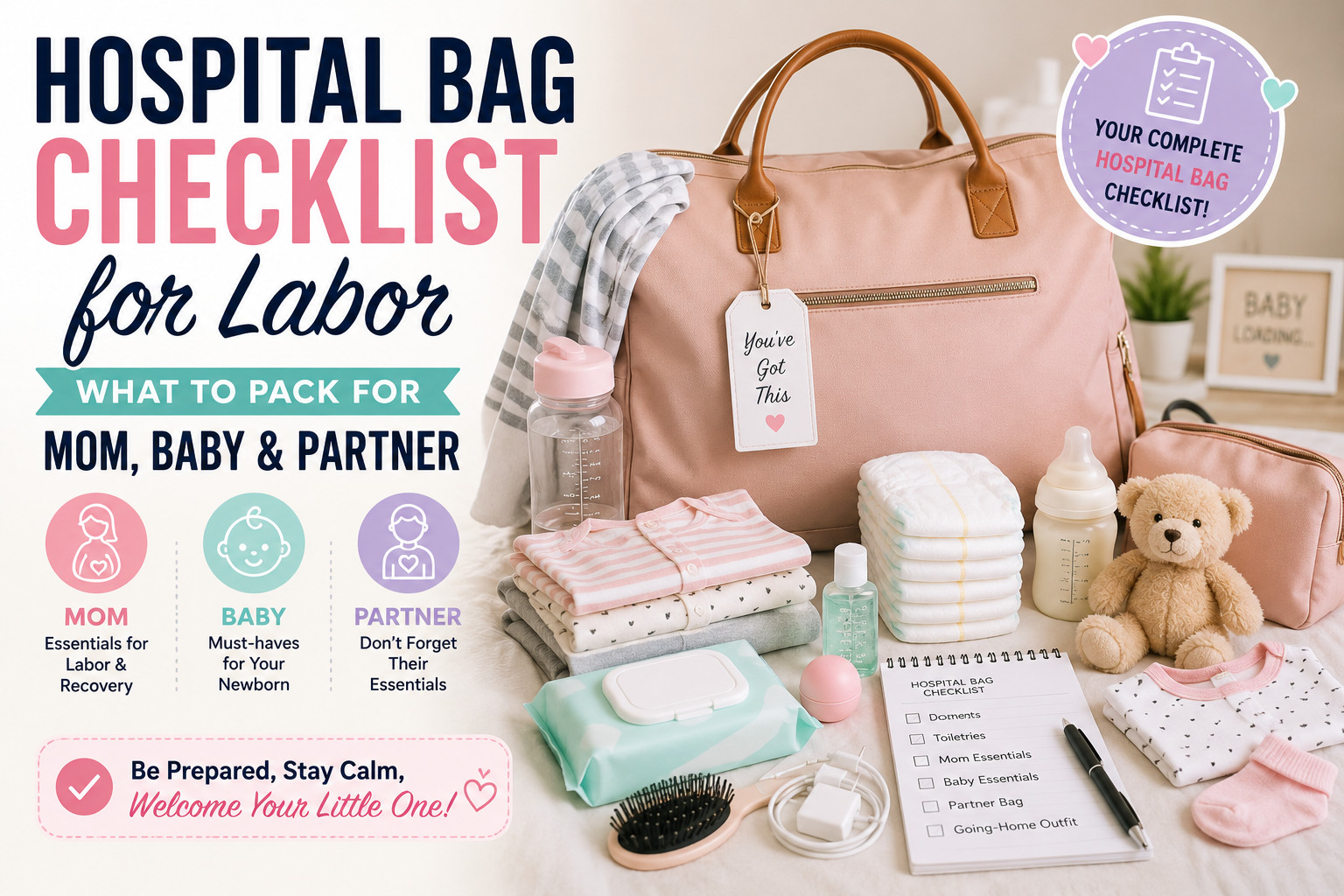
A good hospital bag checklist for labor should be simple. Pack the essentials for mom, a few basics for baby, and practical items for your birth partner. Before buying or packing everything, check what your hospital or birth center already provides.
The NHS suggests having your hospital bag packed at least 3 weeks before your due date, because babies do not always arrive exactly when expected.
If you’re preparing for the final weeks of pregnancy, you can also explore MomSaathi’s Pregnancy resources for more pregnancy and birth-preparation guides.
Quick answer: Pack your medical and identification documents, birth preferences, comfortable clothes, toiletries, phone and charger, postpartum basics, baby clothes and a going-home outfit. Your partner should pack snacks, clothes and personal essentials. Always ask your hospital what it provides before packing diapers, postpartum supplies or feeding equipment.
Quick Hospital Bag Checklist for Labor
| Item | Who Needs It? | Priority |
|---|---|---|
| ID and hospital documents | Mom | MUST PACK |
| Insurance details, if applicable | Mom | MUST PACK |
| Pregnancy/antenatal records | Mom | MUST PACK |
| Birth plan or birth preferences | Mom | OPTIONAL |
| Phone and long charging cable | Mom/Partner | MUST PACK |
| Loose, comfortable clothing | Mom | MUST PACK |
| Toiletries | Mom/Partner | MUST PACK |
| Comfortable underwear | Mom | MUST PACK |
| Nursing bra | Mom | OPTIONAL |
| Slippers or nonslip footwear | Mom | MUST PACK |
| Lip balm | Mom | OPTIONAL |
| Water bottle | Mom/Partner | CHECK WITH HOSPITAL |
| Snacks | Mom/Partner | CHECK WITH HOSPITAL |
| Baby going-home outfit | Baby | MUST PACK |
| Baby bodysuits or sleepsuits | Baby | MUST PACK |
| Baby hat | Baby | CHECK WEATHER |
| Diapers | Baby | CHECK WITH HOSPITAL |
| Baby wipes or cotton wool | Baby | CHECK WITH HOSPITAL |
| Baby blanket | Baby | OPTIONAL |
| Rear-facing car seat | Baby | MUST FOR CAR TRAVEL |
| Change of clothes | Partner | MUST PACK |
| Partner toiletries | Partner | MUST PACK |
| Snacks and drinks | Partner | CHECK WITH HOSPITAL |
| Camera | Family | OPTIONAL |
MomSaathi packing tip: Use three labels while packing—MUST PACK, OPTIONAL and CHECK WITH HOSPITAL. This can stop your maternity bag from becoming an overstuffed suitcase.
When Should You Pack Your Hospital Bag?
Do not wait until contractions begin to search for your phone charger and baby’s first outfit.
The NHS recommends packing your hospital bag at least three weeks before your due date.
For many parents, this means getting the main bag ready during the later weeks of the third trimester.
You can keep a small last-minute list on top of the bag for items you still use every day, such as:
- phone;
- phone charger;
- glasses;
- medications your care team has told you to bring;
- water bottle;
- last-minute documents.
If your healthcare team thinks you may need earlier delivery or closer monitoring, ask whether you should prepare your bag sooner.
Hospital Bag Checklist for Mom
Your hospital bag should first cover your medical documents, labor comfort and postpartum needs.
1. Important Documents
MUST PACK
Keep important paperwork together in one folder or zip pouch.
Depending on your hospital and country, you may need your:
- photo ID;
- hospital registration documents;
- insurance information;
- pregnancy or antenatal records;
- healthcare information;
- relevant medical documents.
Ask your hospital in advance exactly which documents are required.
If you are in India, the paperwork requested by a private maternity hospital may differ from that of a government facility. Similarly, requirements in the US, UK and other countries vary.
Do not assume every hospital follows the same admission process.
2. Birth Plan or Birth Preferences
OPTIONAL
If you have written birth preferences, pack a printed copy.
A birth plan can outline what you would prefer during labor and delivery. The American College of Obstetricians and Gynecologists sample birth plan describes a birth plan as a written outline of what you would like to happen during labor and delivery.
Your preferences might cover:
- who you want with you;
- comfort or pain-management preferences;
- movement during labor;
- immediate skin-to-skin contact, when medically appropriate;
- feeding preferences;
- other personal or cultural preferences.
Remember that labor can be unpredictable. A birth plan is a communication tool, not a guarantee that every detail will happen exactly as planned.
3. Loose Clothes for Labor
CHECK WITH HOSPITAL
Hospitals may provide a gown, but some facilities allow you to wear your own suitable clothing during parts of labor.
If permitted, consider:
- a loose nightdress;
- an oversized T-shirt;
- a comfortable maternity dress;
- a lightweight robe.
The NHS hospital bag guidance includes loose, comfortable clothing among items parents may want for labor and the hospital stay.
Choose clothes you do not mind getting stained.
This is probably not the time for your favourite expensive nightwear.
4. Comfortable Clothes After Delivery
MUST PACK
Your body will not instantly return to its pre-pregnancy shape after birth.
Pack loose clothes that do not press tightly against your abdomen.
Good options include:
- maternity leggings;
- loose trousers;
- soft pyjamas;
- oversized T-shirts;
- button-front nightwear;
- a comfortable maternity dress.
For your going-home outfit, think comfort first.
If you have a planned C-section, clothing that does not rub against the incision area may feel more comfortable. Ask your care team for individual guidance.
5. Comfortable Underwear
MUST PACK
Pack several pairs of comfortable underwear.
You may prefer:
- high-waisted underwear;
- soft cotton underwear;
- disposable underwear, if appropriate;
- underwear you do not mind staining.
Check what postpartum products your hospital provides before packing large quantities.
Hospital practices differ significantly.
6. Maternity or Postpartum Pads
CHECK WITH HOSPITAL
Bleeding after childbirth is expected, and postpartum pads may be needed.
However, some hospitals provide postpartum supplies.
Before filling half your bag with pads, ask:
“Does the hospital provide postpartum pads during my stay?”
If the answer is yes, you may only need a small personal supply for going home.
7. Nursing Bras or Comfortable Bras
OPTIONAL
A soft, non-restrictive bra may be useful after delivery.
If you plan to breastfeed, you may prefer:
- a nursing bra;
- nursing tank;
- soft front-opening bra.
Texas Children’s Hospital includes nursing bras or tanks among its maternity hospital packing suggestions and notes that they can make nursing, pumping or skin-to-skin access easier.
You do not need to pack five bras.
One or two comfortable options may be enough for a short hospital stay.
8. Slippers and Nonslip Socks
MUST PACK
Hospital floors can be slippery, and you may need to walk around.
Pack:
- washable slippers;
- nonslip socks;
- easy slip-on footwear.
Avoid footwear that is difficult to put on.
Your feet may also feel different after delivery, so comfort matters more than style.
9. Toiletries
MUST PACK
Pack travel-size toiletries where possible.
Useful basics may include:
- toothbrush;
- toothpaste;
- hairbrush or comb;
- hair ties;
- face wash;
- deodorant;
- lip balm;
- moisturiser;
- shampoo and conditioner;
- glasses or contact-lens supplies.
Do not pack your entire bathroom cabinet.
Think about what you would realistically use during a short hospital stay.
10. Phone and Extra-Long Charger
MUST PACK
A long charging cable is one of the most practical items you can bring.
Hospital power outlets may not be directly beside the bed.
Pack:
- phone;
- long charging cable;
- wall adapter;
- power bank, if permitted.
Save important phone numbers in advance.
You may also want to free up storage space for photos and videos before heading to the hospital.
What to Pack for Labor Comfort
Labor can take time, and a few comfort items may make the environment feel more familiar.
Lip Balm
OPTIONAL
Hospital rooms can feel dry, and breathing patterns during labor may leave your lips feeling uncomfortable.
A small lip balm takes almost no space.
Pack it somewhere easy to reach.
Hair Ties or Headband
MUST PACK
If you have long hair, bring several hair ties.
One hair tie will somehow disappear exactly when you need it.
Pack extras.
Massage Oil or Lotion
CHECK WITH HOSPITAL
If massage is part of your labor comfort plan, ask whether your hospital permits personal oils or lotions.
Some maternity guidance includes massage oil or lotion as a possible comfort item.
Avoid bringing strongly scented products without checking hospital policies or considering personal sensitivities.
Music or Headphones
OPTIONAL
A familiar playlist may help you create a calmer personal environment.
Download music in advance in case hospital Wi-Fi is unreliable.
Pack:
- headphones;
- earbuds;
- a small speaker only if the hospital permits it.
Remember to charge devices before leaving home.
Pillow
OPTIONAL
Some parents prefer their own pillow.
If you bring one, use a distinctive pillowcase so it is less likely to be confused with hospital linen.
Check your hospital’s policy first.
Snacks and Drinks
CHECK WITH HOSPITAL
Labor and medical circumstances differ, so do not assume you can eat or drink anything you want throughout labor.
Ask your healthcare team about food and drink during labor.
For your birth partner, practical snacks may be particularly useful.
Choose easy items that are not messy or strongly scented.
Hospital Bag Checklist for Baby
Babies are tiny.
Their hospital bag does not need to be enormous.
The first question to ask is:
What does my hospital already provide for newborns?
Some hospitals provide diapers and basic newborn supplies. Others expect parents to bring more.
Baby Clothes
MUST PACK
Pack a small number of age-appropriate clothes.
You may need:
- bodysuits or vests;
- sleepsuits;
- socks, depending on the outfit and weather;
- a going-home outfit.
Consider packing clothes in two sizes:
Newborn and 0–3 months.
You cannot always predict exactly which size will fit your baby.
Going-Home Outfit
MUST PACK
Choose something simple and comfortable.
Avoid complicated outfits with multiple layers, hard decorations or difficult fastenings.
Think about:
- weather;
- travel time;
- car-seat use;
- ease of changing.
A soft bodysuit and suitable outer layer may be more practical than an elaborate photo outfit.
You can still take adorable photos.
Comfort and safe travel come first.
Baby Hat
CHECK WEATHER AND HOSPITAL GUIDANCE
Whether your newborn needs a hat can depend on the environment, weather and healthcare guidance.
Pack one lightweight newborn hat if appropriate, but follow the advice of your baby’s care team about its use.
Diapers
CHECK WITH HOSPITAL
Before packing an entire diaper box, call your maternity unit.
Ask:
“Are newborn diapers provided during the hospital stay?”
If they are not provided, ask how many the hospital recommends bringing.
Hospital policies differ.
Baby Wipes or Cotton Wool
CHECK WITH HOSPITAL
Some facilities may have preferences about newborn skin care.
Ask what is recommended before packing heavily fragranced wipes or multiple skincare products.
Keep newborn skin care simple and follow your healthcare team’s advice.
Baby Blanket
OPTIONAL
A light blanket may be useful for the journey home or supervised use while awake, depending on weather and local guidance.
However, a blanket should not be used to add unsafe padding beneath or behind a baby in a car seat.
Follow your car-seat manufacturer’s instructions.
Infant Car Seat
MUST FOR CAR TRAVEL
If you will take your baby home in a car, arrange an appropriate child restraint before delivery.
Current CDC child passenger safety guidance says infants should ride in a rear-facing car seat with a harness in the back seat and remain rear-facing until they reach the maximum height or weight limit specified for the seat.
Review the CDC child passenger safety guidance and follow your local laws and the car-seat manufacturer’s instructions.
Do not wait until discharge day to open the car-seat box for the first time.
Install and learn how to use it in advance.
Hospital Bag Checklist for Your Birth Partner
Your partner or support person should have their own small bag.
They should not expect to borrow everything from the laboring parent’s bag.
Pack practical basics such as:
- a change of clothes;
- toiletries;
- phone and charger;
- wallet and identification;
- any required medications;
- snacks, if allowed;
- water bottle, if permitted;
- comfortable footwear;
- a light layer or sweatshirt.
Your birth partner should also know where important items are packed.
If you say:
“Get my lip balm from the side pocket.”
you do not want them emptying the entire suitcase onto the hospital floor.
Pack together or give them a quick bag tour.
C-Section Hospital Bag Checklist
If you have a planned C-section, your basic hospital bag remains similar, but comfort after surgery may influence what you choose.
Consider packing:
- high-waisted, soft underwear;
- loose clothing;
- nightwear that is easy to change;
- slip-on footwear;
- long charging cable;
- comfortable going-home clothes.
Avoid tight waistbands that may feel uncomfortable around your abdomen.
Your individual recovery needs may differ, so ask your maternity team what they recommend for your planned hospital stay.
Do not pack medical wound-care products unless advised by your healthcare team.
What Does the Hospital Usually Provide?
This is where many hospital bag checklists become misleading.
There is no universal list of supplies every hospital provides.
Depending on the facility, the hospital may provide some postpartum and newborn basics.
Before your due date, ask specifically whether your hospital provides:
| Item | Ask Your Hospital |
|---|---|
| Postpartum pads | Provided or bring your own? |
| Disposable underwear | Provided or not? |
| Newborn diapers | How many are provided? |
| Baby wipes | Provided or recommended? |
| Baby blankets | Hospital use only? |
| Breast pump | Available if medically needed? |
| Formula | What is the hospital’s policy? |
| Toiletries | Any basics provided? |
| Towels | Provided? |
| Birthing ball | Available in labor rooms? |
A five-minute call to your maternity unit can save you from overpacking.
What Not to Pack in Your Hospital Bag
You do not need to bring your entire nursery to the hospital.
I would generally avoid overpacking:
- large amounts of baby clothing;
- expensive jewellery;
- large sums of cash;
- unnecessary electronics;
- multiple heavy blankets;
- large toy collections;
- full-size toiletries;
- several pairs of shoes;
- unapproved medical or postpartum products;
- bulky decorative items.
Also avoid bringing medications or supplements with the assumption that you can take them independently during your hospital stay.
Tell your healthcare team about medications and supplements you use and follow the hospital’s medication procedures.
Hospital Bag for a Summer Baby
If your baby is expected during warmer weather, focus on breathable and weather-appropriate clothing.
You may consider:
- lightweight baby outfits;
- breathable going-home clothes;
- light layers;
- a water bottle for the parent, if permitted;
- hair ties;
- lip balm.
Do not over-layer your newborn simply because newborn clothes look cute.
Ask your baby’s care team if you are unsure how to dress your newborn for the weather.
Hospital Bag for a Winter Baby
For colder weather, plan the journey home carefully.
Depending on local conditions, you may need:
- weather-appropriate baby clothing;
- socks;
- suitable outer layers;
- a blanket for appropriate use outside the car seat.
Be cautious with bulky clothing in a child restraint.
Follow the car-seat manufacturer’s instructions and local child-passenger safety guidance.
A Simple Two-Bag Packing Method
Instead of one giant suitcase, consider packing:
Bag 1: Labor Essentials
Documents, phone charger, lip balm, hair ties, labor comfort items and immediate essentials.
Bag 2: Postpartum and Baby
Mom’s clothes, toiletries, postpartum items, baby clothes and the going-home outfit.
A government health resource on preparing for birth similarly recommends considering separate bags for the delivery room and maternity ward.
This can make it easier to find what you need without unpacking everything during labor.
Last-Minute Hospital Bag Checklist
Keep a note attached to your hospital bag with items you cannot pack weeks in advance.
For example:
Phone
Charger
Glasses
Daily essentials
Required medications
Water bottle
Medical documents if still in use
Do one final check before leaving.
But if labor is progressing quickly or you have urgent medical concerns, do not delay seeking care because your hospital bag is incomplete.
Your bag is a convenience.
Medical care comes first.
Common Hospital Bag Packing Mistakes
Packing Too Much
More items do not automatically mean you are better prepared.
Overpacking can make essentials harder to find.
Use the MUST PACK, OPTIONAL, CHECK WITH HOSPITAL system.
Forgetting to Ask What the Hospital Provides
This is probably the biggest packing mistake.
One hospital may provide diapers and postpartum supplies.
Another may ask you to bring them.
Call ahead.
Packing Complicated Baby Clothes
A newborn does not need five elaborate outfits during a short hospital stay.
Choose simple, practical clothing.
Forgetting the Partner’s Bag
Your support person also needs basic clothes, toiletries and personal essentials.
Pack separately.
Leaving the Car Seat Until the Last Minute
If travelling home by car, learn how to use the appropriate child restraint before the baby arrives.
Follow the manufacturer’s instructions and local safety requirements.
Frequently Asked Questions About Hospital Bags
When should I pack my hospital bag for labor?
The NHS recommends packing your hospital bag at least three weeks before your due date. If you may need earlier delivery, ask your healthcare team whether you should prepare sooner.
What are the most important hospital bag essentials?
Prioritise required documents, comfortable clothing, toiletries, phone and charger, postpartum basics, baby’s going-home clothes and the items your specific hospital asks you to bring.
What should I pack in my hospital bag for the baby?
Pack a few bodysuits or sleepsuits, a going-home outfit and weather-appropriate essentials. Ask whether your hospital provides diapers and other newborn supplies.
How many baby outfits should I take to the hospital?
The exact number depends on the expected length of your hospital stay and hospital practices. Pack a small practical selection and ask your maternity unit for guidance if you expect a longer stay.
Should I bring diapers to the hospital?
Check with your hospital. Some provide newborn diapers during the stay, while others may ask parents to bring their own.
Do I need a breast pump in my hospital bag?
Ask your hospital. Do not assume you need to buy or pack a pump specifically for the hospital stay. Your healthcare team can advise based on your feeding situation and the equipment available.
What should I pack for a C-section?
Pack the standard hospital essentials and prioritise loose clothing, soft high-waisted underwear and easy-to-wear footwear. Ask your maternity team about the expected stay and individual recovery needs.
What should my husband or partner pack for the hospital?
A support person should pack a change of clothes, toiletries, identification, phone charger, personal medications and any hospital-approved snacks or drinks.
Can I bring snacks during labor?
Hospital policies and individual medical circumstances vary. Ask your care team whether you can eat or drink during labor and what is appropriate for you.
Do I need to bring a birth plan?
A birth plan is optional. If you have written birth preferences, bringing a printed copy can help communicate them to your care team. ACOG provides a sample birth-plan resource.
What should I not pack in my hospital bag?
Avoid unnecessary valuables, excessive baby clothes, bulky items and products you are unlikely to use. Check hospital policies before bringing medical, feeding or postpartum products.
Should I pack separate bags for labor and after delivery?
You can. Separating immediate labor essentials from postpartum and baby supplies may make items easier to find.
What is the most forgotten hospital bag item?
Phone chargers, hair ties, glasses and last-minute daily essentials are easy to forget. Keep a final checklist attached to your packed bag.
Final Thoughts
A hospital bag checklist for labor does not need to include 100 products.
Start with the essentials: documents, comfortable clothing, toiletries, phone and charger, postpartum basics and a simple going-home outfit for your baby. Then add a few comfort items that matter to you and a small bag for your birth partner.
Most importantly, contact your maternity hospital before packing. The NHS checklist itself includes practical items for labor, after birth and baby care, but what a specific hospital provides can vary.
Use three simple labels:
MUST PACK | OPTIONAL | CHECK WITH HOSPITAL
That is the MomSaathi approach I recommend for this article—practical, easy to scan and much more useful than telling an expecting parent to pack everything they own.
For more birth-preparation and pregnancy guides, explore MomSaathi’s Pregnancy section