
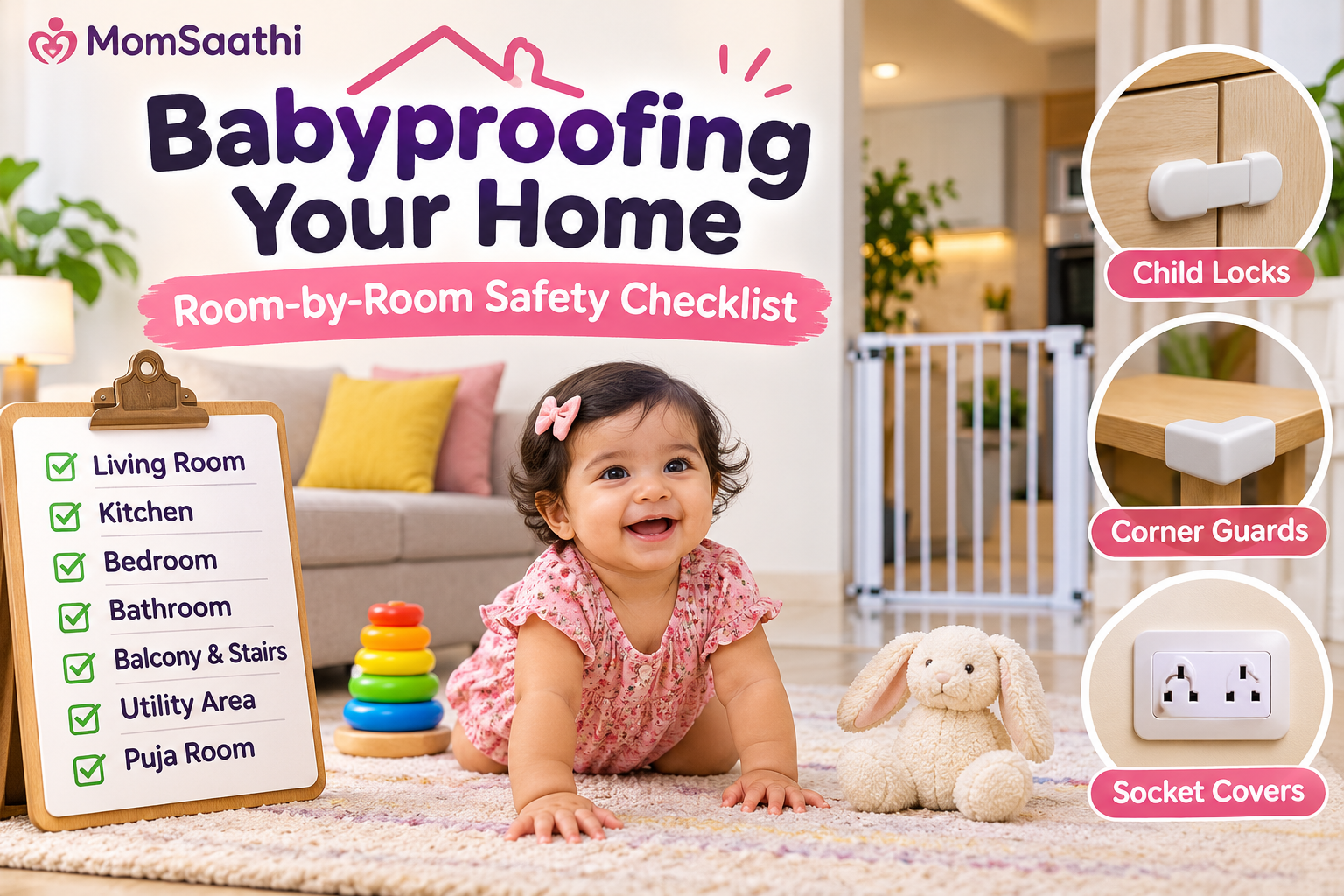
Babyproofing Your Home: Room-by-Room Safety Checklist

Babies and toddlers learn by touching, pulling, climbing, tasting and exploring. A home that feels completely safe to an adult can contain everyday hazards at a child’s eye level: an open electrical socket, a hot cup of tea, a loose balcony latch, a medicine strip or a piece of furniture that can topple. A practical babyproofing checklist helps you spot these risks before your child reaches them.
Babyproofing does not mean making your home risk-free or stopping your child from exploring. It means reducing preventable hazards, creating safer spaces and supervising your child closely. This room-by-room guide is designed for Indian homes, including apartments, independent houses and homes where grandparents or caregivers share childcare.
What is babyproofing and when should you start?
Babyproofing is the process of identifying and reducing household risks for babies and young children. It includes securing furniture, covering electrical outlets, storing dangerous products safely, fitting gates where needed and checking balconies, windows, kitchens and bathrooms.
Start before your baby begins rolling, crawling or pulling up to stand. Children develop at different rates, so do not wait for a milestone before making the home safer. Recheck the house as your child becomes more mobile. A crawling baby, a cruising toddler and a preschooler can reach very different places.
Quick answer: Begin babyproofing during pregnancy or in the first months after birth, complete the essential changes before your baby becomes mobile, and review them regularly as your child grows.
Babyproofing checklist: start with these 15 essential steps
- Install working smoke alarms where appropriate and keep a fire extinguisher accessible to adults.
- Cover unused electrical outlets with properly fitted safety covers and secure loose wires.
- Anchor televisions, bookcases, wardrobes and other heavy furniture to the wall.
- Fit safety gates at the top and bottom of stairs where suitable; gates at the top must be securely fixed.
- Keep medicines, vitamins, cleaning liquids, pesticides and personal-care products locked away and in their original containers.
- Store coins, button batteries, magnets, small toy parts and other choking hazards out of reach.
- Use cupboard and drawer locks for areas containing hazards.
- Keep hot drinks, hot food, irons and cooking vessels away from table edges and reachable surfaces.
- Use the rear burners of the stove when possible and turn pan handles inward.
- Secure balcony doors and windows; never rely on a child’s ability to understand the danger of a height.
- Keep bathroom doors closed and never leave a child alone in or near water.
- Use age- and size-appropriate car seats and install them according to the manufacturer’s instructions.
- Keep cords from blinds, curtains and appliances out of reach.
- Check toys regularly for loose parts, damage and age-inappropriate pieces.
- Make sure every caregiver knows the safety rules and emergency contacts.
Room-by-room babyproofing checklist
1. Living room: secure furniture, screens and everyday objects
The living room often has low tables, television units, charging cables, decorative items and furniture that children can climb. Get down to your child’s height and look around. You may notice sharp corners, accessible plugs and small objects that are easy to miss when standing.
- Anchor heavy furniture: Secure televisions, cabinets, bookcases and tall storage units to wall studs or suitable masonry using the correct anti-tip hardware. Do not place tempting toys on top of furniture.
- Manage wires: Use cable covers or cord organisers. Keep chargers, extension boards and power strips out of reach. Unplug devices when not in use.
- Reduce impact injuries: Consider corner and edge guards on sharp furniture. These can reduce some bumps but do not replace supervision or removing unstable furniture.
- Clear small objects: Keep coins, remote-control batteries, pen caps, beads, décor pieces and medicines away from low tables.
- Check windows: Use secure window locks and suitable window guards where needed. Keep sofas and chairs away from windows so children cannot climb up.
- Review plants: Move toxic or thorny plants out of reach and do not allow children to eat leaves, berries or soil.
Living room check: Can your child pull down, climb onto, open, unplug or put in their mouth anything in this room? Fix each risk you identify.
2. Kitchen: prevent burns, poisoning and cuts
Kitchens contain several high-risk hazards: heat, sharp tools, cleaning chemicals, gas appliances and small food items. A safety gate can help keep a young child out of the kitchen during cooking, but it should not be treated as a substitute for an attentive adult.
- Keep children away from the stove, oven, hot tawa, pressure cooker, hot oil and freshly prepared food.
- Use rear burners when possible and turn pan handles towards the back or centre of the stove.
- Never carry a hot drink or hot food while holding your baby.
- Store knives, peelers, scissors, matches, lighters and skewers in locked or high storage.
- Keep LPG cylinders, regulators and gas knobs inaccessible to children. Have gas appliances and connections checked by qualified professionals.
- Lock away dishwashing liquid, floor cleaners, detergents, drain cleaners, insecticides and other chemicals. Never transfer chemicals into water or soft-drink bottles.
- Keep plastic bags, cling film and packaging away from babies and toddlers.
- Cut age-appropriate foods safely and supervise meals. Whole nuts, whole grapes, popcorn, hard sweets and other hard or round foods can pose choking risks for young children.
- Keep the dustbin covered and inaccessible.
Teach older children that the kitchen is not a play area. If you need to step away while cooking, place your baby in a safe, supervised space away from heat and sharp objects. For ideas to keep toddlers engaged in an appropriate play space, explore our activities for 2-year-olds.
3. Bedroom and nursery: focus on safe sleep and falling hazards
A nursery should be simple, uncluttered and arranged around a safe sleep space. Follow current safe-sleep advice from your child’s healthcare professional and recognised public-health guidance. For babies, a firm, flat sleep surface and a clear sleep space are important; avoid loose pillows, thick quilts, soft toys and bulky bedding in the baby’s sleep area. You can also read our guide to daily routines and sleep for toddlers as your child grows.
- Use a cot or crib that meets applicable safety standards and has no broken, loose or missing parts.
- Keep the cot away from windows, heaters, lamps, dangling cords and wall decorations that could fall.
- Do not hang toys, ribbons or cords where a baby could become entangled.
- Secure wardrobes, drawers and changing units to the wall.
- Never leave a baby unattended on a bed, sofa or changing table, even for a moment.
- Keep nappy creams, powders, medicines, pins and small accessories out of reach.
- Use a night light that does not create a heat or electrical hazard, and keep its cable away from the cot.
- Check that window and balcony access is secure.
As your child grows, lower the cot mattress according to the manufacturer’s instructions and stop using the cot when your child reaches its stated height or weight limit or can climb out.
4. Bathroom: prevent drowning, slips and poisoning
Young children can drown in very shallow water. A bath, bucket, tub, water-filled container or open toilet can be dangerous. The safest approach is active, close supervision around all water.
- Never leave a child alone in a bath, even briefly, and do not rely on bath seats or rings to prevent drowning.
- Empty buckets, tubs and small pools immediately after use; store them upside down and out of reach.
- Keep bathroom doors closed and use a secure toilet lock if needed.
- Store medicines, razors, scissors, cleaning products, toiletries and cosmetics in locked storage.
- Use non-slip mats where appropriate and wipe up water promptly.
- Set water-heater temperature safely with help from a qualified professional; always test bath water before placing your child in it. For more on checking bath temperature, see our newborn bath thermometer guide.
- Keep electrical appliances such as hair dryers and trimmers unplugged and away from water.
Do not leave a child in the care of another child near water. An adult should be responsible for supervision.
5. Balcony, windows and stairs: create strong barriers
In many Indian homes, balconies, terraces, staircases and open windows need special attention. A child may climb onto a chair, planter or storage box to look outside. A mosquito net is not a safety barrier and should never be treated as protection against falls.
- Keep balcony doors locked when not in use and use child-resistant locks that adults can operate quickly in an emergency.
- Do not place chairs, tables, planters or storage boxes near balcony railings.
- Check railings for gaps, loose sections and climbable horizontal bars. Seek professional advice if the barrier is not secure or has openings a child could pass through.
- Install suitable window restrictors or guards that prevent falls while allowing safe emergency access. Do not block fire escape routes.
- Use securely installed stair gates suited to the staircase. Avoid pressure-mounted gates at the top of stairs unless the manufacturer specifically permits that use.
- Keep stairs clear, well lit and free of loose rugs or objects.
- Teach children to use handrails, but do not depend on teaching alone to prevent falls.
Inspect balcony grills and window guards periodically, especially after repairs, painting or building work.
6. Utility area, laundry and storage: lock away chemicals and equipment
Utility spaces may contain washing machines, detergents, buckets, tools, batteries, pesticides and cleaning equipment. These are not safe play areas.
- Keep the washing machine and dryer closed and unplugged when appropriate; do not allow children to climb inside.
- Store detergent capsules, bleach, toilet cleaners, fabric softeners and laundry liquids in locked cabinets, in their original packaging.
- Keep irons, ironing boards, sewing kits, needles and tools inaccessible.
- Secure inverter batteries, electrical panels, water pumps and equipment. Keep children away and use qualified technicians for maintenance.
- Store pesticides, mosquito repellents, fuels and gardening chemicals securely, following label directions.
- Do not leave filled buckets or water tubs unattended.
7. Puja room and household rituals: make the space safer
Diya flames, incense sticks, camphor, matchboxes, oil lamps and hot prasad can attract a curious toddler. You can continue family rituals while creating a safe boundary.
- Place lit diyas, incense and camphor on stable, heat-resistant surfaces well beyond a child’s reach.
- Never leave an open flame unattended, even for a short time.
- Keep matchboxes, lighters, camphor, oils and पूजा supplies in closed storage.
- Keep the child away from hot oil, ghee lamps and recently extinguished items, which may remain hot.
- Avoid loose decorative beads, small idols or breakable items within reach.
Explain the boundary to older toddlers in simple language, but maintain physical separation from flames and hot objects.
Babyproofing products: what do you actually need?
You do not need to buy every product marketed to parents. Choose safety equipment based on the hazards in your home, the child’s age and the product’s instructions. Commonly useful items include:
| Product | Where it helps | What to check |
|---|---|---|
| Furniture anti-tip anchors | Wardrobes, bookcases, TV units | Correct wall fixing, load suitability and secure installation |
| Safety gates | Stairs and selected room entrances | Correct fit, approved use location and secure mounting |
| Cabinet and drawer locks | Kitchen, bathroom and storage units | Adult access, reliable latch and regular checks |
| Outlet covers and cable organisers | Electrical outlets and loose wires | Compatibility with the outlet and secure fit; replace damaged items |
| Window restrictors or guards | Windows and accessible openings | Professional installation, strength and emergency access |
| Corner guards | Sharp furniture edges | Secure attachment; these do not eliminate injury risk |
| Non-slip mats | Bathroom and slippery areas | Stable grip and regular cleaning |
Buy products from reputable sellers, follow the installation instructions and check for recalls or safety notices where available. A poorly fitted gate, lock or anchor can create a false sense of security.
Common babyproofing mistakes parents should avoid
- Waiting until crawling begins: Rolling, reaching and pulling up can happen sooner than expected.
- Relying only on safety gadgets: Locks and guards support supervision; they do not replace it.
- Leaving hazards on high surfaces: Toddlers climb, pull tablecloths and move chairs.
- Using a mosquito net as a fall barrier: Nets are not designed to prevent falls from windows or balconies.
- Assuming child-resistant means childproof: Packaging and locks reduce access but may still be opened or defeated.
- Ignoring visitors’ bags: Medicines, coins, batteries and small objects in handbags can be within reach.
- Forgetting changing routines: A safe room can become unsafe when furniture is moved, a new appliance arrives or a child learns to climb.
- Leaving water in buckets: Empty and store containers safely after use.
How to make a babyproofing routine that works
Babyproofing is not a one-time project. Use a short routine to keep your home safer:
- Do a floor-level scan: Once a week, look at each room from your child’s height and identify new hazards.
- Recheck after changes: Review the room after moving furniture, buying appliances, hosting guests or completing repairs.
- Inspect safety equipment: Check anchors, gates, locks, outlet covers and window restrictors for looseness or damage.
- Update for milestones: Reassess when your child crawls, walks, climbs, opens drawers or reaches higher surfaces.
- Share the rules: Give grandparents, babysitters, domestic helpers and other caregivers a simple list of household safety rules.
What should you do if your child swallows something or gets injured?
If you suspect that your child has swallowed a button battery, magnet, medicine, chemical or another dangerous object, seek urgent medical advice immediately. Do not wait for symptoms and do not try to make the child vomit. For choking, breathing difficulty, severe burns, loss of consciousness or another emergency, contact local emergency services and get immediate medical help. In India, 112 is the national emergency response number.
Keep product packaging or a photo of the suspected substance or object available for medical professionals, if you can do so without delaying care. Do not give home remedies or attempt to remove an object blindly from the child’s throat.
Frequently asked questions about babyproofing
When should I babyproof my home?
Start before your baby becomes mobile, ideally during pregnancy or in the early months. Complete essential changes before rolling, crawling or pulling up begins, and review the home as your child develops.
What is the most important room to babyproof first?
Start with the rooms where your baby spends the most time, usually the living room and bedroom. However, secure every accessible area, especially the kitchen, bathroom, balcony, windows and stairs.
Are socket covers necessary in Indian homes?
Unused outlets and exposed electrical points should be made inaccessible to children. Choose covers or outlet protection compatible with the electrical fittings in your home, and have damaged or unsafe wiring checked by a qualified electrician.
Do I need a safety gate if I live in an apartment?
You may need a gate if your apartment has stairs, a kitchen entrance or another area that should be restricted. Choose a gate designed for that location and install it exactly as instructed. A gate does not replace supervision.
How can I make my balcony safe for a toddler?
Keep balcony access locked when not in use, remove climbable furniture and planters from the railing, and check that railings and barriers are secure and have no unsafe gaps. A mosquito net is not a fall-prevention device.
Are babyproofing products enough to keep my child safe?
No. Products such as locks, gates and anchors reduce specific risks when correctly selected and installed. Active adult supervision, safe routines and regular checks remain essential.
How often should I check my babyproofing setup?
Do a quick check every week and after any change to your home. Also reassess whenever your child gains a new skill, such as climbing, opening drawers or reaching higher surfaces.
Final thoughts: make your home safer, one room at a time
A safer home is built through small, consistent actions: anchoring furniture, locking away chemicals, keeping hot objects out of reach, securing balconies and supervising children around water. Begin with the hazards that could cause the most serious harm, then work through the rest of this babyproofing checklist room by room.
Every home is different. If you are unsure whether a railing, electrical fitting, gate or safety product is suitable, consult a qualified professional or the product manufacturer. The goal is not a perfectly childproof home; it is a safer environment where your child can explore while a responsible adult stays close.
Trusted safety resources
- U.S. Consumer Product Safety Commission: Childproofing Your Home — home hazard prevention guidance.
- NHS: Baby and toddler safety — practical advice on preventing common injuries.
- Emergency Response Support System 112 (India) — national emergency response information.
Editorial note: This article provides general home-safety information and is not a substitute for professional installation advice, emergency care or guidance from your child’s healthcare professional. Check local product standards and manufacturer instructions before purchasing or installing safety equipment.