
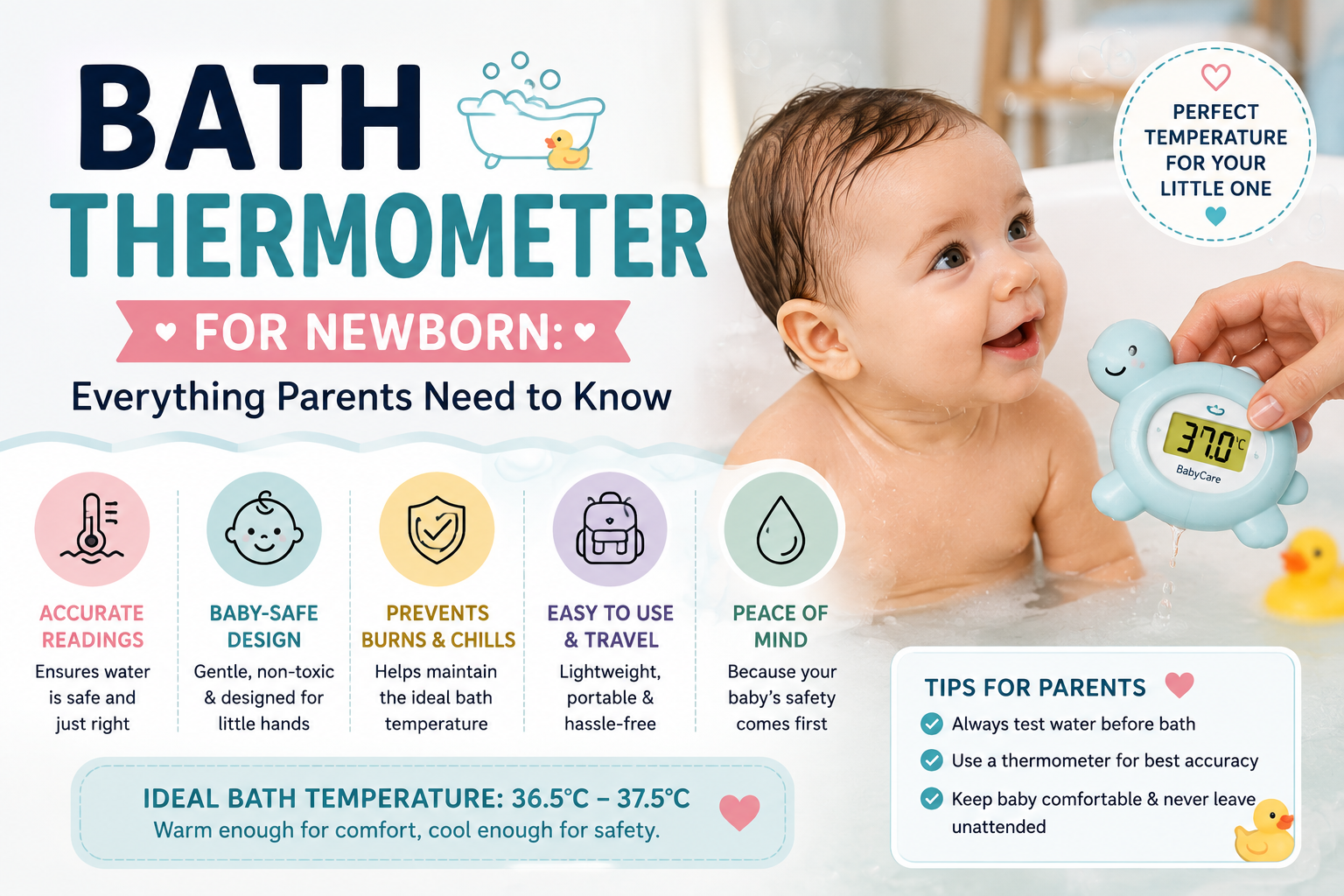

Bath time is one of the most enjoyable bonding moments between parents and their newborn. However, a baby’s delicate skin is much more sensitive than an adult’s, making it important to ensure the bathwater is neither too hot nor too cold.
A bath thermometer for newborns is a simple yet valuable tool that helps parents measure water temperature accurately before placing their baby in the tub. While you can test the water with your wrist or elbow, a bath thermometer provides a more precise reading and reduces the risk of accidental burns or discomfort. Health experts generally recommend bath water around 37–38°C (98.6–100.4°F) for babies.
If you’re preparing for your baby’s first bath, you may also find our guides on Baby Hair Growth Oil, Baby Rash After Swimming, and Baby Skin Abscess helpful.
What Is a Bath Thermometer for a Newborn?
A bath thermometer is a waterproof device designed to measure the temperature of bathwater before your baby enters the tub. Many models also float on the water and double as bath toys, making bath time more enjoyable while helping parents monitor water temperature.
Unlike body thermometers, bath thermometers are specifically made for checking water and should not be used to measure your baby’s body temperature.
Why Do You Need a Bath Thermometer?
Newborn skin is thinner and more delicate than adult skin, so even water that feels comfortable to you may be too hot for your baby.
Using a bath thermometer helps you:
- Prevent burns from overly hot water
- Avoid baths that are too cold
- Maintain a consistent water temperature
- Feel more confident during bath time
- Reduce guesswork
The Cleveland Clinic recommends keeping baby bath water at no higher than about 38°C (100°F) and checking the water before placing your baby in the bath.
What Is the Ideal Bath Temperature for a Newborn?
Most pediatric experts recommend keeping bathwater between:
37°C and 38°C (98.6°F–100.4°F)
This temperature feels warm without being hot and helps keep your newborn comfortable during bathing.
Even when using a bath thermometer, it’s a good idea to test the water with your wrist or elbow before placing your baby in the tub.
Benefits of Using a Bath Thermometer
1. Improves Bath Time Safety
A bath thermometer helps ensure the water stays within a safe range, reducing the risk of accidental burns.
2. Provides Accurate Readings
Unlike guessing by touch alone, digital or floating bath thermometers display the water temperature clearly.
3. Reduces Parent Anxiety
New parents often worry about whether bathwater is too hot or too cold. A thermometer offers reassurance and consistency.
4. Easy to Use
Most bath thermometers activate automatically when placed in water and display the temperature within seconds.
5. Can Double as a Bath Toy
Many baby bath thermometers come in fun shapes like ducks, turtles, whales, or fish, making bath time more engaging for babies.
Types of Bath Thermometers
Floating Bath Thermometers
These float on the water while continuously displaying the temperature.
Pros
- Easy to read
- Fun designs
- Continuous monitoring
Cons
- May cost slightly more
Digital Bath Thermometers
These use electronic sensors to provide fast, accurate readings.
Many feature:
- LCD display
- Temperature alerts
- Auto shut-off
- Waterproof design
Color-Changing Thermometers
Some bath thermometers change color if the water becomes too hot.
These are simple to use but may not provide an exact numerical temperature.
Features to Look For
When buying a bath thermometer for your newborn, consider:
Waterproof Design
It should withstand repeated exposure to water.
Fast Reading
Look for models that display results within a few seconds.
Large Display
A clear digital screen makes it easier to read temperatures quickly.
High-Temperature Warning
Some thermometers display visual or audible alerts if the water is too hot.
BPA-Free Materials
Choose products made from baby-safe, non-toxic materials.
Auto Shut-Off
This feature helps conserve battery life.
How to Use a Bath Thermometer
Using a bath thermometer is simple:
- Fill the baby bathtub with warm water.
- Place the thermometer into the water.
- Stir the water gently to ensure an even temperature.
- Wait until the reading stabilizes.
- Adjust the hot or cold water if needed.
- Test the water with your wrist or elbow before placing your baby in the bath.
Always keep one hand on your baby during bath time and never leave your newborn unattended, even for a moment.
Can You Bathe a Newborn Without a Bath Thermometer?
Yes. Many parents test bathwater with their wrist or elbow.
However, a bath thermometer provides a more objective measurement and can be especially helpful for first-time parents or caregivers who want added reassurance.
Common Mistakes to Avoid
- Using water that’s too hot
- Filling the tub too deeply
- Leaving your baby unattended
- Relying only on touch if you’re unsure
- Forgetting to stir the water before measuring
Choosing the Best Bath Thermometer
A good bath thermometer should be:
- Waterproof
- Accurate
- Easy to read
- Durable
- Made from BPA-free materials
- Equipped with a temperature warning if possible
Many parents also appreciate models that can measure room temperature in addition to bathwater.
If you’re building your newborn essentials checklist, you may also like our articles on Baby Food Chart (0–24 Months), Baby Cold Sores, and Baby Rash After Fever.
Choosing a reliable bath thermometer for your newborn can make bath time safer and less stressful, especially for first-time parents. While no thermometer replaces close supervision, it helps ensure the bathwater stays in the recommended temperature range before your baby enters the tub.
If you’re setting up your baby’s bath routine, you may also find our guides on Baby Hair Growth Oil, Baby Rash After Swimming, and Baby Cold Sores helpful.
Bath Thermometer vs. Elbow Test
Many parents have traditionally checked bathwater using their wrist or elbow. While this method can provide a rough idea, it isn’t always accurate.
| Bath Thermometer | Elbow Test |
|---|---|
| Gives an exact temperature reading | Subjective estimate |
| Helps reduce guesswork | Depends on individual sensitivity |
| Ideal for first-time parents | Suitable as an additional check |
| Some models provide hot-water alerts | No warning system |
The NHS recommends checking bathwater before placing your baby in the tub and says the water should feel close to your own body temperature if using your elbow.
How to Choose the Best Bath Thermometer for a Newborn
When comparing products, look for these features:
Digital Display
A clear LCD screen allows you to read the temperature quickly.
Temperature Alerts
Some models display a warning if the water becomes too hot.
Floating Design
Floating thermometers continue monitoring the water while your baby is bathing.
BPA-Free Construction
Choose products made from baby-safe, non-toxic materials.
Dual Function
Some bath thermometers also measure room temperature, helping you monitor the nursery environment.
Bath Time Safety Tips
A bath thermometer improves safety, but it should always be combined with safe bathing practices.
Before the Bath
- Gather everything you’ll need before filling the tub.
- Fill the bath with cold water first, then add hot water and mix thoroughly.
- Check the water temperature using the thermometer.
- Test the water with your wrist or elbow as an extra precaution.
During the Bath
- Never leave your baby unattended, even for a few seconds.
- Keep one hand supporting your newborn at all times.
- Use only a small amount of water (about 5 cm or 2 inches for newborns).
- Keep the room comfortably warm to prevent your baby from getting chilled.
The Mayo Clinic recommends keeping bath water around 100°F (38°C) and never leaving a baby alone in the bath, even briefly.
How to Clean a Bath Thermometer
Keeping your bath thermometer clean helps maintain accurate readings and prevents residue buildup.
Follow these simple steps:
- Rinse it with clean water after each use.
- Wipe it dry using a soft cloth.
- Store it in a dry place.
- Replace batteries according to the manufacturer’s instructions if applicable.
- Inspect regularly for cracks or damage.
Avoid harsh chemicals unless the product instructions specifically recommend them.
Common Mistakes Parents Make
Even with a bath thermometer, avoid these common mistakes:
- Checking the temperature before mixing the water thoroughly.
- Assuming every part of the bath is the same temperature.
- Leaving the thermometer in direct hot water while filling the tub.
- Relying only on the thermometer without supervising your baby.
- Ignoring warning indicators on digital thermometers.
Do You Really Need a Bath Thermometer?
A bath thermometer isn’t an absolute necessity, but it can be a helpful safety tool—particularly for new parents or caregivers who want extra confidence during bath time.
Because newborns have delicate skin and are more sensitive to temperature changes than adults, using a thermometer can reduce guesswork and help maintain a comfortable bath temperature. Experts generally recommend aiming for 37–38°C (98.6–100.4°F).
Pros and Cons of Bath Thermometers
Pros
- Provides accurate temperature readings
- Helps reduce the risk of burns
- Easy to use
- Gives parents added confidence
- Many models float and double as bath toys
- Some include hot-water warning indicators
Cons
- Requires batteries (digital models)
- Basic models may not provide continuous monitoring
- Quality varies between brands
- Slightly higher cost than relying on manual temperature checks
Frequently Asked Questions
What is the ideal bath temperature for a newborn?
Most experts recommend keeping bathwater between 37°C and 38°C (98.6°F–100.4°F).
Is a bath thermometer necessary?
Not always, but it provides a more accurate temperature reading than relying on touch alone.
Can I use a kitchen thermometer?
It’s better to use a thermometer specifically designed for bathwater, as these are waterproof, baby-safe, and intended for repeated use in water.
How often should I check the bathwater?
Check the temperature before placing your baby in the bath and recheck if you add more water.
Are floating bath thermometers accurate?
Most reputable floating digital bath thermometers provide reliable readings when used according to the manufacturer’s instructions.
Can a bath thermometer also measure room temperature?
Yes. Some models include dual sensors that display both bathwater and room temperature.
What if the bathwater is too hot?
Allow it to cool naturally or add cold water, stir thoroughly, and recheck the temperature before placing your baby in the bath.
How long should a newborn’s bath last?
A newborn’s bath typically lasts 5–10 minutes, helping keep them clean without allowing them to become chilled.
How often should I bathe my newborn?
Most newborns only need a bath 2–3 times per week, unless they become particularly messy.
Can I use bath toys with a newborn?
Simple floating toys are generally fine once your baby is old enough to enjoy them, but they should always be age-appropriate, easy to clean, and used only under close supervision.
Final Thoughts
A bath thermometer for a newborn is a practical tool that helps parents prepare bathwater at a safe and comfortable temperature. Combined with careful supervision, testing the water before every bath, and following safe bathing practices, it can make bath time more enjoyable and less stressful.
Remember that no device replaces attentive caregiving. Always keep your baby within arm’s reach, use only a shallow amount of water, and ensure the bathwater is comfortably warm—not hot—before your newborn enters the tub.
For more newborn care tips, explore these MomSaathi guides:
Baby Food Chart (0–24 Months)
Baby Rash After Fever
Baby Skin Abscess
Baby Sleep Schedule
These resources can help you build a safe, confident, and enjoyable daily care routine for your newborn.