

Edited by: MomSaathi Editorial Team
Reviewed by: Based on the latest research from the National Mental Health Survey (2024-2025) and trusted baby name & child development sources.
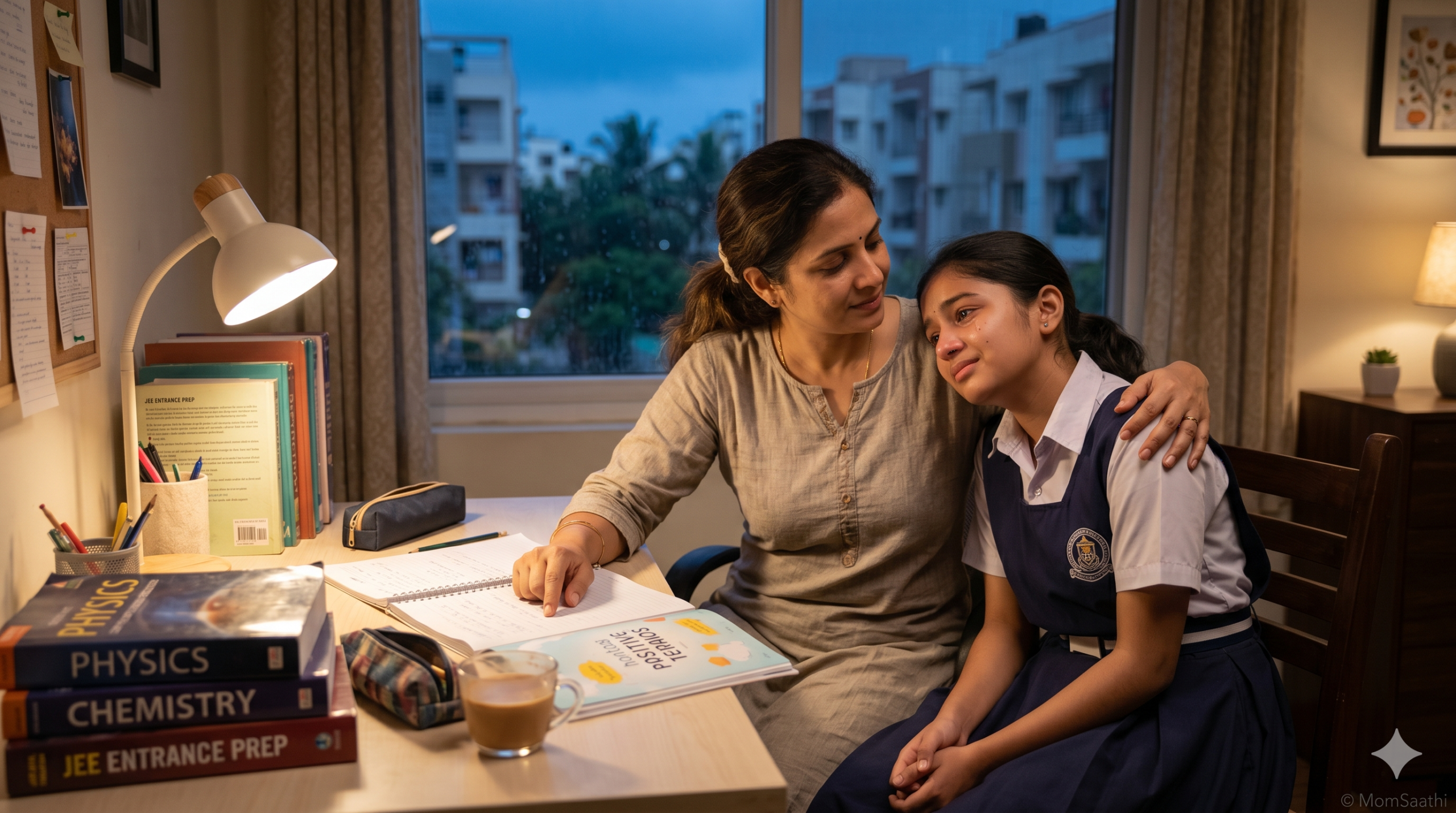
The lights are on at 2:00 AM in a middle-class apartment in Bengaluru. Inside, a 15-year-old is hunched over a thick physics textbook, nursing a cold cup of tea. This isn’t an isolated incident; it is the reality for millions of students across the country.
In India, education isn’t just about learning; it’s often seen as the only ticket to a secure future. While ambition is good, the school pressure in India has reached a boiling point. From the “Kota culture” to the obsession with scoring 95% in Boards, our children are running a race that has no finish line.
As parents, we want the best for our kids. But how do we differentiate between encouraging them and inadvertently crushing them under the weight of expectations? Let’s dive deep into understanding this crisis and how we can be the support system our children truly need.
What Exactly is School Pressure in India?
Academic pressure is the mental and emotional strain students feel to achieve high grades and meet specific educational milestones. In the Indian context, this pressure is unique because it is “multi-layered.“
It isn’t just about the school syllabus. It’s the coaching culture that starts as early as Class 6, the relentless competition for a handful of seats in premier institutes like IITs or AIIMS, and the societal narrative that “if you don’t become an engineer or doctor, you’ve failed.“
The pressure on School Children is often a mix of an internal desire to please parents and an external environment that equates a student’s worth with their marksheet.
Major Causes of School Pressure
Why has the situation become so intense? Several factors contribute to this high-stakes environment:
1. Sky-High Parental Expectations
In many Indian households, a child’s academic success is seen as a reflection of the parents’ upbringing. This “prestige” factor leads parents to push children toward perfection, often ignoring the child’s natural aptitude or interest.
2. The Dreaded Competitive Exams (JEE, NEET, Boards)
The sheer volume of applicants for exams like JEE and NEET creates a “do or die” atmosphere. When 20 lakh students compete for a few thousand seats, the academic pressure on students becomes a constant companion from a very young age.
3. Overwhelming School Workload
Between six hours of school, three hours of coaching, and two hours of homework, where is the time to be a child? The modern Indian curriculum is dense, leaving little room for extracurricular activities or creative thinking.
4. Social Comparison & Peer Pressure
The “Sharma ji ka beta” syndrome is real. Seeing peers excel in multiple areas—coding, sports, and academics—can make a student feel inadequate, even if they are doing well in their own right.
Effects of Academic Pressure on Students
When the mind is constantly in “survival mode,” it takes a toll. The impact of student mental health in India is a growing concern for psychologists and educators alike.
Mental Health Impact
- Chronic Anxiety: Constant worrying about the next test or “what if I fail.“
- Burnout: A state of physical and emotional exhaustion where the student simply loses interest in everything.
- Depression: Feelings of hopelessness when they cannot meet the expectations set for them.
Physical Health Declines
Stress doesn’t just stay in the head. It manifests as:
- Sleep Deprivation: Staying up late to study leads to a weakened immune system and poor concentration.
- Fatigue & Headaches: Constant tension often leads to physical pain and low energy levels.
- Eating Disorders: Stress-eating or a complete loss of appetite.
Emotional Struggles
The fear of failure can lead to extremely low self-confidence. If a child believes their value is tied to their grades, a single bad score can shatter their sense of self-worth.
Signs Your Child is Under School Pressure
Children often find it hard to articulate that they are stressed. Instead, they “show” it through their behavior. Look out for these red flags:
- Sudden Mood Swings: Increased irritability, crying spells, or uncharacteristic anger.
- Withdrawal: If your usually social child starts spending all their time locked in their room.
- Physical Complaints: Frequent stomach aches or headaches, especially on school mornings.
- Lack of Interest: Giving up on hobbies they once loved, like painting or football.
- Changes in Habits: Difficulty falling asleep or eating significantly more/less than usual.
How Parents Can Help Children Cope: Practical Parenting Tips

As parents, we are the first line of defense. Here is how you can implement parenting tips for stressed students to create a healthier home environment.
1. Change the Narrative Around Failure
Teach your child that failure is a comma, not a full stop. Share your own stories of professional setbacks and how you bounced back. When they know you won’t love them any less for a “B” grade, their anxiety levels drop significantly.
2. Prioritize Effort Over Results
Instead of asking, “How many marks did you get?“, ask, “What was the most interesting thing you learned today?” or “I saw how hard you worked on that project, I’m proud of your dedication.“
3. Open the Channels of Communication
Spend at least 15 minutes a day talking to your child about things other than school. Be a safe space where they can vent without being judged or immediately given “advice.“
4. Help with Time Management (Without Micromanaging)
Assist them in creating a schedule that includes “guilt-free” play or relaxation time. A student who rests well actually performs better than one who grinds 24/7.
5. Encourage a Balanced Lifestyle
Ensure they get physical exercise. Even a 20-minute walk or a game of badminton can release endorphins that naturally combat stress.
The Role of Schools in Reducing Pressure
While parents play a huge role, schools must also step up. A healthier academic environment should include:
- Balanced Curriculum: Reducing the emphasis on rote learning and focusing on conceptual understanding.
- Mental Health Support: Having trained counselors on campus who are accessible to students without any stigma.
- Teacher Sensitivity: Training teachers to identify signs of burnout and to encourage students rather than using fear as a motivator.
Tips for Students to Manage Stress
If you are a student reading this, remember: you are more than your marksheet. Here are a few ways to keep your head above water:
- Break it Down: Don’t look at the whole syllabus at once. Focus on one chapter, or even one topic, at a time.
- Practice Mindfulness: Simple breathing exercises for 5 minutes a day can help calm the nervous system before an exam.
- The 50/10 Rule: Study for 50 minutes, then take a total break for 10 minutes. No phones during the break—just stretch or grab a snack.
- Ask for Help: If a subject is too hard, tell your parents or teachers. Asking for help is a sign of strength, not weakness.
Conclusion: Strive for Balance, Not Perfection
The journey of education in India is undoubtedly tough, but it shouldn’t come at the cost of a child’s childhood or mental peace. Our goal as parents should be to raise resilient, happy individuals who are capable of handling life’s ups and downs—not just exam papers.
Let’s replace the pressure to be “the best” with the encouragement to be “their best.” A happy child will eventually find their path to success, whether it’s in a lab, a boardroom, or an art studio.
Disclaimer: While this article provides general guidance, if your child shows severe signs of depression or anxiety, please consult a certified mental health professional or a school counselor immediately.
Expert Resources & References
For more information on student welfare and curriculum standards, visit these official resources:
- NIMHANS: National Institute of Mental Health and Neurosciences
- NCERT: Official Indian National Council of Educational Research and Training
- WHO India: Understanding Mental Health Priorities in India
- UNICEF India: Initiatives for Quality Education and Student Well-being
- CBSE Official: Updates on Examination Policies and Student Support
5 Frequently Asked Questions (FAQs)
How do I know if my child’s stress is “normal” or serious?
Occasional stress before an exam is normal. However, if the stress interferes with their sleep, appetite, or basic daily functioning for more than two weeks, it’s time to seek professional help.
Is the “Kota culture” really that bad?
While many succeed, the high-pressure environment in coaching hubs can be detrimental to a student’s mental health if they don’t have a strong emotional support system.
How can I talk to my child about low grades without discouraging them?
Focus on the “why” rather than the “what.” Ask if they found the paper difficult or if they need more help with a specific topic, and work on a solution together.
Does physical exercise really help with academic performance?
Yes! Exercise increases blood flow to the brain and reduces cortisol (the stress hormone), which actually improves memory and focus.
How much sleep does a high school student actually need?
Ideally, 8–9 hours. Sleep is when the brain processes and stores what was learned during the day. Cutting sleep to study is often counterproductive.