
Does every school morning feel rushed, stressful, and filled with constant reminders like “Hurry up!”, “Finish your breakfast!”, or “Where’s your school bag?” If yes, you’re not alone.
Many families struggle with chaotic mornings, especially when children have difficulty waking up, getting dressed, eating breakfast, or remembering their school essentials. A well-planned school morning routine can transform these hectic mornings into calm, organized, and enjoyable moments.
A predictable morning routine not only helps children reach school on time but also improves their mood, concentration, independence, and overall wellbeing throughout the day.
In this complete guide, you’ll find an easy-to-follow School Morning Routine Checklist, age-wise routines, practical parenting tips, and expert advice to help your family start every school day with confidence.
Related: A distraction-free morning starts with healthy technology habits. Read our AI for Kids: Parent’s Complete Guide to learn how to introduce AI responsibly while maintaining a balanced daily routine.
Why Is a School Morning Routine Important?
Children thrive on routine. Knowing what comes next helps them feel secure, reduces anxiety, and encourages responsibility.
A structured morning routine helps children:
- Wake up feeling refreshed
- Develop time management skills
- Become more independent
- Eat a healthy breakfast
- Arrive at school on time
- Feel mentally prepared for learning
- Reduce morning arguments and stress
Parents also benefit from fewer last-minute surprises and a more peaceful start to the day.
Also Read: Wondering how much technology is healthy before and after school? Check out our Screen Time Chart by Age for expert recommendations on healthy digital habits.
Benefits of Following a Morning Routine
A consistent routine offers long-term benefits beyond simply getting to school on time.
Better Time Management
Children learn how to complete tasks within a set timeframe, an important life skill that supports school and future responsibilities.
Parents Also Read: If breakfast is a daily struggle, our guide on Solutions for Picky Eaters shares practical tips to make healthy eating easier.
Less Morning Stress
Knowing exactly what needs to be done each morning reduces confusion and minimizes arguments between parents and children.
Improved School Performance
Children who arrive at school feeling calm, well-fed, and prepared are more likely to concentrate and participate in classroom activities.
Healthier Habits
Morning routines encourage positive habits such as:
- Brushing teeth
- Eating breakfast
- Drinking water
- Personal hygiene
- Packing healthy snacks
Builds Independence
As children grow, they can complete more morning tasks without constant reminders, boosting confidence and responsibility.
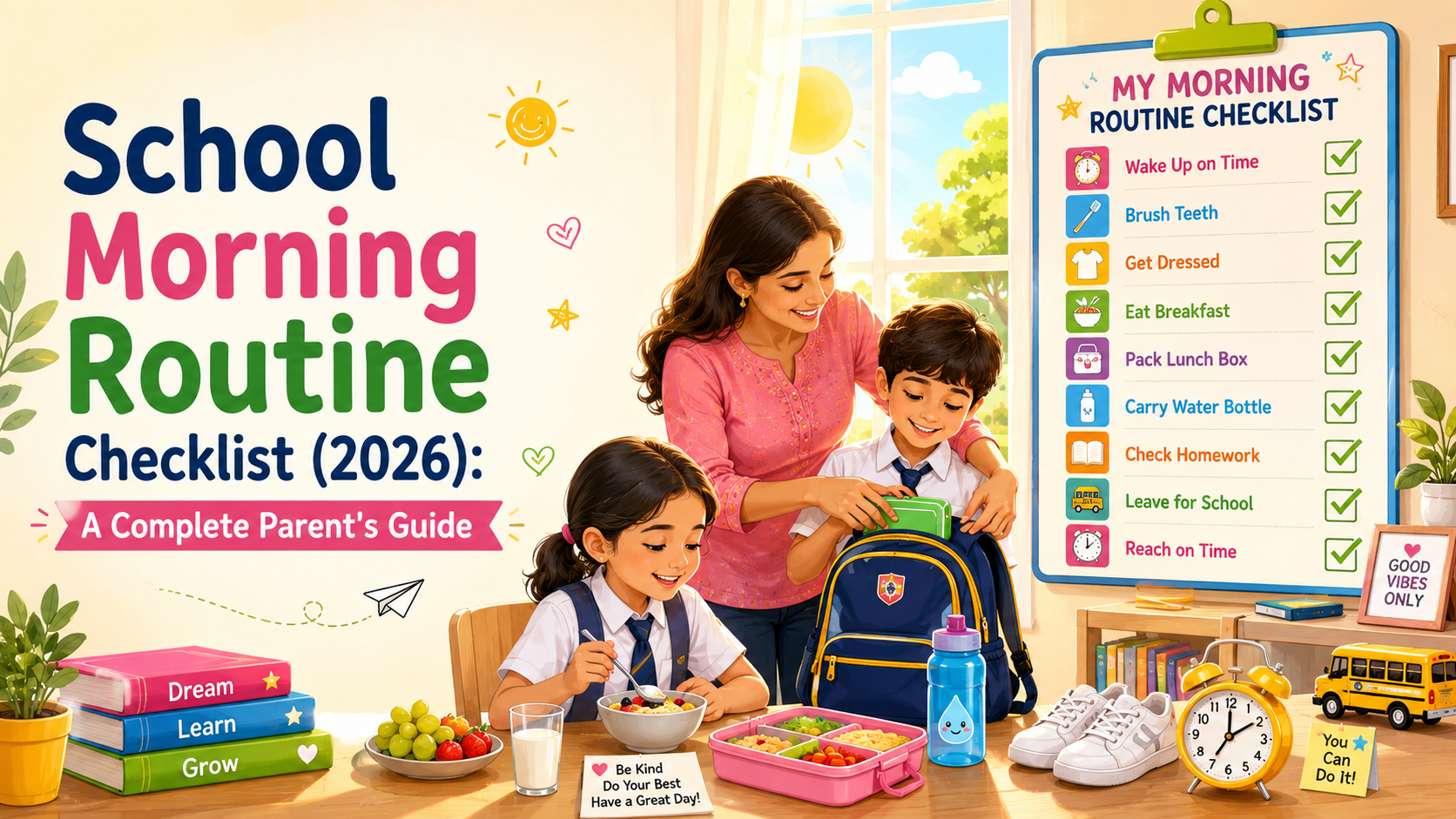
School Morning Routine Checklist
A simple checklist can make mornings smoother for both parents and children.
Wake Up on Time
Set a consistent wake-up time based on your child’s age and school schedule.
Avoid hitting the snooze button repeatedly, as it can make waking up more difficult.
Make the Bed
Encouraging children to make their bed each morning helps build responsibility and gives them an early sense of accomplishment.
Brush Teeth & Wash Face
Good personal hygiene is an essential part of every morning routine.
Older children should brush independently, while younger children may still need supervision.
Get Dressed
Lay out school uniforms or clothes the night before to avoid morning confusion.
Don’t forget:
- Socks
- Shoes
- Belt
- Hair accessories
- Sweater (if needed)
Eat a Healthy Breakfast
Breakfast fuels the brain for learning.
Healthy options include:
- Idli or dosa with chutney
- Poha
- Upma
- Oats
- Eggs
- Whole-grain toast
- Fresh fruits
- Milk or yogurt
Avoid sugary cereals and processed snacks that may cause energy crashes later in the day.
Drink Water
Hydration improves concentration and energy levels.
Encourage children to drink one glass of water before leaving home.
Pack School Essentials
Double-check:
- School bag
- Homework
- Books
- Lunch box
- Water bottle
- ID card
- Stationery
- Sports uniform (if needed)
Creating a packing checklist reduces forgotten items.
Positive Goodbye
A smile, hug, or encouraging words can help children feel confident before heading to school.
Simple phrases like:
- “Have a wonderful day!”
- “I’m proud of you.”
- “Do your best.”
can positively influence your child’s mood.
Age-Wise School Morning Routine
Different age groups require different levels of support.
Preschoolers (3–5 Years)
Parents should guide children through each step while encouraging simple responsibilities.
Morning routine:
- Wake up
- Brush teeth
- Wash face
- Get dressed
- Eat breakfast
- Pack favorite comfort item (if allowed)
- Wear shoes
- Leave for school
Using colorful visual charts helps preschoolers remember the sequence.
Primary School Children (6–10 Years)
Children become more independent but may still need occasional reminders.
Encourage them to:
- Dress themselves
- Pack their school bag
- Check homework
- Fill their water bottle
- Wear their ID card
Parents should supervise rather than complete every task.
Middle School Students (11–13 Years)
At this age, children can manage most tasks independently.
They should:
- Wake up using an alarm
- Prepare their breakfast with supervision
- Organize school materials
- Check the timetable
- Pack sports equipment when needed
This is an ideal time to teach responsibility.
Teenagers (14–18 Years)
Teenagers benefit from routines that prioritize:
- Adequate sleep
- Healthy breakfast
- Personal hygiene
- Time management
- Phone-free mornings
Encourage teenagers to avoid checking social media immediately after waking up.
The Night Before Matters
A successful morning actually begins the previous evening.
Prepare these items at night:
- School uniform
- Shoes
- Socks
- School bag
- Homework
- Lunch planning
- Water bottle
- Permission slips
Spending just 15 minutes preparing the night before can save valuable time in the morning.
Common Morning Challenges (and How to Solve Them)
Child Doesn’t Want to Wake Up
Possible causes:
- Sleeping too late
- Too much screen time
- Inconsistent bedtime
Solution:
Maintain a consistent bedtime routine and avoid screens at least one hour before sleep.
Breakfast Takes Too Long
Prepare simple breakfast options that are quick, nutritious, and easy to eat.
Meal prep the night before whenever possible.
Forgotten Homework
Create a dedicated “School Station” near the entrance where backpacks, homework, and school supplies are kept every evening.
Too Much Screen Time Before School
Avoid allowing television or mobile phones during the morning routine.
Screens often delay getting ready and increase distractions.
Morning Routine Mistakes Parents Should Avoid
Even with the best intentions, some habits can make mornings more stressful.
Avoid:
- Waking children at the last minute
- Packing bags in the morning
- Skipping breakfast
- Arguing during rush hour
- Giving screens while getting ready
- Doing everything for your child
- Constantly rushing without a routine
Small changes can make a significant difference over time.
Printable School Morning Routine Checklist
Print this checklist and place it on your refrigerator, study table, or near the entrance to help children build healthy morning habits.
Daily School Morning Checklist
✅ Wake up on time
✅ Make the bed
✅ Brush teeth
✅ Wash face
✅ Take a bath (if part of your routine)
✅ Wear school uniform
✅ Comb hair neatly
✅ Eat a healthy breakfast
✅ Drink a glass of water
✅ Pack school bag
✅ Carry lunch box
✅ Carry water bottle
✅ Wear ID card
✅ Check homework
✅ Wear shoes and socks
✅ Leave home with a smile 😊
Recommended: Positive communication makes stressful mornings much easier. Read our 5 Gentle Parenting Tips Every Mom Should Know.
Sample School Morning Schedule
30-Minute Routine (Older Children)
| Time | Activity |
|---|---|
| 6:30 AM | Wake up |
| 6:35 AM | Brush & Freshen Up |
| 6:45 AM | Get Ready |
| 6:55 AM | Breakfast |
| 7:10 AM | Final School Bag Check |
| 7:15 AM | Leave for School |
45-Minute Routine (Primary School)
| Time | Activity |
|---|---|
| 6:15 AM | Wake Up |
| 6:20 AM | Bathroom & Brush |
| 6:30 AM | Dress Up |
| 6:40 AM | Breakfast |
| 6:55 AM | Pack School Bag |
| 7:00 AM | Leave Home |
60-Minute Routine (Preschool)
| Time | Activity |
|---|---|
| 6:00 AM | Wake Up Slowly |
| 6:10 AM | Freshen Up |
| 6:20 AM | Get Dressed |
| 6:35 AM | Healthy Breakfast |
| 6:50 AM | Pack School Bag |
| 7:00 AM | Calm Play or Story |
| 7:10 AM | Leave for School |
School Bag Checklist
A quick school bag check every morning can prevent forgotten essentials.
Essentials
- School books
- Homework
- Notebooks
- Pencil box
- Lunch box
- Water bottle
- ID card
- Diary
- Handkerchief
- Face mask (if required)
Extra Items (When Needed)
- Art supplies
- Sports uniform
- Musical instrument
- Project materials
- Raincoat or umbrella
- Sweater or jacket
Healthy Breakfast Ideas Before School
A nutritious breakfast provides the energy children need to stay focused and active.
Indian Breakfast Options
- Vegetable Poha
- Idli with Sambar
- Dosa with Chutney
- Upma
- Stuffed Paratha with Curd
- Moong Dal Chilla
- Vegetable Sandwich
- Oats Porridge
- Fresh Fruits with Yogurt
- Boiled Eggs & Whole Wheat Toast
Quick 10-Minute Breakfasts
- Peanut butter sandwich
- Banana smoothie
- Fruit bowl
- Overnight oats
- Homemade muffins
- Cheese toast
Morning Routine Tips for Working Parents
Busy mornings don’t have to be stressful.
Try these practical strategies:
Prepare Everything the Night Before
- Iron uniforms
- Pack bags
- Chop fruits
- Prepare breakfast ingredients
- Keep shoes ready
Use Visual Checklists
Children often respond better to pictures than repeated reminders.
Visual charts encourage independence.
Screen-Free Fun: Looking for engaging family activities after school? Explore our Ultimate Guide to the Best Board Games for Families.
Wake Up 15 Minutes Earlier
A small buffer helps avoid rushing and keeps everyone calmer.
Avoid Mobile Phones
Parents should also avoid checking emails or social media during the morning routine whenever possible.
Children learn by observing adults.
Morning Routine by School Start Time
School Starts at 8:00 AM
Wake up: 6:30–6:45 AM
School Starts at 8:30 AM
Wake up: 7:00 AM
School Starts at 9:00 AM
Wake up: 7:15–7:30 AM
Adjust bedtime accordingly to ensure your child gets enough sleep.
Expert Parenting Tips
Child development experts recommend focusing on consistency rather than perfection.
Children don’t need perfect mornings every day—they need predictable routines that make them feel secure.
Remember these principles:
- Keep mornings calm.
- Praise effort instead of rushing.
- Encourage independence.
- Create healthy habits gradually.
- Be patient while routines develop.
Even small improvements can make mornings significantly easier over time.
Frequently Asked Questions
What is the best morning routine for school children?
A healthy morning routine includes waking up on time, brushing teeth, getting dressed, eating a nutritious breakfast, packing school essentials, drinking water, and leaving home without rushing.
What time should children wake up before school?
Wake-up time depends on school timings, but most children benefit from waking up 45–60 minutes before leaving home.
Should children eat breakfast before school?
Yes.
Breakfast improves concentration, memory, and energy levels, helping children perform better in school.
How do I stop morning tantrums?
Create a predictable routine, prepare the night before, avoid rushing, and give children positive encouragement rather than constant reminders.
Should children use phones before school?
It is best to avoid phones, television, and gaming before school.
Screen-free mornings improve focus and reduce distractions.
Healthy Families: A parent’s wellbeing plays an important role in creating calm school mornings. Read our Fitness for Mothers in India guide.
Final Thoughts
A successful school morning doesn’t begin when the alarm rings—it begins the night before with preparation and planning.
By following a simple routine, encouraging independence, and maintaining consistency, parents can reduce stress while helping children develop lifelong habits like punctuality, responsibility, and self-confidence.
Remember, the goal isn’t to have a perfect morning—it’s to create a routine that helps your child start every school day feeling happy, prepared, and ready to learn.
Trusted Resources & Further Reading
Want to learn more about healthy school routines, children’s sleep, nutrition, and overall wellbeing? Explore these trusted resources from leading health and parenting organizations:
- HealthyChildren.org (American Academy of Pediatrics) – Family Routines & Daily Habits
- UNICEF Parenting – Expert Parenting Advice & Child Development Resources
- World Health Organization (WHO) – Physical Activity Guidelines for Children
- Sleep Foundation – Healthy Sleep Tips for Children by Age
- Centers for Disease Control and Prevention (CDC) – Healthy Eating for Children
Editorial Note: This article is based on recommendations from globally recognized organizations, including the American Academy of Pediatrics (AAP), UNICEF, the World Health Organization (WHO), the Sleep Foundation, and the Centers for Disease Control and Prevention (CDC). Every child has unique needs, so parents should adapt morning routines based on their child’s age, school schedule, health, and developmental stage while maintaining consistency and healthy daily habits.