

Edited by: MomSaathi Editorial Team
Reviewed by: Based on child development research and widely recognized parenting style frameworks
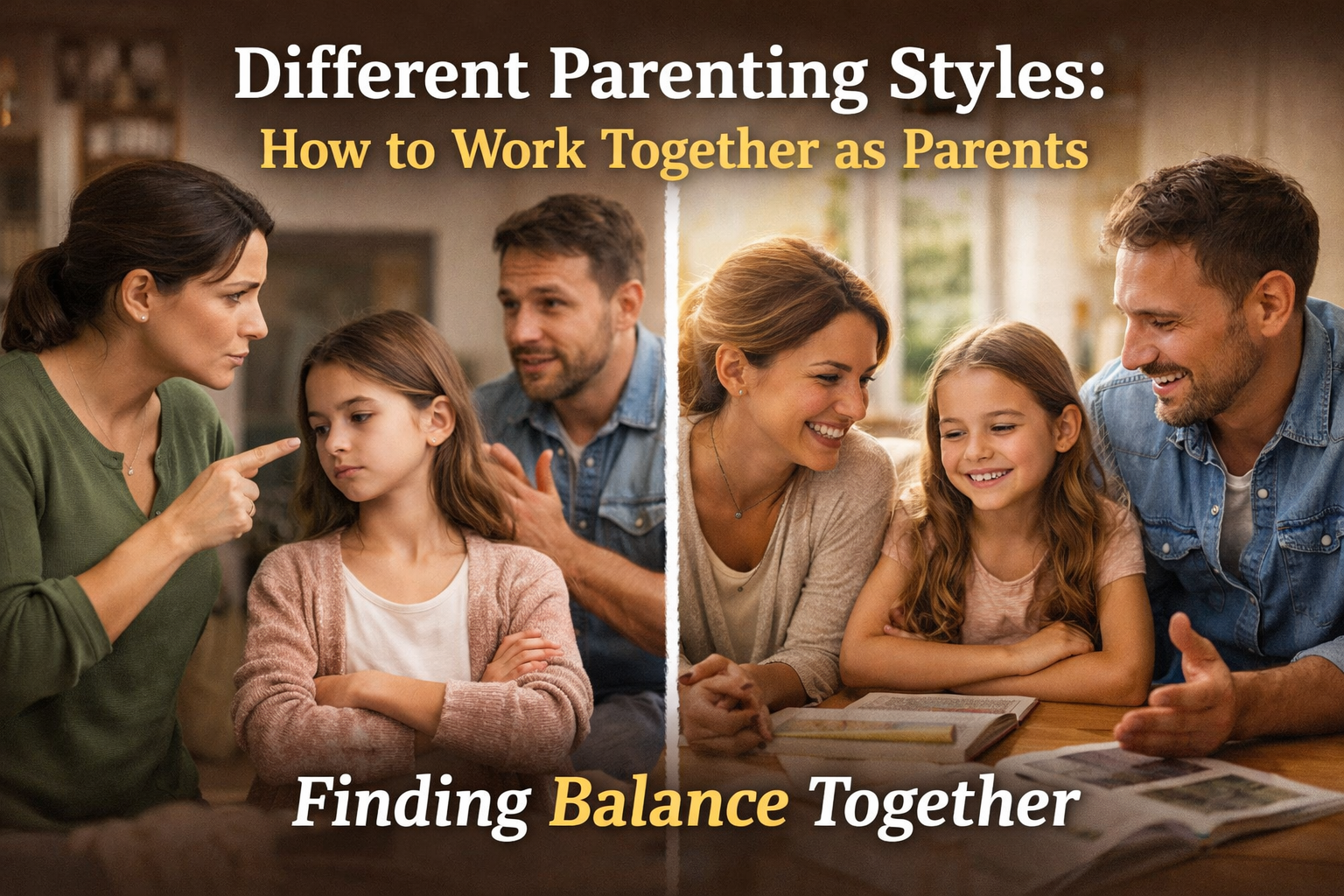
Parenting is probably the best and hardest thing a couple can do together. Even though you and your partner love each other deeply and want the best for your kids, the way you go about getting those things can be very different. It’s very common for partners to have different ways of parenting, which are shaped by their own backgrounds, personalities, and strong beliefs.
But when these differences cause kids to fight a lot or have rules that aren’t always the same, it can make them feel confused and unsafe. It’s not just about keeping the peace when you learn to parent as a team, even if you don’t agree on everything. It’s also about giving your kids the stable base they need to grow.
Understanding the Landscape: Different Ways to Raise Kids
Before looking for answers, it’s helpful to know what psychologists say are the four main types of parenting styles. Most parents choose one of these or a mix of them:
- Authoritative: This style has high expectations and a lot of warmth and responsiveness. These parents are clear about what they want, but they are also helpful and talkative.
- Authoritarian: Emphasizes strict rules, high expectations, and strict discipline, often at the expense of emotional warmth or open communication.
- Permissive: Lots of warmth and responsiveness, but not many rules or expectations. These parents often act more like friends than traditional authority figures.
- Not involved (Neglectful): Not very warm or hopeful. These parents don’t help their kids very much with advice, supervision, or emotional support.
For example, if one partner is more “authoritative” and the other is more “permissive,” there is likely to be friction. The first step to finding a middle ground is to know your own style and your partner’s.
You can learn more about these styles by looking at materials from groups like the American Academy of Pediatrics (AAP).
[fc-smart-plan]
How Inconsistency Affects Things
Kids are very good at picking up on things. When parents don’t agree on rules, expectations, and daily routines, kids may feel:
- They don’t know which rules to follow and when.
- Insecurity: Children may feel less safe when there aren’t clear, consistent rules.
- Behavioral Problems: Kids might learn to “play” parents against each other to get what they want. This is often called “divide and conquer.”
- Anxiety: Parents who are always fighting about how to raise their child can make the whole family more stressed.
Studies show that a “united front” is very important for a child’s healthy growth. Child Mind Institute has more information on family dynamics and how children grow and learn.
How to Work Together as Parents
You don’t want to change your partner’s personality or give up on your own way of doing things. Instead, it’s about finding a “third way”—a way of working together that uses the best parts of both parents.
-
Find What You Have in Common Your methods may be different, but your main goals for your kids are probably very similar. Talk about these big-picture goals first. Do you both value being kind, self-sufficient, working hard in school, or being strong?
Tip: Write down the five most important values you want to teach your kids. Focus on what you both agree on and use those things as the basis for your house rules. Internal: How to create consistent house rules
-
Talk to each other often and on purpose Good communication is the key to successful co-parenting. Don’t wait for a problem to come up before you talk about being a parent.
- Check-ins every day: Spend ten minutes each night talking about what happened that day, what you need to do in the future, and any other needs you have right away.
- “Parenting Meetings” once a week: Set aside time once a week to talk about bigger problems, like changing bedtimes, changing allowances, or dealing with a specific behavior issue. This stops these issues from becoming points of contention when things get heated. Internal: Effective communication techniques for couples
-
Disagree in Private It’s normal to disagree with how your partner is raising their kids. But how and where you show that you don’t agree is very important.
The Golden Rule: Don’t ever make your partner look bad in front of the kids. If your partner is currently punishing a child or enforcing a rule you don’t agree with, wait until you are alone to talk about it.
Why It Matters: Kids learn that the rules aren’t set in stone and that they can get around authority by going to the “nicer” parent when they see one parent go against the other.
-
Understand and support each other’s backgrounds How we parent often comes from how we were raised. One partner may be strict because they were raised in a strict home, or they may be permissive because they think their parents were too controlling.
Show empathy: Talk about your childhoods with each other. What did you like about your upbringing? What would you do differently? Knowing the “why” behind your partner’s style can help you be more understanding and less defensive.
Point out their strengths: Be sure to tell your partner what you like about how they parent. “I love how patient you are when you read them bedtime stories,” or “I really admire how you get them to do their chores.”
-
Don’t let the kids “divide and conquer.” Kids are naturally good at finding the easiest way to do things. If they know that Dad usually says “no” to extra screen time but Mom usually says “yes,” they will go after Mom.
The “Unified Answer” Plan: If your child asks for something you haven’t talked about yet, you could say, “Let me talk it over with [Partner’s Name] and we’ll get back to you.” This backs up the idea that everyone makes decisions together.
-
Get Help from Outside Sometimes, it seems like the difference between parenting styles is too big to cross on your own. This is where professional help can be very useful.
- Classes for Parents: Schools, hospitals (like Stanford Medicine Children’s Health), and many communities have programs to teach parents how to be good parents. Learning new skills together can help you change in a neutral way.
- Therapy for Families: A family therapist can help you deal with parenting disagreements in a way that doesn’t hurt your relationship too much. The American Association for Marriage and Family Therapy (AAMFT) and other groups can help you find a qualified therapist.
Taking the Journey Together
Working out how to deal with different parenting styles is a constant process of negotiation, compromise, and growth. You need to be patient, be willing to admit when things aren’t working, and be completely committed to your partner and your kids.
Keep in mind that the goal isn’t to win a fight about whose parenting style is “better.” The goal is to make a loving, stable, and helpful space for your kids to grow up in so that they can become healthy, happy adults. When you work together, you’re not just controlling behavior; you’re also showing your kids how to be respectful, communicate, and work together.
Important Things for Busy Parents to Remember:
Why It’s Important to Have a Strategy Quick Action: A United Front
- Stops kids from being confused and scared.
- Together, agree on house rules that can’t be changed.
Private Conflict: Keeps parents in charge and respected. When kids are around, say “Let’s talk about this later” if you don’t agree.
Empathy makes people less defensive and more connected. Tell me about a childhood memory that affects how you raise your kids now.
Regular Talk stops little problems from turning into big fights. Set aside 15 minutes this week for a “parenting sync.”