
Medical Note: A rash after eating does not always mean your baby has a food allergy. Viral infections, heat rash, eczema, and skin irritation can look similar. A healthcare professional can help identify the cause.
Introducing solid foods is an exciting milestone, but it can also bring new concerns for parents—especially when a rash appears soon after a baby eats a new food. While many skin rashes in babies are harmless, a rash that develops after eating may sometimes be a sign of a food allergy.
Food allergies occur when the immune system mistakenly identifies a food protein as harmful and reacts against it. The reaction may affect the skin, digestive system, respiratory tract, or, in rare cases, multiple body systems at once. In babies, the skin is often the first place where a food allergy becomes visible, making rashes one of the most common symptoms.
Most food allergy rashes are mild and improve after the trigger food is avoided. However, some allergic reactions can progress rapidly and become life-threatening. Recognizing the early signs of a food allergy rash and knowing when to seek emergency care are essential for every parent.
This comprehensive guide explains the causes, symptoms, diagnosis, treatment, prevention, and emergency warning signs of baby food allergy rash, helping you respond confidently if your baby develops a rash after eating.
If your baby also has eczema, contact dermatitis, or skin allergies, explore our related MomSaathi guides for additional skin care advice.
Quick Answer
What causes a baby food allergy rash?
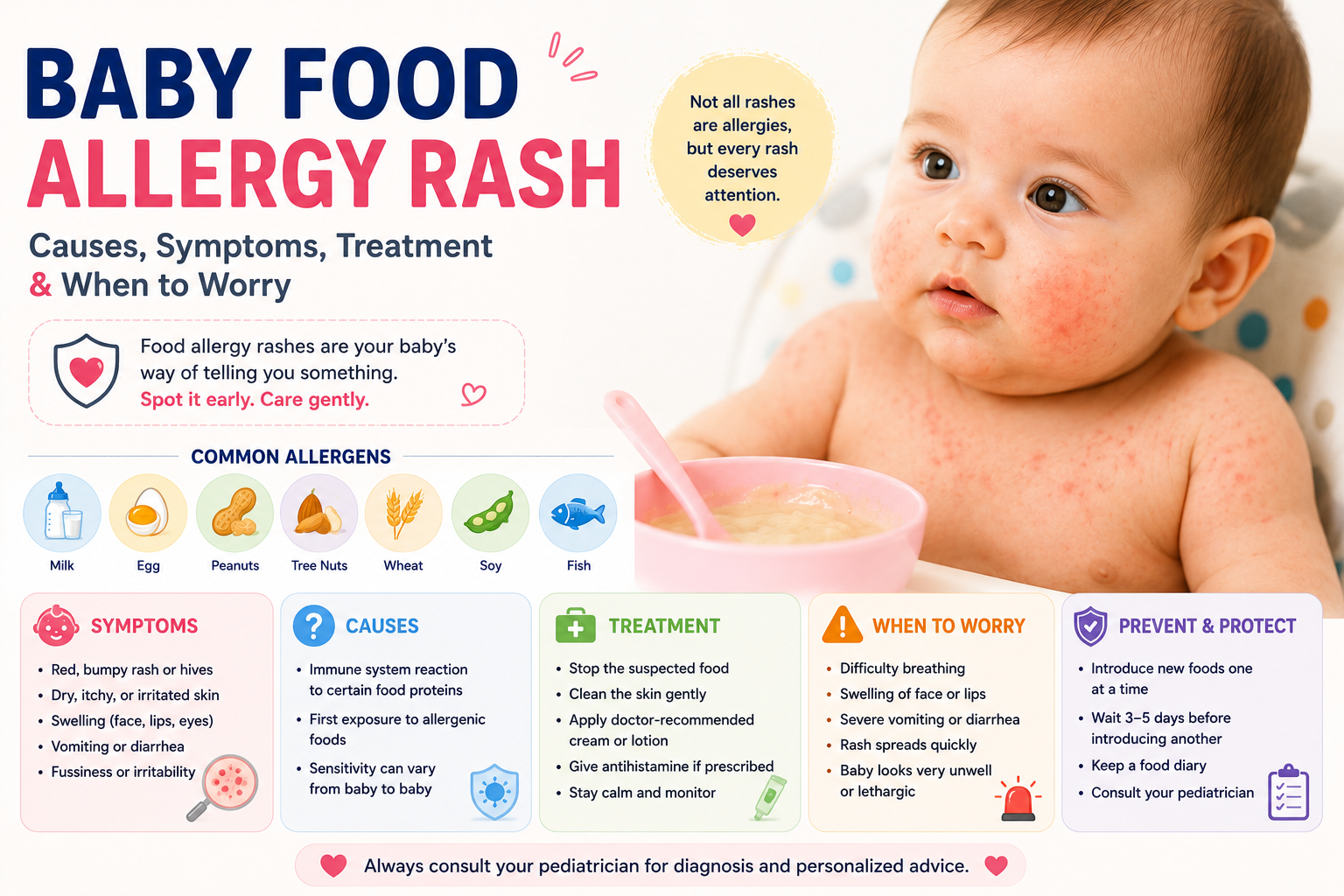
A baby food allergy rash occurs when the immune system reacts to a food protein. Common trigger foods include cow’s milk, eggs, peanuts, tree nuts, soy, wheat, fish, shellfish, and sesame. The rash often appears within minutes to two hours after eating and may be accompanied by hives, swelling, vomiting, coughing, or difficulty breathing.
What Is a Baby Food Allergy Rash?
A food allergy rash is a skin reaction that develops after eating or sometimes touching a food that triggers an allergic response.
The rash may appear as:
- Raised hives (urticaria)
- Red itchy patches
- Small bumps
- Swollen skin
- Flushed cheeks
- Worsening eczema
Some babies develop only a mild skin rash, while others experience symptoms affecting several body systems.
Is It Common?
Yes.
Food allergies affect many infants and young children, particularly during the first few years of life when new foods are being introduced.
The most common food allergies begin in infancy, although many children outgrow allergies to foods such as milk and eggs over time.
Common Foods That Cause Allergy Rashes
The foods responsible for most allergic reactions include:
Cow’s Milk
Symptoms may include:
- Hives
- Vomiting
- Eczema flare-ups
- Swelling
Eggs
Egg allergy is common during infancy.
Symptoms include:
- Rash
- Hives
- Swollen lips
- Vomiting
Peanuts
Peanut allergy can cause reactions ranging from mild hives to severe anaphylaxis.
Tree Nuts
Examples include:
- Almonds
- Cashews
- Walnuts
- Pistachios
Soy
Soy allergy may cause:
- Rash
- Vomiting
- Digestive symptoms
- Eczema flare-ups
Wheat
Some babies react to wheat proteins with:
- Hives
- Rash
- Digestive symptoms
Fish and Shellfish
Although less commonly introduced in early infancy, these foods can cause allergic reactions in susceptible children.
Sesame
Sesame allergy is becoming more common worldwide and may trigger skin or more severe allergic reactions.
What Does a Food Allergy Rash Look Like?
The appearance varies depending on the type and severity of the reaction.
Common features include:
- Raised, itchy hives
- Bright red patches
- Small bumps
- Swollen eyelids or lips
- Red cheeks
- Eczema flare-ups
- Blotchy skin
The rash may appear anywhere on the body but often affects:
- Face
- Neck
- Chest
- Arms
- Abdomen
When Does the Rash Appear?
Food allergy rashes usually appear:
- Within a few minutes
- Within 30 minutes
- Up to 2 hours after eating
Delayed reactions, especially those linked to eczema, may appear several hours later.
Symptoms That May Occur Along with the Rash
A food allergy may also cause:
Skin Symptoms
- Hives
- Itching
- Swelling
- Redness
Digestive Symptoms
- Vomiting
- Diarrhea
- Stomach pain
- Refusing feeds
Respiratory Symptoms
- Coughing
- Wheezing
- Noisy breathing
- Nasal congestion
General Symptoms
- Fussiness
- Irritability
- Sleepiness
- Pale skin
Food Allergy Rash vs Eczema vs Heat Rash
| Condition | Appearance | Itching | Trigger |
|---|---|---|---|
| Food Allergy Rash | Raised hives, red patches | Usually severe | Food exposure |
| Eczema | Dry, scaly patches | Persistent | Genetics, irritants |
| Heat Rash | Tiny red bumps | Mild | Heat and sweating |
| Contact Dermatitis | Localized red rash | Moderate | Skin contact with irritants |
| Viral Rash | Flat pink or red spots | Usually mild | Viral infection |
Can a Food Allergy Rash Spread?
Yes.
Hives often begin in one area before spreading to:
- Face
- Neck
- Chest
- Back
- Arms
- Legs
Individual hives may disappear while new ones appear elsewhere.