
Home » Baby Care » Baby Rash After Vaccination: Causes, Symptoms, Treatment & When to Worry
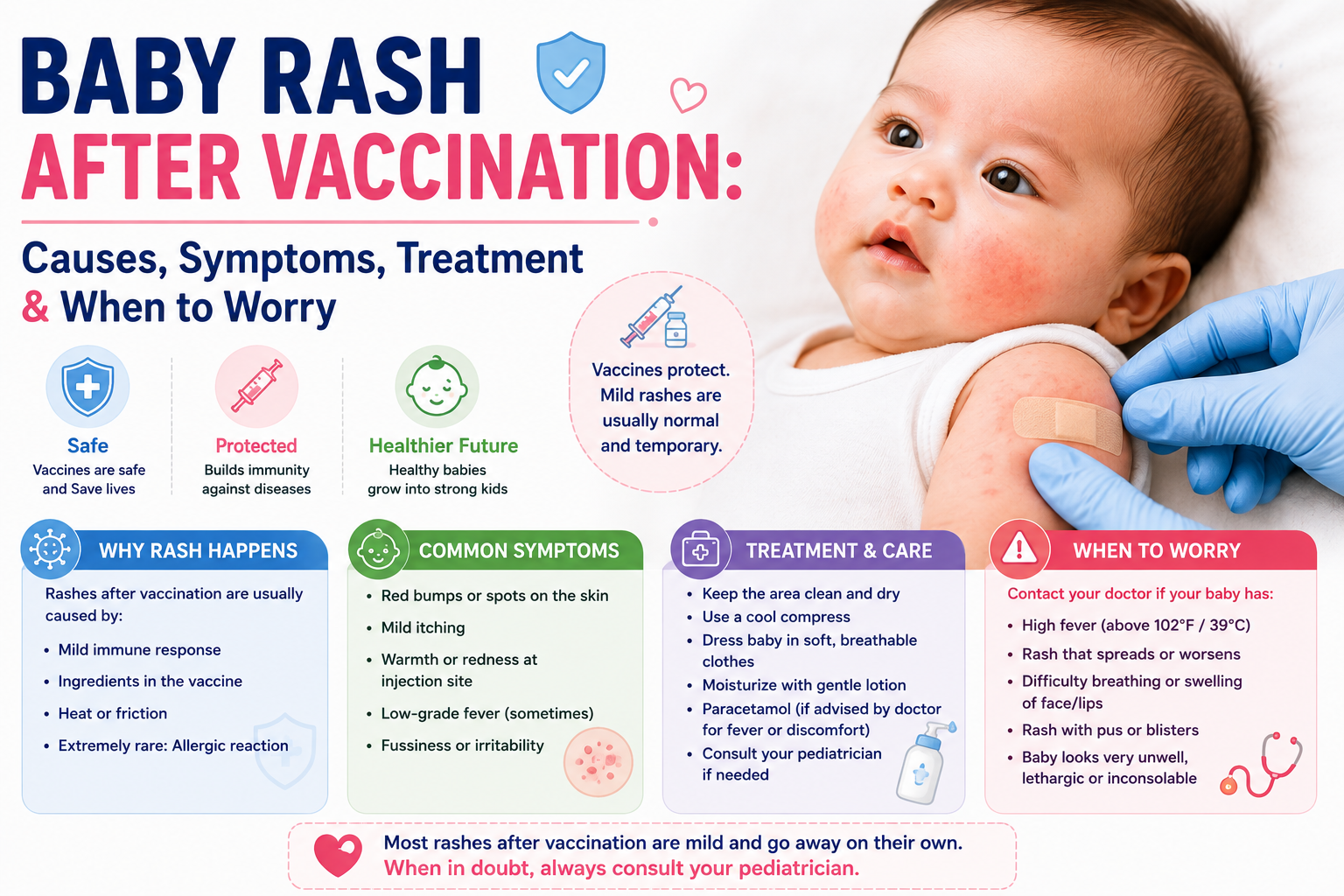
Baby rash after vaccination infographic showing normal vaccine reactions, MMR rash, injection-site redness, home care tips, and emergency warning signs.

Baby Rash After Vaccination: Causes, Symptoms, Treatment & When to Worry

Medical Note: A mild rash after certain vaccines, such as the MMR (Measles, Mumps, and Rubella) or chickenpox (varicella) vaccine, can occur several days after vaccination and is usually harmless. A rash accompanied by difficulty breathing, swelling of the face, or severe lethargy requires immediate medical attention.

Vaccinations are one of the most effective ways to protect babies from serious infectious diseases. While most vaccines are safe and well tolerated, it’s common for some babies to develop mild side effects, including redness, swelling, low-grade fever, or a small rash after vaccination.

Seeing a rash after your baby’s vaccination can understandably worry parents. Fortunately, most post-vaccination rashes are mild, temporary, and resolve on their own without treatment. In many cases, the rash is simply a sign that the immune system is responding to the vaccine and building protection against disease.

According to the Centers for Disease Control and Prevention (CDC), mild side effects such as redness, swelling, fever, and occasional rash can occur after certain childhood vaccinations as the immune system builds protection.

However, in rare situations, a rash may indicate an allergic reaction or another medical condition that requires immediate attention. Understanding what is considered a normal vaccine reaction and knowing the warning signs of a serious reaction can help parents respond appropriately.

This comprehensive guide explains the common causes of a baby rash after vaccination, expected symptoms, treatment options, home care advice, and when to contact your pediatrician or seek emergency care.

If your baby also develops fever, skin allergy, or a rash after fever, explore our related MomSaathi guides for more information.

Quick Answer

Is it normal for a baby to develop a rash after vaccination?

Yes. Some babies develop a mild rash after certain vaccines, particularly MMR and varicella (chickenpox) vaccines. The rash is usually mild, lasts only a few days, and disappears without treatment. Severe allergic reactions are extremely rare but require emergency medical care.

What Is a Baby Rash After Vaccination?

A baby rash after vaccination is a temporary skin reaction that develops after receiving a vaccine.

The rash may appear as:

  • Small red spots
  • Pink patches
  • Mild raised bumps
  • Tiny blister-like spots (rare with varicella vaccine)
  • Local redness around the injection site

The appearance depends on the vaccine received and your baby’s immune response.

Is a Rash After Vaccination Normal?

Yes.

A mild rash can be a normal side effect of some vaccines and generally means the immune system is responding.

The rash usually:

  • Is mild
  • Is not painful
  • Resolves within a few days
  • Does not require special treatment

Not all vaccines commonly cause rashes. Many vaccines cause only mild redness or swelling at the injection site.

Which Vaccines Can Cause a Rash?

1. MMR Vaccine

The Measles, Mumps, and Rubella (MMR) vaccine may cause:

  • Mild fever
  • Pink or red rash
  • Mild swelling of glands

The rash typically appears 7–12 days after vaccination and usually resolves within a few days.

2. Varicella (Chickenpox) Vaccine

Some babies develop:

  • A few small blister-like spots
  • Mild rash
  • Low-grade fever

This reaction is generally mild and temporary.

3. Combination Vaccines

Certain combination vaccines may occasionally cause:

  • Mild redness
  • Small localized rash
  • Injection-site irritation

These reactions usually disappear within a few days.

4. Injection-Site Reaction

Many babies experience:

  • Redness
  • Swelling
  • Warmth
  • Mild tenderness

This is not a true body rash but a common local reaction.

Common Causes of Rash After Vaccination

A rash may develop because of:

  • Normal immune response
  • Mild vaccine-related viral replication (live vaccines such as MMR or varicella)
  • Skin sensitivity
  • Injection-site irritation
  • Rare allergic reactions

Most reactions are mild and self-limiting.

Symptoms That May Occur Along with the Rash

Your baby may also have:

  • Mild fever
  • Fussiness
  • Sleepiness
  • Temporary reduced appetite
  • Mild swelling around the injection site
  • Irritability
  • Soreness where the vaccine was given

Most babies continue feeding and behaving normally.

What Does the Rash Look Like?

The rash may appear as:

  • Small pink spots
  • Tiny red bumps
  • Mild blotchy rash
  • Local redness around the injection site
  • Small blister-like spots after the varicella vaccine

It usually fades without leaving scars.

Rash After Vaccination vs Allergic Reaction

Normal Vaccine Rash Allergic Reaction
Mild red or pink spots Hives (raised, itchy welts)
Appears hours to days later Usually starts within minutes to hours
Baby generally looks well Difficulty breathing or swelling may occur
Improves within a few days Requires emergency treatment
Often no treatment needed Immediate medical attention required

How Long Does a Vaccine Rash Last?

Most mild vaccine-related rashes last:

  • 2–5 days

Some rashes after MMR vaccination may last up to one week before fading completely.
How Is a Rash After Vaccination Diagnosed?

Most vaccine-related rashes can be diagnosed based on:

  • Your baby’s vaccination history
  • The timing of the rash
  • The appearance of the rash
  • Associated symptoms such as fever or fussiness
  • A physical examination

Your pediatrician may ask:

  • Which vaccine was given?
  • When was the vaccine administered?
  • When did the rash appear?
  • Is the rash itchy?
  • Does your baby have a fever?
  • Is your baby feeding normally?
  • Has your baby received any new medicines or foods?

In most cases, no laboratory tests are required. Additional investigations may be recommended if a severe allergic reaction, bacterial infection, or another medical condition is suspected.

Treatment for Baby Rash After Vaccination

Treatment depends on the cause of the rash.

See also  Baby Cellulitis: Causes, Symptoms, Treatment & When to See a Doctor

1. Mild Vaccine Rash

Most mild vaccine-related rashes require no specific treatment.

The rash usually disappears on its own within a few days.

Parents should:

  • Continue normal feeding
  • Monitor the rash
  • Allow the baby to rest
  • Watch for worsening symptoms

2. Fever Management

Some babies develop a mild fever after vaccination.

If your baby appears uncomfortable, your pediatrician may recommend an age-appropriate fever-reducing medicine.

Always follow the recommended dosage and never give medication without appropriate medical advice.

3. Injection-Site Care

If redness or swelling develops where the vaccine was given:

  • Keep the area clean.
  • Dress your baby in loose clothing.
  • Avoid rubbing or massaging the injection site.
  • A cool compress may help reduce discomfort.

4. Allergic Reactions

Mild allergic skin reactions should always be assessed by a healthcare professional.

Severe allergic reactions require immediate emergency medical treatment.

Home Care Tips

Most babies recover quickly after vaccination.

Keep Your Baby Comfortable

Offer:

  • Extra cuddles
  • Quiet activities
  • Plenty of rest

Some babies may sleep more than usual for a day or two.

Continue Feeding

Continue:

  • Breastfeeding
  • Formula feeding
  • Age-appropriate solid foods

Smaller, more frequent feeds may be helpful if your baby has a reduced appetite.

Keep Your Baby Hydrated

Adequate fluids help support recovery.

Offer:

  • Breast milk
  • Formula
  • Water (only if age-appropriate)

Watch for signs of dehydration, such as fewer wet diapers or a dry mouth.

Dress in Lightweight Clothing

If your baby has a mild fever:

  • Dress them comfortably.
  • Avoid excessive layers.
  • Maintain a comfortable room temperature.

Skin Care Tips

If your baby has a mild rash:

  • Bathe with lukewarm water.
  • Use fragrance-free cleansers.
  • Pat the skin dry gently.
  • Avoid harsh soaps or scented lotions.

If the rash becomes itchy or painful, seek medical advice before applying creams or ointments.

Can My Baby Receive Future Vaccines?

Yes.

A mild rash after vaccination does not usually prevent future vaccinations.

However, babies who experience:

  • Severe allergic reactions
  • Anaphylaxis
  • Serious vaccine-related complications

should be evaluated by their pediatrician or an allergy specialist before receiving additional doses.

Never skip scheduled vaccinations without medical advice.

Can a Vaccine Rash Spread?

Some vaccine rashes, especially after the MMR vaccine, may spread from:

  • Face
  • Chest
  • Back
  • Arms
  • Legs

This is usually a normal immune response and resolves without treatment.

Prevention

Although mild vaccine reactions cannot always be prevented, you can reduce discomfort by:

  • Keeping your baby well hydrated before and after vaccination.
  • Dressing them in comfortable clothing.
  • Monitoring them for the first 24–48 hours.
  • Following your pediatrician’s advice regarding fever management.
  • Attending all recommended vaccination appointments.

Vaccination remains one of the safest and most effective ways to protect babies from serious infectious diseases.

Do’s and Don’ts

Do Don’t
Continue normal feeding Panic over a mild rash
Monitor your baby’s temperature Skip future vaccines without medical advice
Watch for allergic reactions Apply medicated creams without consulting a doctor
Keep the injection site clean Scratch or rub the rash
Contact your pediatrician if symptoms worsen Ignore breathing difficulties or facial swelling

When Should You Call a Pediatrician?

Contact your pediatrician if your baby:

  • Has a rash lasting longer than one week.
  • Develops a fever that persists or returns.
  • Has increasing redness or swelling around the injection site.
  • Appears unusually irritable.
  • Refuses feeds repeatedly.
  • Has signs of dehydration.
  • Develops blisters or widespread skin peeling.
  • Has a rash that is rapidly worsening.

Emergency Warning Signs

Seek immediate emergency medical care if your baby develops:

  • Difficulty breathing
  • Wheezing
  • Swelling of the lips, tongue, face, or throat
  • A widespread itchy rash (hives) with breathing difficulty
  • Severe lethargy
  • Repeated vomiting
  • Seizures
  • Pale or bluish skin
  • Loss of consciousness
  • A rash that does not fade when pressed (non-blanching rash)

These symptoms may indicate anaphylaxis or another serious medical emergency and require urgent treatment.

Conclusion

A mild rash after vaccination is usually a normal sign that your baby’s immune system is responding to the vaccine. Most rashes are harmless, temporary, and resolve without treatment within a few days. Along with a mild fever or soreness at the injection site, these reactions are among the most common and expected side effects of certain childhood vaccines.

Parents should continue regular feeding, keep their baby comfortable, and monitor for improvement. However, any rash associated with difficulty breathing, swelling of the face or throat, persistent high fever, seizures, or unusual drowsiness requires immediate medical attention.

Routine childhood vaccinations remain one of the most effective ways to protect babies from serious illnesses. If you have concerns about a reaction after immunization, speak with your pediatrician rather than delaying future vaccinations.

For more guidance, explore our Baby Fever, Baby Rash After Fever, Baby Skin Allergy, Baby Contact Dermatitis, Baby Eczema, and Baby Vaccination Schedule guides on MomSaathi.

Frequently Asked Questions (FAQs)

Is it normal for a baby to get a rash after vaccination?

Yes. Some vaccines, especially the MMR and varicella vaccines, can cause a mild rash that usually disappears on its own.

Which vaccines commonly cause a rash?

The MMR (Measles, Mumps, and Rubella) vaccine and the varicella (chickenpox) vaccine are the most common vaccines associated with a mild rash.

How long does a vaccine rash last?

Most mild vaccine-related rashes last 2–5 days, although an MMR-related rash may occasionally last up to one week.

Is a vaccine rash contagious?

No. A typical vaccine rash is not contagious and does not spread to other children.

Can my baby have a fever and rash after vaccination?

Yes. Mild fever and a temporary rash are recognized side effects of certain vaccines and usually resolve without treatment.

Should I apply cream to the rash?

Usually not. Most mild rashes do not require creams. If the rash is itchy or becomes worse, consult your pediatrician before using any medication.

Should I skip my baby’s next vaccine if a rash appeared?

No. A mild rash is generally not a reason to delay future vaccinations. Always discuss any previous vaccine reactions with your healthcare provider.

When should I worry about a rash after vaccination?

Seek medical advice if the rash lasts longer than a week, becomes severe, is accompanied by persistent fever, poor feeding, or signs of dehydration. Seek emergency care immediately if your baby develops difficulty breathing, swelling of the face or throat, seizures, or a widespread allergic reaction.

Can an allergic reaction happen after vaccination?

Yes, but it is very rare. Severe allergic reactions (anaphylaxis) usually occur within minutes to hours after vaccination and require emergency treatment.

How can I keep my baby comfortable after vaccination?

Offer regular feeds, keep your baby hydrated, dress them in lightweight clothing, allow plenty of rest, and follow your pediatrician’s advice for managing fever or discomfort.

More Reading

Post navigation

Subscribe
Notify of
guest

0 Comments
Oldest
Newest Most Voted
0
Would love your thoughts, please comment.x
()
x