
Home » Baby Care » Baby Food Chart (0–24 Months): Month-by-Month Feeding Guide, Meal Plan & Nutrition Chart
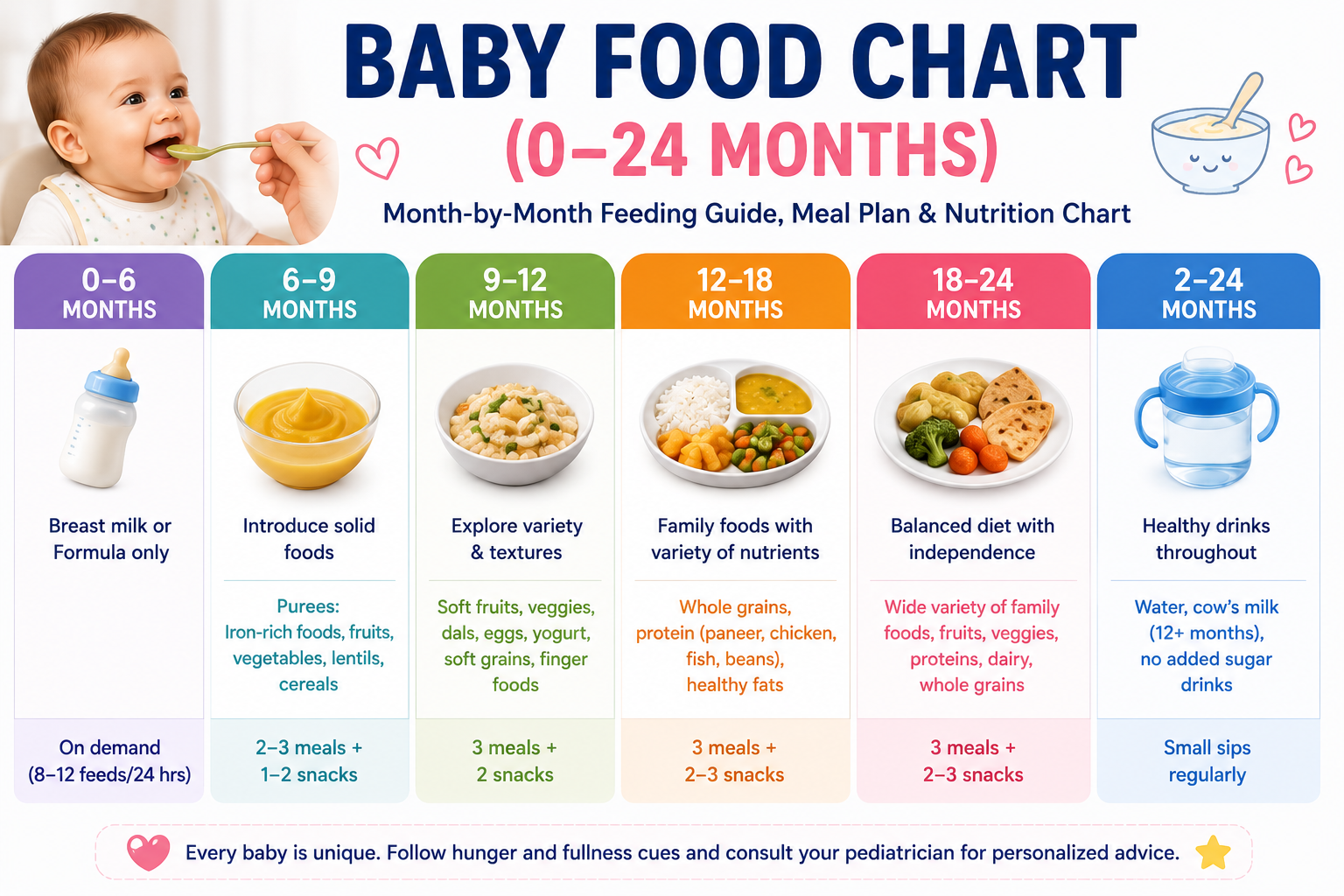
Baby Food Chart (0–24 Months) showing month-by-month feeding schedule, first foods, meal plans, portion sizes, and healthy nutrition for babies and toddlers.

Baby Food Chart (0–24 Months): Month-by-Month Feeding Guide, Meal Plan & Nutrition Chart

Medical Note: Every baby develops at a different pace. Introduce new foods only when your baby shows signs of developmental readiness, and continue breast milk or infant formula as the primary source of nutrition until around 12 months of age.

One of the biggest questions parents ask is, “What should I feed my baby, and when should I introduce new foods?” Every stage of your baby’s growth brings new nutritional needs, making it important to offer the right foods at the right time.

During the first six months, breast milk or infant formula provides all the nutrition most babies need. Around 6 months of age, babies are developmentally ready to begin complementary foods while continuing breast milk or formula. Over the next 18 months, their diet gradually expands from smooth purees to mashed foods, finger foods, family meals, and a balanced toddler diet.

Introducing foods in a gradual, age-appropriate way supports healthy growth, brain development, immune function, and the development of chewing and self-feeding skills. It also helps babies explore different tastes, textures, and nutrients during this important period of development.

According to the World Health Organization (WHO), exclusive breastfeeding is recommended for the first six months of life, followed by the introduction of complementary foods while continuing breastfeeding up to two years or beyond.

This comprehensive guide provides a month-by-month baby food chart from birth to 24 months, including feeding schedules, portion sizes, meal ideas, foods to avoid, nutrition tips, and expert recommendations based on current pediatric guidance.

Whether you’re breastfeeding, formula feeding, or following baby-led weaning, this guide will help you confidently plan your baby’s meals during the first two years. Learn when and how to introduce your baby’s first foods with our comprehensive First Foods for Baby guide.

Quick Answer

What is the best baby food chart from 0 to 24 months?

  • 0–6 months: Exclusive breast milk or infant formula.
  • 6–8 months: Smooth purees, mashed fruits and vegetables, iron-rich foods, and single-ingredient complementary foods.
  • 8–10 months: Thicker textures, soft finger foods, soft fruits, vegetables, eggs, yogurt, and cereals.
  • 10–12 months: Chopped family foods, protein-rich meals, fruits, vegetables, grains, dairy, and self-feeding practice.
  • 12–24 months: Balanced family meals with fruits, vegetables, whole grains, healthy fats, dairy, and protein.

Why Is a Baby Food Chart Important?

A structured baby food chart helps parents:

  • Introduce foods safely
  • Meet nutritional needs
  • Prevent nutrient deficiencies
  • Support healthy growth
  • Encourage healthy eating habits
  • Reduce feeding stress
  • Develop chewing skills
  • Introduce food textures gradually
  • Build confidence with family foods

Baby Feeding Timeline (0–24 Months)
Baby Feeding Timeline (0–24 Months)

Age Primary Nutrition Food Texture
0–6 Months Breast milk or infant formula Liquid
6 Months Breast milk/formula + complementary foods Smooth puree
7 Months Purees + mashed foods Smooth to mashed
8 Months Mashed + soft finger foods Soft lumps
9 Months Finger foods Soft chopped
10–12 Months Family foods Small bite-sized pieces
12–24 Months Balanced family meals Regular textures

Baby Food Chart: Birth to 6 Months

What Should Babies Eat?

From birth until around six months, babies should receive:

  • Breast milk
  • Iron-fortified infant formula (if not breastfed)

No additional foods or drinks are generally needed unless advised by a healthcare professional. Discover a complete Baby Feeding Schedule by Age to understand meal timings and feeding frequency from birth to toddlerhood.

Feeding Frequency

Breastfed Babies

  • Feed on demand
  • Usually 8–12 feeds every 24 hours during early infancy

Formula-Fed Babies

  • Every 3–4 hours
  • Quantity gradually increases with age

Can Babies Drink Water?

No.

Healthy babies under six months generally do not need water because breast milk or formula provides adequate hydration.

The American Academy of Pediatrics (HealthyChildren.org) and WHO recommend exclusive breastfeeding for about the first six months whenever possible.

Foods to Avoid Before 6 Months

Avoid:

  • Solid foods
  • Honey
  • Fruit juice
  • Cow’s milk as the main drink
  • Salt
  • Sugar
  • Herbal drinks

Baby Food Chart: 6 Months

Most babies are ready to begin complementary feeding at around 6 months while continuing breast milk or formula. Unsure how much your baby should eat? Check our Baby Portion Size Guide for age-wise serving recommendations.

Signs Your Baby Is Ready for Solids

Your baby may be ready if they:

  • Can sit with support
  • Have good head and neck control
  • Show interest in food
  • Open their mouth when food approaches
  • Can swallow food instead of pushing it out with the tongue

Best First Foods

Choose iron-rich foods first whenever possible.

Examples include:

Iron-Rich Foods

  • Iron-fortified baby cereal
  • Lentil puree
  • Moong dal puree
  • Mashed beans
  • Soft cooked egg yolk
  • Pureed chicken (if non-vegetarian)

Fruits

  • Banana
  • Apple puree
  • Pear puree
  • Avocado
  • Mango

Vegetables

  • Pumpkin
  • Sweet potato
  • Carrot
  • Potato
  • Bottle gourd
  • Peas

Sample Feeding Schedule (6 Months)

Time Meal
Morning Breast milk/formula
Breakfast Iron-fortified cereal
Mid-Morning Breast milk/formula
Lunch Vegetable puree
Evening Breast milk/formula
Night Breast milk/formula

Portion Size

Begin with:

  • 1–2 teaspoons
  • Gradually increase to 2–4 tablespoons

Follow your baby’s hunger and fullness cues rather than encouraging them to finish every serving. Prepare healthy meals at home with our collection of Homemade Baby Food Recipes suitable for every stage of development.

Baby Food Chart: 7 Months

By seven months, babies are becoming more comfortable with solids and can explore a wider variety of foods.

Foods to Introduce

Continue breast milk or formula while adding:

Fruits

  • Banana
  • Papaya
  • Pear
  • Peach
  • Apple
  • Chikoo (Sapota)

Vegetables

  • Spinach
  • Beetroot
  • Sweet potato
  • Pumpkin
  • Cauliflower
  • Broccoli

Protein

  • Dal
  • Rajma puree
  • Chickpeas
  • Tofu
  • Egg (well cooked)
  • Fish (deboned, where appropriate)

Grains

  • Rice
  • Oats
  • Ragi
  • Wheat porridge
  • Suji (Semolina)

Meal Frequency

  • Breast milk/formula on demand
  • 2–3 solid meals daily
  • Small amounts of water may be offered with meals after solids have started.

Sample Meal Plan

Meal Food
Breakfast Oats porridge
Lunch Moong dal with mashed rice
Snack Mashed banana
Dinner Vegetable puree
Milk Feeds Breast milk/formula

Foods to Avoid

Continue avoiding:

  • Honey
  • Added sugar
  • Salt
  • Whole nuts
  • Popcorn
  • Hard candies
  • Unpasteurized dairy
  • Highly processed foods

Baby Food Chart: 8 Months

By 8 months, babies usually become more confident eaters and begin exploring thicker textures and self-feeding.

Foods to Introduce

Fruits

  • Kiwi
  • Watermelon
  • Muskmelon
  • Orange (small amounts)
  • Blueberries (mashed)
  • Strawberries (well mashed)

Vegetables

  • Green beans
  • Zucchini
  • Okra
  • Corn
  • Cabbage
  • Bell peppers

Protein

  • Paneer
  • Tofu
  • Yogurt (plain, unsweetened)
  • Egg
  • Chicken
  • Fish
  • Lentils

Grains

  • Quinoa
  • Barley
  • Dalia (Broken Wheat)
  • Multigrain cereal

Meal Frequency

  • 2–3 meals
  • 1 snack
  • Breast milk/formula continues

Sample Meal Plan

Meal Food
Breakfast Ragi porridge
Snack Banana
Lunch Rice + Dal + Pumpkin
Evening Yogurt
Dinner Vegetable Khichdi

Baby Food Chart: 9 Months

At 9 months, babies improve their pincer grasp and enjoy finger foods.

Best Finger Foods

  • Soft banana slices
  • Steamed carrot sticks
  • Avocado cubes
  • Soft pear
  • Sweet potato cubes
  • Scrambled egg
  • Cheese cubes
  • Idli pieces
  • Dosa strips
  • Soft chapati soaked in dal

Meal Frequency

  • 3 meals
  • 1–2 snacks
  • Breast milk/formula

Baby Food Chart: 10–12 Months

By their first birthday, babies can usually eat most healthy family foods prepared without excessive salt, sugar, or spicy seasonings.

Foods

  • Rice
  • Chapati
  • Dal
  • Vegetables
  • Fruits
  • Eggs
  • Fish
  • Chicken
  • Paneer
  • Yogurt
  • Cheese
  • Oats
  • Millet
  • Poha
  • Upma
  • Khichdi

Sample Meal Plan

Meal Food
Breakfast Vegetable Upma
Snack Fruit
Lunch Dal Rice + Vegetables
Snack Yogurt
Dinner Soft Chapati + Dal

Baby Food Chart: 12–24 Months

Toddlers should eat a balanced family diet with three meals and two to three healthy snacks each day.

Daily Food Groups

  • Fruits
  • Vegetables
  • Whole grains
  • Protein
  • Dairy
  • Healthy fats

Sample Meal Plan

Meal Food
Breakfast Vegetable Paratha + Curd
Morning Snack Seasonal Fruit
Lunch Rice + Dal + Vegetables
Evening Snack Paneer Cubes
Dinner Chapati + Vegetable Curry + Egg/Paneer

Portion Size Guide

Age Portion Size
6 Months 1–2 teaspoons initially
7–8 Months 2–4 tablespoons
9–11 Months ½ cup per meal
12–24 Months ¾–1 cup per meal

Always let your baby’s appetite guide how much they eat. Avoid forcing them to finish meals.

Water Intake Chart

Age Water Recommendation
0–6 Months No additional water
6–12 Months Small sips with meals
12–24 Months Approximately 1–4 cups (240–960 mL) per day, depending on diet, weather, and activity

Milk Intake Chart

Age Milk Recommendation
0–6 Months Breast milk/formula only
6–12 Months Breast milk/formula remains the primary drink
12–24 Months Whole cow’s milk (if appropriate) along with a balanced diet; breastfeeding may continue as desired

Baby-Led Weaning (BLW) Food Chart

Suitable foods include:

  • Banana strips
  • Avocado slices
  • Steamed broccoli
  • Sweet potato wedges
  • Soft carrot sticks
  • Omelette strips
  • Toast fingers
  • Idli
  • Dosa
  • Paneer sticks
  • Soft chicken strips
  • Fish flakes (boneless)

Always supervise your baby during meals and offer foods that are soft enough to mash easily.

Introducing Common Food Allergens

Current guidance recommends introducing common allergens around 6 months, once your baby has started other complementary foods and is developmentally ready.

Common allergens include:

  • Egg
  • Peanut (smooth peanut butter thinned with water or mixed into foods)
  • Dairy
  • Wheat
  • Soy
  • Fish
  • Sesame

Introduce one new food at a time and watch for reactions such as hives, swelling, vomiting, persistent coughing, wheezing, or difficulty breathing. Seek immediate medical care if a severe allergic reaction is suspected.

Foods to Avoid Before Age 2

Avoid or limit:

  • Honey before 12 months
  • Whole nuts (choking hazard)
  • Popcorn
  • Hard candies
  • Sugary drinks
  • Soft drinks
  • Excess fruit juice
  • Highly processed snacks
  • Foods high in added salt
  • Foods high in added sugar
  • Raw or undercooked eggs, meat, or seafood
  • Unpasteurized dairy products

Essential Nutrients for Babies

Nutrient Food Sources
Iron Lentils, beans, fortified cereals, eggs, meat
Calcium Yogurt, cheese, paneer, milk
Protein Dal, beans, eggs, fish, chicken, tofu
Healthy Fats Avocado, nut butters (age-appropriate), seeds, dairy
Vitamin C Citrus fruits, tomatoes, berries
Vitamin D Fortified foods, supplements if advised by your pediatrician

Feeding Tips

  • Offer a variety of colorful foods.
  • Continue breastfeeding or formula feeding as appropriate.
  • Encourage self-feeding when developmentally ready.
  • Eat together as a family whenever possible.
  • Introduce new textures gradually.
  • Be patient—babies may need multiple exposures before accepting a new food.
  • Let your baby decide how much to eat based on hunger and fullness cues.

Common Feeding Mistakes

Avoid:

  • Starting solids before developmental readiness.
  • Adding salt or sugar to baby foods.
  • Offering choking hazards.
  • Forcing your baby to eat.
  • Depending only on packaged baby foods.
  • Introducing several new foods on the same day.
  • Using food as a reward or punishment.
  • Comparing your baby’s eating habits with other children.

Do’s and Don’ts

Do Don’t
Introduce iron-rich foods early Add salt or sugar
Continue breast milk/formula Replace milk feeds too early
Offer different textures Delay textured foods without reason
Encourage self-feeding Force-feed your baby
Follow hunger cues Compare portion sizes with other babies

When Should You See a Pediatrician?

Consult your pediatrician if your baby:

  • Refuses solids for several weeks after starting complementary foods.
  • Has poor weight gain or growth concerns.
  • Frequently chokes or gags excessively.
  • Shows signs of a food allergy.
  • Has persistent vomiting or diarrhea after eating.
  • Has feeding difficulties related to oral development.
  • Eats an extremely limited range of foods over time.

Conclusion

A well-planned baby food chart helps ensure your child receives the nutrients needed for healthy growth and development during the first two years of life. Start with breast milk or formula, introduce complementary foods around 6 months when your baby is ready, and gradually progress from purees to finger foods and balanced family meals. Focus on iron-rich foods, fruits, vegetables, whole grains, protein, and healthy fats while avoiding added salt, sugar, and choking hazards. Most importantly, follow your baby’s developmental cues, encourage a positive mealtime environment, and remember that every child progresses at their own pace.

Frequently Asked Questions (FAQs)

When should I start solid foods for my baby?

Most babies are ready for complementary foods at around 6 months, while continuing breast milk or formula.

What is the best first food for a baby?

Iron-fortified infant cereal, mashed lentils, avocado, banana, sweet potato, and pumpkin are excellent first foods.

Can I give water to a 6-month-old?

Yes. Once solids are introduced, you can offer small sips of water with meals.

How many meals should a 7-month-old eat?

Most 7-month-olds eat 2–3 small meals daily while continuing breast milk or formula.

How many meals should a 9-month-old eat?

Three meals and one or two healthy snacks are common by this age.

Can babies eat eggs?

Yes. Well-cooked eggs can usually be introduced around 6 months when your baby is ready for complementary foods.

When can babies eat yogurt?

Plain, unsweetened yogurt can generally be introduced from around 6 months.

When can babies drink cow’s milk?

Cow’s milk should not replace breast milk or formula before 12 months, though small amounts in cooking or foods may be appropriate earlier.

Which foods are choking hazards?

Whole grapes, whole nuts, popcorn, hard candies, large chunks of raw vegetables, and similar foods should be avoided or modified appropriately.

Should I follow baby-led weaning or purees?

Both approaches can support healthy development. Many families successfully combine spoon-feeding with safe finger foods, provided they follow age-appropriate safety recommendations.

How much should my toddler eat?

Toddlers’ appetites vary from day to day. Offer balanced meals and snacks, and allow your child to decide how much to eat based on their hunger and fullness cues.

More Reading

Post navigation

Subscribe
Notify of
guest

0 Comments
Oldest
Newest Most Voted
0
Would love your thoughts, please comment.x
()
x