
Medical Note: Contact naps are not harmful when practiced safely. However, sleeping in an adult’s arms or on a couch or recliner carries a risk of accidental suffocation if the caregiver falls asleep. Always transfer your baby to a safe, flat sleep surface if you feel sleepy.
If your baby sleeps peacefully only when held in your arms but wakes up the moment you place them in the crib, you’re experiencing what parents commonly call a contact nap. While these naps can provide comfort and reassurance for babies, they also leave many parents wondering whether they’re creating a long-term sleep habit.
The good news is that contact naps are a normal part of infant development, especially during the newborn months. Babies are biologically wired to seek warmth, touch, and the familiar heartbeat of their caregiver. For many infants, sleeping in a parent’s arms feels safe and secure, making it easier for them to fall asleep and stay asleep.
However, as babies grow older, parents may wish to encourage more independent naps to support longer sleep periods and provide caregivers with time to rest or complete daily tasks.
In this guide, you’ll learn what contact naps are, why babies prefer them, their benefits and drawbacks, when contact naps are appropriate, practical tips for transitioning to crib naps, and when to seek medical advice if your baby’s sleep patterns become concerning.
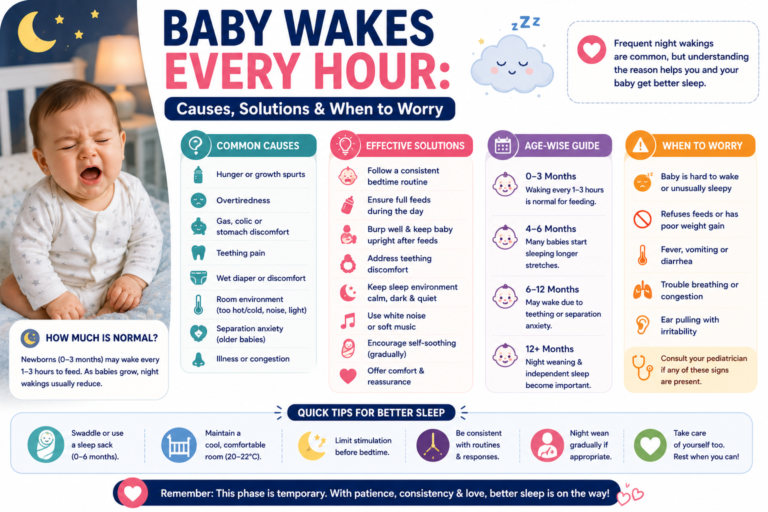
If your baby also wakes frequently at night, explore our Baby Won’t Sleep, Baby Wakes Every Hour, Baby Sleep Regression, and Newborn Sleep Schedule guides on MomSaathi.
Quick Answer
Are contact naps bad for babies?
No. Contact naps are a normal and healthy way for many newborns and young babies to sleep. They can promote bonding, regulate a baby’s heart rate and body temperature, and help some babies sleep longer. The key is to practice safe sleep and gradually encourage independent naps when your baby is developmentally ready.
What Are Contact Naps?
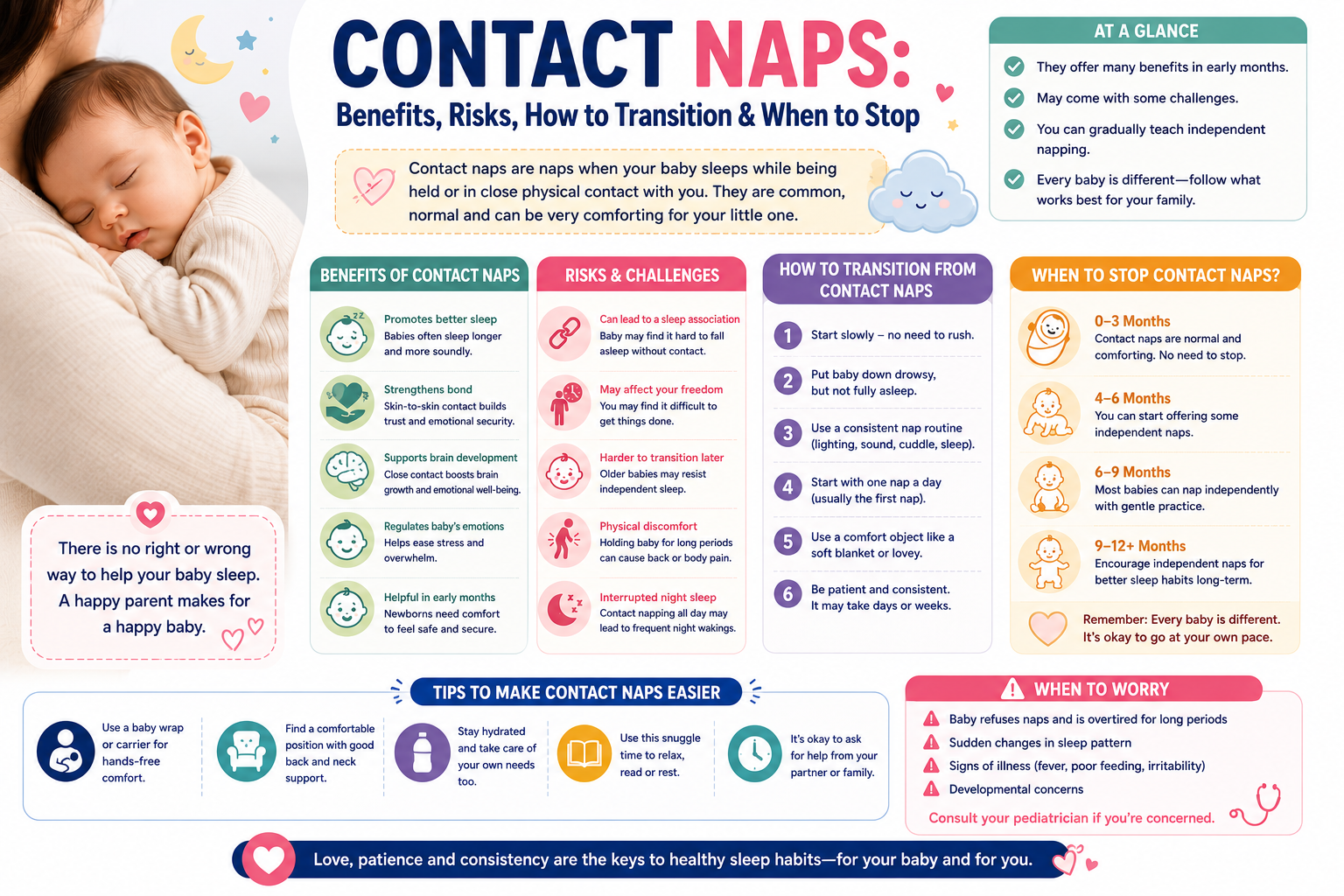
A contact nap is when a baby sleeps while being held or resting against a parent or caregiver instead of sleeping independently in a crib, bassinet, or cot.
Examples include:
- Sleeping in a parent’s arms
- Sleeping on a caregiver’s chest while the caregiver is awake
- Sleeping during babywearing (following safety guidelines)
- Sleeping while breastfeeding or bottle-feeding before being transferred to a crib
Many babies naturally prefer contact naps during the first few months because they feel secure and comforted by close physical contact.
Are Contact Naps Normal?
Yes. Contact naps are especially common during the newborn stage (0–3 months).
Newborns have an immature nervous system and are comforted by:
- A caregiver’s warmth
- Familiar heartbeat
- Gentle movement
- Voice and smell
- Skin-to-skin contact
As babies mature, many naturally become more comfortable sleeping independently.
Why Do Babies Prefer Contact Naps?
Babies seek close contact because it meets both their physical and emotional needs.
Common reasons include:
1. Feeling Safe and Secure
Being close to a caregiver helps babies feel protected, reducing stress and making it easier to fall asleep.
2. Immature Sleep Cycles
Young babies spend more time in light sleep and wake easily. Physical contact often helps them transition between sleep cycles.
3. Warmth and Comfort
A parent’s body heat provides a familiar, calming environment similar to the womb.
4. Separation Anxiety
From around 6–9 months, babies become more aware of their surroundings and may prefer sleeping close to their caregiver.
5. Sleep Regression
During developmental milestones, babies may temporarily seek more comfort and reassurance, leading to an increase in contact naps.
6. Illness or Teething
When babies are unwell or teething, they often seek additional comfort and may only settle while being held.
Benefits of Contact Naps
Contact naps offer several advantages, particularly during early infancy.
Emotional Benefits
- Promotes secure attachment
- Helps babies feel safe
- Reduces stress
- Encourages emotional regulation
Physical Benefits
- May help regulate body temperature
- Supports stable heart rate and breathing
- Can improve breastfeeding success through close contact
Sleep Benefits
- Helps some babies nap longer
- Makes it easier for overtired babies to settle
- Can reduce excessive crying in some infants
Are Contact Naps Bad?
No. Contact naps themselves are not harmful.
However, parents should be aware of two potential challenges:
Sleep Associations
Some babies become accustomed to falling asleep only while being held and may need help transitioning to independent naps later.
Caregiver Fatigue
Holding a sleeping baby for every nap can be physically demanding and may limit time for rest or daily activities.
Neither issue means you’ve done anything wrong—many babies naturally outgrow contact naps with gentle, consistent practice.
Contact Naps by Age
| Baby’s Age | Are Contact Naps Normal? |
|---|---|
| 0–3 Months | ✅ Very common |
| 3–6 Months | ✅ Common |
| 6–9 Months | ✅ Still normal |
| 9–12 Months | ✅ May continue during regressions |
| 12+ Months | ⚠️ Many toddlers can begin transitioning to independent naps, though some still enjoy occasional contact naps |
Contact Naps vs Crib Naps
| Contact Naps | Crib Naps |
|---|---|
| Close physical comfort | Independent sleep |
| Easier for many newborns | Encourages self-settling over time |
| May result in longer naps | Gives caregivers free time |
| Requires caregiver involvement | More flexible daily routine |
| Useful during illness or regressions | Supports long-term sleep habits |
Signs Your Baby Enjoys Contact Naps
Your baby may prefer contact naps if they:
- Fall asleep quickly while being held
- Wake within minutes of being placed in the crib
- Sleep longer in your arms
- Calm immediately with cuddling
- Seek close physical contact during naps
How to Transition from Contact Naps to Crib Naps
If your baby only naps while being held, you don’t have to stop contact naps overnight. Most babies adjust better with gradual changes rather than sudden transitions.
Remember that every baby develops at their own pace. Some babies are ready for independent naps earlier, while others need more time and reassurance.
1. Start with One Crib Nap Each Day
Instead of trying to eliminate all contact naps, begin with just one crib nap daily.
Choose the easiest nap, usually:
- The first morning nap
- A time when your baby isn’t overtired
- After a full feeding
As your baby becomes comfortable, gradually increase crib naps.
2. Watch for Sleep Cues
Putting your baby down before they become overtired makes crib naps more successful.
Early sleep cues include:
- Yawning
- Eye rubbing
- Looking away
- Becoming quieter
- Reduced activity
- Mild fussiness
Avoid waiting until your baby is crying heavily.
3. Create a Consistent Nap Routine
A predictable routine signals that sleep is approaching.
A simple nap routine may include:
- Closing curtains
- Changing the diaper
- Reading a short book
- Singing a lullaby
- Gentle rocking
- White noise
- Placing your baby in the crib while drowsy
Consistency helps babies recognize sleep time.
4. Put Baby Down Drowsy but Awake
Once developmentally appropriate, place your baby in the crib when they are sleepy but still awake.
This allows them to gradually learn how to connect sleep cycles without always needing to be held.
5. Give Your Baby Time to Settle
Some babies fuss briefly before falling asleep.
Pause for a minute or two before immediately picking your baby up.
If crying increases or your baby becomes distressed, comfort them and try again later.
6. Practice Gradual Withdrawal
Instead of stopping contact naps completely:
- Hold until drowsy
- Rock less each day
- Transfer earlier
- Reduce assistance gradually
Small changes often work better than sudden ones.
7. Keep the Sleep Environment Comfortable
Your baby’s room should be:
- Quiet
- Dark
- Cool but comfortable
- Free from distractions
Blackout curtains and white noise may help some babies nap longer.
Can Contact Naps Affect Night Sleep?
Usually, no.
Good daytime naps often improve nighttime sleep because babies are less likely to become overtired.
However, if a baby depends entirely on being held to fall asleep, they may also seek the same support after naturally waking between sleep cycles at night.
When Should You Stop Contact Naps?
There is no specific age when contact naps must end.
Many babies naturally begin preferring crib naps between 6 and 12 months, while others continue enjoying occasional contact naps into toddlerhood.
You may consider gradually reducing contact naps if:
- You are physically exhausted.
- Your baby is ready for independent sleep.
- Contact naps interfere with family routines.
- Your baby sleeps well in the crib once settled.
Occasional contact naps for comfort, illness, travel, or cuddles are completely normal.
Is Babywearing Safe for Contact Naps?
Babies sometimes fall asleep in a properly fitted baby carrier during walks or daily activities.
If using a carrier:
- Ensure your baby’s face is always visible.
- Keep their chin off the chest.
- Make sure the airway remains open.
- Follow the manufacturer’s instructions.
- Frequently check your baby’s position.
If you plan to sleep yourself, always transfer your baby to a safe, flat sleep surface first.
Safe Sleep Guidelines
Whether your baby naps independently or enjoys contact naps, follow safe sleep recommendations.
Always:
- Place your baby on their back for sleep.
- Use a firm, flat mattress in a safety-approved crib or bassinet.
- Keep pillows, blankets, stuffed toys, and loose bedding out of the sleep area.
- Share a room—but not the same bed—for at least the first six months, if possible.
- Avoid sleeping with your baby on a couch, recliner, or armchair.
- If you feel sleepy while holding your baby, move them to their crib or bassinet.
These recommendations are consistent with guidance from the American Academy of Pediatrics (AAP).
Common Mistakes Parents Should Avoid
Avoid:
- Feeling guilty about contact naps
- Trying to stop all contact naps in one day
- Skipping naps to encourage nighttime sleep
- Allowing your baby to sleep on unsafe surfaces
- Becoming inconsistent with bedtime routines
- Comparing your baby’s sleep to other children
Every baby’s sleep journey is different.
Do’s and Don’ts
| Do | Don’t |
|---|---|
| Follow a predictable nap routine | Force independent naps before your baby is ready |
| Watch for sleepy cues | Wait until your baby is overtired |
| Practice gradual transitions | Stop contact naps suddenly |
| Follow safe sleep guidelines | Fall asleep while holding your baby on a sofa or recliner |
| Be patient and consistent | Compare your baby’s progress with others |
When Should You See a Pediatrician?
Speak with your pediatrician if your baby:
- Cannot sleep unless held for every sleep over an extended period
- Snores loudly or has pauses in breathing
- Has poor weight gain
- Refuses feeds
- Appears to be in pain
- Has persistent reflux symptoms
- Is unusually sleepy during the day
- Has ongoing sleep difficulties despite consistent routines
Emergency Warning Signs
Seek immediate medical care if your baby:
- Has difficulty breathing
- Turns blue
- Is difficult to wake
- Has a seizure
- Develops a high fever, especially in young infants
- Stops feeding completely
- Shows signs of dehydration
- Becomes unusually limp or unresponsive
These symptoms require urgent medical evaluation and are not typical of ordinary contact naps.
Conclusion
Contact naps are a normal and comforting part of infancy. For many babies, sleeping in a caregiver’s arms provides warmth, security, and reassurance during the early months of life. These naps can strengthen bonding and help babies settle more easily, especially during growth spurts, sleep regressions, illness, or teething.
As your baby grows, you can gradually introduce independent crib naps through consistent routines, age-appropriate sleep schedules, and gentle transitions. There is no “perfect” age to stop contact naps, and occasional cuddly naps remain a wonderful way to connect with your child.
If your baby’s sleep difficulties are persistent, accompanied by breathing problems, poor growth, feeding issues, or other concerning symptoms, consult your pediatrician for personalized advice.
For more sleep support, explore our Baby Won’t Sleep, Baby Wakes Every Hour, Baby Sleep Regression, Newborn Sleep Schedule, and Safe Sleep for Babies guides on MomSaathi.
Frequently Asked Questions (FAQs)
Are contact naps bad for babies?
No. Contact naps are a normal part of infant development and can provide comfort, emotional security, and better sleep for many babies, especially during the newborn stage.
Can contact naps create bad sleep habits?
Not necessarily. While some babies may develop a preference for falling asleep while being held, many naturally transition to independent naps with gentle, consistent practice as they mature.
When should I stop contact naps?
There is no fixed age. Many babies begin taking independent naps between 6 and 12 months, but occasional contact naps remain normal beyond infancy.
Why does my baby only nap when being held?
Babies often prefer being held because it provides warmth, familiar sounds, movement, and a sense of security, all of which help them relax and fall asleep.
Do contact naps affect nighttime sleep?
Usually not. In fact, well-rested babies often sleep better at night. However, babies who always fall asleep while being held may sometimes expect the same support during night wakings.
Can I wear my baby during contact naps?
Yes, provided the baby carrier is used correctly and your baby’s airway remains clear. Always follow the manufacturer’s instructions and safe babywearing guidelines.
Is it safe to sleep while my baby is napping on my chest?
No. If you feel sleepy, place your baby on a firm, flat sleep surface. Falling asleep while holding your baby on a couch, recliner, or bed increases the risk of accidental suffocation.
How can I transition from contact naps to crib naps?
Start with one crib nap each day, establish a calming nap routine, watch for sleep cues, and gradually reduce the amount of rocking or holding before placing your baby in the crib.
Are contact naps common during sleep regression?
Yes. During sleep regressions, babies often seek additional comfort and reassurance, making contact naps more common for a temporary period.
When should I worry about contact naps?
Consult your pediatrician if your baby has persistent sleep problems, poor feeding, poor weight gain, breathing difficulties, or if sleep concerns significantly affect your baby’s health or development.