
Medical Note: Every baby has unique sleep needs. Some babies naturally wake more often than others, especially during the first year. Frequent night waking does not always indicate a problem.
Few parenting challenges are as exhausting as a baby who wakes every hour throughout the night. Whether your newborn wakes constantly to feed, your 4-month-old suddenly starts waking every hour, or your 10-month-old refuses to sleep for more than an hour at a time, frequent night waking can leave the entire family sleep-deprived.
The reassuring news is that hourly waking is often a normal part of infant development. Babies have much shorter sleep cycles than adults and spend more time in lighter stages of sleep. Hunger, growth spurts, sleep regression, teething, illness, separation anxiety, and environmental factors can all contribute to frequent waking.
Understanding why your baby wakes every hour can help you respond appropriately while building healthy sleep habits. Most babies gradually learn to connect sleep cycles and sleep for longer stretches as they grow.
This guide explains the most common reasons babies wake every hour, age-specific sleep expectations, effective ways to improve sleep, and signs that indicate it’s time to consult your pediatrician.
If your baby struggles to fall asleep in addition to waking frequently, also read our Baby Won’t Sleep, Baby Sleep Regression, and Newborn Sleep Schedule guides on MomSaathi.
Quick Answer
Is it normal for a baby to wake every hour?
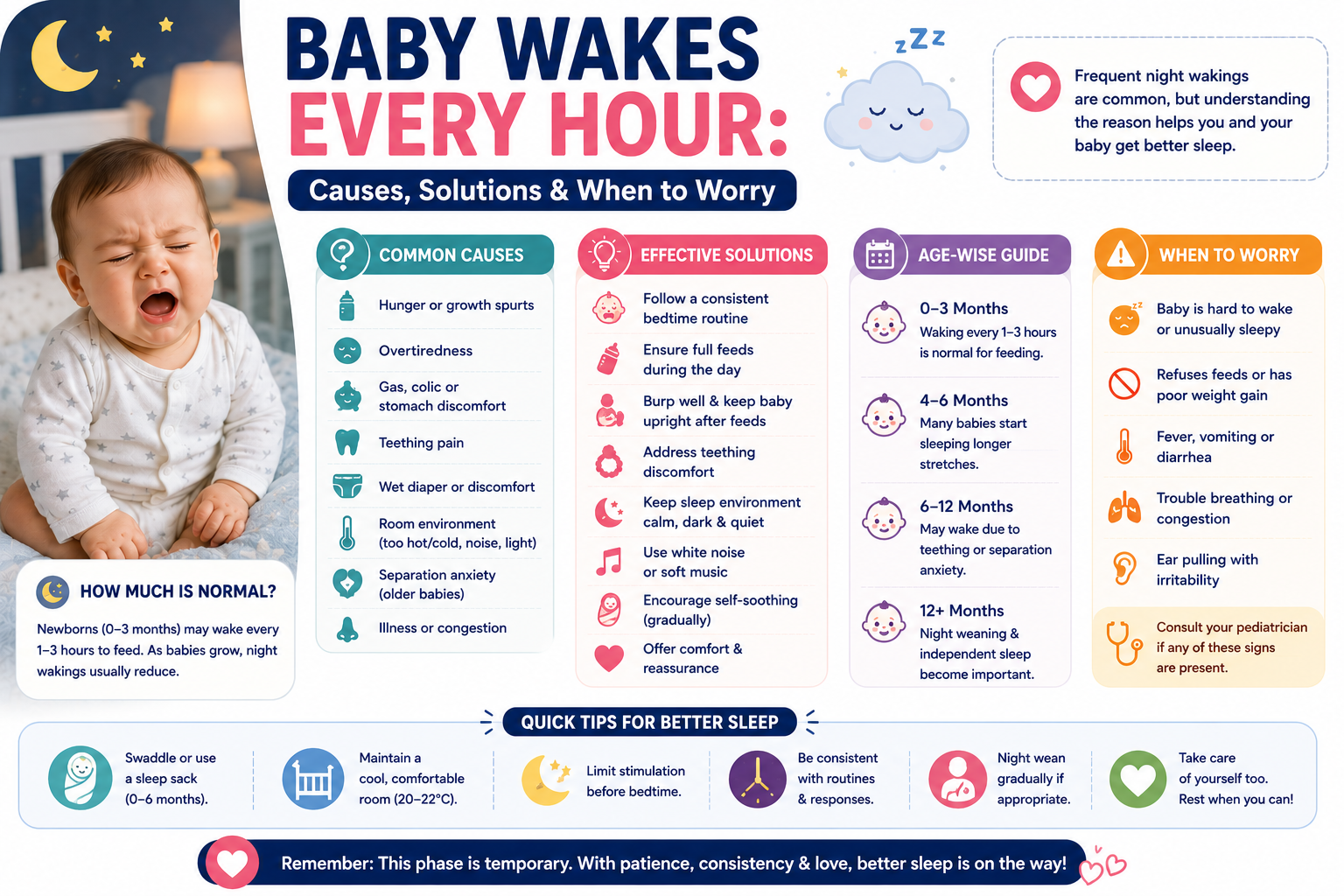
Yes, it can be. During the newborn stage and periods of rapid development, babies commonly wake every 1–3 hours. However, if hourly waking continues for several weeks, is accompanied by poor feeding, breathing problems, fever, poor weight gain, or unusual lethargy, consult your pediatrician.
What Does “Baby Wakes Every Hour” Mean?
A baby who wakes every hour typically:
- Sleeps for only 45–60 minutes before waking
- Cries or fusses after each sleep cycle
- Needs feeding, rocking, or cuddling to return to sleep
- Wakes repeatedly throughout the night
- Sometimes wakes shortly after being placed in the crib
Some babies wake every hour only during sleep regressions, while others may do so because of hunger, discomfort, or illness.
Is It Normal for Babies to Wake Frequently?
Yes.
Unlike adults, babies have shorter sleep cycles that last around 40–60 minutes. Between cycles, they often wake briefly.
Many babies naturally settle back to sleep, while others need parental comfort.
Night waking is particularly common during:
- The newborn period
- Growth spurts
- Sleep regressions
- Teething
- Illness
- Major developmental milestones
How Often Should Babies Wake at Night?
| Baby’s Age | Typical Night Waking |
|---|---|
| Newborn (0–3 Months) | Every 2–3 hours |
| 3–4 Months | Every 3–5 hours (varies) |
| 4–6 Months | Longer stretches possible, though some still wake for feeds |
| 6–12 Months | 0–2 night feeds for many babies, though individual patterns vary |
| 12+ Months | Many toddlers sleep longer, but some continue to wake occasionally |
Every baby’s sleep pattern is different.
Common Causes of Hourly Night Waking
1. Hunger
The most common reason young babies wake is hunger.
Newborn stomachs are very small, so they require frequent feeding throughout the day and night.
Signs of hunger include:
- Rooting
- Lip smacking
- Sucking on hands
- Restlessness
- Crying
2. Immature Sleep Cycles
Babies naturally spend more time in light sleep.
As they transition between sleep cycles, they may briefly wake and require reassurance before returning to sleep.
This gradually improves as the nervous system matures.
3. Sleep Regression
Sleep regression commonly occurs around:
- 4 months
- 6 months
- 8–10 months
- 12 months
- 18 months
During these stages, babies are learning exciting new skills, including rolling, crawling, standing, walking, and talking, which may temporarily interrupt sleep.
4. Growth Spurts
Growth spurts increase nutritional needs.
Your baby may:
- Wake more often
- Feed more frequently
- Cluster feed
- Become fussier than usual
These phases are usually temporary.
5. Teething
Teething discomfort can disturb sleep.
Signs include:
- Excessive drooling
- Chewing on toys
- Swollen gums
- Fussiness
- Mild irritability
6. Gas or Reflux
Some babies wake because they are uncomfortable after feeding.
Possible signs include:
- Arching the back
- Pulling knees toward the tummy
- Frequent spit-up
- Crying after feeds
- Difficulty settling
7. Overtiredness
An overtired baby often sleeps poorly.
When babies stay awake beyond their recommended wake window, stress hormones increase, making it harder for them to remain asleep.
8. Separation Anxiety
Between 8 and 18 months, babies become more aware of their caregivers.
They may wake frequently looking for reassurance and struggle to settle without parental comfort.
9. Illness
Temporary illnesses can interrupt sleep, including:
- Common cold
- Ear infection
- Fever
- Cough
- Nasal congestion
- Viral infections
Sleep usually improves as your baby recovers.
10. Environmental Disturbances
Your baby may wake because of:
- Bright lights
- Loud noises
- Room temperature that’s too hot or cold
- Wet diapers
- Uncomfortable clothing
- Travel or unfamiliar surroundings
Signs That Frequent Waking Is Related to Sleep Regression
Your baby may be experiencing a sleep regression if they:
- Suddenly wake every hour after previously sleeping well
- Resist naps
- Cry more at bedtime
- Wake earlier than usual
- Practice new developmental skills in the crib
- Need more comfort during the night
Sleep regressions are temporary and often improve within 2–6 weeks.
Signs Your Baby May Be Hungry Rather Than Just Awake
Look for hunger cues such as:
- Rooting
- Turning toward the breast or bottle
- Hand sucking
- Lip smacking
- Increased alertness
- Fussiness that settles after feeding
If your baby simply stirs briefly and goes back to sleep, they may not need a feed.
Can Frequent Waking Affect Development?
Occasional periods of hourly waking are unlikely to affect healthy development.
However, prolonged sleep disruption may impact:
- Mood
- Feeding
- Learning
- Parent well-being
- Family routines
If frequent waking continues for several weeks without improvement, speak with your pediatrician to rule out underlying medical or sleep concerns.
How to Help a Baby Who Wakes Every Hour
Although waking during the night is normal for babies, frequent hourly waking can often be improved by identifying the underlying cause and establishing healthy sleep habits.
1. Follow an Age-Appropriate Bedtime Routine
A predictable bedtime routine helps your baby’s brain recognize that it’s time to sleep.
A calming routine may include:
- Warm bath
- Gentle baby massage
- Fresh diaper
- Feeding
- Reading a short bedtime story
- Singing a lullaby
- Dim lighting
- Quiet cuddles
Aim to start the routine at the same time each evening.
2. Ensure Your Baby Is Feeding Well During the Day
Some babies wake frequently because they are genuinely hungry.
Make sure your baby is:
- Breastfeeding effectively
- Taking enough formula (if formula-fed)
- Eating balanced solid meals (after 6 months)
Speak with your pediatrician if you are concerned about feeding or weight gain.
3. Watch Wake Windows
Keeping babies awake too long often causes overtiredness, making it harder to stay asleep.
| Age | Recommended Wake Window |
|---|---|
| Newborn | 45–60 minutes |
| 2–3 Months | 60–90 minutes |
| 4–6 Months | 1.5–2.5 hours |
| 6–12 Months | 2–4 hours |
| 12–24 Months | 4–6 hours |
4. Create a Comfortable Sleep Environment
Your baby’s room should be:
- Quiet
- Dark
- Comfortably cool
- Safe
- Free from distractions
Some babies settle better with white noise, especially if household sounds disturb sleep.
5. Put Your Baby Down Drowsy but Awake
Once developmentally appropriate, placing your baby in the crib while drowsy—but not fully asleep—may help them learn to settle independently between sleep cycles.
6. Burp After Every Feeding
Gas discomfort is a common reason babies wake shortly after falling asleep.
Burp your baby:
- During feeds
- After feeding
- Before bedtime
7. Address Teething Comfortably
If teething is contributing to frequent waking:
- Offer a chilled teething ring
- Gently massage the gums with a clean finger
- Discuss pain relief options with your pediatrician if discomfort is significant
8. Manage Sleep Regression with Patience
Around 4 months, 6 months, 8–10 months, 12 months, and 18 months, babies often wake more because they are learning new skills.
Avoid making major changes to your bedtime routine during these phases. Most regressions improve within a few weeks.
9. Encourage Daytime Activity
Age-appropriate play can help babies sleep better at night.
Examples include:
- Tummy time
- Crawling practice
- Outdoor walks
- Reading books
- Interactive play
- Singing songs
10. Be Consistent
Changing routines every night can confuse babies.
Instead:
- Keep bedtime consistent
- Follow similar nap schedules
- Respond calmly to night wakings
- Give new routines time to work
Common Reasons by Baby’s Age
| Age | Most Common Reason for Hourly Waking |
|---|---|
| Newborn | Hunger |
| 2–3 Months | Feeding, immature sleep cycles |
| 4 Months | Sleep regression |
| 6 Months | Growth spurts, sleep regression |
| 8–10 Months | Separation anxiety, crawling |
| 12 Months | Walking, nap transitions |
| 18 Months | Separation anxiety, language development |
Breastfed Baby Wakes Every 2 Hours at Night
Frequent waking is often normal for breastfed babies, especially during the first few months.
Reasons include:
- Breast milk digests quickly
- Growth spurts
- Cluster feeding
- Comfort nursing
- Sleep regression
If your baby is gaining weight well and producing enough wet diapers, waking every 2–3 hours in early infancy is usually expected.
Formula-Fed Baby Wakes Every Hour
Hourly waking in a formula-fed baby is less likely to be due to hunger alone.
Other possible causes include:
- Sleep regression
- Illness
- Teething
- Gas
- Overtiredness
- Environmental disturbances
Persistent sleep problems should be discussed with your pediatrician.
Baby Wakes Every Hour but Isn’t Hungry
Not every waking means your baby needs food.
Your baby may wake because of:
- Transitioning between sleep cycles
- Needing comfort
- Teething discomfort
- Developmental milestones
- Noise
- Room temperature
- Habitual waking
Pause briefly to observe before assuming hunger.
Common Mistakes Parents Should Avoid
Avoid:
- Keeping your baby awake too long
- Frequently changing bedtime
- Skipping naps
- Using screens before bedtime
- Feeding every waking without checking other cues
- Overstimulating your baby before sleep
Consistency is usually more effective than frequent changes.
Can Frequent Night Waking Be Prevented?
Some night waking is a normal part of infancy and cannot always be prevented.
Healthy sleep habits may help reduce unnecessary waking:
- Follow a bedtime routine
- Maintain regular naps
- Encourage full daytime feeds
- Create a calm sleep environment
- Follow safe sleep guidelines
- Respond consistently to sleep cues
When Should You See a Pediatrician?
Arrange a medical evaluation if your baby:
- Wakes every hour for several weeks despite healthy sleep habits
- Snores loudly or has pauses in breathing
- Has poor weight gain
- Refuses feeds
- Vomits frequently
- Appears to be in pain
- Has persistent fever
- Seems unusually sleepy during the day
Emergency Warning Signs
Seek immediate medical care if your baby:
- Has difficulty breathing
- Turns blue while sleeping
- Is difficult to wake
- Has a seizure
- Has repeated vomiting
- Stops feeding completely
- Shows signs of dehydration
- Develops a high fever, especially if under 3 months of age
These symptoms are not typical of ordinary night waking and require urgent medical attention.
Conclusion
If your baby wakes every hour, remember that frequent night waking is common during infancy and is often linked to normal development, hunger, sleep regression, teething, or temporary changes in routine. Most babies gradually begin sleeping for longer stretches as they grow and their sleep cycles mature.
Supporting your baby with a consistent bedtime routine, age-appropriate naps, a calm sleep environment, and responsive care can make this phase easier. However, if hourly waking continues for several weeks, affects feeding or growth, or is accompanied by concerning symptoms such as breathing problems or persistent illness, consult your pediatrician.
For more sleep guidance, explore our Baby Won’t Sleep, Baby Sleep Regression, Newborn Sleep Schedule, Baby Wake Windows by Age, and Baby Bedtime Routine articles on MomSaathi.
Frequently Asked Questions (FAQs)
Is it normal if my baby wakes every hour?
Yes. Hourly waking can be normal during growth spurts, sleep regressions, illness, or the newborn period. However, persistent waking accompanied by poor feeding, poor growth, or breathing problems should be assessed by a healthcare professional.
Why does my baby wake every hour at night?
Common causes include hunger, immature sleep cycles, sleep regression, teething, illness, gas, overtiredness, separation anxiety, or environmental disturbances.
Does sleep regression cause hourly waking?
Yes. Sleep regression, especially around 4 months, 8–10 months, and 12 months, can temporarily increase the number of night wakings.
Why does my breastfed baby wake every 2 hours?
Breast milk is digested quickly, so young breastfed babies often feed every 2–3 hours. Frequent waking may also occur during growth spurts or sleep regressions.
Can teething make my baby wake every hour?
Yes. Gum discomfort from teething can disturb sleep, although not every baby experiences significant sleep disruption.
Should I feed my baby every time they wake?
Not always. Check for hunger cues first. Some babies wake briefly between sleep cycles and may settle without feeding.
Can an overtired baby wake more often?
Yes. Staying awake beyond age-appropriate wake windows can make it harder for babies to stay asleep and may lead to more frequent night waking.
When do babies start sleeping for longer stretches?
Many babies begin sleeping for longer periods between 4 and 6 months, but every child develops differently. Some continue to wake at night beyond the first year.
Is white noise safe for babies?
White noise can be used if it is kept at a safe volume and placed away from the crib. It should not be excessively loud or played directly next to the baby’s ears.
When should I worry if my baby wakes every hour?
Seek medical advice if hourly waking continues for several weeks despite good sleep habits, or if it is associated with poor feeding, poor growth, breathing difficulties, fever, repeated vomiting, or unusual lethargy.