
Medical Note: Every baby has unique sleep needs. Occasional sleepless nights are a normal part of infancy, especially during developmental milestones. Patience, consistency, and healthy sleep habits usually help babies establish better sleep over time.
One of the biggest challenges new parents face is a baby who simply won’t sleep. Whether your newborn refuses to settle, your infant wakes every hour, or your toddler suddenly resists bedtime, sleep difficulties can leave the whole family feeling exhausted.
The good news is that sleep problems are extremely common during infancy. Babies wake frequently because their brains, bodies, and sleep cycles are still developing. Hunger, growth spurts, sleep regression, teething, illness, overstimulation, or changes in routine can all affect your baby’s ability to sleep.
Understanding why your baby won’t sleep is the first step toward helping them rest better. Most sleep issues are temporary and improve with consistent routines, age-appropriate sleep schedules, and a calm sleep environment.
In this comprehensive guide, you’ll learn the common causes of sleep difficulties in babies, age-wise sleep requirements, practical bedtime tips, safe sleep recommendations, and signs that indicate it’s time to consult a pediatrician.
If you’re also concerned about frequent night waking or changing sleep patterns, explore our Baby Sleep Regression, Newborn Sleep Schedule, and Baby Growth Spurts guides on MomSaathi for more expert parenting advice
What Does “Baby Won’t Sleep” Mean?
A baby who won’t sleep may:
- Take a long time to fall asleep
- Wake repeatedly during the night
- Resist naps
- Sleep only when being held
- Wake shortly after being put down
- Cry whenever placed in the crib
- Wake much earlier than expected
- Sleep for very short periods
These sleep challenges may be temporary or related to your baby’s developmental stage.
Is It Normal for Babies Not to Sleep Well?
Yes. Most babies experience periods of disrupted sleep during their first two years.
Sleep patterns vary based on:
- Age
- Feeding method
- Growth spurts
- Developmental milestones
- Temperament
- Health
- Daily routine
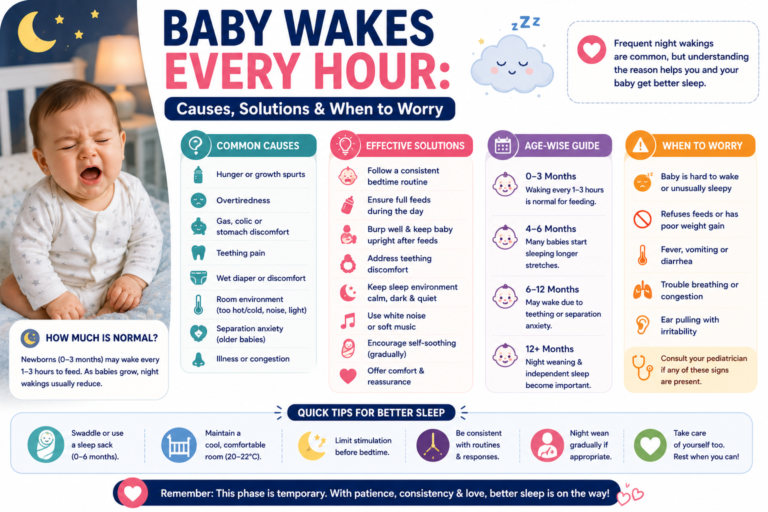
Newborns naturally wake every few hours to feed because their stomachs are small and they require frequent nutrition.
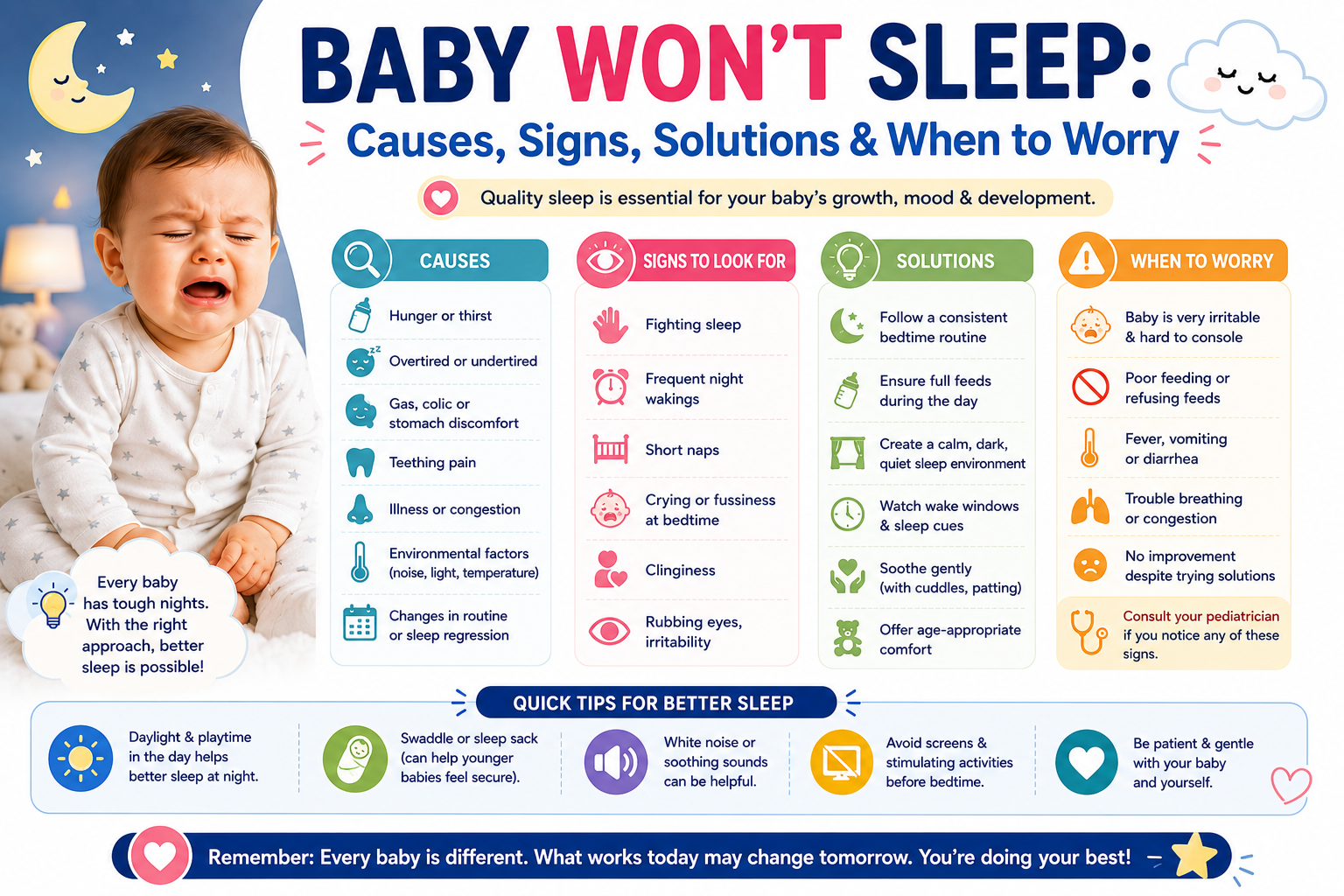
Common Reasons Why Your Baby Won’t Sleep
1. Hunger
Hunger is one of the most common reasons babies wake frequently.
Newborns usually feed every 2–3 hours, while older babies gradually begin sleeping for longer stretches.
Signs of hunger include:
- Rooting
- Sucking on hands
- Lip smacking
- Fussiness
- Crying
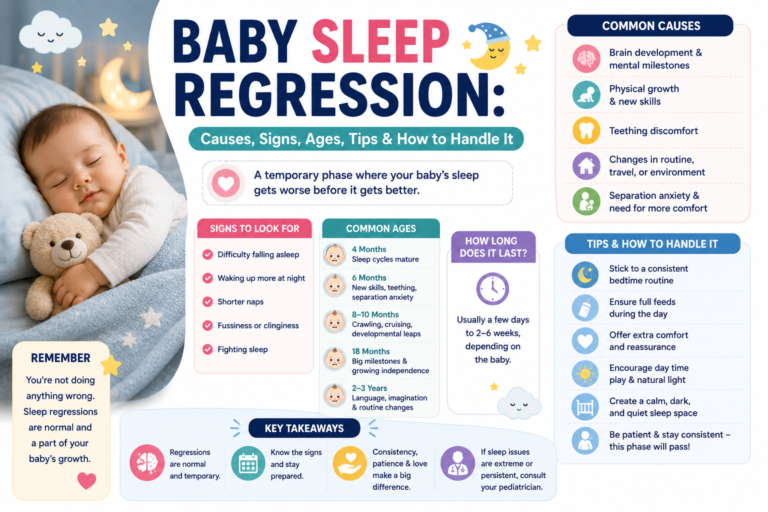
2. Sleep Regression
Babies commonly experience temporary sleep disruptions around:
- 4 months
- 6 months
- 8–10 months
- 12 months
- 18 months
- 2 years
During these stages, developmental milestones such as rolling over, crawling, standing, walking, or talking can temporarily affect sleep.
3. Overtiredness
Surprisingly, babies who stay awake too long often have a harder time falling asleep.
Signs of an overtired baby include:
- Crying
- Arching the back
- Rubbing eyes
- Increased fussiness
- Difficulty settling
Watching your baby’s sleep cues and following age-appropriate wake windows can help prevent overtiredness.
4. Under-Tiredness
If your baby has had too much daytime sleep or insufficient activity, they may not be sleepy at bedtime.
Balancing naps with age-appropriate awake time supports better nighttime sleep.
5. Teething
Teething discomfort can temporarily interfere with sleep.
Symptoms may include:
- Drooling
- Chewing on objects
- Swollen gums
- Irritability
- Mild discomfort
6. Gas or Colic
Some babies struggle to sleep because of trapped gas or colic, especially during the first few months.
They may:
- Pull their legs toward the tummy
- Cry intensely in the evening
- Arch their back
- Pass gas frequently
7. Illness
Sleep may be disrupted by:
- Colds
- Ear infections
- Fever
- Cough
- Nasal congestion
- Reflux
If illness is suspected, consult your pediatrician.
8. Separation Anxiety
Around 8–18 months, babies become more aware of their caregivers and may resist sleeping alone.
Common signs include:
- Crying when parents leave
- Wanting extra cuddles
- Frequent night waking
- Bedtime resistance
9. Environmental Factors
Babies may struggle to sleep because of:
- Bright lights
- Loud noises
- Room temperature that’s too hot or too cold
- Uncomfortable clothing
- Travel
- New surroundings
10. Changes in Routine
A change in daily routine, daycare, travel, visitors, or moving house can temporarily affect sleep.
Maintaining familiar bedtime habits often helps babies adjust more quickly.
Signs Your Baby Is Sleepy
Recognizing early sleep cues can make bedtime easier.
Common signs include:
- Yawning
- Eye rubbing
- Looking away
- Reduced activity
- Fussiness
- Pulling ears
- Quiet staring
- Seeking comfort
Putting your baby to bed before they become overtired often leads to smoother sleep.
How Much Sleep Does a Baby Need?
| Age | Recommended Total Sleep (24 Hours) |
|---|---|
| Newborn (0–3 Months) | 14–17 hours |
| 4–6 Months | 12–16 hours |
| 6–12 Months | 12–15 hours |
| 1–2 Years | 11–14 hours |
Sleep needs vary slightly from one child to another.
How to Help a Baby Who Won’t Sleep
Helping a baby sleep better often involves identifying the underlying cause and building healthy sleep habits. Every baby is different, so it may take time to discover what works best for your child.
1. Establish a Consistent Bedtime Routine
Babies thrive on routine. Repeating the same calming activities every night helps them recognize that it’s time for sleep.
A simple bedtime routine may include:
- A warm bath
- Gentle baby massage
- Changing into pajamas
- Feeding your baby
- Reading a short bedtime story
- Singing a lullaby
- Dimming the lights
- Gentle cuddles before placing your baby in the crib
Aim to start the routine at the same time every evening.
2. Follow Age-Appropriate Wake Windows
Keeping your baby awake for too long can make it harder for them to fall asleep.
Typical Wake Windows
| Age | Wake Window |
|---|---|
| Newborn | 45–60 minutes |
| 2–3 Months | 60–90 minutes |
| 4–6 Months | 1.5–2.5 hours |
| 6–12 Months | 2–4 hours |
| 12–24 Months | 4–6 hours |
These are general guidelines, and individual babies may vary.
3. Watch for Sleep Cues
Instead of waiting until your baby is crying, look for early signs of tiredness:
- Rubbing eyes
- Yawning
- Looking away
- Becoming quieter
- Fussiness
- Clinginess
Putting your baby down while they’re drowsy—but still awake—can help them learn to fall asleep independently over time.
4. Create a Calm Sleep Environment
A sleep-friendly room can make a big difference.
Try to keep the room:
- Quiet
- Dark or dimly lit
- Comfortably cool
- Free from distractions
- Safe and uncluttered
Some babies are soothed by white noise, which can help mask household sounds.
5. Feed Your Baby if Hungry
Young babies often wake because they need to eat.
Continue:
- Breastfeeding on demand
- Formula feeding as recommended
- Age-appropriate solid meals for older infants
Avoid overfeeding solely to encourage longer sleep, as this is unlikely to solve sleep issues.
6. Burp Your Baby Well
Gas trapped after feeding may make babies uncomfortable.
Burp your baby:
- During feeds
- After each feeding
- Before laying them down to sleep
This may reduce discomfort and help some babies sleep more peacefully.
7. Swaddle Safely (For Young Infants Only)
Swaddling may help calm newborns who have not yet started rolling over.
Stop swaddling as soon as your baby shows signs of rolling.
Always place swaddled babies on their backs to sleep.
8. Offer a Pacifier (If Appropriate)
Some babies are soothed by sucking.
If breastfeeding is well established, offering a pacifier during sleep may help comfort some infants.
Never force a baby to use a pacifier if they refuse it.
9. Encourage Active Play During the Day
Age-appropriate play supports healthy development and may improve nighttime sleep.
Examples include:
- Tummy time
- Singing
- Reading books
- Floor play
- Crawling practice
- Outdoor walks
10. Keep Daytime and Nighttime Different
Help your baby learn the difference between day and night.
During the day:
- Open curtains
- Talk and play
- Spend time outdoors when possible
At night:
- Keep lights dim
- Speak softly
- Minimize stimulation
- Return your baby to sleep calmly after feeding
11. Avoid Overtiredness
An overtired baby often finds it harder—not easier—to fall asleep.
Try to follow regular naps and bedtime rather than keeping your baby awake in hopes they’ll sleep longer at night.
12. Be Patient During Sleep Regression
Developmental milestones can temporarily disrupt sleep.
During these periods:
- Maintain routines
- Offer comfort
- Keep bedtime predictable
- Avoid introducing multiple changes at once
Most regressions improve within a few weeks.
Should You Sleep Train?
Sleep training is a personal family decision.
Some parents choose gentle sleep-learning approaches after discussing them with their pediatrician, while others prefer responsive settling methods.
There is no single “best” method. Choose an approach that matches your family’s values, your baby’s age, and their developmental needs.
Avoid beginning sleep training when your baby is ill or going through a major developmental transition.
Safe Sleep Recommendations
Following safe sleep practices reduces the risk of sleep-related accidents.
Always:
- Place your baby on their back to sleep.
- Use a firm, flat mattress in a safety-approved crib or bassinet.
- Keep pillows, blankets, stuffed toys, and loose bedding out of the sleep space.
- Share a room—but not the same bed—for at least the first six months, if possible.
- Dress your baby appropriately to avoid overheating.
- Keep the sleep area smoke-free.
These recommendations align with guidance from the American Academy of Pediatrics (AAP).
Common Mistakes Parents Should Avoid
When your baby won’t sleep, avoid:
- Putting your baby to bed overtired
- Frequently changing bedtime
- Skipping naps completely
- Introducing multiple new sleep habits at once
- Using screens before bedtime
- Feeding every time your baby stirs without checking other cues
- Creating stimulating bedtime activities
Consistency usually works better than frequent changes.
Can Sleep Problems Be Prevented?
Not all sleep challenges can be prevented, especially during developmental milestones.
However, healthy sleep habits can reduce their frequency:
- Follow a predictable bedtime routine.
- Encourage daytime activity.
- Feed your baby adequately during the day.
- Maintain age-appropriate nap schedules.
- Respond consistently to sleep cues.
- Create a calm sleeping environment.
When Should You See a Pediatrician?
Consult your pediatrician if your baby:
- Has difficulty sleeping for several weeks despite consistent routines
- Snores loudly or has pauses in breathing
- Refuses feeds repeatedly
- Is not gaining weight appropriately
- Has severe reflux symptoms
- Appears unusually sleepy during the day
- Has persistent fever or illness
- Seems to be in significant pain during sleep
Persistent sleep difficulties may sometimes be linked to underlying medical conditions.
Emergency Warning Signs
Seek immediate medical care if your baby:
- Has difficulty breathing
- Turns blue during sleep
- Is difficult to wake
- Has a seizure
- Develops a high fever, especially in a young infant
- Has repeated vomiting
- Stops feeding completely
- Shows signs of dehydration, such as very few wet diapers, a dry mouth, or unusual lethargy
These symptoms are not typical causes of ordinary sleep difficulties and require urgent medical evaluation.
Conclusion
A baby who won’t sleep can be exhausting for parents, but it’s important to remember that disrupted sleep is a normal part of infancy and early childhood. Hunger, growth spurts, sleep regression, teething, illness, and developmental milestones are among the most common reasons babies have trouble settling or staying asleep.
Creating a consistent bedtime routine, recognizing your baby’s sleep cues, maintaining age-appropriate nap schedules, and following safe sleep practices can improve sleep over time. Most babies gradually develop longer and more predictable sleep patterns as they grow.
If your baby’s sleep problems are persistent, affect feeding or growth, or are accompanied by breathing difficulties, fever, or other concerning symptoms, consult your pediatrician for further evaluation.
For more support, explore our Baby Sleep Regression, Newborn Sleep Schedule, Baby Growth Spurts, Baby Teething, and Baby Feeding & Nutrition guides on MomSaathi.
Frequently Asked Questions (FAQs)
Why won’t my baby sleep?
Common reasons include hunger, overtiredness, sleep regression, teething, illness, gas, separation anxiety, or changes in routine.
Is it normal for babies to wake frequently at night?
Yes. Night waking is common, especially during the first year, as babies have smaller stomachs and different sleep cycles than adults.
How much sleep does a baby need?
Newborns generally need 14–17 hours of sleep in a 24-hour period, while older babies usually need 12–16 hours, including naps.
Why does my baby only sleep when being held?
Young babies often seek comfort through close contact. As they mature, many gradually become more comfortable sleeping independently with consistent routines.
Can teething keep my baby awake?
Yes. Teething discomfort can make it harder for some babies to settle or stay asleep.
What is sleep regression?
Sleep regression is a temporary phase in which a baby who previously slept well begins waking more often due to developmental changes.
Should I wake my baby to feed?
Newborns and babies with specific medical needs may need scheduled feeds. Follow your pediatrician’s advice based on your baby’s age and growth.
Is white noise safe for babies?
White noise can be helpful if used at a safe volume and placed away from your baby’s crib.
Should I let my baby cry?
There is no single approach that suits every family. Gentle, responsive sleep strategies are appropriate for many babies. Discuss sleep-training options with your pediatrician if needed.
Can an overtired baby refuse to sleep?
Yes. Overtired babies often become more alert and may find it harder to fall asleep.
How can I tell if my baby is sleepy?
Look for cues such as yawning, rubbing eyes, fussiness, looking away, or becoming quieter.
Why does my baby wake every hour?
Frequent waking may occur because of hunger, sleep regression, illness, discomfort, or developmental milestones. Persistent or unusual waking should be discussed with your pediatrician.
When should I worry about my baby’s sleep?
Seek medical advice if sleep problems continue for several weeks, your baby has breathing difficulties, poor weight gain, repeated feeding problems, or other concerning symptoms.
Will my baby eventually sleep through the night?
Most babies develop longer nighttime sleep as they grow, although the timeline varies from child to child. Consistent routines and healthy sleep habits can support this process.