
Home » Baby Care » Hard Stool in Babies: Causes, Symptoms, Treatment & When to Worry
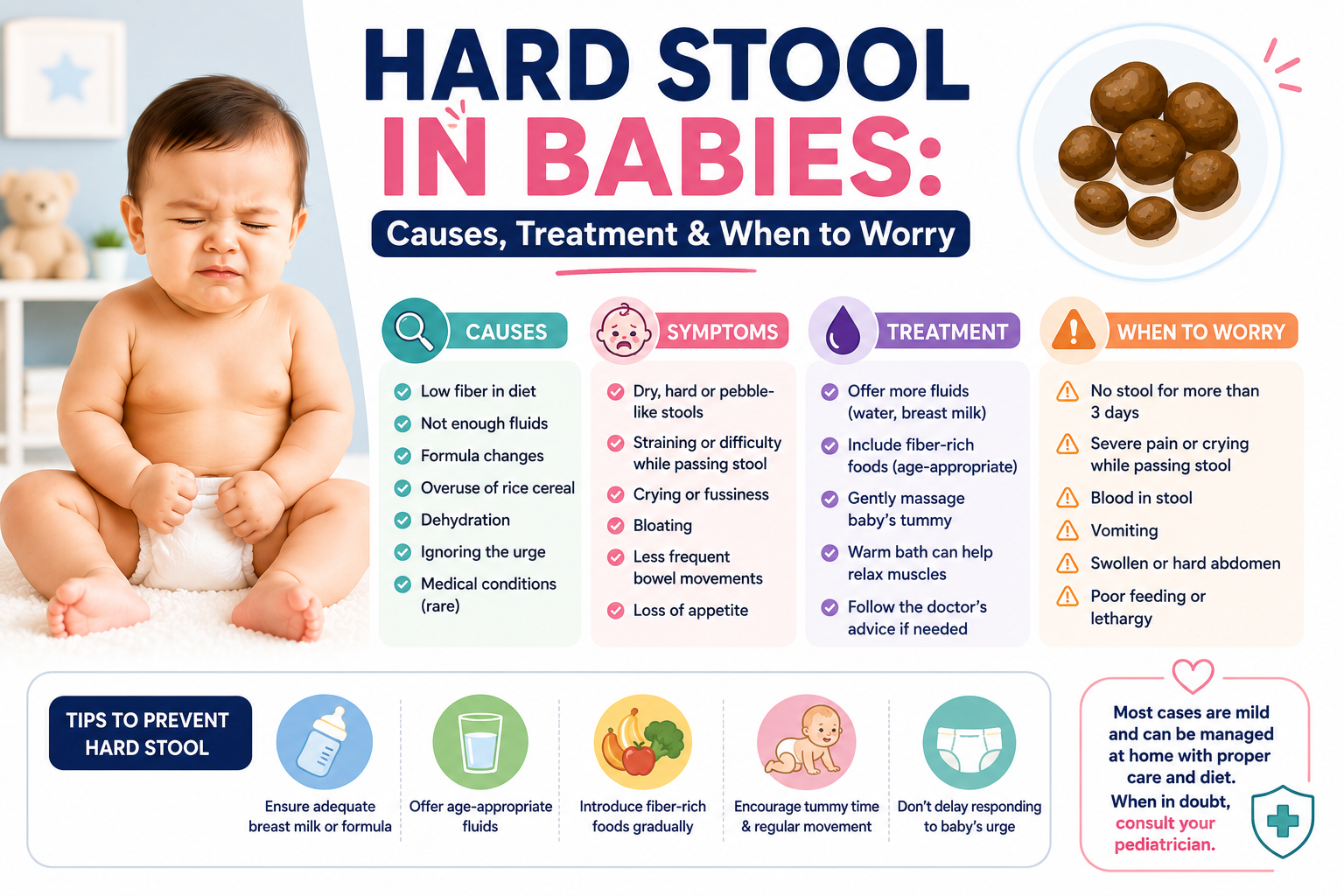
Hard stool in babies infographic showing pebble-like baby poop, common causes, symptoms, treatment options, foods that help soften stools, and warning signs for parents.

Hard Stool in Babies: Causes, Symptoms, Treatment & When to Worry

Medical Note: Straining alone does not always mean constipation. Babies often grunt or turn red while passing soft stools because their abdominal muscles are still developing. Hard, dry, pebble-like stools are a better indicator of constipation.

Seeing your baby struggle to pass hard stools can be upsetting for any parent. Babies may strain, cry, or appear uncomfortable during bowel movements, leading many parents to wonder whether constipation or another digestive issue is the cause.

While occasional hard stools can happen—especially after introducing formula or solid foods—persistent hard stool is not considered normal. If left untreated, it can lead to pain, anal fissures, poor feeding, and worsening constipation.

Understanding why hard stools develop and how to manage them safely can help keep your baby’s digestive system healthy.

This guide explains the common causes, symptoms, treatment options, home care strategies, and warning signs of hard stool in babies.

If you’re also concerned about stool color or bowel habits, explore our Baby Poop Color Chart, Baby Constipation, and Baby Diarrhea guides for a complete understanding of infant digestive health.


What Is Hard Stool in Babies?

Hard stool refers to bowel movements that are dry, firm, difficult to pass, or pebble-like.

Instead of soft, mushy stools, babies with hard stools may pass:

  • Small pellets
  • Dry lumps
  • Large hard stools
  • Cracked stools
  • Pebble-like stool

Hard stools usually indicate that the stool has remained in the intestines longer than normal, allowing more water to be absorbed.

Is Hard Stool Normal in Babies?

Occasional hard stools may occur during periods of dietary change.

However, repeated hard stools are not considered normal, especially if they cause:

  • Pain
  • Crying during bowel movements
  • Bleeding
  • Refusal to feed
  • Persistent constipation

Parents should monitor both stool consistency and frequency.

What Causes Hard Stool in Babies?

Several factors can contribute to hard stools.

1. Starting Solid Foods

One of the most common reasons is introducing complementary foods around six months of age.

Foods that may temporarily firm stools include:

  • Rice cereal
  • Bananas
  • Potatoes
  • White bread
  • Cheese

Introduce solids gradually and offer a balanced variety of fruits, vegetables, and whole grains when age-appropriate.

2. Formula Feeding

Some formula-fed babies develop firmer stools than breastfed infants.

Possible reasons include:

  • Individual response to formula
  • Incorrect formula preparation
  • Mild dehydration

Never add extra powder or reduce water when preparing formula.

3. Low Fluid Intake

As babies grow and start solids, inadequate fluid intake may contribute to hard stools.

Breast milk or formula should remain the primary source of hydration during the first year unless your pediatrician advises otherwise.

4. Low-Fiber Diet

Older babies eating solids may develop constipation if their diet contains too little fiber.

Fiber-rich foods suitable for age may include:

  • Pears
  • Prunes
  • Peaches
  • Oats
  • Vegetables
  • Whole grains (when appropriate)

5. Cow’s Milk Protein Allergy (CMPA)

Some babies with Cow’s Milk Protein Allergy may experience constipation and hard stools along with:

  • Eczema
  • Blood in stool
  • Excessive crying
  • Vomiting
  • Poor weight gain

Your pediatrician may recommend dietary adjustments if CMPA is suspected.

6. Holding Stool

Older infants may occasionally avoid passing stools because of previous painful bowel movements.

This creates a cycle:

Hard stool → Pain → Holding stool → Even harder stool

Breaking this cycle early is important.

7. Certain Medical Conditions

Although uncommon, persistent hard stools may be associated with:

  • Hirschsprung disease
  • Hypothyroidism
  • Celiac disease
  • Neuromuscular disorders
  • Metabolic disorders

These conditions require specialist evaluation.

Symptoms of Hard Stool in Babies

Signs may include:

  • Dry stools
  • Pebble-like stools
  • Large hard bowel movements
  • Crying during bowel movements
  • Straining
  • Red face while passing stool
  • Blood on the stool or diaper
  • Reduced appetite
  • Irritability
  • Abdominal bloating

Some babies may pass stools less frequently, while others pass hard stools daily.

What Does Hard Baby Stool Look Like?

Hard stools may appear as:

  • Small dry pellets
  • Round pebble-like stools
  • Large hard masses
  • Cracked stools
  • Dry brown lumps

Unlike normal soft stools, hard stools are usually difficult to pass.

Hard Stool in Breastfed Babies

Constipation is rare in exclusively breastfed babies.

Breast milk is easily digested, so stools are usually:

  • Soft
  • Yellow
  • Seedy
  • Easy to pass

If an exclusively breastfed baby develops hard stools, medical evaluation is recommended to identify the cause.

Hard Stool in Formula-Fed Babies

Formula-fed babies are more likely to develop firm stools.

Possible reasons include:

  • Formula composition
  • Low fluid intake
  • Incorrect formula preparation
  • Transition between formulas

Never change formulas without discussing it with your pediatrician.

Hard Stool After Starting Solids

Many babies experience temporary constipation after beginning solid foods.

Common foods that may contribute include:

  • Rice cereal
  • Bananas
  • White rice
  • Potatoes
  • Processed snacks (older infants)

Balanced meals containing fruits, vegetables, and adequate fluids often help maintain softer stools.

Hard Stool with Blood

Blood may appear when a hard stool causes a small tear (anal fissure) around the anus.

Signs include:

  • Bright red streaks on the stool
  • Small spots of blood on the diaper
  • Pain during bowel movements

Although anal fissures are common, blood in the stool should always be discussed with your pediatrician to rule out other causes.

Can Teething Cause Hard Stools?

No. There is no strong scientific evidence that teething directly causes hard stools or constipation.

However, changes in appetite or fluid intake during teething may indirectly affect bowel movements.

Hard Stool vs Constipation

Hard Stool Constipation
Refers to stool consistency Refers to a bowel movement disorder
Stool is dry or pebble-like Infrequent, difficult, or painful bowel movements
May occur occasionally Often persists until treated
Can be a symptom May include hard stools, pain, and stool withholding

How Is Hard Stool in Babies Diagnosed?

In most cases, your pediatrician can diagnose hard stool or constipation by reviewing your baby’s symptoms and performing a physical examination.

The doctor may ask about:

  • Your baby’s age
  • Feeding pattern (breastfed, formula-fed, or solids)
  • Frequency of bowel movements
  • Stool appearance
  • Pain during bowel movements
  • Recent dietary changes
  • Fluid intake
  • Weight gain and growth
  • Family history of digestive disorders
See also  Baby Poop Color Chart: Meaning of Every Baby Stool Color & When to Worry

If symptoms are severe or persistent, additional tests may be recommended, such as:

  • Stool examination
  • Blood tests
  • Thyroid function tests
  • Abdominal X-ray (in selected cases)
  • Evaluation for Hirschsprung disease or other rare conditions

According to the American Academy of Pediatrics (HealthyChildren.org) and the NHS, most healthy babies do not need extensive testing unless constipation is persistent, severe, or associated with poor growth or delayed passage of meconium after birth.

Treatment for Hard Stool in Babies

Treatment focuses on softening the stool, improving bowel habits, and addressing the underlying cause.

1. Continue Breastfeeding

For exclusively breastfed babies:

  • Continue breastfeeding on demand.
  • Breast milk provides hydration and is easily digested.
  • Breastfeeding should not be stopped because of hard stools.

2. Formula Feeding Guidance

Formula-fed babies should:

  • Continue their regular formula unless advised otherwise.
  • Have formula prepared exactly according to the manufacturer’s instructions.
  • Never receive concentrated formula.

If constipation persists, your pediatrician may recommend changing to a different formula or investigating other causes.

3. Increase Fluids (Age Appropriate)

For babies over six months who have started solids, offering adequate fluids may help soften stools.

Suitable fluids include:

  • Breast milk
  • Formula
  • Small amounts of water (only if age-appropriate and advised by your pediatrician)

Avoid sugary drinks or fruit juices unless specifically recommended by a healthcare professional.

4. Increase Fiber-Rich Foods

Once your baby has started solids, include age-appropriate foods that naturally support healthy digestion, such as:

  • Pear puree
  • Prune puree
  • Peach puree
  • Apricots
  • Oatmeal
  • Sweet potato
  • Peas
  • Spinach

Introduce new foods gradually and observe how your baby responds.

5. Medications (Only Under Medical Supervision)

If dietary changes are not enough, your pediatrician may recommend a stool-softening medication or laxative that is appropriate for your baby’s age and condition.

Do not give:

  • Adult laxatives
  • Enemas
  • Herbal remedies
  • Mineral oil
  • Castor oil

unless specifically prescribed.

Home Care Tips

Most babies improve with simple lifestyle measures.

Encourage Regular Feeding

Continue:

  • Breastfeeding
  • Formula feeding
  • Age-appropriate solid foods

Good nutrition supports healthy bowel movements.

Gentle Tummy Massage

Using clean hands, gently massage your baby’s abdomen in a clockwise direction for a few minutes.

This may encourage bowel movement in some babies.

Bicycle Leg Exercises

Move your baby’s legs in a gentle cycling motion while they lie on their back.

This may help relieve gas and stimulate bowel activity.

Warm Bath

A warm bath can help relax your baby’s abdominal and pelvic muscles, making bowel movements more comfortable.

Foods That Help Soften Stool

Once your baby is eating solids, these foods may help:

  • Pears
  • Prunes
  • Plums
  • Peaches
  • Kiwi (age-appropriate)
  • Oatmeal
  • Barley cereal
  • Sweet potato
  • Pumpkin
  • Green peas

For additional feeding advice, explore our Baby Feeding & Nutrition and Transition from Breastfeeding to Solids guides.

Foods That May Make Stools Harder

Some foods may contribute to firmer stools in certain babies.

Examples include:

  • Excess rice cereal
  • White rice
  • Large amounts of bananas
  • White bread
  • Cheese
  • Highly processed snack foods (older infants)

These foods do not need to be completely avoided but should be offered as part of a balanced diet.

Can Hard Stool Be Prevented?

You can lower the risk by:

  • Continuing breastfeeding whenever possible
  • Preparing formula correctly
  • Introducing solids gradually
  • Offering fiber-rich foods after six months
  • Encouraging adequate fluid intake
  • Promoting regular physical activity through supervised tummy time and movement
  • Monitoring bowel habits

Hard Stool vs Normal Baby Stool

Hard Stool Normal Stool
Dry Soft
Pebble-like Mushy or seedy
Painful to pass Easy to pass
May cause bleeding No bleeding
Often linked to constipation Healthy bowel movement

Hard Stool vs Baby Diarrhea

Hard Stool Baby Diarrhea
Dry and firm Loose and watery
Difficult to pass Frequent bowel movements
Constipation common Dehydration common
May cause anal fissures May cause diaper rash
Often relieved by fiber and fluids Requires hydration and monitoring

When Should You See a Doctor?

Contact your pediatrician if your baby has:

  • Hard stools lasting more than one week
  • Blood in the stool
  • Pain during every bowel movement
  • Severe constipation
  • Vomiting
  • Poor feeding
  • Abdominal swelling
  • Weight loss
  • Fever
  • Constipation beginning before one month of age

Persistent constipation should always be evaluated to rule out underlying medical conditions.

Emergency Warning Signs

Seek immediate medical care if your baby:

  • Has a swollen, painful abdomen
  • Vomits green (bilious) fluid
  • Refuses all feeds
  • Has repeated vomiting
  • Has significant rectal bleeding
  • Becomes unusually sleepy or difficult to wake
  • Has fever with severe constipation
  • Has not passed stool for several days and appears very uncomfortable

These symptoms may indicate an intestinal obstruction or another serious condition requiring urgent treatment.

Conclusion

Hard stool in babies is often related to dietary changes, formula feeding, or the introduction of solid foods and can usually be managed with age-appropriate nutrition, adequate fluids, and healthy bowel habits. While occasional hard stools are common, persistent constipation, painful bowel movements, blood in the stool, or poor growth should never be ignored.

Continue breastfeeding or formula feeding as recommended, introduce fiber-rich foods gradually after six months, and monitor your baby’s bowel movements for any changes. If symptoms persist or your baby develops warning signs, consult your pediatrician promptly.

For a complete understanding of your baby’s digestive health, read our Baby Poop Color Chart, Baby Constipation, Baby Diarrhea, and Mucus in Baby Poop guides, which explain common stool changes and when medical care is needed.

Frequently Asked Questions (FAQs)

Is hard stool normal in babies?

Occasional hard stools can occur, especially after starting solids, but persistent hard stools are not normal and should be evaluated.

What causes hard stool in babies?

Common causes include starting solid foods, low fluid intake, formula feeding, low-fiber diets, and constipation.

Does breastfeeding cause hard stools?

No. Exclusively breastfed babies usually pass soft stools. Persistent hard stools in breastfed infants should be assessed by a pediatrician.

Can formula cause hard stools?

Some babies may develop firmer stools with formula, but persistent constipation should be discussed with your doctor.

Which foods help soften baby stool?

Age-appropriate options include pears, prunes, peaches, oatmeal, sweet potatoes, and peas.

Can bananas cause hard stools?

Large amounts of bananas may contribute to firmer stools in some babies, although this varies from child to child.

How can I help my baby pass hard stool?

Continue regular feeding, ensure appropriate fluid intake, offer fiber-rich foods if your baby has started solids, try gentle tummy massage, and consult your pediatrician if symptoms persist.

Should I give my baby laxatives?

No. Only give laxatives or stool softeners if prescribed by your pediatrician.

Can teething cause hard stools?

There is no strong evidence that teething directly causes hard stools or constipation.

Why is there blood after my baby passes a hard stool?

A small anal fissure caused by passing a hard stool is a common reason for bright red blood, but any blood in the stool should be discussed with your pediatrician.

How long can constipation last in babies?

Many mild cases improve within a few days with dietary adjustments, but constipation lasting more than a week should be evaluated.

When should I take my baby to the doctor?

Seek medical advice if your baby has persistent hard stools, blood in the stool, severe pain, vomiting, poor feeding, abdominal swelling, or poor weight gain.

Can dehydration cause hard stools?

Yes. Inadequate fluid intake can contribute to hard, dry stools, particularly after solid foods are introduced.

Can probiotics help with hard stools?

Some babies may benefit from probiotics, but evidence is mixed. Always consult your pediatrician before giving probiotic supplements.

Can hard stools be prevented?

In many cases, yes. Proper hydration, balanced nutrition, gradual introduction of solids, and regular feeding can help maintain healthy bowel movements.

More Reading

Post navigation

Subscribe
Notify of
guest

0 Comments
Oldest
Newest Most Voted
0
Would love your thoughts, please comment.x
()
x