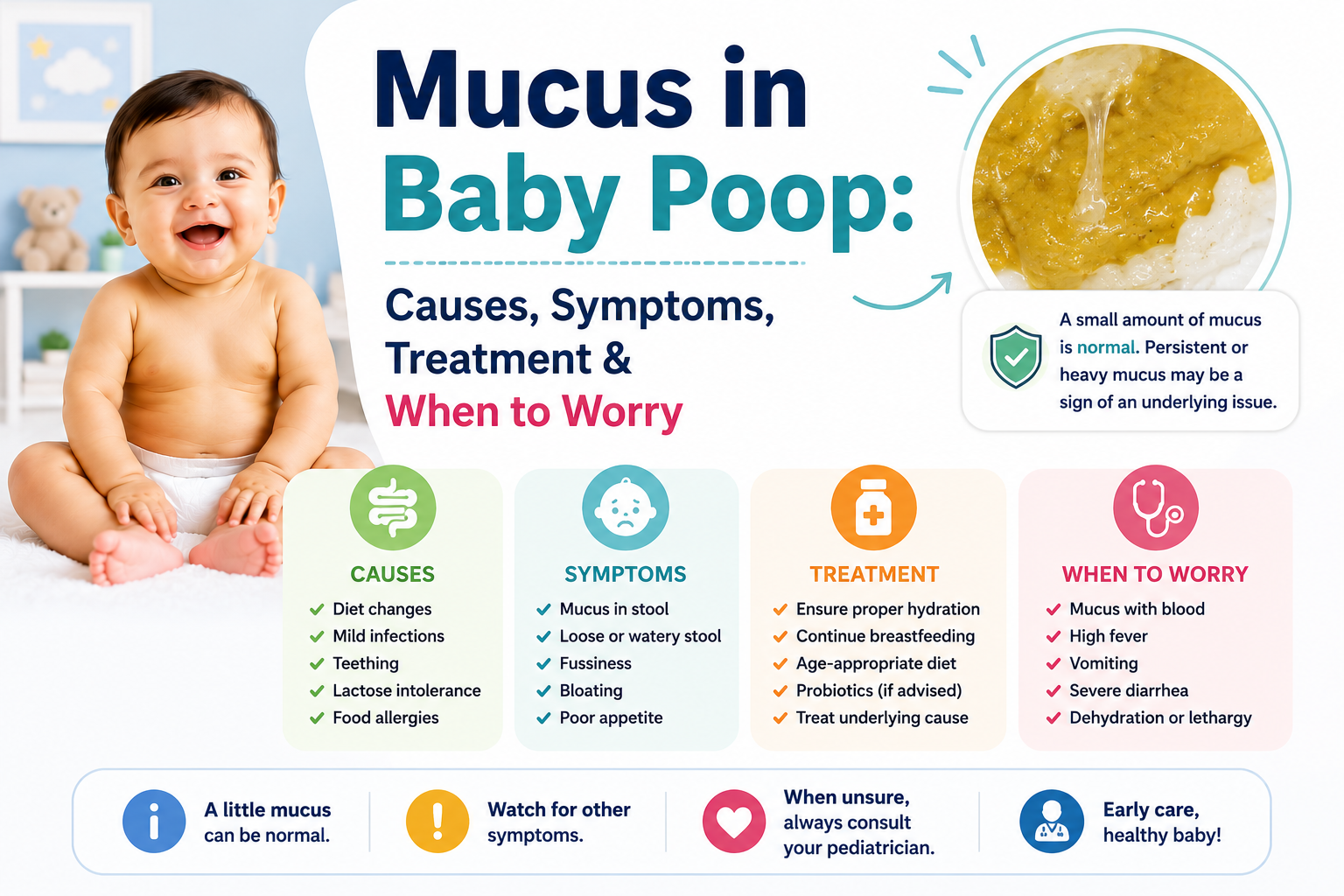

Medical Note: A small amount of mucus in baby poop is often normal. However, mucus that occurs repeatedly or with blood, fever, poor feeding, or dehydration should always be evaluated by a pediatrician.
Seeing a slimy or jelly-like substance in your baby’s diaper can be alarming for parents. In many cases, mucus in baby poop is harmless and temporary, especially in breastfed infants or babies recovering from a mild illness. However, excessive mucus—particularly when accompanied by blood, fever, vomiting, or diarrhea—may indicate an infection, food allergy, or digestive condition that requires medical attention.
Mucus is a normal secretion produced by the intestines to protect the digestive tract and help stool pass smoothly. Small amounts of mucus are usually not a cause for concern. However, frequent or large amounts of mucus may signal that your baby’s digestive system is irritated.
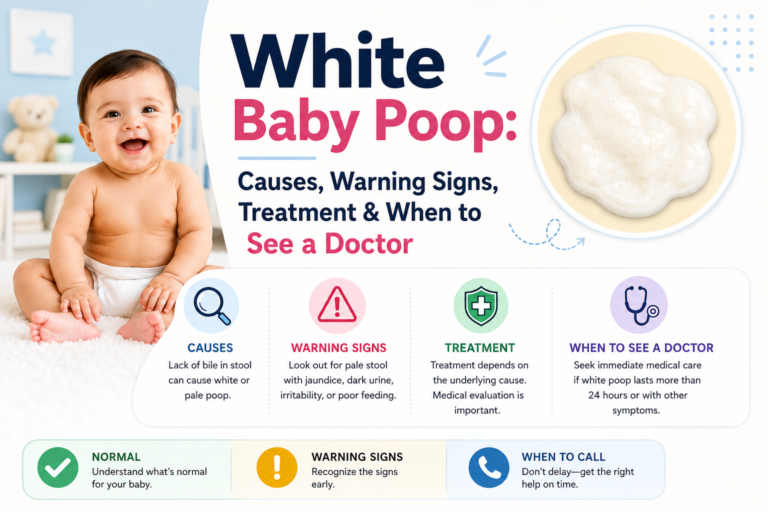
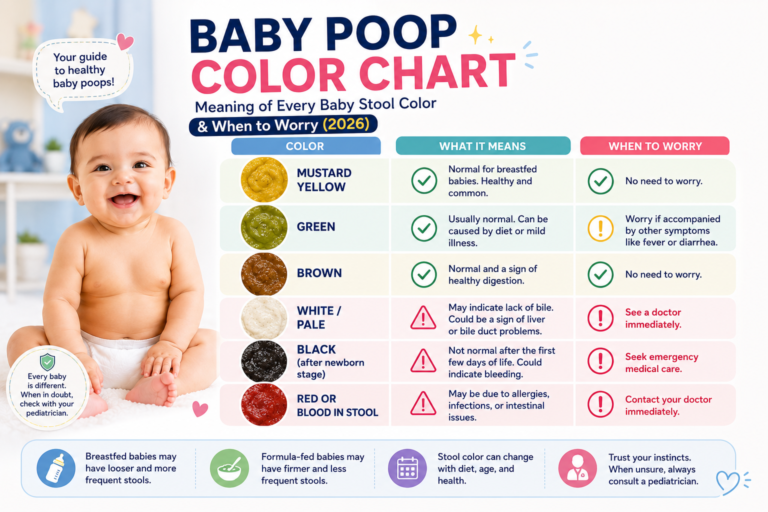
If you’re unsure whether your baby’s stool is normal, you may also find our Yellow Baby Poop, White Baby Poop, and upcoming Baby Poop Color Chart guides helpful in understanding different stool colors and textures.
What Is Mucus in Baby Poop?
Mucus is a thick, slippery substance naturally produced by the intestines.
Its role is to:
- Protect the intestinal lining
- Lubricate stool
- Help waste move smoothly through the digestive tract
- Prevent irritation
Normally, mucus mixes with stool and is not noticeable. When the intestines become irritated, larger amounts may appear in your baby’s diaper as:
- Clear mucus
- White mucus
- Yellowish mucus
- Stringy mucus
- Jelly-like streaks
According to the American Academy of Pediatrics (HealthyChildren.org), occasional mucus in stool is common, but persistent mucus accompanied by other symptoms should be medically evaluated.
Is Mucus in Baby Poop Normal?
Sometimes.
A small amount of mucus can be completely normal, particularly in:
- Breastfed babies
- Babies who swallow saliva while teething
- Babies recovering from a mild viral illness
- Infants with temporary digestive irritation
However, frequent mucus or mucus associated with blood, diarrhea, fever, or poor weight gain should not be ignored.
What Causes Mucus in Baby Poop?
Several conditions can lead to mucus in your baby’s stool.
1. Normal Intestinal Secretions
The intestines naturally produce mucus to keep the digestive tract healthy.
Small amounts are usually harmless.
2. Swallowed Saliva During Teething
Babies produce extra saliva while teething.
Some of this saliva is swallowed, passes through the digestive system, and may contribute to mucus appearing in the stool.
If your baby is drooling excessively or chewing on objects, teething may be the reason.
3. Viral Gastroenteritis
Viruses such as rotavirus or norovirus can irritate the intestines.
Symptoms often include:
- Diarrhea
- Fever
- Vomiting
- Mucus in stool
Most viral infections improve with hydration and supportive care.
4. Food Allergy or Cow’s Milk Protein Allergy (CMPA)
One of the most common causes of persistent mucus in infants is Cow’s Milk Protein Allergy (CMPA).
Additional symptoms may include:
- Blood in stool
- Eczema
- Frequent crying
- Vomiting
- Poor weight gain
- Colic-like symptoms
Breastfeeding mothers may be advised to eliminate dairy if CMPA is suspected, while formula-fed babies may require a hypoallergenic formula under medical supervision.
5. Food Intolerance
As babies begin solid foods, some may temporarily develop mucus due to sensitivity to certain foods.
Introducing one new food at a time helps identify potential triggers.
You can also explore our nutrition guides on Transition from Breastfeeding to Solids and Baby Feeding & Nutrition to support healthy digestive development.
6. Bacterial Infection
Certain bacterial infections can inflame the intestines and produce mucus.
Common bacteria include:
- Salmonella
- Shigella
- Campylobacter
- E. coli
Babies with bacterial infections often have fever, diarrhea, poor feeding, or blood in the stool and require prompt medical care.
7. Antibiotic Use
Antibiotics can temporarily alter the balance of healthy gut bacteria.
This may cause:
- Loose stools
- Mild diarrhea
- Increased mucus
Symptoms usually improve after completing treatment, but persistent diarrhea should be evaluated.
8. Digestive Disorders
Less commonly, mucus may occur because of digestive conditions such as:
- Inflammatory bowel disease (rare in infants)
- Hirschsprung disease
- Cystic fibrosis
- Malabsorption disorders
These conditions require specialist evaluation.
What Does Mucus in Baby Poop Look Like?
Mucus may appear as:
- Clear jelly
- White strings
- Slimy coating
- Thick transparent streaks
- Gel-like patches
- Shiny mucus mixed with stool
The appearance varies depending on the underlying cause.
Mucus in Breastfed Baby Poop
Breastfed babies occasionally pass small amounts of mucus.
Possible reasons include:
- Swallowed saliva
- Mild viral illness
- Temporary digestive irritation
- Food sensitivity through breast milk
Most breastfed babies continue feeding normally and recover without treatment.
Mucus in Formula-Fed Baby Poop
Formula-fed babies may develop mucus due to:
- Formula intolerance
- Cow’s milk protein allergy
- Gastrointestinal infections
- Constipation
- Digestive irritation
If mucus persists for more than a couple of days or is accompanied by blood or poor feeding, consult your pediatrician.
Mucus in Baby Poop After Starting Solids
Introducing solid foods changes your baby’s digestive system.
Temporary mucus may occur as the intestines adjust to:
- Fruits
- Vegetables
- Cereals
- New proteins
Introduce only one new food every 3–5 days to help identify any food sensitivities.
Mucus in Baby Poop with Blood
Blood and mucus together require prompt medical evaluation.
Possible causes include:
- Cow’s Milk Protein Allergy (CMPA)
- Anal fissures
- Bacterial infection
- Intestinal inflammation
- Rare gastrointestinal disorders
Seek immediate medical advice if you notice blood in your baby’s stool.
Symptoms That May Occur Along with Mucus
Watch for:
- Fever
- Diarrhea
- Vomiting
- Poor feeding
- Weight loss
- Dehydration
- Bloody stool
- Excessive crying
- Rash
- Lethargy
If these symptoms occur together, your baby should be examined by a healthcare professional.
How Is Mucus in Baby Poop Diagnosed?
If your baby has persistent mucus in the stool, especially with blood, diarrhea, vomiting, or poor weight gain, your pediatrician may recommend further evaluation to determine the underlying cause.
Diagnosis usually begins with a physical examination and a detailed discussion about:
- Feeding pattern (breastfeeding, formula, or solids)
- Frequency and appearance of stools
- Recent illnesses
- Growth and weight gain
- Family history of allergies or digestive disorders
Depending on your baby’s symptoms, the doctor may order:
- Stool examination (for infection, blood, or parasites)
- Stool culture
- Blood tests
- Allergy testing (if Cow’s Milk Protein Allergy is suspected)
- Imaging studies (rarely)
- Referral to a pediatric gastroenterologist for persistent cases
According to HealthyChildren.org and the NHS, most cases resolve without extensive testing, but persistent symptoms should always be evaluated.
Treatment for Mucus in Baby Poop
Treatment depends on the underlying cause rather than the mucus itself.
1. Normal Digestive Mucus
If your baby is otherwise healthy, feeding well, and gaining weight normally, no treatment may be needed.
Your pediatrician may simply recommend monitoring your baby’s stools.
2. Viral Gastroenteritis
Most viral infections improve within a few days.
Treatment includes:
- Continued breastfeeding or formula feeding
- Oral rehydration solution (if recommended)
- Preventing dehydration
- Extra rest
Antibiotics are not effective against viral infections.
3. Cow’s Milk Protein Allergy (CMPA)
If CMPA is diagnosed:
Breastfed Babies
Your doctor may advise the breastfeeding mother to temporarily eliminate:
- Milk
- Cheese
- Butter
- Yogurt
- Other dairy products
Formula-fed Babies
Your pediatrician may recommend:
- Extensively hydrolyzed formula
- Amino acid-based formula
Do not change your baby’s formula without medical advice.
4. Bacterial Infection
Bacterial infections may require:
- Stool testing
- Antibiotics (only when prescribed)
- Hydration therapy
- Close medical follow-up
5. Food Intolerance
If mucus appears after introducing a new food:
- Stop the suspected food temporarily.
- Reintroduce only under medical guidance if necessary.
- Introduce new foods one at a time.
Our Transition from Breastfeeding to Solids guide can help parents introduce complementary foods safely.
Home Care Tips
Most babies with mild mucus recover quickly with supportive care.
Continue Regular Feeding
Continue:
- Breastfeeding
- Formula feeding
- Age-appropriate solid foods
Unless advised otherwise, avoid reducing feeds.
Keep Your Baby Hydrated
Watch for dehydration signs:
- Dry mouth
- Fewer wet diapers
- Sunken soft spot
- Excessive sleepiness
- Crying without tears
If diarrhea is present, discuss oral rehydration solutions with your pediatrician.
Observe Stool Changes
Keep track of:
- Stool color
- Stool consistency
- Amount of mucus
- Frequency
- Blood
- Feeding habits
Photographs of unusual diapers may help your doctor.
Practice Good Hygiene
Wash hands:
- Before preparing bottles
- After diaper changes
- Before feeding
Good hygiene reduces the spread of viral and bacterial infections.
Foods That May Trigger Digestive Irritation
Once your baby starts solids, some foods may occasionally irritate the digestive tract.
Common triggers include:
- Dairy (for allergic babies)
- Soy
- Eggs
- Wheat
- Citrus fruits (occasionally)
- Highly processed foods (older infants)
Introduce only one new food every 3–5 days to monitor for reactions.
For healthy feeding practices, parents can also read our Baby Feeding & Nutrition and First 1000 Days Nutrition guides.
Can Mucus in Baby Poop Be Prevented?
Not every case can be prevented, but you can reduce the risk by:
- Exclusive breastfeeding for the first six months (when possible)
- Proper bottle hygiene
- Safe food preparation
- Introducing solids gradually
- Staying up to date with vaccinations
- Practicing regular handwashing
Mucus vs Blood in Baby Poop
| Mucus | Blood |
|---|---|
| Clear or white jelly | Bright red or dark blood |
| Often harmless | Requires prompt evaluation |
| May occur during viral illness | May indicate allergy, infection, fissure, or intestinal disease |
| Usually temporary | Never ignore |
Mucus vs Diarrhea
| Mucus in Stool | Diarrhea |
|---|---|
| Jelly-like appearance | Frequent watery stools |
| May occur occasionally | Usually several loose stools per day |
| Sometimes normal | May lead to dehydration |
| Often no treatment needed | Medical advice may be necessary |
When Should You See a Doctor?
Arrange a pediatric consultation if your baby has:
- Mucus lasting more than 2–3 days
- Blood in the stool
- Fever
- Vomiting
- Persistent diarrhea
- Poor feeding
- Poor weight gain
- Signs of dehydration
- Excessive fussiness
Parents should also seek advice if mucus appears repeatedly without an obvious cause.
Emergency Warning Signs
Go to the nearest emergency department immediately if your baby:
- Has bloody diarrhea
- Refuses all feeds
- Becomes difficult to wake
- Has persistent vomiting
- Develops severe dehydration
- Has a swollen abdomen
- Has breathing difficulty
- Passes black or white stools
- Has high fever in a young infant
These symptoms may indicate a serious medical condition requiring urgent treatment.
Conclusion
A small amount of mucus in baby poop is usually nothing to worry about and often reflects normal intestinal secretions, swallowed saliva, or temporary digestive irritation. However, persistent mucus—especially when accompanied by blood, fever, diarrhea, vomiting, poor feeding, or weight loss—should never be ignored.
Monitoring your baby’s stool, hydration, and feeding habits can help you recognize early warning signs. If you’re unsure whether your baby’s diaper is normal, compare it with our Yellow Baby Poop, White Baby Poop, and upcoming Baby Poop Color Chart guides to better understand healthy and abnormal stool changes.
When in doubt, always consult your pediatrician. Early diagnosis and treatment can prevent complications and provide peace of mind.
Frequently Asked Questions (FAQs)
Is mucus in baby poop normal?
A small amount is often normal, especially in breastfed babies. Persistent or excessive mucus should be evaluated.
What causes mucus in baby poop?
Common causes include normal intestinal secretions, viral infections, teething, food allergies, and digestive irritation.
Can teething cause mucus in stool?
Yes. Babies swallow more saliva while teething, which may contribute to small amounts of mucus in the stool.
Is mucus in breastfed baby poop common?
Yes. Occasional mucus can occur in healthy breastfed babies without indicating illness.
Can formula cause mucus in baby poop?
Formula itself usually does not, but formula intolerance or Cow’s Milk Protein Allergy may cause mucus.
Should I worry if mucus appears only once?
Not necessarily. One isolated episode is usually not concerning if your baby is otherwise healthy.
What if mucus is mixed with blood?
Blood and mucus together require prompt medical evaluation.
Does diarrhea cause mucus?
Yes. Viral and bacterial gastroenteritis often cause mucus along with loose stools.
Can constipation cause mucus?
Yes. Straining and intestinal irritation from constipation may occasionally produce mucus.
When should I call my pediatrician?
Call if mucus lasts more than two days, occurs with blood, fever, vomiting, diarrhea, poor feeding, or dehydration.
Can mucus indicate an allergy?
Yes. Cow’s Milk Protein Allergy is one of the most common causes of persistent mucus in infants.
How is mucus in stool treated?
Treatment depends on the underlying cause and may include hydration, dietary changes, or medication prescribed by your doctor.
Can probiotics help?
Some babies may benefit from probiotics, but only use them after discussing them with your pediatrician.
Can dehydration occur with mucus in stool?
Yes, especially if mucus is associated with diarrhea or vomiting.
Is mucus in newborn poop different?
Small amounts can be normal in newborns, but persistent mucus or mucus with blood should always be evaluated by a healthcare professional.