
Medical Note: White, gray, or chalky baby poop is never normal. Contact your pediatrician immediately instead of waiting for the stool color to change.
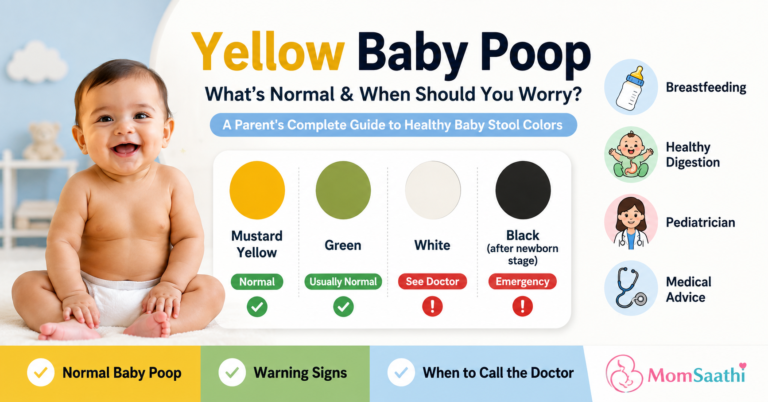
Parents often monitor their baby’s diapers because stool color can reveal important clues about a baby’s health. While yellow, green, and brown stools are usually considered normal, white baby poop is a warning sign that should never be ignored.
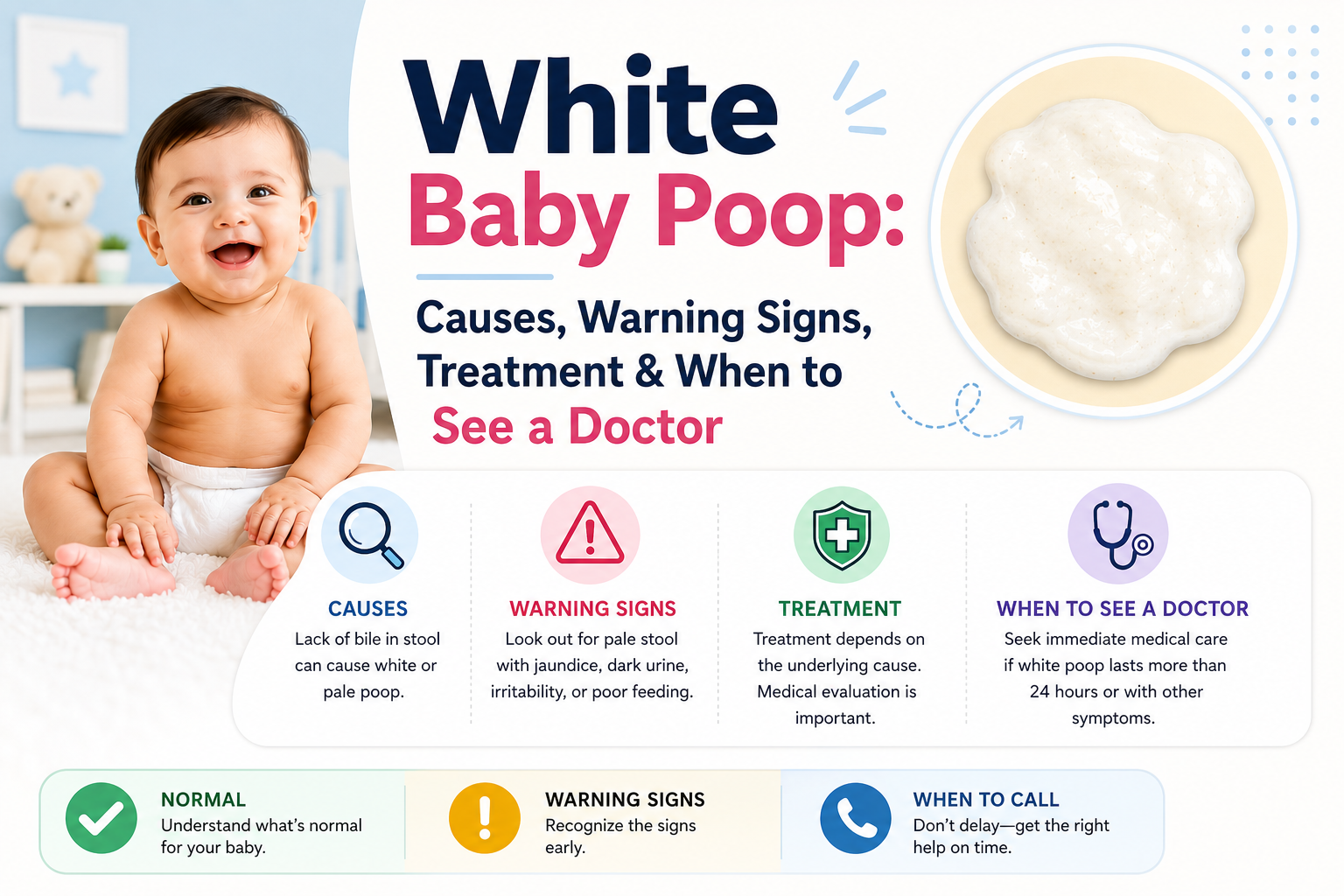
White, pale, gray, or clay-colored stools may indicate that bile is not reaching your baby’s intestines, which can signal a serious liver, gallbladder, or bile duct disorder such as biliary atresia. According to the American Academy of Pediatrics (HealthyChildren.org), parents should seek immediate medical evaluation if their baby passes white or chalky stools, especially during the first few weeks of life.
If you’ve recently noticed changes in your baby’s stool, you may also find our guides on Yellow Baby Poop, Green Baby Poop, and the upcoming Baby Poop Color Chart useful for understanding which stool colors are normal and which require urgent medical attention.
What Is White Baby Poop?
White baby poop refers to stool that appears:
- White
- Chalky white
- Pale cream
- Clay-colored
- Grayish-white
Healthy baby stools contain bile pigments, which naturally give stool a yellow, green, or brown color. When bile cannot reach the intestines, stools lose their normal color and become pale or white.
If you’re unsure whether your baby’s stool color is normal, compare it with our Baby Poop Color Chart (coming soon), which explains the meaning of every common stool color.
Is White Baby Poop Normal?
No. White baby poop is never considered normal.
Unlike yellow baby poop, which is common in breastfed infants, or green baby poop, which is often linked to diet or iron-fortified formula, white stool almost always requires immediate medical evaluation.
According to the NHS and the American Academy of Pediatrics, white or clay-colored stools may indicate that the liver is not producing or transporting bile properly.
Early diagnosis can be life-saving, particularly in newborns.
Why Is Bile Important?
Bile is a digestive fluid produced by the liver and stored in the gallbladder.
It helps:
- Digest fats
- Absorb vitamins A, D, E, and K
- Remove waste products
- Give stool its normal yellow or brown color
Without bile, stool becomes pale, gray, or white.
The National Institute of Diabetes and Digestive and Kidney Diseases (NIDDK) explains that reduced bile flow is often one of the earliest signs of liver or bile duct disease in infants.
What Causes White Baby Poop?
Several medical conditions may reduce or block bile flow.
1. Biliary Atresia (Most Serious Cause)
The most concerning cause of white baby poop is biliary atresia, a rare condition in which the bile ducts become blocked or damaged shortly after birth.
Without treatment:
- Liver damage progresses rapidly.
- Scarring (cirrhosis) develops.
- Liver failure may occur.
- A liver transplant may eventually be required.
Doctors often perform a Kasai procedure during the first few months of life to improve bile drainage. Early diagnosis greatly improves outcomes.
2. Liver Disease
Various liver disorders can interfere with bile production.
Examples include:
- Neonatal hepatitis
- Viral infections
- Metabolic disorders
- Genetic liver diseases
If your baby also has persistent jaundice, poor weight gain, or feeding difficulties, consult your pediatrician immediately.
3. Gallbladder Problems
Although uncommon in infants, abnormalities affecting the gallbladder may prevent bile from reaching the intestines, causing pale stools.
4. Bile Duct Obstruction
Some babies are born with structural abnormalities affecting the bile ducts.
Possible causes include:
- Congenital narrowing
- Bile duct cysts
- Inflammation
- Blockages
These conditions require prompt medical evaluation and imaging studies.
5. Rare Medication Effects
Certain medications or medical contrast agents may temporarily change stool color. However, medication-related white stools are uncommon, and persistent white poop should never be assumed to be harmless.
Symptoms That May Occur Along With White Baby Poop
White stools often occur alongside other symptoms, including:
- Persistent jaundice
- Yellowing of the eyes
- Dark urine
- Poor feeding
- Slow weight gain
- Enlarged abdomen
- Swollen liver
- Excessive sleepiness
- Irritability
Parents should seek immediate medical care if these symptoms occur together.
What Does White Baby Poop Look Like?
White baby poop may appear:
- Chalky
- Pale cream
- Clay-colored
- Grayish-white
- Putty-colored
Unlike normal baby stool, it lacks the yellow or brown pigment produced by bile.
If you’re uncertain about stool color, comparing your baby’s diaper with a trusted Baby Poop Color Chart can help—but any white stool should still be evaluated by a healthcare professional.
White Baby Poop vs Normal Baby Poop
| Normal Baby Poop | White Baby Poop |
|---|---|
| Yellow, green, or brown | White, gray, or clay-colored |
| Contains bile pigments | Little or no bile pigment |
| Healthy digestion | Possible liver or bile duct disease |
| Usually harmless | Requires urgent medical evaluation |
Can Formula Cause White Baby Poop?
No.
Formula-fed babies normally pass stools that are:
- Yellow-brown
- Tan
- Peanut butter-colored
- Light brown
Formula feeding alone does not cause completely white stools.
If your baby is formula-fed and develops white poop, contact your pediatrician without delay.
Does Breastfeeding Cause White Baby Poop?
No.
Breastfed babies usually have mustard-yellow, seedy stools, which are considered a healthy sign of digestion.
Learn more in our detailed guide on Yellow Baby Poop, where we explain why mustard-yellow stools are normal in breastfed infants.
White Baby Poop and Jaundice
One of the most important warning signs is the combination of:
- White or pale stools
- Persistent jaundice after two weeks of age
- Dark urine
This combination may indicate biliary atresia, a condition that requires urgent diagnosis and treatment.
According to the Centers for Disease Control and Prevention (CDC) and the American Academy of Pediatrics, early treatment significantly improves long-term liver health.
How Is White Baby Poop Diagnosed?
Your pediatrician may recommend:
- Physical examination
- Medical history
- Blood tests
- Liver function tests
- Bilirubin levels
- Abdominal ultrasound
- HIDA scan
- MRI (if necessary)
- Liver biopsy (selected cases)
Early diagnosis is essential because conditions such as biliary atresia are most successfully treated when detected during the first few weeks of life.
How Is White Baby Poop Treated?
White baby poop is not a disease itself but a symptom of an underlying medical condition. Treatment depends on identifying and addressing the cause as early as possible.
If your baby develops white, gray, or clay-colored stools, do not attempt home remedies. Instead, consult your pediatrician immediately. According to the American Academy of Pediatrics (HealthyChildren.org) and the National Institute of Diabetes and Digestive and Kidney Diseases (NIDDK), early treatment of liver and bile duct disorders significantly improves long-term outcomes.
Treatment Options
1. Kasai Procedure (For Biliary Atresia)
If biliary atresia is diagnosed, the most common treatment is the Kasai portoenterostomy, a surgery that creates a new pathway for bile to drain from the liver into the intestine.
The surgery is most successful when performed before 60 days of age.
Early surgery can:
- Improve bile flow
- Reduce liver damage
- Delay or prevent liver transplantation
- Improve long-term survival
2. Liver Transplant
Some babies may require a liver transplant if:
- The Kasai procedure is unsuccessful.
- Liver damage becomes severe.
- Liver failure develops.
- Cirrhosis progresses despite treatment.
Modern liver transplantation has excellent survival rates when performed at specialized pediatric centers.
3. Treatment for Liver Disease
If white stool is caused by hepatitis or another liver disorder, treatment may include:
- Nutritional support
- Vitamin supplementation
- Medicines for liver disease
- Management of infections
- Regular liver function monitoring
4. Treating Underlying Disorders
If another condition is responsible, treatment will focus on correcting the specific problem, such as:
- Metabolic disorders
- Gallbladder abnormalities
- Bile duct cysts
- Genetic diseases
Home Care Tips for Parents
While medical treatment is essential, parents can support their baby’s recovery by:
Continue Feeding
Continue breastfeeding or formula feeding unless advised otherwise by your pediatrician.
If your baby is feeding well, you can also read our Yellow Baby Poop guide to understand which stool colors are considered normal during infancy.
Monitor Stool Color
Take note of:
- Stool color
- Stool frequency
- Feeding pattern
- Wet diapers
- Weight gain
Photographing unusual stools can help your pediatrician assess changes over time.
Watch for Jaundice
Observe your baby’s:
- Skin
- Eyes
- Urine color
Persistent jaundice together with white stools should always be treated as an urgent medical concern.
Attend Follow-Up Appointments
Babies diagnosed with liver or bile duct disorders require regular follow-up visits to monitor:
- Liver function
- Growth
- Nutrition
- Overall development
What Should Parents Avoid?
Do not:
- Ignore white stools
- Delay visiting a doctor
- Assume formula caused the color change
- Give over-the-counter medicines without medical advice
- Try home remedies or herbal treatments
- Stop breastfeeding without consulting your pediatrician
Prompt medical evaluation is the safest approach.
Can White Baby Poop Be Prevented?
Many causes, including biliary atresia, cannot be prevented.
However, parents can support their baby’s health by:
- Attending newborn check-ups
- Following vaccination schedules
- Feeding appropriately
- Monitoring stool color regularly
- Seeking medical advice for persistent jaundice
Early recognition is the best way to prevent complications.
White Baby Poop vs Yellow Baby Poop
| White Baby Poop | Yellow Baby Poop |
|---|---|
| Not normal | Usually normal |
| Little or no bile | Healthy bile flow |
| May indicate liver disease | Common in breastfed babies |
| Requires urgent medical evaluation | Usually no treatment needed |
| Often associated with jaundice | Usually indicates healthy digestion |
If your baby’s stool is mustard yellow instead of white, read our detailed guide on Yellow Baby Poop to understand why it is usually a healthy sign.
White Baby Poop vs Black Baby Poop
| White Baby Poop | Black Baby Poop |
|---|---|
| Indicates possible liver or bile duct disease | Normal only during the first few days (meconium) |
| No bile pigment | Meconium is expected after birth |
| Medical emergency | Black stool after the newborn period needs evaluation |
| Requires immediate pediatric assessment | May indicate gastrointestinal bleeding if occurring later |
You can also explore our upcoming Black Baby Poop guide to learn when dark stools are normal and when they require medical attention.
When Should You See a Doctor?
Schedule an immediate medical evaluation if your baby has:
- White or clay-colored stools
- Persistent jaundice
- Dark urine
- Poor feeding
- Vomiting
- Poor weight gain
- Fever
- Swollen abdomen
- Extreme sleepiness
According to the NHS and HealthyChildren.org, white stools should never be ignored because they may indicate serious liver disease.
Emergency Warning Signs
Go to the nearest emergency department immediately if your baby:
- Passes repeated white or gray stools
- Has difficulty feeding
- Is difficult to wake
- Has severe jaundice
- Has breathing difficulty
- Has seizures
- Develops a swollen abdomen
- Shows signs of dehydration
- Has persistent vomiting
Early medical care can significantly improve treatment outcomes.
Conclusion
Unlike yellow, green, or brown stools, white baby poop is never normal. It often indicates that bile is not reaching the intestines and may be an early sign of serious conditions such as biliary atresia or liver disease.
The good news is that early diagnosis greatly improves the chances of successful treatment. If you notice white, gray, or clay-colored stools, contact your pediatrician immediately rather than waiting for the color to return to normal.
Monitoring your baby’s stool color, feeding habits, and overall health is an important part of newborn care. If you’re unsure whether your baby’s stool is healthy, compare it with our Yellow Baby Poop, Green Baby Poop, and upcoming Baby Poop Color Chart guides to better understand normal and abnormal stool colors.
Frequently Asked Questions (FAQs)
Is white baby poop normal?
No. White baby poop is never considered normal and requires prompt medical evaluation.
Why is my baby’s poop white?
White stools usually occur because bile is not reaching the intestines. This may indicate a liver or bile duct disorder.
Can formula cause white baby poop?
No. Formula-fed babies usually have yellow, tan, or light brown stools—not white stools.
Does breastfeeding cause white stools?
No. Breastfed babies normally pass mustard-yellow, seedy stools.
What is biliary atresia?
Biliary atresia is a rare condition where the bile ducts become blocked or damaged, preventing bile from reaching the intestines.
Is white poop an emergency?
Yes. White or clay-colored stools should always be assessed by a pediatrician as soon as possible.
Can white baby poop go away on its own?
No. Persistent white stools should never be ignored and require medical evaluation.
What tests diagnose white baby poop?
Doctors may perform blood tests, liver function tests, ultrasound, HIDA scan, MRI, or liver biopsy, depending on the suspected cause.
Does jaundice occur with white stools?
Yes. White stools combined with persistent jaundice are a common warning sign of biliary atresia and other liver disorders.
What color baby poop is most dangerous?
White, gray, black (after the newborn period), or bloody stools require immediate medical attention.
How soon should I see a doctor?
Immediately. Do not wait to see if the stool color changes.
Can liver disease cause white poop?
Yes. Liver diseases that reduce bile production or block bile flow can cause white or clay-colored stools.
What should healthy baby poop look like?
Healthy baby poop is typically yellow, mustard-colored, green, or brown, depending on your baby’s age and diet.
Can white poop affect my baby’s growth?
If the underlying liver condition is left untreated, it can affect digestion, nutrient absorption, and growth.
Where can I learn about normal baby poop colors?
Our Yellow Baby Poop, Green Baby Poop, and upcoming Baby Poop Color Chart articles explain the meaning of different baby stool colors and when parents should seek medical advice.