
Medical Note: Never squeeze, pop, or puncture a boil at home. This can spread the infection and increase the risk of complications. Always consult your pediatrician if your baby develops a painful lump or fever.
Discovering a red, swollen lump on your baby’s skin can be worrying. In many cases, it may be a boil (furuncle)—a painful bacterial skin infection that develops around a hair follicle or oil gland. Although boils are more common in older children and adults, babies can also develop them, especially if bacteria enter the skin through tiny cuts, insect bites, or areas affected by eczema.
Most small boils improve with proper medical care and hygiene, but some may require antibiotics or drainage if they become large or spread.
This guide explains everything parents need to know about baby boils, including their causes, symptoms, treatment, prevention, complications, and when to seek medical attention.
What Are Baby Boils?
A baby boil, also known as a furuncle, is a localized bacterial skin infection that forms when bacteria infect a hair follicle or nearby oil gland. The infection causes a red, swollen, painful lump that may gradually fill with pus.
Boils can appear anywhere on the body but are more common in areas where there is friction, sweating, or tiny skin injuries.
Common locations include:
- Face
- Neck
- Scalp
- Armpits
- Buttocks
- Thighs
- Groin
- Legs
Are Baby Boils Serious?
Most boils are not dangerous when treated early.
However, larger boils or multiple boils can spread to nearby skin and occasionally develop into cellulitis or deeper skin infections. Babies with fever, rapidly spreading redness, or poor feeding should be evaluated by a doctor promptly.
What Causes Baby Boils?
Boils develop when bacteria enter the skin through tiny openings.
The most common bacteria responsible are:
- Staphylococcus aureus
- Occasionally MRSA (Methicillin-resistant Staphylococcus aureus)
Common Causes of Baby Boils
Minor Cuts and Scratches
Even small scratches can allow bacteria to enter the skin.
Insect Bites
Scratching mosquito or insect bites may introduce bacteria into the skin. If your baby frequently develops itchy bites, our guide on Baby Mosquito Bites explains how to reduce irritation safely.
Baby Eczema
Babies with Baby Eczema have a weakened skin barrier, making bacterial infections such as boils more likely.
Baby Skin Allergy
Persistent scratching caused by Baby Skin Allergy can damage the skin and increase the risk of boils.
Baby Contact Dermatitis
Inflamed skin from Baby Contact Dermatitis may develop tiny cracks that allow bacteria to enter.
Poor Skin Hygiene
Sweat, dirt, and bacteria trapped on the skin may increase infection risk.
Weak Immune System
Babies with certain medical conditions or weakened immunity may be more prone to recurrent boils.
Risk Factors
Your baby’s risk of developing boils increases if they have:
- Eczema
- Frequent scratching
- Dry or cracked skin
- Insect bites
- Cuts and abrasions
- Close contact with someone who has a boil
- Previous skin infections
- Diabetes (rare in infants)
- Reduced immunity
Symptoms of Baby Boils
Boils often begin as a small, tender red bump and gradually enlarge over several days.
Common symptoms include:
- Red lump
- Pain or tenderness
- Swelling
- Warm skin
- Pus-filled center
- Yellow or white head
- Surrounding redness
- Irritability
- Fever (sometimes)
- Swollen nearby lymph nodes
Stages of a Baby Boil
| Stage | What Happens |
|---|---|
| Early Stage | Small red, tender bump develops |
| Growth Stage | Lump becomes larger, firmer, and more painful |
| Pus Formation | White or yellow center appears |
| Drainage Stage | Boil may drain naturally |
| Healing Stage | Skin gradually heals over several days |
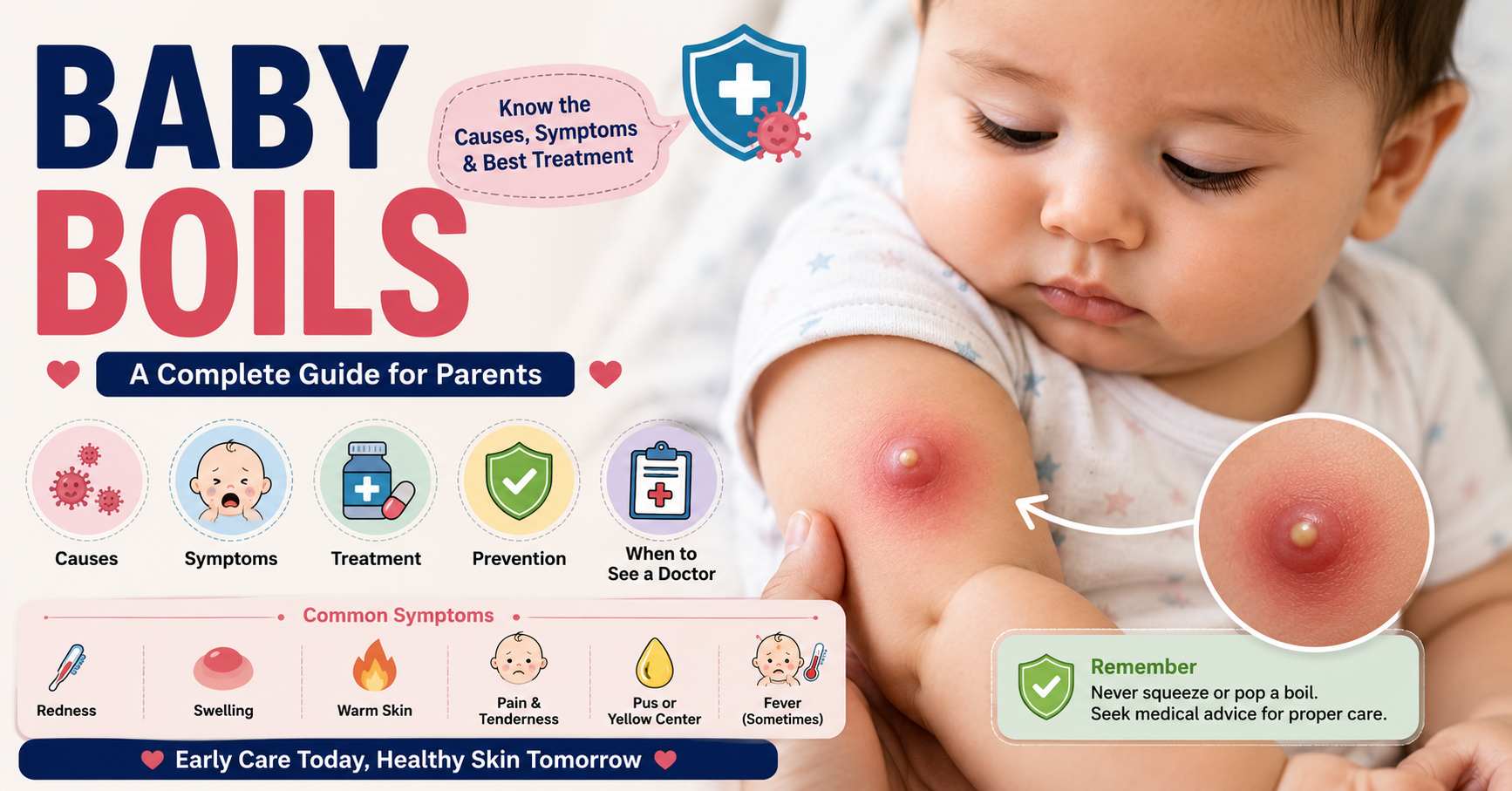
What Does a Baby Boil Look Like?
A boil usually appears as:
- Round red lump
- Painful swelling
- Warm skin
- White or yellow pus-filled center
- Increasing size over time
Unlike a simple pimple, a boil is usually deeper, more painful, and surrounded by inflamed skin.
Are Baby Boils Contagious?
The boil itself is not contagious, but the bacteria inside the pus can spread through:
- Direct skin contact
- Shared towels
- Clothing
- Bedding
- Hands contaminated with drainage
Good hygiene and handwashing help prevent transmission.
How Are Baby Boils Diagnosed?
A pediatrician usually diagnoses a boil through:
- Physical examination
- Medical history
- Evaluation of symptoms
If boils keep returning or are severe, the doctor may recommend:
- Pus culture
- Blood tests (rare)
- Testing for antibiotic-resistant bacteria (MRSA)
Treatment for Baby Boils
The treatment for baby boils depends on the size of the boil, your baby’s age, and whether the infection has spread. Small boils may improve with medical guidance and proper home care, while larger or multiple boils often require antibiotics.
Never try to squeeze or pop a boil yourself, as this can spread the infection deeper into the skin.
Medical Treatment
Your pediatrician may recommend:
- Oral antibiotics for larger boils
- Antibiotic ointments for certain mild skin infections (only if prescribed)
- Pain relief medication, if appropriate
- Incision and drainage (I&D) for large boils that do not drain naturally
If your baby has repeated boils, your doctor may investigate the underlying cause, including eczema, skin infections, or bacteria such as MRSA.
Does Every Baby Boil Need Antibiotics?
No.
Small boils that drain naturally may not always require antibiotics. However, babies should always be examined by a healthcare provider because infants are at a higher risk of developing complications than older children.
Antibiotics are commonly recommended if:
- The boil is large
- Multiple boils are present
- There is surrounding cellulitis
- Fever develops
- Your baby is younger than three months
- The boil is on the face or near the eyes
Home Care Tips
Home care helps your baby’s skin heal but should never replace medical treatment when cellulitis or a significant bacterial infection is suspected.
Apply Warm Compresses
A warm, clean compress for 10–15 minutes, three to four times daily, may encourage the boil to drain naturally.
Always check the temperature to avoid burns.
Keep the Area Clean
Wash the surrounding skin gently using mild baby soap and clean water.
Pat the area dry instead of rubbing.
Cover Draining Boils
If the boil begins draining, cover it with a clean sterile dressing as advised by your healthcare provider.
Change the dressing regularly.
Wash Your Hands
Always wash your hands before and after touching the affected area to reduce the spread of bacteria.
Trim Your Baby’s Fingernails
Short fingernails help prevent scratching and reduce the chance of spreading infection.
Continue Feeding Normally
Breastfeeding or formula feeding should continue as usual unless your pediatrician advises otherwise.
What Should You Avoid?
Avoid:
- Squeezing or popping the boil
- Using needles to drain it
- Applying toothpaste, herbal pastes, or home remedies
- Sharing towels or washcloths
- Reusing dirty dressings
- Stopping antibiotics early
How Long Do Baby Boils Last?
With proper treatment:
- Small boils may improve within 5–7 days
- Larger boils often heal within 1–3 weeks
- Healing may take longer if drainage is required
If the boil continues growing after treatment begins, contact your pediatrician.
Can Baby Boils Come Back?
Yes.
Recurring boils are more common in babies who have:
- Baby Eczema
- Baby Skin Allergy
- Frequent skin injuries
- Poor skin hygiene
- Close contact with someone carrying Staphylococcus aureus
If your baby develops repeated boils, your doctor may recommend additional evaluation.
How to Prevent Baby Boils
Although not all boils can be prevented, these measures help reduce the risk.
Keep Skin Clean
Bathe your baby regularly using a gentle baby cleanser.
Moisturize Dry Skin
Dry, cracked skin allows bacteria to enter more easily. Managing Baby Dry Skin helps strengthen the skin barrier.
Treat Eczema Promptly
Proper treatment of Baby Eczema reduces scratching and skin damage.
Prevent Insect Bites
Protect your baby from mosquito bites and treat itching early. Our guide on Baby Mosquito Bites explains safe prevention strategies.
Clean Minor Cuts
Wash small cuts and scratches promptly with clean water and keep them covered if needed.
Wash Clothing and Towels Regularly
Clean clothing, towels, and bedding help reduce bacterial spread.
Possible Complications
Without treatment, boils can occasionally lead to:
- Cellulitis
- Skin abscess
- Spread of infection
- Fever
- Scarring
- Bloodstream infection (rare)
- Hospitalization
Early treatment greatly reduces these risks.
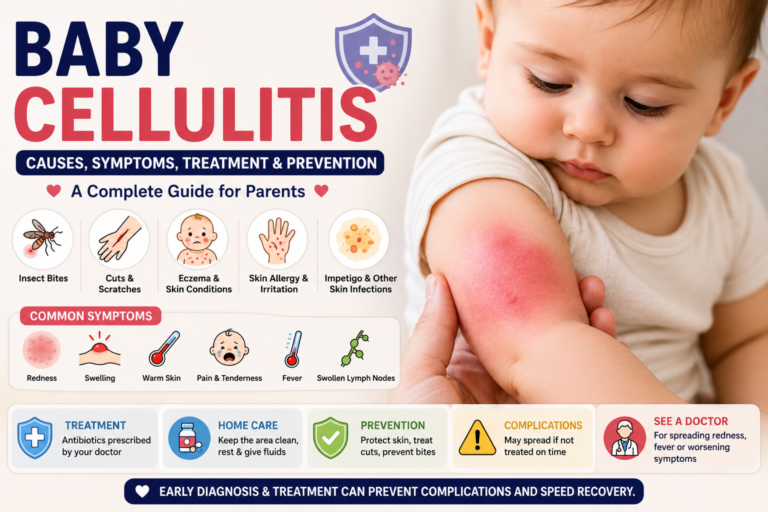
Baby Boils vs Cellulitis
| Baby Boils | Baby Cellulitis |
|---|---|
| Localized bacterial infection | Infection of deeper skin layers |
| Usually has a pus-filled center | Usually no visible pus initially |
| Round, raised lump | Large, spreading red area |
| Painful lump | Painful swollen skin |
| Often drains naturally | Does not usually drain on its own |
| May require drainage | Usually treated with antibiotics |
Baby Boils vs Impetigo
| Baby Boils | Baby Impetigo |
|---|---|
| Deep skin infection | Surface skin infection |
| Painful | Usually itchy |
| Large swollen lump | Honey-colored crusts |
| Pus-filled center | Small blisters and crusts |
| Often affects hair follicles | Often affects face and nose |
| May require drainage | Usually treated with topical or oral antibiotics |
When Should You See a Doctor?
Consult your pediatrician if your baby:
- Develops a boil before three months of age
- Has fever
- Has multiple boils
- Has increasing redness
- Appears very uncomfortable
- Has swelling near the eyes
- Refuses feeds
- Has recurring boils
- Shows no improvement after 48 hours of treatment
- Develops pus with a foul smell
Prompt medical care helps prevent the infection from spreading.
Emergency Warning Signs
Seek emergency medical care immediately if your baby:
- Has difficulty breathing
- Develops a high fever
- Becomes unusually sleepy
- Refuses all feeds
- Has rapidly spreading redness
- Has swelling around the eyes
- Develops seizures
- Appears dehydrated
- Has blue or black discoloration around the boil
These symptoms may indicate a serious bacterial infection requiring urgent treatment.
Conclusion
Baby boils are common bacterial skin infections that usually begin as small, painful red lumps around a hair follicle. While many boils heal completely with appropriate medical treatment, parents should never attempt to squeeze or pop them at home. Early evaluation by a pediatrician is especially important in young infants or when the boil is accompanied by fever, spreading redness, or poor feeding.
Maintaining good skin hygiene, treating conditions such as Baby Eczema, Baby Dry Skin, Baby Skin Allergy, and Baby Cellulitis, and caring for minor cuts promptly can significantly reduce the risk of boils. With timely treatment and proper home care, most babies recover fully without long-term complications.
Frequently Asked Questions (FAQs)
What causes boils in babies?
Boils are usually caused by Staphylococcus aureus bacteria entering the skin through a hair follicle, scratch, insect bite, or other break in the skin.
Are baby boils contagious?
The boil itself is not contagious, but the bacteria inside the pus can spread through direct contact or shared towels and clothing.
Can baby boils heal on their own?
Some small boils may drain and heal naturally, but babies should always be evaluated by a pediatrician.
Should I squeeze my baby’s boil?
No. Squeezing a boil can spread the infection and make it worse.
Can mosquito bites cause boils?
Yes. Scratching insect bites can allow bacteria to enter the skin and cause boils.
Are boils painful?
Yes. They are usually tender, swollen, warm, and painful to touch.
How long does a boil take to heal?
Most boils improve within 1–3 weeks, depending on their size and treatment.
Can boils leave scars?
Some larger boils may leave a small scar, especially if they are severe or drain deeply.
What is the difference between a boil and a pimple?
Boils are deeper, larger, more painful, and usually caused by a bacterial infection.
Can eczema cause boils?
Yes. Cracked skin from eczema makes it easier for bacteria to enter and cause infection.
Are antibiotics always needed?
Not always. Treatment depends on the size, location, and severity of the boil.
Can my baby get boils again?
Yes. Babies with eczema, skin allergies, or repeated skin injuries may experience recurrent boils.
How can I prevent boils?
Keep your baby’s skin clean, moisturized, treat cuts promptly, manage eczema, and avoid scratching insect bites.
When should I take my baby to the hospital?
Seek emergency care if your baby develops fever, rapidly spreading redness, difficulty breathing, poor feeding, severe swelling around the eyes, or appears very ill.
Can boils turn into cellulitis?
Yes. If left untreated, a boil can spread to the surrounding skin and develop into cellulitis, which requires prompt medical treatment.