
Medical Note: This article is for educational purposes only and should not replace professional medical advice. Babies younger than 6 months should be kept out of direct sunlight whenever possible. Seek immediate medical care if your baby develops blisters, fever, lethargy, dehydration, or signs of heat-related illness.
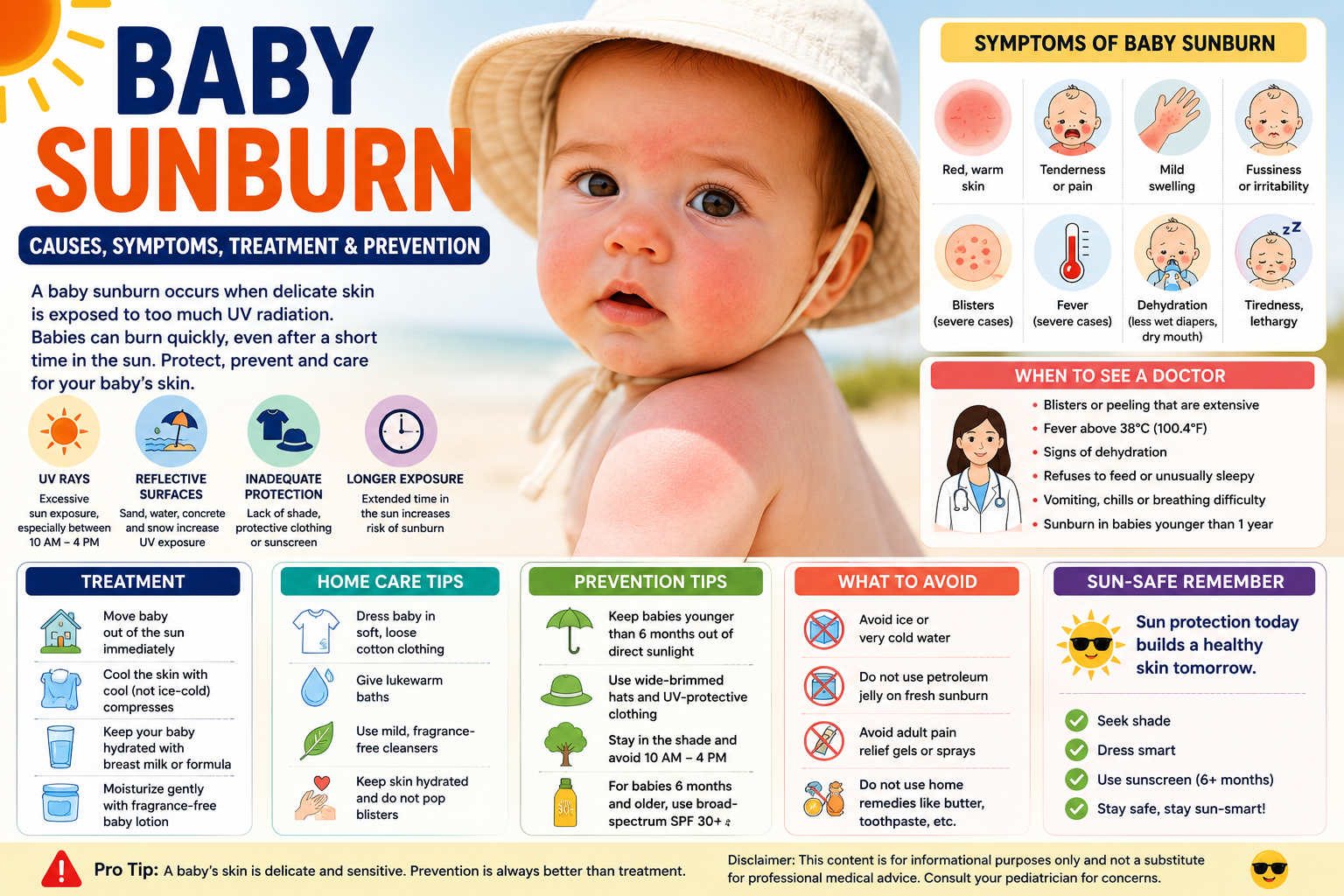
A baby sunburn occurs when a baby’s delicate skin is damaged by excessive exposure to the sun’s ultraviolet (UV) rays. Because a baby’s skin is thinner and contains less protective melanin than adult skin, it burns much more quickly—even after a short time outdoors.
Sunburn can range from mild redness to painful blisters and dehydration. While mild cases usually improve within a few days with proper care, severe sunburn may require immediate medical attention, especially in newborns and young infants.
The best way to protect your baby is to avoid direct sunlight, dress them in protective clothing, and follow age-appropriate sun safety recommendations.
This guide explains the causes, symptoms, treatment, home care, prevention tips, and warning signs parents should know.
What Is Baby Sunburn?
Baby sunburn is an inflammatory skin reaction caused by excessive ultraviolet (UV) radiation, primarily from the sun.
The damage occurs when UV rays injure skin cells faster than the body can repair them.
Sunburn most commonly affects:
- Face
- Cheeks
- Nose
- Ears
- Scalp (especially with thin hair)
- Neck
- Shoulders
- Arms
- Legs
Why Are Babies More Likely to Get Sunburn?
Babies have:
- Thin, delicate skin
- Less melanin (natural skin pigment)
- Immature skin barrier
- Greater sensitivity to UV radiation
Even 10–15 minutes of intense midday sun may be enough to damage a baby’s skin.
Common Causes of Baby Sunburn
1. Direct Sun Exposure
The most common cause is spending time outdoors without adequate protection.
Risk increases between:
- 10:00 AM and 4:00 PM
when UV radiation is strongest.
2. Inadequate Shade
Babies in:
- Strollers
- Parks
- Beaches
- Balconies
may still receive direct sunlight if shade is insufficient.
3. Reflective Surfaces
UV rays reflect from:
- Sand
- Water
- Concrete
- Snow
This increases exposure even while sitting under partial shade.
4. Insufficient Protective Clothing
Short sleeves, uncovered heads, and exposed legs increase the risk of sunburn.
5. Lack of Sunscreen (When Appropriate)
For babies older than 6 months, sunscreen should be used on exposed skin when shade and protective clothing are not sufficient.
For babies younger than 6 months, physical sun protection is preferred over sunscreen whenever possible.
Symptoms of Baby Sunburn
Symptoms usually appear within 2–6 hours after sun exposure.
Common signs include:
- Red skin
- Warm skin
- Tenderness
- Mild swelling
- Fussiness
- Dry skin
- Pain when touched
Severe sunburn may cause:
- Blisters
- Fever
- Chills
- Dehydration
- Poor feeding
- Excessive sleepiness
- Vomiting
Baby Sunburn vs Heat Rash
| Condition | Key Features |
|---|---|
| Baby Sunburn | Red, warm, painful skin after sun exposure |
| Baby Heat Rash | Tiny red bumps caused by blocked sweat glands |
| Baby Face Rash | May have multiple causes including eczema and irritation |
| Baby Dry Skin | Rough, flaky skin without recent sun exposure |
| Baby Eczema | Dry itchy inflamed patches |
Can Babies Get Sunburn Through a Window?
Yes.
While glass blocks most UVB rays, UVA rays can still pass through many windows and contribute to skin damage during prolonged exposure.
Is Baby Sunburn Dangerous?
Most mild sunburns heal without complications.
However, severe sunburn increases the risk of:
- Dehydration
- Heat exhaustion
- Heatstroke
- Skin infection (if blisters break)
- Long-term skin damage
Repeated childhood sunburns are associated with a higher lifetime risk of skin cancer.
How Is Baby Sunburn Diagnosed?
Doctors diagnose sunburn through:
- Physical examination
- Recent history of sun exposure
- Assessment of skin redness and swelling
According to the American Academy of Dermatology (AAD), most cases are diagnosed clinically without additional tests.
Risk Factors
Your baby is more likely to develop sunburn if they:
- Are younger than 6 months
- Spend time outdoors without shade
- Have fair skin
- Are outdoors during peak UV hours
- Live in hot, sunny climates
- Spend time near water or sand
Can Baby Sunburn Heal on Its Own?
Yes.
Most mild sunburns improve within 3–7 days with appropriate home care.
More severe burns with blisters or dehydration require prompt medical attention.
Treatment for Baby Sunburn
Most cases of baby sunburn are mild and improve within a few days with proper care. The primary goals of treatment are to cool the skin, relieve discomfort, prevent dehydration, and protect the damaged skin while it heals.
According to the American Academy of Dermatology (AAD), sunburned skin should be cooled gently and kept moisturized while avoiding further sun exposure.
How Is Baby Sunburn Treated?
1. Move Your Baby Out of the Sun Immediately
At the first sign of sunburn:
- Move your baby indoors or into deep shade.
- Avoid further sun exposure until the skin has healed completely.
2. Cool the Skin
Apply a cool (not ice-cold) compress to the affected skin for 10–15 minutes several times a day.
You may also give your baby a lukewarm bath.
Avoid:
- Ice packs directly on the skin
- Very cold water
These may further irritate delicate skin.
3. Keep Your Baby Hydrated
Sunburn can increase fluid loss.
Offer:
- Breast milk
- Formula
- Water (only for babies old enough, as advised by your pediatrician)
Watch for signs of dehydration such as:
- Fewer wet diapers
- Dry mouth
- Sunken eyes
- Lethargy
4. Moisturize the Skin
After cooling the skin:
- Apply a fragrance-free baby moisturizer.
- Use products designed for sensitive skin.
Parents can also read our Baby Dry Skin guide for moisturizing tips.
5. Pain Relief
If your baby appears uncomfortable, consult your pediatrician regarding age-appropriate pain relief medication.
Never give aspirin to babies or children.
The Mayo Clinic recommends consulting a healthcare provider before giving any medication to infants with sunburn.
Home Care Tips
Dress Your Baby in Loose Clothing
Choose:
- Soft cotton clothing
- Lightweight fabrics
Avoid tight clothing that rubs against the burned skin.
Avoid Sun Exposure
Keep your baby indoors or in complete shade until the sunburn has healed.
Do Not Pop Blisters
If blisters develop:
- Leave them intact.
- Cover loosely if necessary.
- Seek medical advice if they burst or show signs of infection.
Continue Gentle Skin Care
Use:
- Mild baby cleansers
- Lukewarm baths
- Fragrance-free moisturizers
Avoid harsh soaps or exfoliating products.
What Parents Should Avoid
Avoid:
- Applying ice directly to the skin
- Using petroleum jelly on fresh sunburn
- Using adult pain-relief gels
- Applying toothpaste, butter, or home remedies
- Popping blisters
- Returning to direct sunlight before healing
Can Baby Sunburn Be Prevented?
Yes. Prevention is the safest and most effective approach.
Parents should:
- Keep babies younger than 6 months out of direct sunlight.
- Use stroller shades and umbrellas.
- Dress babies in long sleeves, lightweight pants, and wide-brimmed hats.
- Stay in shaded areas.
- Avoid outdoor activities between 10 AM and 4 PM.
- For babies older than 6 months, apply a broad-spectrum SPF 30 or higher sunscreen to exposed skin when shade and clothing are insufficient.
The HealthyChildren.org (American Academy of Pediatrics) recommends minimizing direct sun exposure for infants and using protective clothing as the primary form of sun protection.
Possible Complications
Without appropriate care, severe sunburn may lead to:
- Dehydration
- Blistering
- Skin infection
- Heat exhaustion
- Heatstroke
- Increased lifetime risk of skin cancer due to repeated UV damage
Baby Sunburn vs Baby Heat Rash
| Baby Sunburn | Baby Heat Rash |
|---|---|
| Caused by UV rays | Caused by blocked sweat glands |
| Red, warm, tender skin | Tiny red bumps |
| Painful | Usually itchy |
| Appears after sun exposure | Appears after sweating |
| May blister | Does not blister |
If your baby develops tiny red bumps rather than widespread redness, read our Baby Heat Rash guide.
When Should You See a Doctor?
Seek immediate medical attention if your baby:
- Is younger than 1 year with significant sunburn.
- Develops blisters.
- Has a fever above 38°C (100.4°F).
- Refuses to feed.
- Shows signs of dehydration.
- Is unusually sleepy or difficult to wake.
- Vomits repeatedly.
- Has swelling around the eyes.
- Develops pus or signs of skin infection.
According to the NHS, babies with severe sunburn, blistering, or symptoms of dehydration should receive prompt medical assessment.
Conclusion
Baby sunburn is a preventable skin injury caused by excessive exposure to ultraviolet (UV) rays. Because babies have delicate, sensitive skin, they can develop sunburn quickly, even after a short time outdoors. Most mild sunburns improve with cooling measures, hydration, gentle moisturizers, and avoiding further sun exposure.
Parents should also know how to distinguish sunburn from other common skin conditions such as Baby Heat Rash, Baby Face Rash, Baby Dry Skin, Baby Eczema, and Baby Scalp Rash, as each requires different care. Practicing sun-safe habits from infancy helps protect your baby’s skin now and reduces the risk of long-term UV damage.
Frequently Asked Questions (FAQs)
How quickly can a baby get sunburn?
A baby can develop sunburn in as little as 10–15 minutes of strong midday sun, depending on skin type and UV intensity.
Can babies younger than 6 months wear sunscreen?
The primary recommendation is to keep babies younger than 6 months out of direct sunlight. If shade and protective clothing are unavailable, consult your pediatrician about limited sunscreen use on small exposed areas.
What does baby sunburn look like?
It usually appears as red, warm, tender skin and may be accompanied by mild swelling. Severe cases can cause blisters.
Can baby sunburn cause fever?
Yes. Severe sunburn may be associated with fever and dehydration and should be evaluated by a healthcare provider.
Is baby sunburn dangerous?
Most mild cases heal without problems, but severe sunburn can lead to dehydration, heat illness, and skin damage.
Should I put ice on my baby’s sunburn?
No. Ice can damage delicate skin. Use cool compresses instead.
Can aloe vera be used on babies?
Use only baby-safe, fragrance-free products and consult your pediatrician before applying aloe vera gels, especially on infants.
Can baby sunburn peel?
Yes. Mild peeling may occur several days after the burn as the skin heals.
Can babies get sunburn through clouds?
Yes. Up to 80% of UV rays can pass through clouds, so sun protection is still important on overcast days.
Does baby sunburn itch?
As it heals, the skin may become itchy. Moisturizing can help reduce discomfort.
How long does baby sunburn last?
Most mild sunburns improve within 3–7 days, while severe burns may take longer.
Can sunburn cause dehydration?
Yes. Sunburn increases fluid loss and can contribute to dehydration, particularly in infants.
How can I prevent baby sunburn?
Use shade, protective clothing, hats, avoid peak sunlight hours, and apply sunscreen to babies older than 6 months when appropriate.
When should I go to the emergency room?
Seek emergency care if your baby has severe blistering, high fever, dehydration, difficulty waking, repeated vomiting, or signs of heatstroke.
Can repeated sunburn affect my baby’s future skin health?
Yes. Repeated sunburns during childhood increase the lifetime risk of premature skin aging and skin cancer, making sun protection an important part of your baby’s daily care.