
Medical Note: This article is for educational purposes only and should not replace professional medical advice. If your baby has severe constipation, blood in the stool, persistent vomiting, fever, or poor feeding, contact your pediatrician immediately.
Many parents worry when their baby doesn’t poop every day or seems to strain during bowel movements. However, not every change in bowel habits means your baby is constipated. In fact, bowel movement frequency can vary greatly depending on your baby’s age, diet, and whether they’re breastfed or formula-fed.
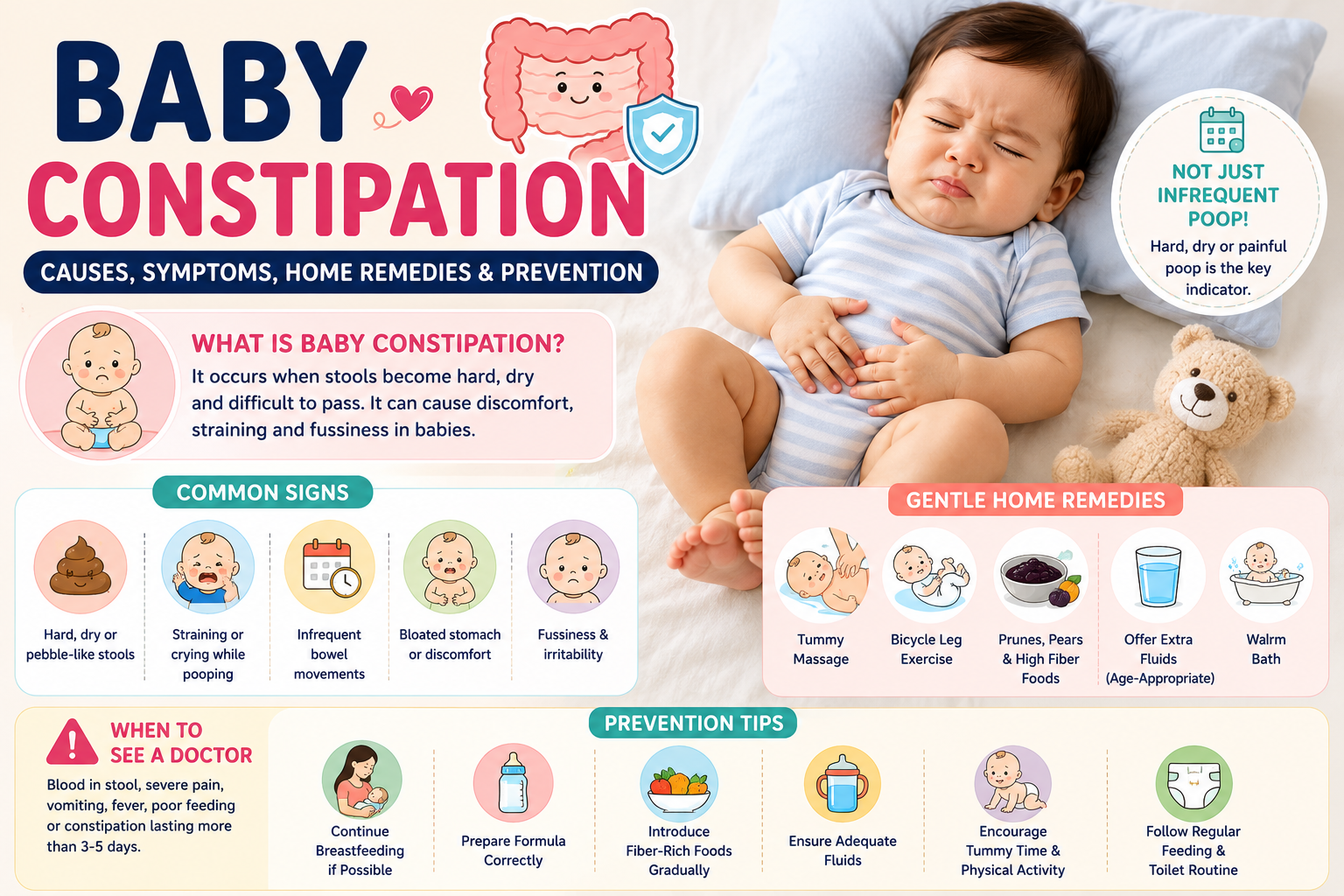
Baby constipation occurs when stools become hard, dry, and difficult to pass. While it’s less common in exclusively breastfed babies, constipation can occur after switching to formula, introducing solid foods, or due to dehydration.
Understanding the signs of constipation, safe ways to relieve it, and knowing when to seek medical advice can help keep your baby comfortable and healthy.
Explore our Child Development Milestones guide to learn how your baby’s feeding, digestion, and overall development change from birth through early childhood.
What Is Baby Constipation?
Baby constipation is a condition in which a baby passes hard, dry, or difficult-to-pass stools less frequently than is normal for them.
A baby may still poop every day and be constipated if the stool is hard and painful to pass. Likewise, some healthy breastfed babies may go several days without a bowel movement and still not be constipated if the stool remains soft.
The consistency of the stool is generally more important than how often your baby poops.
Is Baby Constipation Common?
Yes. Constipation is one of the most common digestive problems in infants and young children.
It is more likely to occur:
- After switching from breast milk to formula
- During the introduction of solid foods
- When babies don’t get enough fluids
- During illness or dehydration
What Causes Baby Constipation?
Several factors can contribute to constipation in babies.
1. Formula Feeding
Some babies may develop constipation after starting formula, as certain formulas can produce firmer stools.
The American Academy of Pediatrics (AAP) offers evidence-based recommendations on infant feeding, hydration, and digestive health.
2. Starting Solid Foods
Introducing foods such as:
- Rice cereal
- Bananas
- Potatoes
- Processed grains
may temporarily slow bowel movements in some babies.
3. Dehydration
Not getting enough fluids can make stools dry and harder to pass.
This may happen during:
- Hot weather
- Fever
- Vomiting
- Diarrhea
4. Dietary Changes
Sudden changes in feeding patterns or diet can temporarily affect bowel habits.
The NHS provides practical advice on recognizing constipation in babies, improving feeding habits, and knowing when medical care is needed.
5. Medical Conditions (Rare)
Occasionally, constipation may be linked to underlying conditions such as:
- Hirschsprung disease
- Hypothyroidism
- Food allergies
- Certain neurological disorders
These causes are uncommon but require medical evaluation.
Signs and Symptoms of Baby Constipation
Common symptoms include:
- Hard, pebble-like stools
- Dry stools
- Straining during bowel movements
- Crying while pooping
- Infrequent bowel movements
- Swollen or bloated abdomen
- Fussiness
- Reduced appetite
Sometimes you may notice a small amount of blood on the stool due to a tiny tear (anal fissure) caused by passing hard stools.
How Often Should Babies Poop?
Normal bowel movement frequency varies widely.
| Baby’s Age | Typical Pattern |
|---|---|
| Newborn | Several times a day |
| Breastfed baby | Several times daily or once every few days (soft stools) |
| Formula-fed baby | Usually 1–2 times daily |
| After starting solids | Frequency may decrease slightly |
Every baby is different, so focus on stool consistency rather than the exact number of bowel movements.
Baby Constipation vs Normal Straining
| Baby Constipation | Normal Infant Straining |
|---|---|
| Hard, dry stools | Soft stools |
| Painful bowel movements | Baby strains briefly but passes soft stool |
| Crying due to discomfort | Temporary grunting is common |
| Pebble-like stools | Normal stool consistency |
| May have blood from anal fissures | No blood |
What Does Constipated Baby Poop Look Like?
Constipated stools may be:
- Small, hard pellets
- Large, dry stools
- Difficult to pass
- Darker than usual
- Occasionally streaked with a small amount of blood from straining
Safe Home Remedies for Baby Constipation
Most cases of mild baby constipation can be managed at home with simple feeding and lifestyle adjustments. However, always consult your pediatrician before giving your baby any medication or home remedy.
If you’re concerned about your baby’s bowel movements, our guide on Green Baby Poop explains when stool color is normal and when medical advice may be needed.
Continue Breastfeeding or Formula Feeding
For babies under 6 months, breast milk or infant formula should remain the primary source of nutrition.
If your baby is feeding well, continue regular feeds unless advised otherwise by your doctor.
Offer Extra Fluids (Age-Appropriate)
For babies who have started solid foods (usually after 6 months):
- Offer small amounts of water between meals (as advised by your pediatrician).
- Continue regular breast milk or formula feeds.
Avoid giving water to young infants unless recommended by a healthcare professional.
Gentle Tummy Massage
A gentle clockwise tummy massage may help stimulate bowel movements.
Use clean hands and apply light pressure while your baby is relaxed.
Bicycle Leg Exercises
Lay your baby on their back and gently move their legs in a cycling motion.
This simple exercise may help relieve trapped gas and encourage bowel movements.
Warm Bath
A lukewarm bath can help relax your baby’s abdominal muscles and may make passing stool more comfortable.
Foods That May Help Relieve Constipation
If your baby has started solids, include fiber-rich foods such as:
- Prunes
- Pears
- Peaches
- Plums
- Apples (pureed)
- Oatmeal cereal
- Sweet potatoes
- Peas
- Broccoli
Introduce new foods gradually and monitor for any reactions.
Foods That May Worsen Constipation
Some babies may become constipated after eating:
- Large amounts of rice cereal
- Bananas (in some babies)
- White bread
- Refined grains
- Highly processed snacks
These foods don’t cause constipation in every baby but may contribute in some cases. Digestive changes like constipation can sometimes occur alongside common infant conditions such as Baby Hiccups during the first year of life.
What Should You Avoid?
Do not give your baby:
- Laxatives without medical advice
- Enemas
- Adult constipation medicines
- Mineral oil
- Herbal remedies
- Castor oil
Avoid inserting thermometers or objects into your baby’s rectum unless specifically instructed by a healthcare professional.
Can Baby Constipation Be Prevented?
Many cases can be prevented by maintaining healthy feeding habits.
Helpful tips include:
- Continue breastfeeding if possible.
- Prepare formula exactly as directed.
- Introduce high-fiber foods gradually after 6 months.
- Encourage age-appropriate fluid intake.
- Promote regular tummy time and physical activity.
- Avoid excessive processed foods once solids are introduced.
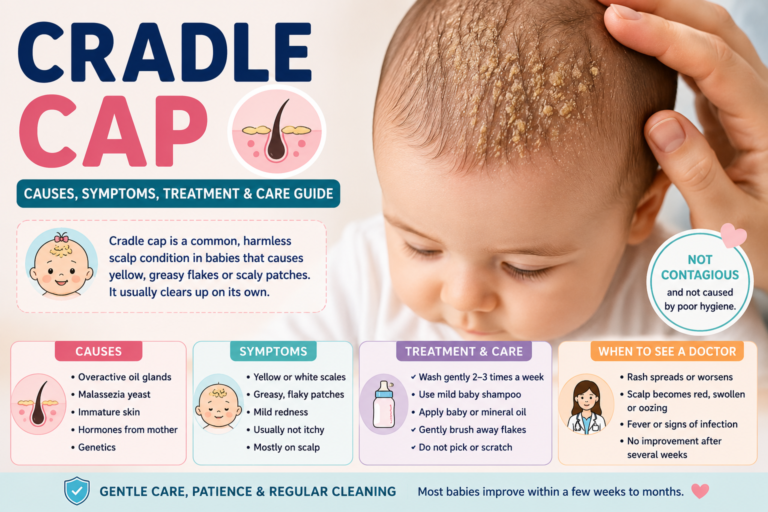
Feeding difficulties can sometimes be linked with oral conditions. Learn more in our guide to White Baby Tongue.
When Should You See a Doctor?
Seek medical advice if your baby:
- Is younger than 1 month and appears constipated.
- Has blood in the stool.
- Has severe abdominal swelling.
- Vomits repeatedly.
- Refuses to feed.
- Has constipation lasting more than 3–5 days despite home care.
- Has poor weight gain.
- Develops fever along with constipation.
- Experiences repeated episodes of constipation.
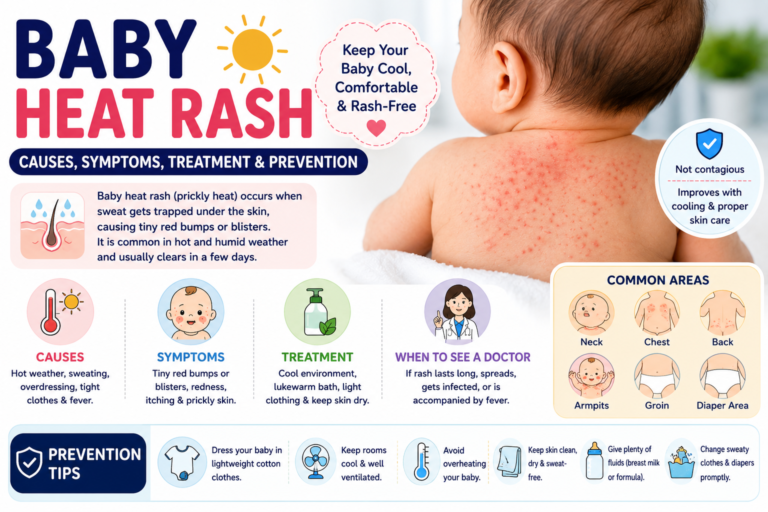
Seek urgent medical attention if your baby has severe vomiting, significant abdominal swelling, or appears unusually sleepy or difficult to wake. During hot weather, dehydration can contribute to constipation. Read our Baby Heat Rash guide for tips on keeping your baby cool and comfortable.
Baby Constipation vs Baby Gas
| Baby Constipation | Baby Gas |
|---|---|
| Hard stools | Normal stool |
| Difficulty passing stool | Excessive burping or passing gas |
| Pain during bowel movements | Temporary tummy discomfort |
| Infrequent bowel movements | Normal bowel movement frequency |
| May improve with dietary changes | Often relieved by burping and tummy massage |
Conclusion
Baby constipation is a common digestive issue that often occurs during feeding changes or after introducing solid foods. Most babies improve with gentle home care, adequate fluids, tummy massage, and age-appropriate high-fiber foods.
Because bowel habits vary from baby to baby, focus on stool consistency rather than frequency. If constipation persists, becomes severe, or is accompanied by blood in the stool, vomiting, fever, or poor feeding, consult your pediatrician promptly.
Frequently Asked Questions
Is it normal for a baby not to poop every day?
Yes. Some healthy babies, especially those who are exclusively breastfed, may go several days without a bowel movement as long as the stool remains soft.
What are the signs of baby constipation?
Hard, dry stools, straining, crying while passing stool, bloating, and infrequent bowel movements are common signs.
Can breastfeeding cause constipation?
Constipation is uncommon in exclusively breastfed babies. Breast milk is usually easy to digest.
Can formula cause constipation?
Some babies may develop firmer stools after switching to formula.
What foods help relieve constipation?
Prunes, pears, peaches, plums, oatmeal, peas, broccoli, and sweet potatoes may help after solids are introduced.
Can bananas cause constipation?
Some babies may experience constipation after eating bananas, while others tolerate them well.
Is straining always constipation?
No. Many babies grunt and strain while passing soft stools. This is a normal developmental pattern known as infant dyschezia.
Can dehydration cause constipation?
Yes. Inadequate fluid intake can make stools harder and more difficult to pass.
Should I give my baby juice for constipation?
Some pediatricians may recommend small amounts of 100% prune or pear juice for older infants, but only after considering your baby’s age and individual needs. Follow your pediatrician’s advice.
Can tummy massage help?
Yes. Gentle clockwise tummy massage and bicycle leg exercises may help stimulate bowel movements.
When should I worry about constipation?
Seek medical advice if constipation is severe, persistent, associated with blood in the stool, vomiting, fever, abdominal swelling, or poor feeding.
Can constipation affect sleep?
Yes. Babies with constipation may become uncomfortable and have trouble sleeping.
Are suppositories safe for babies?
Only use glycerin suppositories or any rectal treatment if specifically recommended by your pediatrician.
How can I prevent constipation?
Maintain regular feeds, prepare formula correctly, introduce fiber-rich foods gradually after 6 months, and ensure adequate hydration.
Can constipation come back?
Yes. Some babies experience recurring constipation during dietary transitions, but most improve with appropriate feeding habits and medical guidance when needed.