
Home » Baby Care » Newborn Care » Baby Hiccups: Causes, How to Stop Them & When to See a Doctor

Baby Hiccups: Causes, How to Stop Them & When to See a Doctor

Editorial Note: This article is for informational purposes only and should not replace professional medical advice. If your baby’s hiccups are persistent, interfere with feeding, or are accompanied by vomiting, breathing difficulties, or poor weight gain, consult your pediatrician.

Baby hiccups are a common occurrence, especially during the first year of life. Many parents become concerned when their newborn or infant starts hiccupping frequently, but in most cases, hiccups are completely harmless and don’t bother the baby.

Hiccups happen when the diaphragm, the muscle located below the lungs, contracts suddenly. This causes the vocal cords to close quickly, producing the familiar “hic” sound.

Whether your baby gets hiccups after feeding, during sleep, or seemingly for no reason, they’re usually a normal part of development and tend to become less frequent as your baby grows.

The American Academy of Pediatrics (AAP) offers evidence-based recommendations on infant feeding practices and digestive health.

This guide explains why babies get hiccups, how to stop them safely, prevention tips, and when hiccups might require medical attention.

Are Baby Hiccups Normal?

Yes. Hiccups are very common in newborns and young infants.

In fact, babies can even experience hiccups before birth. Many pregnant women notice rhythmic movements during pregnancy that are caused by fetal hiccups.

After birth, hiccups usually become less frequent as the baby’s digestive and nervous systems mature.


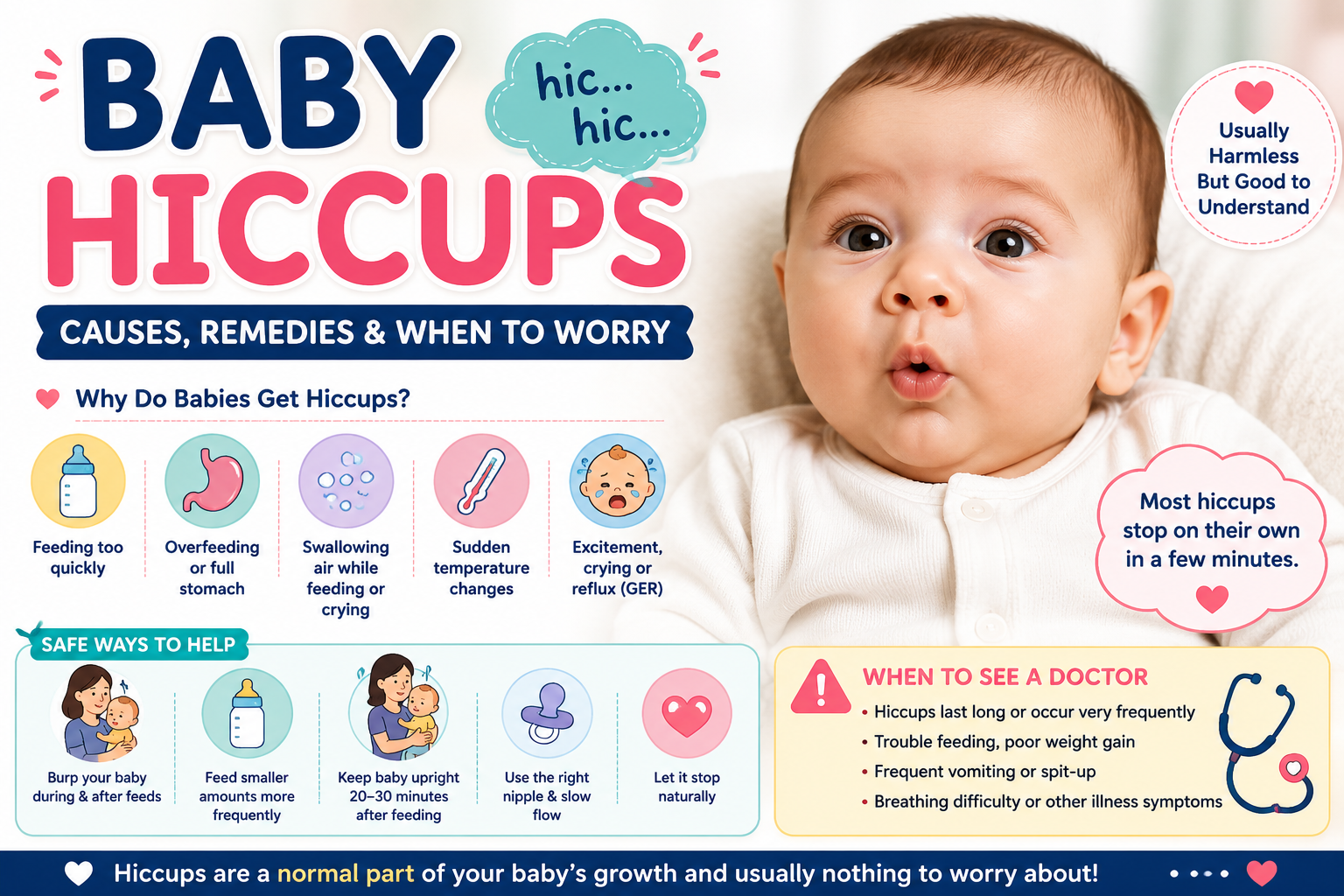
What Causes Baby Hiccups?

Several everyday factors can trigger hiccups in babies.

1. Feeding Too Quickly

One of the most common causes is feeding too fast.

Rapid feeding may cause your baby to swallow extra air, leading to diaphragm irritation and hiccups.

NHS Start for Life provides practical advice on breastfeeding, bottle-feeding, burping, and caring for your baby’s digestive health.


2. Overfeeding

A very full stomach can press against the diaphragm and trigger hiccups.

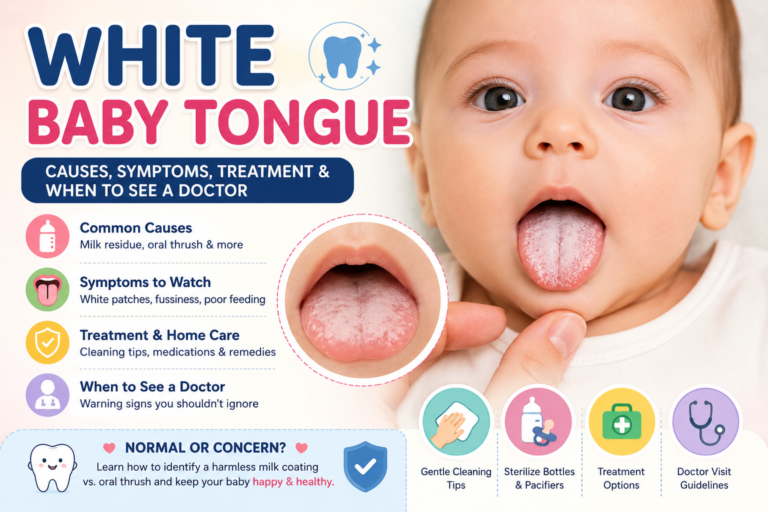
Offering smaller, more frequent feeds may help reduce episodes. If your baby seems uncomfortable while feeding and has a white coating on the tongue, learn how to distinguish normal milk residue from oral thrush in our White Baby Tongue guide.


3. Swallowing Air

Babies often swallow air while:

  • Breastfeeding
  • Bottle feeding
  • Crying
  • Using a pacifier

Burping during and after feeds can help remove trapped air.


4. Gastroesophageal Reflux (GER)

Some babies with mild reflux may hiccup more often because stomach contents briefly move back into the esophagus, irritating the diaphragm.

Many infants outgrow reflux naturally during their first year. As your baby’s digestive system matures, you may notice changes in feeding, hiccups, and stool color. Read our guide on Green Baby Poop to understand what stool colors are considered normal.


5. Sudden Temperature Changes

Occasionally, moving from a warm room to a cooler environment—or drinking milk at a different temperature—may trigger hiccups in some babies.


6. Excitement or Crying

Laughing, crying, or becoming excited may cause babies to swallow extra air, increasing the chance of hiccups.


Symptoms That May Accompany Baby Hiccups

Most babies simply experience:

  • Repeated “hic” sounds
  • Small jerking movements
  • Temporary pauses between hiccups
  • Normal breathing
  • Normal feeding

In most cases, babies remain comfortable during hiccups. MedlinePlus offers evidence-based information about hiccups, digestive health, and common infant conditions.


How Long Do Baby Hiccups Last?

Most episodes last:

  • A few minutes
  • Occasionally up to 10–15 minutes
  • Rarely longer

The hiccups usually stop on their own without treatment.


When Are Baby Hiccups More Common?

Parents often notice hiccups:

  • After feeding
  • During burping
  • Before bedtime
  • After crying
  • During the newborn period
  • During the first six months of life

Frequent hiccups are usually a normal part of infancy.
How to Stop Baby Hiccups Safely

Most baby hiccups go away on their own and don’t require any treatment. However, these simple techniques may help your baby become more comfortable.

Burp Your Baby

Burping helps release trapped air that may be irritating the diaphragm.

Try burping:

  • Halfway through a feeding
  • After every feeding
  • Whenever your baby seems gassy

Feed Smaller Amounts More Frequently

Instead of large feeds, offer smaller, more frequent feedings if your baby tends to hiccup after eating.

See also  How to Increase Baby Weight — Best Foods, Diet Plan & Expert Tips | MomSaathi

This can reduce pressure on the stomach.


Keep Your Baby Upright After Feeding

Hold your baby upright for about 20–30 minutes after feeding.

This may help digestion and reduce swallowed air.


Check the Bottle Nipple

If bottle-feeding:

  • Ensure the nipple flow isn’t too fast.
  • Avoid nipples that cause excessive air intake.
  • Hold the bottle so the nipple stays filled with milk.

Allow Hiccups to Stop Naturally

In most cases, the best treatment is simply waiting.

Many babies continue feeding, sleeping, or playing comfortably while hiccupping.


What Should You Avoid?

Do not try traditional remedies that may be unsafe for babies, such as:

  • Pulling your baby’s tongue
  • Pressing on the eyeballs
  • Giving water to newborns
  • Startling your baby
  • Adding sugar, honey, or herbal remedies (honey should not be given to babies under 12 months due to the risk of infant botulism)
  • Holding your baby’s breath

These methods are not recommended and may be harmful.

Increased drooling during teething can irritate your baby’s skin. Read our article on Baby Drool Rash for prevention and treatment tips.


Can Baby Hiccups Be Prevented?

Although hiccups can’t always be prevented, these tips may reduce how often they occur:

  • Feed before your baby becomes very hungry.
  • Burp during and after feeds.
  • Avoid overfeeding.
  • Keep your baby calm during feeding.
  • Feed in an upright position when possible.
  • Use slow-flow bottle nipples if appropriate.
  • Limit excessive crying before feeding.

If your baby’s hiccups occur along with flushed cheeks or other symptoms, read our guide on Infant Rosy Cheeks to understand common causes of facial redness.


When Should You See a Doctor?

Baby hiccups are rarely a medical concern, but contact your pediatrician if your baby:

  • Has hiccups that frequently interfere with feeding.
  • Shows poor weight gain.
  • Vomits frequently after feeds.
  • Appears uncomfortable or cries excessively during hiccups.
  • Has persistent hiccups lasting several hours or occurring unusually often.
  • Has breathing difficulties, wheezing, or bluish skin.
  • Develops fever or other signs of illness.

Seek emergency medical care if your baby has trouble breathing or becomes difficult to wake. If your baby is beginning to teethe, our Baby Teeth Order guide explains when each tooth typically appears and what symptoms to expect.


Baby Hiccups vs Acid Reflux

Baby Hiccups Acid Reflux
Usually harmless May require medical evaluation if severe
Short episodes Frequent spit-up or vomiting
Baby remains happy Feeding discomfort may occur
No treatment usually needed May improve with feeding adjustments or medical advice
Common in healthy babies More likely if accompanied by poor weight gain or persistent irritability

Conclusion

Baby hiccups are a normal part of infancy and are usually caused by feeding, swallowing air, or the natural development of the diaphragm. In most cases, they disappear within a few minutes and don’t require treatment.

Simple steps such as burping your baby, offering smaller feeds, and keeping your baby upright after feeding can help reduce hiccups. If hiccups become persistent, interfere with feeding, or occur alongside vomiting, poor weight gain, or breathing difficulties, it’s important to seek medical advice.


Frequently Asked Questions

Are baby hiccups normal?

Yes. Hiccups are extremely common in newborns and infants and usually aren’t a cause for concern.

Why does my baby get hiccups after every feed?

This often happens because babies swallow air while feeding or their stomach becomes full, temporarily irritating the diaphragm.

Can I continue feeding my baby during hiccups?

Yes. If your baby is feeding comfortably, it’s generally fine to continue.

How long do baby hiccups last?

Most episodes last a few minutes and usually resolve on their own within 10–15 minutes.

Do hiccups hurt babies?

Most babies aren’t bothered by hiccups and continue feeding or sleeping normally.

Can burping stop hiccups?

Burping may help release swallowed air and can reduce hiccups in some babies.

Should I give my baby water for hiccups?

No. Babies younger than 6 months should not be given water unless advised by a healthcare professional.

Can overfeeding cause hiccups?

Yes. A very full stomach can put pressure on the diaphragm and trigger hiccups.

Is it safe for babies to sleep with hiccups?

Yes. Hiccups generally don’t interfere with breathing or sleep.

Can reflux cause frequent hiccups?

Yes. Some babies with gastroesophageal reflux may hiccup more often, although many infants outgrow reflux as they mature.

Can pacifiers help stop hiccups?

Some babies may settle with a pacifier, but there is no strong evidence that pacifiers consistently stop hiccups.

Should I worry if my newborn hiccups every day?

Daily hiccups can be normal during the newborn period, especially if your baby is feeding well, growing appropriately, and otherwise healthy.

Can crying trigger hiccups?

Yes. Crying may cause babies to swallow more air, increasing the likelihood of hiccups.

When should I call the doctor about hiccups?

Seek medical advice if hiccups are persistent, interfere with feeding, are associated with frequent vomiting, poor weight gain, or breathing difficulties.

Do babies get hiccups before birth?

Yes. Many pregnant women notice rhythmic fetal movements caused by hiccups, which are considered a normal part of fetal development.

More Reading

Post navigation

Subscribe
Notify of
guest

0 Comments
Oldest
Newest Most Voted
0
Would love your thoughts, please comment.x
()
x